Owen Bradley
 The PC speakers vs headset debate rarely gets settled once, because most people eventually want both. Speakers make a desk feel like a room, spread sound naturally, and let you work for hours without anything touching your head. A headset delivers isolation, precision, and a microphone in one package that nobody else has to hear. Which one deserves your money depends less on audio theory than on your living situation, the games you play, and whether you spend your day in voice calls. This guide compares the two on positional accuracy, comfort, microphone quality, and consideration for housemates, so you can commit with confidence.
The Fundamental Difference
Headphones and speakers deliver sound to your ears in physically different ways, and everything else follows from that. A headset puts a driver directly against each ear, so the left channel reaches only your left ear and the right only your right. There is no crosstalk, no room, and no interference. Speakers, by contrast, fire into a space, and both ears hear both speakers plus every reflection off your desk, walls, and monitor.
That difference explains the classic trade-off. Headsets give you an intimate, hyper-detailed presentation with perfect channel separation. Speakers give you a natural, out-of-head soundstage that your brain interprets as a real acoustic event, but one that your room is now part of. Neither is more accurate in the abstract; they are accurate about different things.
Positional Accuracy for Gaming
For competitive play, headsets win, and the margin is not close. Perfect channel separation means a footstep panned slightly left reaches only your left ear at the exact intended level. Game engines and spatial audio processing are also designed and tuned around headphone listening, since developers assume most players use them.
Speakers muddy those cues. Both ears hear both drivers, room reflections arrive milliseconds later from the walls, and unless you sit in the exact centre of a well-placed stereo pair, the image skews toward whichever speaker is closer. In a tactical shooter or extraction game where hearing a reload behind a wall decides the round, that ambiguity costs you. If competitive audio is your priority, the best computer gaming headsets deliver the positional precision speakers cannot match at a desk.
Speakers do have a real strength here, though: scale. Explosions, engines, orchestral scores, and open-world ambience feel bigger and more physical through drivers you can feel in your chest, especially with a subwoofer. For single-player, cinematic, racing, and driving games, that immersion is genuinely more enjoyable, and the loss of pinpoint imaging does not matter.
Comfort Over Long Sessions
Speakers are unbeatable on comfort because nothing touches you. No clamp pressure on the jaw, no heat trapped against your ears, no pressure on the arms of your glasses, no flattened hair. On a long working day, or during an eight-hour weekend session, that absence of physical contact is worth more than most people expect.
Headsets have improved enormously, and a well-designed one with breathable hybrid pads and a suspension headband can be worn for hours without complaint. But even the best pair generates heat, and ear fatigue from sustained close-range listening is real. A useful compromise many desk workers adopt: speakers as the default for work and casual play, with the headset reserved for calls, competitive matches, and late nights. If you spend most of your day in meetings, a comfortable, well-isolating pair from our roundup of the best headsets for home office use will serve you better than any speaker setup.
The Microphone Problem
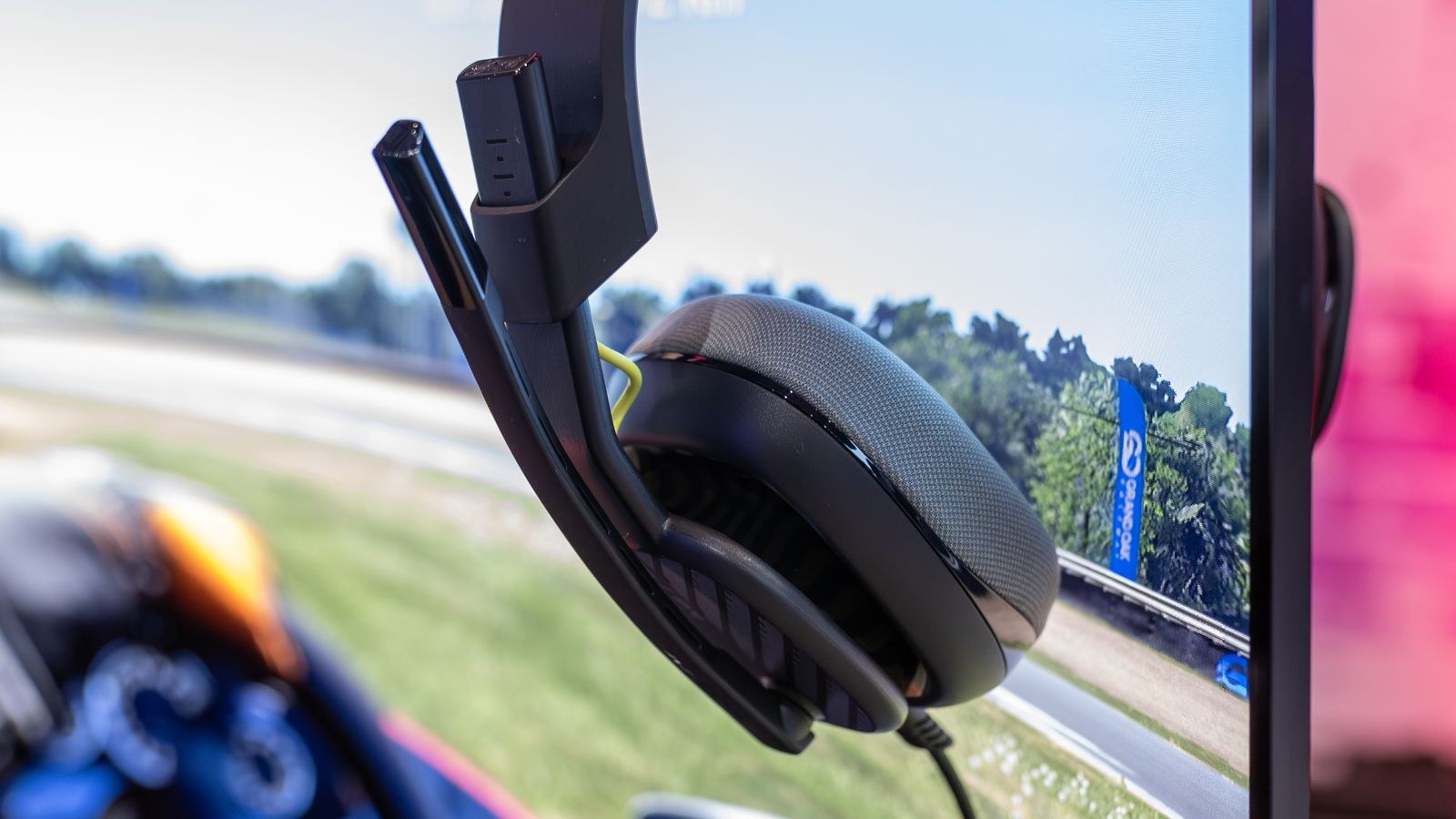
This is where speakers create genuine complications. A headset boom sits inches from your mouth, stays there regardless of how you move, and picks up almost nothing else. It is the most reliable voice solution there is, and it never conflicts with your speakers because there are none.
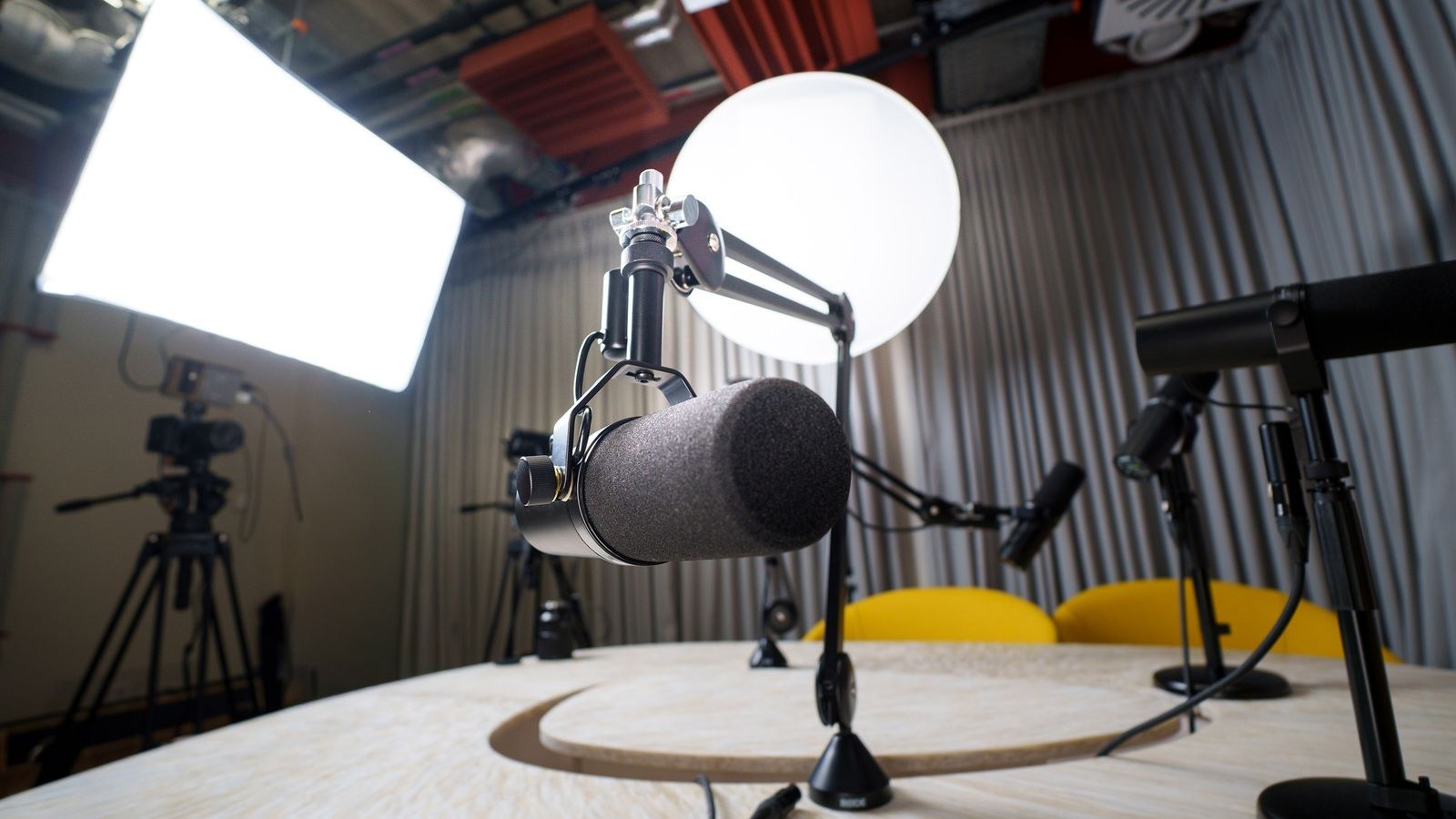
Use speakers and you need a separate microphone, which introduces feedback and bleed. Your microphone hears your speakers, so teammates and callers hear an echo of themselves. Software echo cancellation handles this reasonably well for meetings but degrades your voice quality, and at gaming volumes it struggles. Mitigations exist: keep speaker volume moderate, use a cardioid microphone with the rear facing the speakers, place the speakers wide and angled away from the mic, and avoid sitting with drivers firing directly at the capsule. It is workable, but it is a problem you simply do not have with a headset.
Your Living Situation Decides More Than Specs
Be realistic about who else lives with you. Speakers project sound into the whole room and often beyond it, so late-night gaming, early calls, and a housemate working next door all become negotiations. A subwoofer makes this worse, because low frequencies pass through walls and floors far more readily than treble; apartment dwellers with neighbours below should think carefully before adding one.
Conversely, if you live alone, have a dedicated office, or a house with forgiving walls, speakers are a joy and you should not deny yourself them. A shared bedroom, an open-plan office, a dorm, or a partner who sleeps on a different schedule points firmly toward a headset. This factor overrules every audio argument in this guide, so settle it first.
Sound Quality Per Pound Spent
Below roughly $150, headsets deliver more usable quality than speakers because the drivers sit against your ear and need very little power to produce full-range sound. Cheap speakers, by contrast, have small cabinets, weak amplification, and almost no bass extension, so a $60 speaker pair sounds thin next to a $60 headset.
The picture changes above $200. Larger cabinets, real amplification, and proper drivers start delivering the kind of scale and effortlessness headphones cannot replicate, and a good stereo pair at that price genuinely outclasses a headset for music and film. Bear in mind you are also buying into your room, though: a great pair of speakers in a reflective, badly arranged space can sound worse than a modest pair positioned well. Our guides to the best PC speakers and the best computer speakers for gaming break down which tiers make that leap worthwhile.
Speaker Placement Fundamentals
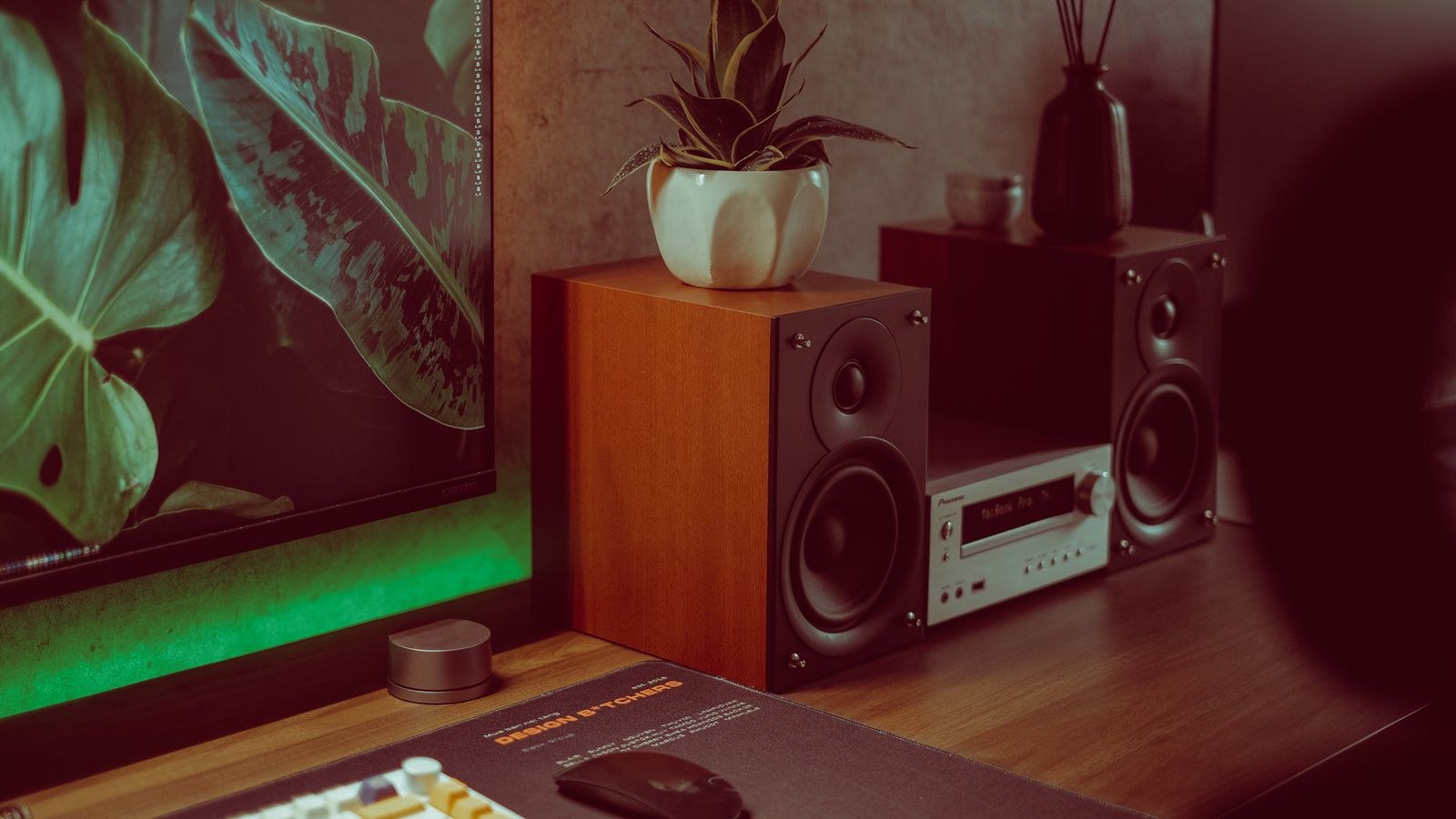
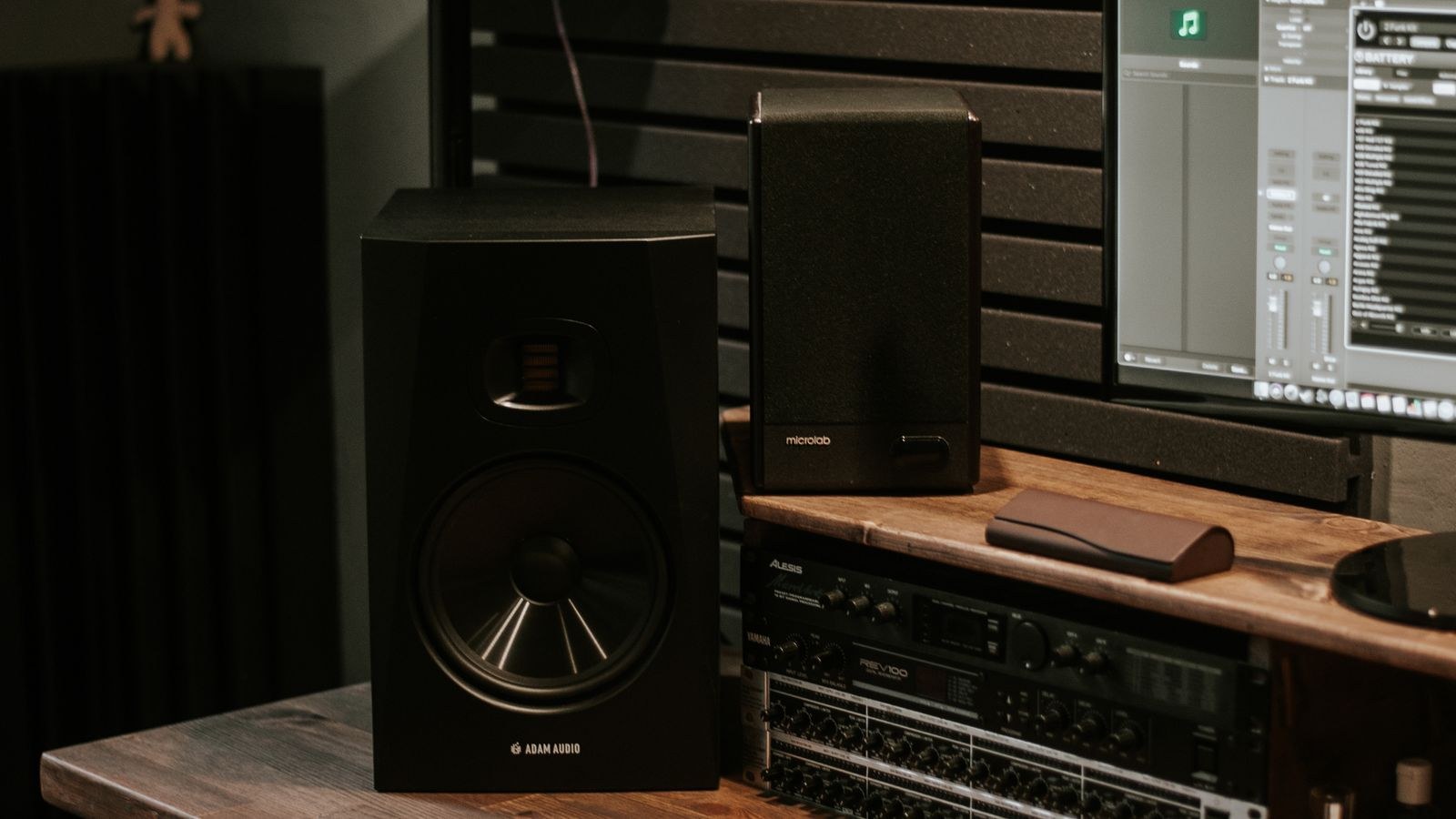
If you go the speaker route, placement is free performance. Position the two speakers and your head at the points of an equilateral triangle, with the tweeters at ear height and angled slightly inward toward your listening position. Pull them a few inches away from the wall behind them to reduce boom, and use isolation pads or small stands to lift them off the desk surface, which otherwise colours the sound. Keep them symmetrical relative to side walls where possible. Ten minutes of adjustment routinely delivers what a price-tier upgrade would.
Bass, Subwoofers and Desk Space
Bass behaves very differently between the two. Headsets, particularly closed-back models, produce deep bass easily because the sealed cup holds pressure against your ear. Speakers must physically move air, so small desktop cabinets roll off well before the lowest octaves unless you add a subwoofer.
A 2.1 system with a subwoofer restores that low end and adds physical impact a headset can only imitate, which is why it remains a popular gaming choice. The costs are space and neighbours. The sub needs floor room, another power outlet, and cable routing, and it is the component most likely to annoy people through walls. Desktop space matters too: two speakers plus a sub take up real estate a headset stand does not. If your desk is already crowded with monitors, a headset removes the problem entirely, and options built for immersive desktop play appear in our best desktop speakers for gaming roundup.
Which Should You Choose? A Quick Decision Guide
- Competitive shooters and esports: headset. Positional accuracy and a reliable microphone are non-negotiable.
- Shared living space or thin walls: headset. This overrules everything else.
- Heavy voice call or meeting workload: headset, for microphone reliability and echo-free calls.
- Single-player, cinematic and racing games: speakers, for scale and physical impact.
- All-day desk work in a private room: speakers, for comfort and freedom of movement.
- Music and film alongside gaming: speakers above $200, headset below it.
If your answers split, buy the headset first. It solves the microphone problem, works in every environment, and costs less to get right. Add speakers later when you know your space allows them.
Common Mistakes
The most common error is buying cheap speakers instead of a decent headset and concluding that speakers are inferior. You were comparing price brackets, not technologies. The second is placing good speakers badly, tucked behind monitors or crammed against a wall, and blaming the hardware for the result.
Third is adding a subwoofer in an apartment without considering the neighbours, then never being able to use it above a whisper. Fourth is assuming echo cancellation makes speakers viable for professional calls; it helps, but colleagues will still notice. Finally, many people buy a headset purely on brand or lighting and ignore pad comfort, then abandon it within a month because it hurts.
Frequently Asked Questions
Can I run speakers and a headset at the same time?
Yes. Most motherboards expose both a rear line-out for speakers and a front panel jack, and you switch outputs in your operating system’s sound settings. USB headsets appear as separate devices, making switching trivial. Many people keep both connected permanently.
Do I need a soundcard or DAC for speakers?
Usually not. Powered desktop speakers connect fine to a motherboard’s analogue output, and many now accept USB directly, bypassing onboard audio entirely. Consider an external DAC only if you hear hiss or interference from your front-panel jack.
Are studio monitors better than PC speakers?
They are tuned flatter and more revealing, which is ideal for editing and mixing, but that neutrality can sound clinical for gaming and needs a decent room to shine. For general desktop use, consumer speakers with a slightly warmer tuning are often more enjoyable.
Will speakers hurt my competitive performance?
Slightly, in games where precise directional cues matter. At a casual level the difference is negligible. If you play ranked shooters seriously, switch to a headset for those sessions and keep speakers for everything else.
Final Thoughts
Speakers and headsets are complementary rather than competing, and the smartest desks eventually hold both. Start with the constraint that cannot be negotiated: if you share walls or a room, or if your microphone must work flawlessly, buy a good headset and prioritise comfort and boom quality. If you have a private space and value all-day ease with cinematic scale, put your money into a decent stereo pair and spend ten minutes getting the placement right.
Whichever you choose, spend to the point where quality becomes genuinely good rather than merely acceptable, then stop and improve your room instead. That approach will serve your desk well throughout 2026 and long after the current model names are forgotten.