Owen Bradley
 Seating priorities shift with age. The features that sell chairs to younger office workers, such as aggressive recline, deep bucket seats, and complex multi-lever mechanisms, become obstacles when getting into and out of the chair is the harder part of the day. Office chairs for seniors need to solve a different problem: stable, easy entry and exit, joint-friendly support during long periods of sitting, and controls simple enough to use without reading a manual. This guide covers the specific features that make a chair genuinely easier to live with as mobility and joint comfort change, what to check before buying, and how to adapt an existing chair when replacing it is not the plan for 2026.

Entry and Exit Beat Everything Else
The moment that causes the most difficulty is not sitting; it is the transition between standing and sitting. Lowering the body under control demands eccentric strength in the thighs, and rising demands power plus balance. A chair that helps with this transition transforms the whole experience, while a chair that hinders it becomes something to avoid.
Three factors govern how easy that transition is. Seat height comes first: a slightly higher seat means less distance to descend and less force to rise. Where a standard chair might sit at 17 inches, many older users find 19 to 21 inches noticeably easier, provided a footrest keeps the feet supported. Armrest quality comes second, because the arms take much of the load during the movement. Arms must be firm, extend far enough forward to be reachable while rising, and not flex under body weight. Seat firmness comes third: a very soft cushion swallows the hips and makes rising far harder than a firm, supportive one.
Armrests: The Most Underrated Feature
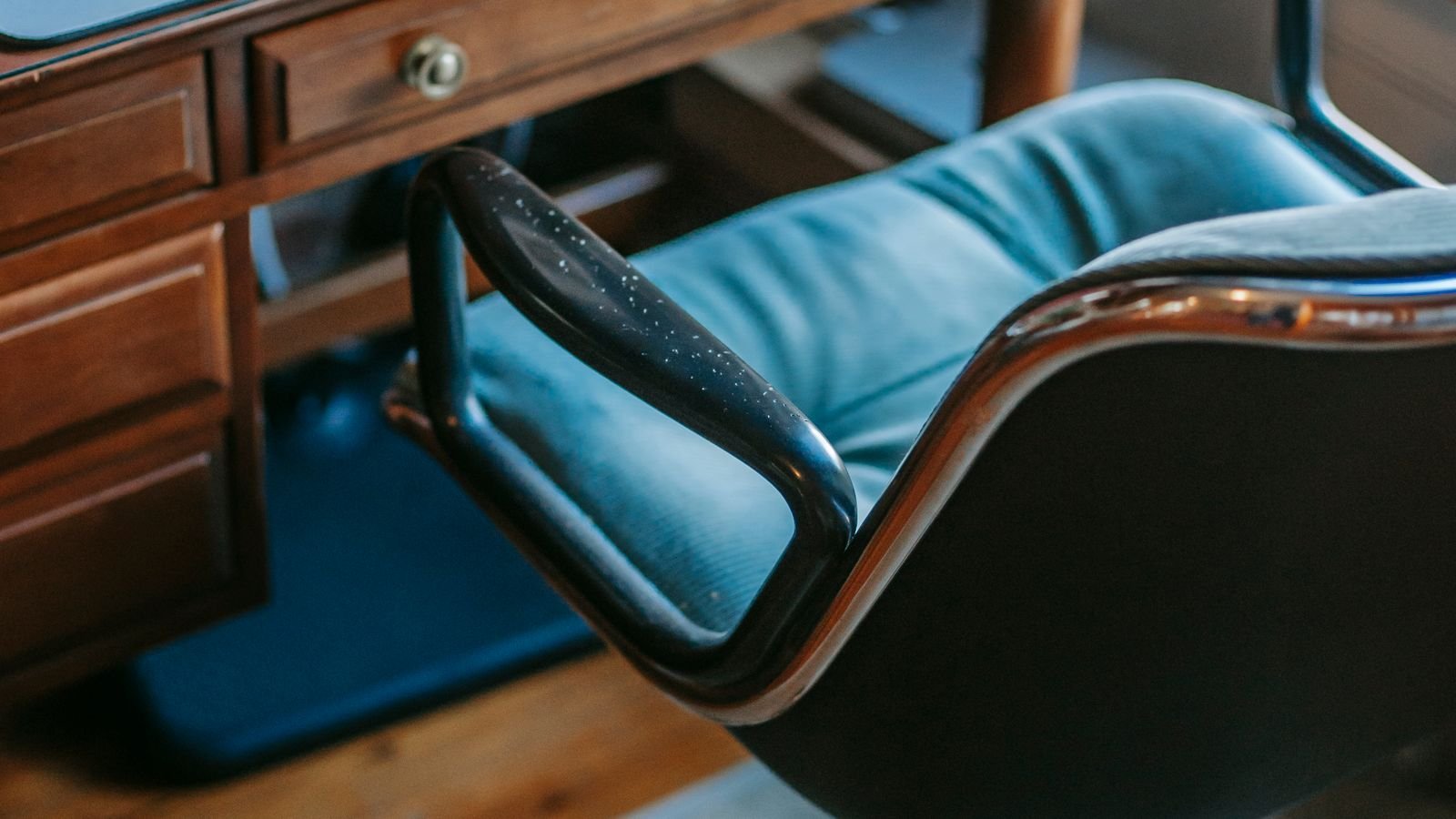
For anyone with reduced leg strength or knee or hip discomfort, armrests are load-bearing equipment rather than comfort accessories. The best arrangement is a fixed or firmly locking armrest that reaches close to the front of the seat, sits at a height where the elbow rests naturally while seated, and has a broad top surface that spreads pressure across the palm rather than concentrating it on a narrow edge.
Avoid armrests that flip up, slide freely, or pivot, unless they lock solidly, because an arm that shifts as you push on it is a fall risk. Padded tops are more comfortable than hard plastic, but the padding should be firm; soft foam that compresses fully offers no real support. If your current chair has weak or missing arms, the practical options in our roundup of the best chairs with armrests illustrate the range of designs and how far forward each type extends.
Base Stability and Caster Choice
A chair that rolls away as someone lowers themselves into it is genuinely dangerous. Look for a wide five-star base, since a broader footprint resists tipping when weight goes onto one armrest. Metal bases are heavier and more stable than lightweight nylon ones, which is an advantage here even though it makes the chair harder to move around.
Casters deserve careful thought. Standard casters roll freely at all times, which is exactly wrong for a chair someone leans on. Braked or locking casters are the better answer: they hold the chair still until body weight is fully on the seat, then roll normally. These are inexpensive and usually a direct replacement, so retrofitting an existing chair is simple. On carpet, soft rubber casters roll too easily and dig in unpredictably, so match caster type to the floor surface. Removing the casters entirely and fitting glides is another option for someone who does not need to move at the desk at all.
Support That Suits Older Joints
Long sitting sessions are common in retirement, whether at a computer, a hobby bench, or a reading desk, so continuous support matters. A backrest that supports the full length of the spine, including the mid and upper back, reduces the muscular effort of holding posture. Lumbar support should be adjustable in height so it lands at belt level, and a gentle rather than aggressive curve is usually more comfortable for a back that has lost some flexibility.
Headrests earn their place here more than they do in a typical office chair, because they allow genuine rest during breaks without leaving the desk. A recline function with a lock lets a user shift to a resting angle for ten minutes and then return to work. Seat contouring matters too: a mild contour distributes weight and reduces pressure at the sitting bones, which becomes more noticeable when natural padding has thinned. Chairs built around these broad comfort priorities are covered in our comparison of the best comfortable desk chairs.

Simple Controls Beat Clever Ones
A chair with eight levers, each doing something different and none labeled, gets set once at delivery and never touched again. That defeats the purpose of adjustability. Look for chairs where the controls are few, clearly distinguishable by shape or position, and operable without twisting to look underneath.
Levers are easier than knobs for arthritic hands, since they need a push rather than a pinch and twist. Large paddle-style handles are better than small ones. Tension dials that require many rotations to change anything are a common frustration; a chair with a weight-activated or automatic tension mechanism removes that adjustment entirely, which is often a benefit rather than a limitation. Whatever the chair, sit in it and try every control before deciding, because a mechanism that is fine at a desk showroom height can be impossible to reach once the chair is under a desk.
Fabric, Cushioning, and Temperature
Upholstery choice affects daily comfort more than most buyers expect. Mesh backs breathe well and suit warm rooms, but a very taut mesh can feel hard against a bony back and mesh seats can create pressure ridges over long sittings. Padded fabric seats are usually more forgiving. Leather and vinyl wipe clean easily, which matters if spills are a concern, but they can feel cold in winter and sticky in summer.
Cushion depth is a balancing act: too thin and you feel the base through it, too thick and soft and you sink in and struggle to rise. High-resilience foam that compresses a little and then firms up is the ideal middle ground. If the existing chair has bottomed-out foam, a firm replacement cushion often restores both comfort and ease of standing for a very small outlay.

When a Lift Chair Is the Better Answer
For some users the transition from sitting to standing is difficult enough that no ordinary chair solves it. Powered lift seating tilts and raises the seat to help bring the user to a near-standing position, removing most of the strength requirement from the movement. These are typically living-room recliners rather than desk chairs, but they are the right tool when standing unaided has become a real limitation. Our overview of the best lift chairs for elderly users explains how the mechanisms differ and what to check on weight capacity and seat width. If the difficulty is occasional rather than constant, a firm high seat with strong armrests usually remains the more practical choice for a desk.
Setting Up the Whole Workstation
The chair is only half the setup, and several small changes around it reduce strain considerably.
- Set seat height first. Aim for feet flat and thighs level, then raise slightly for easier standing and add a footrest to compensate.
- Match the desk to the chair. Forearms should rest roughly parallel to the floor. If the desk is too high, raise the chair further and use the footrest.
- Raise the monitor. The top of the screen should sit at or just below eye level so the neck stays neutral. Bifocal wearers usually need the screen lower and tilted back slightly.
- Bring the keyboard closer. Reaching forward loads the shoulders. Keep it within a few inches of the desk edge.
- Improve lighting. Older eyes need considerably more light for the same task; a good adjustable desk lamp reduces the leaning that causes neck strain.
- Clear the floor. Cables, rugs with curled edges, and clutter around a rolling chair are the most common trip hazards in a home office.
Budget Tiers and Where to Spend
At the low end, a firm padded task chair with fixed arms, a metal base, and locking casters covers the safety essentials, and adding a separate lumbar cushion and footrest improves it further. In the mid tier, expect adjustable-height arms, adjustable lumbar support, a stronger gas cylinder, and better foam, which together make long sessions considerably more comfortable. At the top end you get a full ergonomic chair with a headrest, seat depth adjustment, high-quality upholstery, and a long warranty. If the budget is limited, spend it in this order: stable base and casters, then firm supportive arms, then seat cushioning, then everything else. General options across all of these tiers appear in our roundup of the best office chairs, and the broader ergonomic feature comparison in the best ergonomic chairs guide is useful for understanding which adjustments justify their cost.
Common Mistakes When Buying for Older Users
- Choosing the softest chair in the showroom. Soft feels good for two minutes and makes standing up harder for years.
- Ignoring caster type. Free-rolling casters on hard floors are the most common cause of near-falls with office chairs.
- Buying a chair with flip-up or sliding arms. Anything that moves when leaned on undermines the arms’ main job.
- Setting the seat too low. A low seat looks correct on paper but adds effort to every stand-up.
- Overlooking the controls. A chair no one can adjust is effectively a fixed chair.
- Forgetting the footrest. Raising the seat for easier standing only works if the feet still have support.
Frequently Asked Questions
What seat height is best for an older adult?
Slightly higher than standard. Many people find 19 to 21 inches easier than the typical 17 inches, because less descent means less strain on knees and hips. Pair the higher seat with a footrest so the feet remain flat and the thighs are not compressed by the seat’s front edge.
Should the chair have wheels at all?
Wheels help when working across a desk but create instability during standing. Locking or braked casters give both benefits. If the user rarely needs to move at the desk, replacing casters with fixed glides is a simple and very safe alternative.
Is a mesh or padded chair better for seniors?
Padded is usually more comfortable for long, still sitting, especially where natural cushioning has thinned. Mesh suits warm rooms and users who move around more. A padded seat with a mesh back is a good compromise that keeps the back cool without a hard seating surface.
Can I improve an existing chair instead of replacing it?
Often, yes. Locking casters, a firm replacement seat cushion, a strap-on lumbar support, and an adjustable footrest together cost a fraction of a new chair and address the most common complaints. Replace the chair if the base is cracked, the cylinder sinks, or the arms flex under weight.
Does a headrest actually help?
It does if the user takes rest breaks in the chair rather than leaving it, because it supports the head during recline and reduces neck fatigue. It matters less for people who sit upright at a keyboard the whole time and stand up for breaks.
Final Thoughts
Choosing office chairs for seniors means reversing the usual priorities. Stability, firm supportive armrests, a slightly higher and firmer seat, braked casters, and controls that anyone can operate matter far more than recline range or the number of adjustments listed on the box. Set the workstation around the chair with a footrest, a raised monitor, good light, and a clear floor, and the whole space becomes safer as well as more comfortable. Whether you buy new in 2026 or upgrade the chair already in the room, work down the list from stability to comfort, and you will end up with seating that supports independence rather than quietly discouraging it.