Owen Bradley
 Gaming hardware has grown steadily hungrier, and a high-end desktop can now pull more power under load than a small refrigerator. That shows up in three places: your electricity bill, the temperature of the room you sit in, and the noise the fans make trying to remove all that heat. The encouraging part is that a large share of that draw is waste. Most systems idle badly, run frame rates far higher than the monitor can display, and push voltages higher than the silicon needs. This guide covers how to reduce PC power consumption in practical steps, starting with free software changes and ending with the hardware swaps that actually pay for themselves.
Measure Before You Change Anything
You cannot reduce what you have not measured. Guessing from component spec sheets overstates real draw badly, because published figures describe worst-case peaks rather than the way you actually use the machine.
- A plug-in energy meter that sits between the wall socket and the PC gives you true wall draw in watts, including power supply losses.
- Hardware monitoring software reports package power for the processor and board power for the graphics card, which tells you where the watts are going.
- A notepad to record four numbers: idle draw, light desktop use, a typical gaming session, and a heavy stress load.
Take those four baseline readings before touching a setting. Most people are surprised to find that idle, not gaming, accounts for the majority of their monthly consumption, simply because the machine spends far more hours sitting on the desktop than running a game.
Step-by-Step: Cutting Your PC’s Power Draw
- Fix idle first. Set the operating system power plan to a balanced rather than a high-performance profile. High-performance plans often prevent the processor from dropping to its low-power states, which can add 15 to 30 watts around the clock for no benefit whatsoever on the desktop.
- Enable proper sleep and display timeouts. Set the display to switch off after 10 minutes and the system to sleep after 30 minutes of inactivity. A sleeping desktop typically draws a few watts against the 60 to 100 watts of a machine left idling all night.
- Turn on the firmware power-saving states. Restart into the motherboard firmware and confirm that the processor’s C-states and its frequency scaling feature are enabled. Some prebuilt and overclock-oriented boards disable these by default, which locks the CPU at high clocks permanently.
- Cap your frame rate. This is the single largest gaming saving available for free. Limit frames to your monitor’s refresh rate, or slightly below it, in the graphics driver control panel. Rendering 240 frames per second on a 144Hz panel wastes a substantial amount of GPU power and produces nothing you can see.
- Enable adaptive sync and vertical sync sensibly. With a variable refresh display, a frame cap just under the panel’s maximum keeps the GPU in its efficient range while eliminating tearing. The result is smoother, cooler, and quieter at once.
- Trim in-game settings with poor value. Ultra shadows, maximum ray tracing, and extreme draw distances often cost 20 to 40 percent more power for a visual difference you would struggle to spot in motion. Drop the two most expensive settings one notch each and re-measure.
- Undervolt the graphics card. Using the vendor’s tuning utility, reduce the voltage at your target clock speed in small steps. Many cards run stably at meaningfully lower voltage, cutting 30 to 60 watts under load while keeping essentially the same frame rate. Test each step with a long gaming session before going further.
- Set a power limit as a simpler alternative. If undervolting feels fiddly, most tuning tools expose a straightforward power limit slider. Reducing it to 80 percent typically costs only a few percent of performance because the top of the frequency curve is deeply inefficient.
- Undervolt or power-limit the processor. Modern CPUs behave the same way. Lowering the sustained power limit to a sensible figure barely affects gaming frame rates, since games rarely load all cores, but it dramatically reduces heat during compiling, rendering, and other all-core work.
- Reduce fan speeds once temperatures drop. Lower power means lower heat, so revisit your fan curves. Fans are a modest draw individually but they also determine noise, and a cooler system lets you run a quieter, flatter curve.
- Audit background software. Overlays, launchers, sync clients, and update services keep the processor awake and prevent deep idle states. Remove what you do not use from startup and re-measure idle draw.
- Re-measure and compare. Repeat the same four measurements from your baseline. Only keep the changes that produced a real reduction without a performance cost you notice.
Where Efficiency Really Comes From: the Power Supply
Every watt your components use has to pass through the power supply, and whatever the unit wastes becomes heat inside your case. An 80 Plus rated unit describes how much of the wall power actually reaches your components at various loads. A basic unit might convert 82 percent at half load, while a top-tier unit converts around 94 percent.
The difference sounds small until you look at the hours. On a system pulling 400 watts of component power for several hours a day, the gap between those two units is tens of watts continuously, plus the extra heat and fan noise that comes with it. Units in our best PSUs with high efficiency guide cover the mainstream range, while the best 80 Plus Platinum PSUs and the even stricter best 80 Plus Titanium PSUs deliver the highest conversion, including notably better efficiency at the low loads where desktops spend most of their time.
Sizing Matters as Much as Rating
Efficiency curves peak around 40 to 60 percent of rated load. A hugely oversized unit spends its life at 10 percent load where efficiency is at its worst, while an undersized one runs hot at the top of its curve. Aim for a unit where your typical gaming draw lands near the middle of its capacity, which also leaves headroom for a future upgrade.
Hardware Choices That Cut Draw the Most
- A more efficient graphics card. Performance per watt improves substantially between generations, so a newer mid-range card can match an older high-end one at a fraction of the draw. Models in our best quiet GPUs guide tend to be the efficient ones, because low noise and low power go together.
- A processor with integrated graphics. For a machine that mostly browses and only occasionally games, integrated graphics allow the discrete card to stay idle or be omitted entirely. Options in the best CPUs with integrated graphics guide are worth considering for secondary or media systems.
- Solid state storage. Replacing mechanical hard drives removes constantly spinning motors, saving several watts each around the clock and reducing noise.
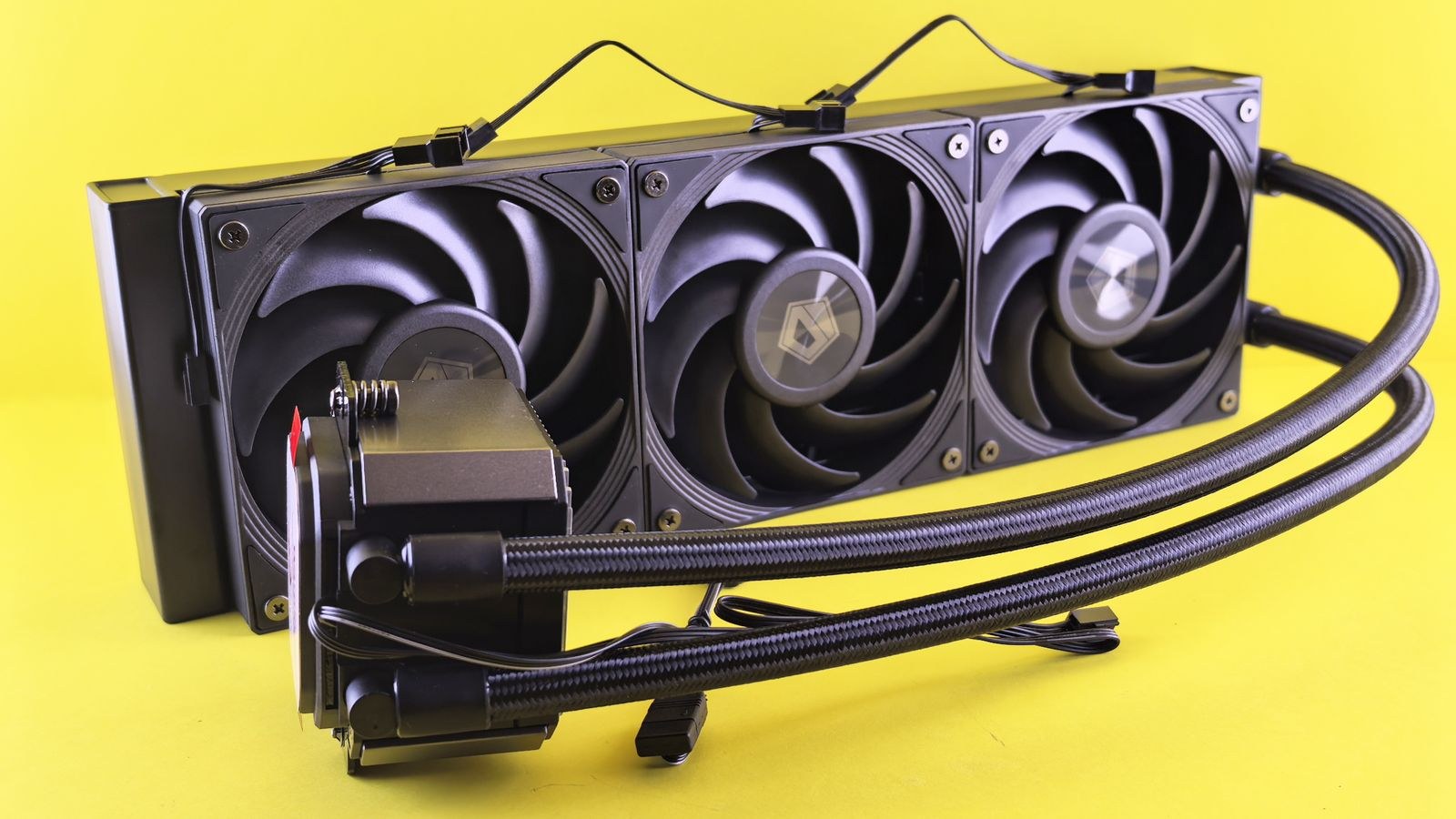
- Fewer, larger fans. Three 140mm fans move the same air as five 120mm fans at lower speed, lower noise, and lower total draw.
- A single high-refresh monitor instead of several. Displays often use more power than people expect, and driving multiple panels also raises the graphics card’s idle clocks.
Safety Notes When Tuning
- Change one setting at a time and test properly. Stacking three changes at once makes an instability impossible to trace.
- Undervolting too aggressively causes crashes and driver resets rather than damage, but repeated hard crashes risk file system corruption, so save your work.
- Write down the default values before adjusting anything, and learn how to clear the firmware settings on your board in case a change prevents a boot.
- Never open or modify a power supply. It stores dangerous voltage long after being unplugged.
- Do not disable thermal or current protections in tuning software to chase a stable undervolt.
Troubleshooting After Reducing Power
Games crash or the driver resets. The undervolt is too aggressive. Add voltage back in small increments until stability returns, then add one more step for margin.
Performance dropped more than expected. The power limit is set too low, or an in-game setting was reduced further than intended. Restore the limit in stages and identify the point where frame rates recover.
Idle draw did not fall. A background application is preventing deep sleep states. Check what is running at startup and confirm the firmware power-saving options are actually enabled.
The PC will not wake from sleep. Update chipset and graphics drivers, and check the board firmware for a known fix. Sleep issues are almost always driver related rather than caused by the power settings themselves.
Mistakes That Undo Your Savings
- Chasing peak wattage while ignoring idle hours. Idle draw multiplied by hundreds of hours a month usually outweighs gaming peaks.
- Leaving frame rates uncapped. Free performance headroom converted directly into heat and noise.
- Buying a far oversized power supply. It pushes the unit into its least efficient operating region.
- Using a high-performance power plan permanently. The gain is negligible for gaming and the idle cost is constant.
- Forgetting the monitor and peripherals. They are part of the wall reading too, and screens left on overnight add up quickly.
Frequently Asked Questions
Does undervolting reduce performance?
Usually very little. A well-tuned undervolt holds the same clock speeds at lower voltage, so frame rates stay effectively unchanged while power and temperature fall. Performance only drops if you undervolt so far that the card must reduce its clocks to stay stable.
Is it better to sleep the PC or shut it down?
Sleep draws only a few watts and resumes in seconds, which suits daily use. A full shutdown is marginally lower still and is worth doing when the machine will sit unused for several days. Either is vastly better than leaving it idling.
How much can I realistically save?
A frame cap, a sensible power plan, a modest undervolt, and proper sleep settings commonly cut total consumption by 20 to 35 percent for a typical gaming system, without any noticeable loss of experience. Swapping to a high-efficiency power supply adds a further few percent on top.
Do efficiency ratings matter at low load?
Yes, and arguably more than at full load. Higher-tier units hold their efficiency much better at the 10 to 20 percent loads where desktop machines spend most of their time, which is exactly where cheaper units perform worst.
Final Thoughts
Reducing power consumption is not about accepting a slower PC. It is about removing the waste that sits between what your hardware draws and what you actually see on screen. Measure a real baseline, fix idle behaviour, cap frames to your display, then undervolt or power-limit the two big consumers. Once the software side is tuned, an efficient power supply and a modern, efficient graphics card lock in the savings for the life of the build. The result is a machine that costs less to run, heats the room less, and runs noticeably quieter while playing the same games at the same settings.