Owen Bradley
 Almost every display ships with a stand in the box, so the question of monitor arm vs monitor stand rarely comes up until something starts to bother you. Maybe your neck aches because the screen sits too low, or a second display has arrived and the desk suddenly feels tiny. Whatever pushed you here, the choice is less about which product is objectively better and more about which one solves the problem you actually have. This guide walks through how the two mounting approaches differ, what your desk top can physically support, how much height range each option really gives you, and where the money goes. By the end of it you should be able to decide in a few minutes rather than spending a week reading spec tables in 2026.

What Each Option Actually Is
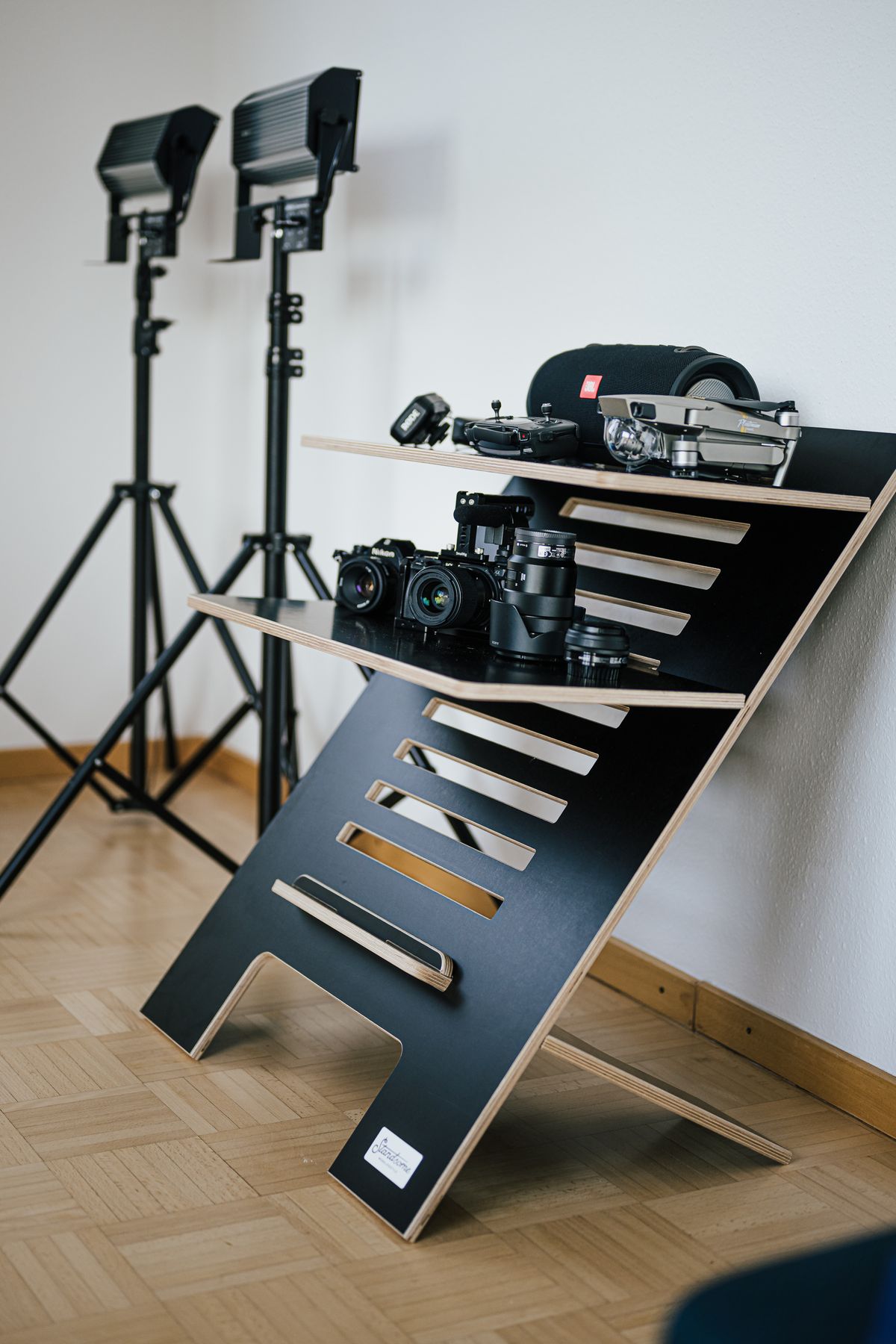
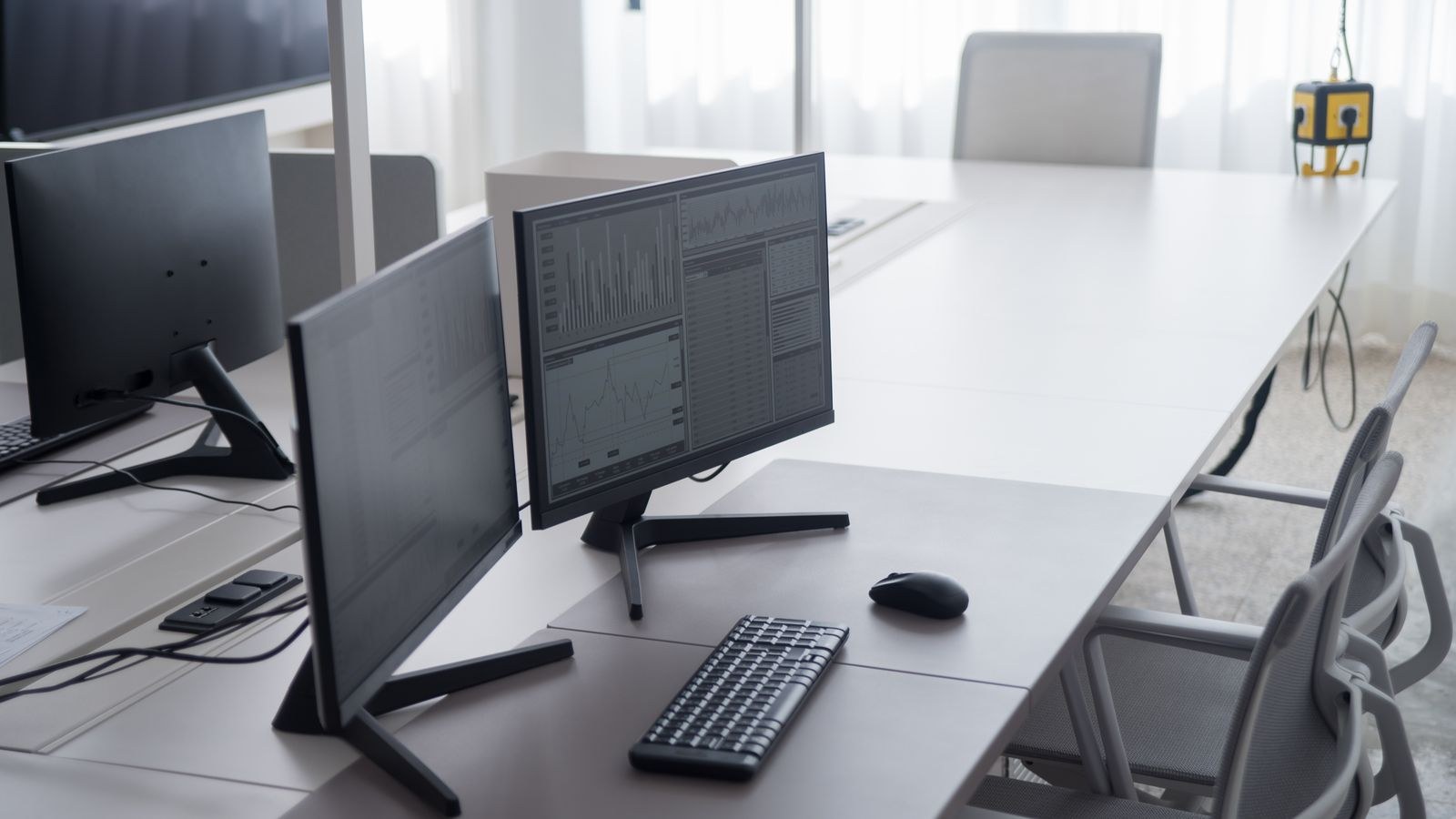
A monitor stand sits on the desk surface and supports the screen from underneath. That covers the factory stand your display came with, aftermarket pedestal stands, and riser style stands that lift the panel while creating a shelf below. Nothing attaches to the desk itself, so the whole assembly can be picked up and moved with one hand. Weight is transferred straight down into the desk top.
A monitor arm attaches to the edge of the desk with a clamp or passes through a grommet hole, then holds the panel out on a jointed arm. The screen floats above the desk with nothing touching the surface beneath it. Most arms use a gas spring or a tensioned mechanical spring so the display stays wherever you push it, which is what people mean when they say an arm is easy to reposition.
Both attach to the back of the display through the same VESA pattern, usually 75x75mm or 100x100mm on desktop panels. If your monitor has no VESA holes, and some slim consumer models genuinely do not, an arm is off the table unless you buy an adapter bracket sized for that specific chassis.
Desk Space Is the Deciding Factor for Most People
The clearest practical difference is footprint. A typical factory stand eats a wedge of desk roughly the depth of a keyboard, and a riser style stand claims even more. An arm claims nothing but the strip of desk edge where the clamp bites down, usually a few inches wide.
On a deep desk, say 30 inches front to back, that reclaimed space is a nice bonus but not urgent. On a shallow 22 or 24 inch desk it changes how the whole workspace feels, because the base of a stand forces the panel forward and squeezes your keyboard toward the front edge. The gain compounds with a second screen. Two factory stands on a shallow desk leave almost no usable surface, which is why dual setups drive so much arm adoption. If you would rather solve the problem by starting with more surface area, our roundup of the best desks for dual monitor gaming covers tops wide and deep enough to run two panels on their factory stands without crowding.
Do Not Forget Depth Behind the Screen
Arms need clearance behind the desk that people forget to measure. A gas spring arm can push a display several inches back from the clamp point, and it also needs room to swing without hitting a wall. If your desk is pushed flat against drywall you may lose part of the arm’s travel. Stands have the opposite issue, since they need clearance in front rather than behind.
Height Adjustment and Ergonomic Range
Ergonomics guidance is consistent on this point. The top of the screen should sit roughly at or slightly below eye level, with the panel about an arm’s length away and tilted back a few degrees. Meeting that target depends entirely on your height, your chair, and your desk height, and the range each mounting option offers varies enormously.
Factory stands are the weakest here. Budget displays often provide tilt only, with zero height travel, which leaves taller users looking down all day. Better factory stands offer 100 to 150mm of height adjustment plus swivel and pivot, which is enough for most people sitting at a standard 29 inch desk.
Arms typically offer 300 to 400mm of vertical travel plus tilt, swivel, pan, and full portrait rotation. That extra range matters most in three situations: you are unusually tall or short, you share the desk with someone of a different height, or you move between sitting and standing. Riser stands, by contrast, are fixed height by design and only work if the exact lift they provide happens to be correct for you.
Standing Desks Change the Math
On a height adjustable desk the whole work surface rises together, so a plain stand keeps the screen at the same relative height whether you sit or stand. That is often good enough. The complication is that your standing posture is usually a little more upright than your seated one, so many people want the panel a touch higher when standing. An arm lets you nudge it in a second. There is also a mechanical concern, since a clamped arm adds leverage to a moving desk top and can amplify wobble on a lighter frame. Our walkthrough on how to mount a monitor arm on a standing desk covers clamping to thin tops and keeping the whole assembly stable through travel.
Can Your Desk Take a Clamp?
This is where arm plans most often fall apart, and it is worth checking before anything else.
- Thickness. Most clamps accept tops between 10mm and 60mm. Very thin tops need a spacer, very thick butcher block may need a grommet mount instead.
- Hollow core tops. Many inexpensive desks use a honeycomb cardboard core with thin laminate skins. A clamp can crush or dimple these under spring tension. A wide steel backing plate spreads the load and usually saves the top.
- Glass tops. Treat these as clamp hostile unless the manufacturer explicitly approves it. Point loading tempered glass risks a sudden shatter.
- Overhanging or bullnose edges. Clamps want a flat parallel edge. A rounded or lipped edge may prevent a secure bite.
- Rear obstructions. Cross braces, cable trays, and rear aprons frequently sit exactly where the clamp needs to go.
If any of these apply, a stand is the low risk answer. Some desks sidestep the whole problem by shipping with an integrated raised platform, and our list of the best desks with a monitor stand shows what that built in approach looks like in practice.
Weight Limits and Screen Size
Arms are rated for a weight range, not just a maximum, and the low end matters as much as the high end. A gas spring tuned for a 9 to 20 pound load will drift upward if you hang a 6 pound panel on it, because the spring cannot be de-tensioned far enough. Weigh your display without its factory stand, since the stand is often a third of the shipping weight.
Screen size limits are about torque rather than mass. A 34 inch ultrawide weighing 15 pounds puts far more twisting force on the joint than a 24 inch panel at the same weight, simply because the mass sits further out. Respect the stated diagonal limit even when you are under the weight limit. Curved ultrawides and 32 inch and larger panels generally want a heavy duty arm, and dual arms should be checked for a per screen rating rather than a combined figure.
Cost, Assembly and Long Term Value
The factory stand is free, which is a genuine advantage that gets underrated. A decent single arm runs roughly $80 to $180, a dual arm $120 to $250, and heavy duty ultrawide models more. Aftermarket pedestal stands and risers sit around $25 to $70. Cheap arms under $40 exist and are usually a false economy, since weak springs sag within months and thin steel columns flex when you type.
Assembly is another quiet difference. A stand clicks on in about a minute. An arm takes fifteen to thirty minutes, involves reading the manual for spring tension adjustment, and often requires routing cables through internal channels. That channel routing is a real perk once done, because it hides the mess a stand leaves visible. If a tidier desk is your underlying goal, a mounting solution paired with a well chosen surface goes further than either alone, and our guide to the best computer desks is a sensible starting point.
A Quick Decision Checklist
- Does your display have VESA holes? No means stand.
- Is the desk glass, hollow core, or oddly edged? Probably stand, or use a grommet mount.
- Are you running two or more screens on a shallow desk? Strongly favor an arm.
- Is the factory stand already putting the screen at eye level? Keep it and spend the money elsewhere.
- Do you rotate a screen to portrait, share the desk, or move between sit and stand? Favor an arm.
- Do you just want a shelf under the screen for a keyboard? A riser stand does that for a fraction of the cost.
Where Each Option Wins Outright
Choose a monitor arm when desk real estate is scarce, when you need genuine height range, when you want portrait rotation, when two or more panels must be aligned edge to edge, or when you frequently pull the screen closer for detail work and push it back afterwards. Arms also make the desk far easier to clean, since nothing sits on the surface.
Choose a monitor stand when your factory stand already hits the right height, when the desk cannot safely take a clamp, when you move or rearrange often, when the display is unusually heavy or oversized for consumer arms, or when budget is the binding constraint. Gaming setups in particular often do fine on stands because panels sit at fixed positions, and our picks for the best monitor stands and desks for gaming cover risers that add storage while lifting the screen.
Common Mistakes to Avoid
- Buying an arm before measuring the desk edge. Five minutes with a tape measure prevents most returns.
- Ignoring the minimum weight rating. A too light panel on a strong spring floats upward on its own.
- Mounting the screen too high. Arms make it easy to overshoot, and looking upward strains the neck more than looking slightly down.
- Skipping the backing plate. On laminate tops it is the difference between a clean install and a permanent dent.
- Forgetting cable slack. An arm moves, and a taut cable will unplug itself or damage the port.
Frequently Asked Questions
Is a monitor arm worth it for a single screen?
Yes, if your factory stand lacks height adjustment or your desk is shallow. If your stand already puts the top of the panel at eye level and you have surface to spare, the upgrade is mostly cosmetic.
Will a clamp damage my desk?
On solid wood, plywood, or thick laminate over particleboard, a properly installed clamp with the supplied backing plate leaves no lasting mark. Hollow core and veneer over soft substrate can dimple, so spread the load and avoid overtightening.
Grommet mount or clamp mount?
Clamp if you have a clear flat edge, because it needs no drilling. Grommet if your desk already has a cable hole, if the edge is obstructed, or if the top is too thick for the clamp jaw. Grommet mounts are also more stable on desks that move.
Can I use an arm with a laptop?
Only with a VESA laptop tray accessory, which bolts to the arm and holds the machine like a shelf. Check the combined weight against the arm rating before buying.
Do arms cause more screen wobble?
A quality arm on a solid desk is stable. Wobble usually comes from a flexing desk top, a loose clamp, or an undersized arm.
Final Thoughts
The monitor arm vs monitor stand debate has no universal winner, only a better fit for your desk, your display, and your body. Arms buy you space and adjustability at the cost of money, installation time, and compatibility homework. Stands buy you simplicity and zero risk at the cost of desk area and, on cheaper displays, ergonomic range. Start from the problem rather than the product. Measure your desk edge and thickness, weigh the panel without its stand, and sit down to see where the screen currently lands relative to your eyes. That five minute audit answers the question more reliably than any spec comparison, and it stops you paying for adjustability you were never going to use.