Owen Bradley
 Shop for a home surveillance system and you will meet two three-letter acronyms within about thirty seconds: NVR and DVR. Both are recorders, both sit in a cupboard with a hard drive inside, and both let you scroll back through last night’s footage. Yet buying the wrong one can strand you with cameras that will not connect, resolution you cannot use, or a system that cannot grow. The difference comes down to what kind of camera signal each device expects and what that signal can carry. This guide explains NVR versus DVR in plain terms so you can match the recorder to the cameras you have, or the cameras you intend to buy in 2026.
The Core Difference in One Sentence
A DVR records analogue cameras over coaxial cable and digitises the video inside the recorder, while an NVR records network cameras that have already digitised the video themselves and send it as data over Ethernet. Everything else that separates the two platforms flows from that single distinction.
Because a DVR does the encoding, the camera is a relatively simple device: a lens, a sensor, and a transmitter that sends a raw video signal down the cable. Because an NVR receives finished streams, the intelligence lives in the camera, which handles compression, motion analysis, and often audio and analytics before anything reaches the recorder. That architectural difference explains the cabling, the resolution ceilings, the audio support, and the upgrade paths described below.
Cabling: Coax Versus Ethernet
DVR systems use coaxial cable, typically RG59, with a separate low-voltage power cable running alongside it to each camera. Many kits use a combined siamese cable that bundles both. Coax is thick, awkward around tight corners, and cannot be terminated with the crimp tools most households own, but it is extremely forgiving over long distances and tolerates electrical noise well.
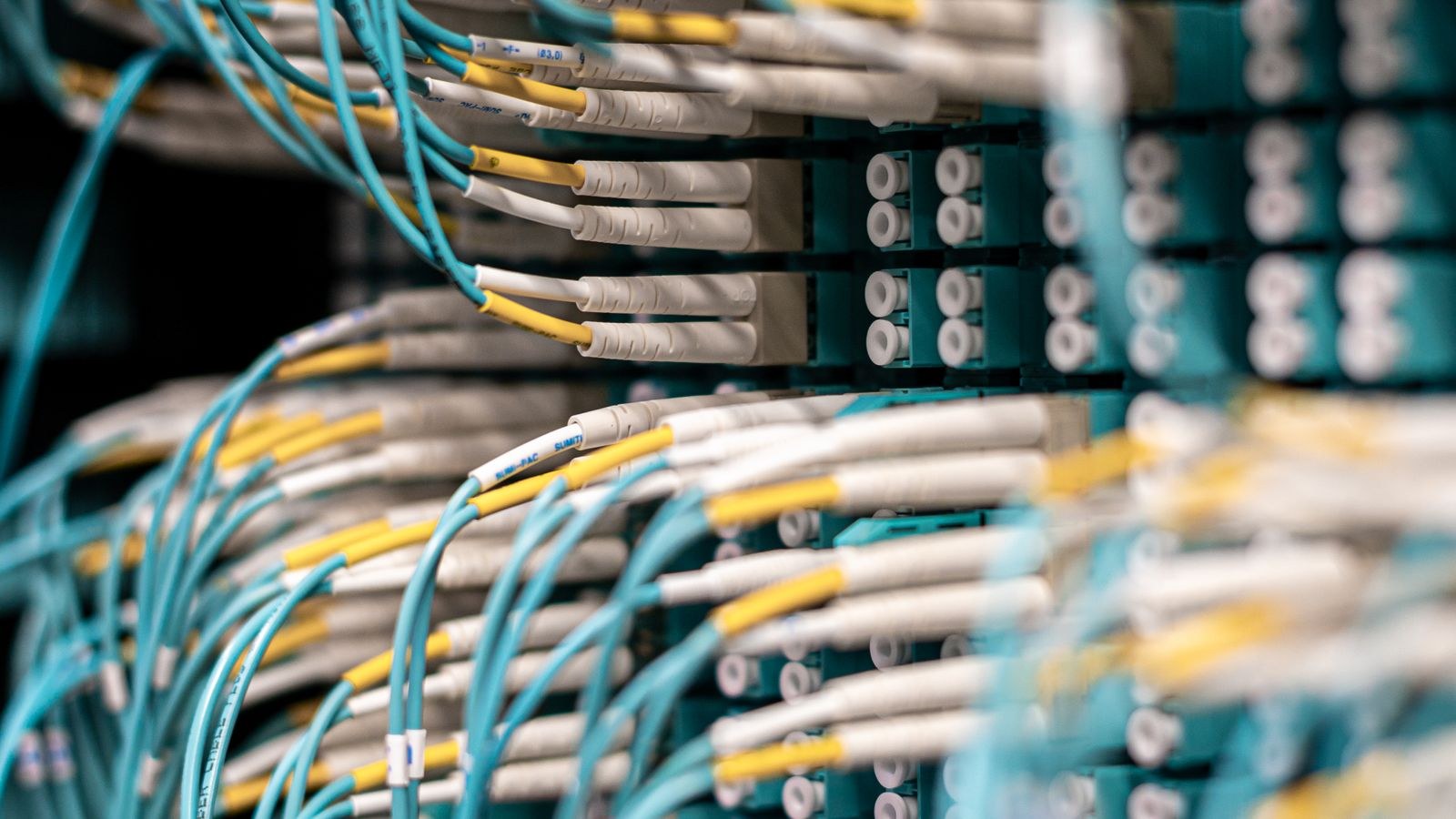
NVR systems use Cat5e or Cat6 Ethernet. A single run carries both the video data and, with Power over Ethernet, the camera’s power supply, so there is no second cable to pull. Ethernet is thinner, cheaper per metre, easier to terminate, and far easier to route through a loft or wall cavity. Its practical limit is around 100 metres per run before you need a switch or extender, whereas coax comfortably reaches several hundred metres.
What If Coax Is Already Installed?
This is the single most important question for anyone replacing an older system. If your property already has coaxial runs to every camera position, replacing them with Ethernet means opening walls and ceilings, which can easily cost more than the recorder itself. In that case an HD-over-coax DVR is the sensible choice, because modern analogue formats push high-definition video down the cable you already own. Our overview of the best CCTV camera systems covers kits designed exactly for that scenario.
There is also a middle path. Ethernet-over-coax adapters let an IP camera and NVR communicate across existing coaxial runs, converting the signal at each end. It works, it saves the rewiring, and it adds a small point of failure at every camera. For a handful of hard-to-reach positions it is a reasonable compromise; for an entire property it is usually cleaner to stay analogue or bite the bullet and rewire.
Resolution and Image Quality Limits
Older analogue DVRs topped out at standard definition, which is where the reputation for grainy, unusable footage came from. Modern HD analogue formats such as HD-TVI, HD-CVI, and AHD changed that considerably, delivering 1080p, 5MP, and in some cases 4K over coax. If you buy a current-generation DVR, the gap in raw resolution is much smaller than internet folklore suggests.
NVR systems still hold the ceiling, though. Because the camera encodes the stream itself, resolution is limited only by the sensor and available bandwidth, so 4K, 8MP, and higher are routine. Network cameras also tend to receive better image processing, wide dynamic range, and low-light handling, because the manufacturer can put more computing power inside the camera housing. If sharpness matters more than reusing existing cable, browse the best IP security cameras to see what current network models achieve.
Compression Efficiency Matters as Much as Megapixels
A 4K camera using efficient H.265 encoding can consume less storage than a 5MP camera stuck on older H.264, so check the codec before comparing recorders on resolution alone. Compression efficiency directly determines how many days of footage a given drive holds, and it is one of the areas where network cameras have advanced fastest. Whichever platform you choose, confirm the recorder supports the same codec the cameras output, or it will transcode and waste processing headroom.

Audio Support and Extra Features
Audio is a quiet but real differentiator. Traditional coaxial cable carries video only, so an analogue camera needs a separate audio cable back to the DVR, and only some DVR models offer enough audio inputs. Newer HD analogue standards can embed audio in the coax signal, but support varies by format and by camera, so it must be verified rather than assumed.
Network cameras carry audio inside the same data stream as a matter of course, and two-way audio with a built-in speaker is common. That makes NVR systems the natural choice if you want to speak to a delivery driver or challenge someone in the driveway. Network cameras also expose far more configuration over the network, including detailed motion zones, line-crossing detection, person and vehicle classification, and direct integration with smart home platforms.
Analytics and False Alarms
Anyone who has been woken by a motion alert for a moth knows why analytics matter. Basic pixel-change motion detection triggers on rain, headlights, spiders, and swaying branches. Object classification, which distinguishes a person from a cat, cuts nuisance alerts dramatically. This processing usually runs on the camera, so it is more widely available on network cameras, though some DVRs now perform analysis on the recorder side for analogue inputs. Ask specifically how a system handles false alarms before buying, because it affects daily satisfaction more than resolution does.
Cost, Channels, and Storage
DVR systems are generally cheaper per channel. Analogue cameras cost less to make, and complete eight-channel kits with cameras, cable, and a drive are widely available at prices that undercut comparable network bundles. That value is real and is why analogue remains popular for large camera counts on a budget.
NVR systems cost more up front but consolidate wiring, power, and expansion into one infrastructure. A PoE NVR powers its cameras directly, removing a dozen plug adapters, and adding a camera later is a matter of plugging into a spare port. Compare complete packages rather than components; our roundup of the best home CCTV systems lines up kits from both camps so the per-channel maths is easier to see.
Sizing the Hard Drive
Storage is the most commonly underspecified part of a recorder. As a rough planning figure, one 1080p camera recording continuously with H.265 uses roughly 15 to 25GB per day, and a 4K camera can use three to four times that. Motion-only recording cuts these numbers substantially but leaves gaps in the timeline. Decide how many days of retention you want, multiply, and buy a surveillance-rated drive designed for constant writing rather than a desktop drive that expects idle time. Understanding how the recorder fits alongside cameras, power supplies, and cabling is easier with a full breakdown of home CCTV system components.
Upgrade Paths and Future Proofing
A pure DVR is limited to analogue inputs, so growth means adding analogue cameras. That is fine if the system meets your needs, but it constrains you if you later want a 4K doorbell-style camera or a smart-home integration. Hybrid recorders solve much of this: they accept both coaxial analogue inputs and network cameras on the same box, which lets you keep existing coax runs while adding IP cameras where new cabling is easy. For a house being upgraded in stages, a hybrid is frequently the smartest purchase.
NVR systems expand more freely. Extra cameras can join over the network through a switch even if the recorder’s own PoE ports are full, and mixing camera models from the same ecosystem is straightforward. The constraint is the recorder’s total decoding throughput, quoted in megabits per second, which caps how many high-resolution streams it can handle at once. Check that figure rather than the channel count alone, because a sixteen-channel NVR may not sustain sixteen 4K streams.
Which One Should You Buy?
- Buy a DVR if coaxial cable is already run, if you need many channels on a tight budget, or if runs exceed what Ethernet handles without extra switches.
- Buy an NVR if you are wiring from scratch, want maximum resolution, need built-in audio and smart detection, or plan to integrate with a broader smart home.
- Buy a hybrid if you are modernising an existing analogue system in stages and want to add network cameras without abandoning the old runs.
Whichever direction you choose, look at complete, matched packages first. Mismatched cameras and recorders cause more setup headaches than any other single factor, and curated bundles in our guide to the best CCTV systems remove most of that compatibility risk for a first build.
Common Mistakes to Avoid
The most expensive mistake is buying cameras and a recorder from different standards and discovering they will not talk. Analogue formats are not universally interchangeable, and even ONVIF-compliant network cameras sometimes lose advanced features when paired with another brand’s NVR. Confirm compatibility explicitly, in writing, before ordering.
The second mistake is ignoring the power supply. Analogue kits ship with a multi-output power box that must supply enough current for every camera plus infrared illuminators at night, and undersized supplies produce mysterious night-time dropouts. On PoE systems the equivalent error is exceeding the recorder’s total power budget.
Third, many buyers plan the recorder and forget the network. An NVR that streams to a phone over the internet needs upload bandwidth and sensible remote-access configuration, and leaving ports forwarded to the internet without a strong password is how home cameras end up on public streaming sites. Use the manufacturer’s secure relay service or a VPN instead of opening ports. Finally, do not skimp on retention. Discovering a break-in three days after it happened is common, and a system that only holds two days of video is a system that fails when you need it.
Frequently Asked Questions
Can I connect IP cameras to a DVR?
Not to a pure analogue DVR. Many hybrid recorders accept a limited number of network cameras alongside coaxial inputs, so check the specification sheet for how many IP channels are supported.
Is an NVR always better quality than a DVR?
Not automatically. A modern 4K HD analogue camera on a good DVR beats an entry-level 1080p network camera. Network systems have a higher ceiling, but the specific camera matters more than the platform label.
Do I need internet for either system to record?
No. Both record locally to their internal drive whether or not the internet is working. An internet connection is only needed for remote viewing, notifications, and cloud backup.
How many cameras can one recorder handle?
Channel count sets the maximum, but the real limit is the recorder’s decoding bandwidth and drive capacity. Match total stream bitrate against the quoted throughput before filling every channel with high-resolution cameras.
Can I reuse my old analogue cameras with a new recorder?
Usually yes with a compatible DVR, though old standard-definition cameras will still produce standard-definition footage. Upgrading the cameras is what improves image quality; the recorder simply needs to support the format.
Final Thoughts
Choosing between an NVR and a DVR is really a question about cable, not about which technology sounds more modern. If coaxial runs already exist, a current-generation HD analogue DVR delivers strong image quality without tearing the house apart, and it does so at an attractive price per channel. If you are starting fresh, the single-cable simplicity, higher resolution ceiling, built-in audio, and smarter detection of a network system justify the extra spend and will age better. Hybrids exist precisely because most homes sit between those two positions. Work out your cable situation first, size the drive for the retention you actually want, verify camera compatibility before you order, and the recorder decision becomes straightforward rather than confusing.