
 Owen Bradley
 Indoor air is the one thing you consume constantly and almost never measure. You can see when a room is untidy and feel when it is cold, but the particles from cooking, the solvent fumes from new furniture, and the carbon dioxide building up behind a closed bedroom door are all invisible. An indoor air quality monitor turns those invisible problems into numbers you can act on. The catch is that monitors vary enormously in what they actually sense, how honestly they report it, and whether the readings mean anything at all. This guide explains which sensors are worth paying for, how to interpret PM2.5, VOC and CO2 readings without panicking at every spike, and how to turn data into changes that genuinely improve the air you breathe.
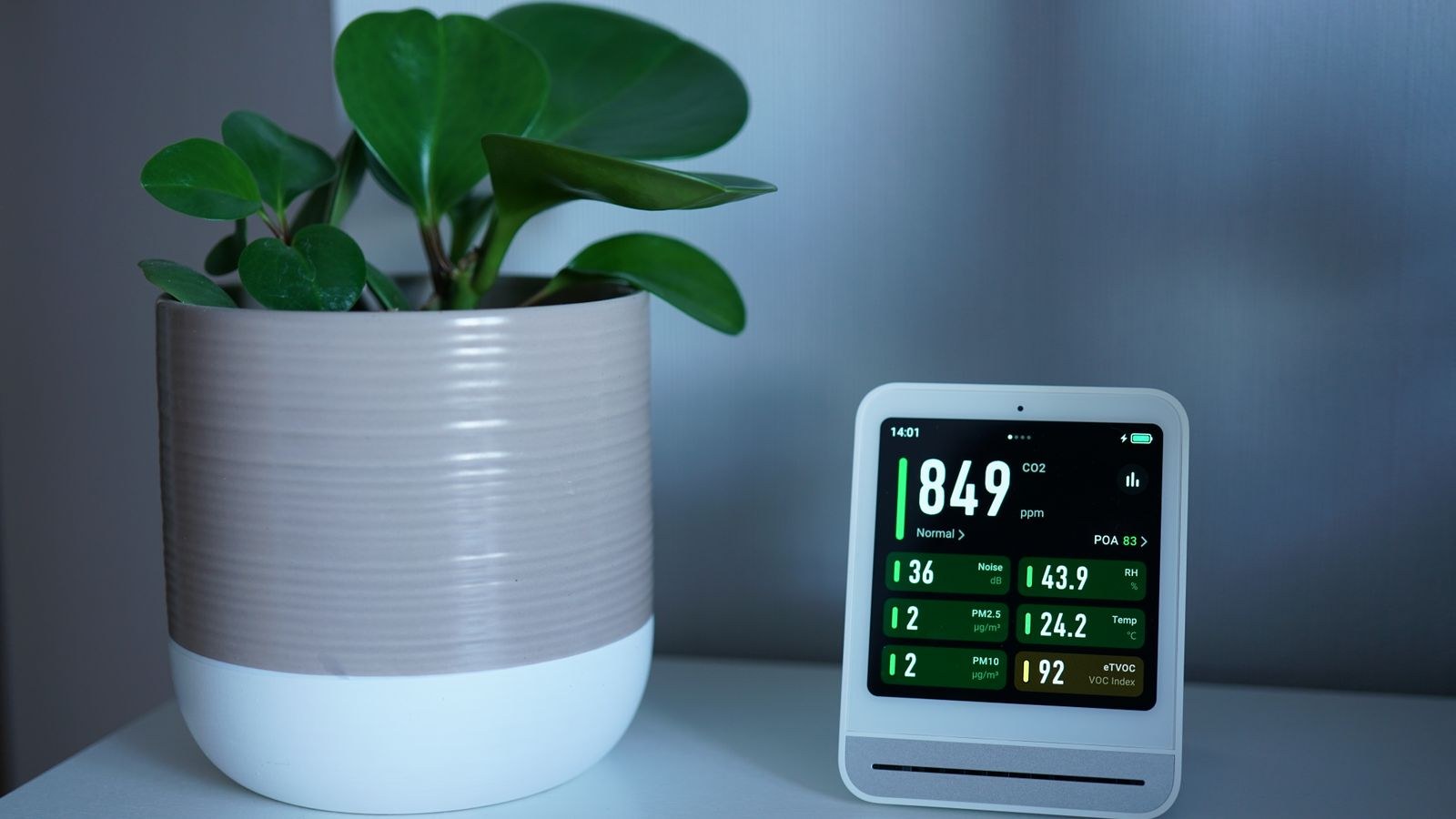
What a Monitor Can and Cannot Tell You
A monitor is a diagnostic instrument, not a treatment. It will not clean anything. Its value is that it tells you when a problem exists, where it comes from, and whether whatever you did about it worked. That last function matters most. Without measurement you are guessing whether opening a window helped, whether the purifier is sized correctly, or whether that smell in the spare room is harmless.
What a monitor cannot do is identify every hazard. Consumer units do not detect radon, mould spores, carbon monoxide unless they explicitly include a dedicated sensor, or specific chemical species. Treat a monitor as a general early warning system, and use dedicated alarms for life-safety gases.
PM2.5 and the Particle Sensors
PM2.5 refers to particulate matter smaller than 2.5 microns across, which is fine enough to travel deep into the lungs. Indoors, the biggest sources are cooking, especially frying and searing, candles and incense, wood stoves and fireplaces, vacuuming without a sealed filter, and outdoor air drawn in during pollution or wildfire events.
Readings are given in micrograms per cubic metre. As a working scale, under 12 is clean air, 12 to 35 is moderate and worth investigating if it persists, 35 to 55 is unhealthy for sensitive groups, and anything above that warrants immediate action. What matters more than any single number is duration. A brief spike to 90 while searing a steak is normal and clears in twenty minutes with the extractor on. A steady reading of 30 all day means you have a continuous source you have not found.
How Consumer Particle Sensors Work
Almost all affordable monitors use a laser scattering sensor. A small fan draws air past a laser beam, and a photodiode measures the light scattered by passing particles, from which the device estimates size and count. This approach is genuinely useful but has limits. It infers mass from optical size rather than weighing anything, high humidity makes particles swell and inflate readings, and the internal fan means the sensor is a moving part that will eventually accumulate dust.
The practical implication is to trust trends over absolutes. If your monitor reads 8 in clean conditions and 45 while cooking, the relationship between those numbers is reliable even if neither is laboratory-accurate. Comparing your reading against a neighbour’s different model is far less meaningful.
VOC Sensors and What They Are Really Measuring
Volatile organic compounds are gases released by paints, adhesives, new carpet and furniture, cleaning products, air fresheners, cosmetics, and printers. Some are harmless, some are irritants, and a few are genuinely worth avoiding. The problem is that consumer VOC sensors, almost always metal oxide types, cannot distinguish between them.
What these sensors actually report is a total VOC index, usually as a relative scale rather than a concentration. The device learns your home’s typical baseline over days or weeks and then reports deviations from it. That makes them excellent at answering “did something change?” and poor at answering “is this dangerous?”. A sharp VOC rise after you spray a cleaner or open a tin of paint is the sensor working correctly. A slow, unexplained climb over weeks in a room with new furnishings is the signal worth chasing, because it usually means off-gassing that ventilation will fix.
CO2: The Most Underrated Reading
Carbon dioxide is not toxic at indoor levels, which is why people dismiss it. Its real value is as a proxy for ventilation. Because people exhale it continuously, the CO2 level in a room tells you almost exactly how much fresh air is being exchanged relative to how many people are in it.
Outdoor air sits around 420 parts per million. A well-ventilated indoor room stays under 800. Between 800 and 1,000 ventilation is becoming marginal. Above 1,000 most people begin reporting stuffiness and reduced concentration, and studies on cognitive performance show measurable declines in decision-making tasks at sustained high levels. A closed bedroom with two sleepers can exceed 2,000 by morning, which is a common and overlooked reason for waking up groggy.
Insist on a True NDIR Sensor
This is the single biggest specification trap in the category. Genuine CO2 measurement uses NDIR, or non-dispersive infrared, which detects how much infrared light carbon dioxide absorbs. It measures CO2 directly.
Many cheaper monitors instead advertise “eCO2” or “estimated CO2”. These do not measure carbon dioxide at all. They take the VOC sensor reading and apply an algorithm to guess a CO2 figure, on the assumption that human occupancy raises both together. Open a bottle of solvent near one and the eCO2 number will climb sharply even though no carbon dioxide has been produced. If ventilation is your reason for buying, verify the letters NDIR appear in the specification before you order.
Humidity and Temperature
Every monitor includes these, and they are more consequential than their ubiquity suggests. The comfortable and healthy band is 40 to 60 percent relative humidity. Below 30 percent, airways dry out, static builds, and wood furniture and flooring can shrink and crack. Above 60 percent, dust mites thrive and mould gains a foothold on cool surfaces such as window reveals and exterior wall corners.
Humidity also distorts other readings. Particle sensors overestimate PM2.5 in damp air because water clings to particles and makes them optically larger, so a monitor showing both a high humidity and a moderately elevated PM2.5 may be exaggerating the second. If your readings sit persistently above 60 percent, addressing the moisture with one of the best dehumidifiers for home use will often improve the particle picture as a side effect.
Choosing the Right Monitor for Your Situation
Match the sensor set to the question you are trying to answer rather than buying the longest specification list.
- Allergies, pets, or wildfire smoke: prioritise a good laser particle sensor with both PM2.5 and PM10 reporting.
- Stuffy offices, bedrooms, or home study spaces: prioritise NDIR CO2 above everything else.
- New build, recent renovation, or new furniture: prioritise VOC sensing, ideally with a dedicated formaldehyde sensor if the budget allows.
- Damp, condensation, or mould history: accurate humidity plus logging is enough; you do not need a premium unit.
Beyond sensors, look for data logging and a graph history, since a single instantaneous number tells you very little. App connectivity that stores weeks of history is what lets you spot patterns, such as PM2.5 always rising at 7pm because of dinner, or CO2 climbing every night after the bedroom door closes. Battery operation is worth having if you want to carry the unit between rooms to hunt for a source.
Turning Readings Into Action
Data only helps if it changes something. Three responses cover most situations.
- High CO2 means ventilate. No filter removes carbon dioxide. Open a window, crack a bedroom door, or run mechanical ventilation. Ten minutes of cross-ventilation usually resets a room.
- High VOCs means ventilate and remove the source. Identify what changed, air the room out, and consider activated carbon filtration for a persistent source you cannot eliminate.
- High PM2.5 means filter, and control the source. Use the cooker extractor every time you cook, and run a correctly sized purifier. This is the one category where filtration genuinely solves the problem, and models from our list of the best HEPA room air purifiers will pull a spike down within minutes in a suitably sized space.
The most satisfying use of a monitor is verification. Place it near your seating position, note the PM2.5 baseline, then run a purifier on high for thirty minutes and watch the number fall. If it barely moves, the machine is undersized for the room, and stepping up to something matched to your floor area from the best air purifiers for rooms will fix what a filter upgrade alone cannot.

Placement and Calibration
Where you put the monitor changes what it reports. Place it at roughly breathing height, between one and one and a half metres from the floor, in the part of the room you actually occupy. Keep it away from windows, exterior doors, extractor vents, and direct sunlight, all of which produce readings that describe a draught rather than the room. Never place it directly beside a purifier outlet, which will report artificially clean air, or on the hob side of a kitchen, which will report constant alarm.
Many NDIR sensors use automatic baseline calibration, assuming that the lowest reading seen over several days corresponds to outdoor air. This works in a home that gets aired regularly and drifts in one that never does, so open windows periodically even if only for the sensor’s benefit. Wipe dust from the intake vents every few months so the internal fan keeps drawing a clean sample.
Common Mistakes
The first is reacting to every spike. Air quality is inherently variable, and short peaks during cooking, cleaning, or a hot shower are normal. Judge your home on its baseline and on how quickly it recovers, not on its worst instantaneous reading.
The second is buying an eCO2 device expecting real CO2 data, then making ventilation decisions from a number derived from solvent vapour. The third is treating a purifier as the answer to everything; it does nothing for carbon dioxide and only helps with gases if it carries substantial activated carbon. The fourth is placing the monitor somewhere convenient rather than somewhere representative, which produces months of data about a windowsill.
Frequently Asked Questions
Are inexpensive monitors accurate enough to be useful?
For relative trends, yes. A budget laser sensor will reliably show you that frying doubled your particle load and that the extractor cleared it. Do not rely on it for absolute compliance-grade figures.
Does a monitor replace a carbon monoxide alarm?
No, unless it contains a certified CO sensor and is approved as an alarm. Carbon monoxide is a life-safety matter and needs a dedicated, alarmed device.
Why does my PM2.5 rise every morning?
Usually cooking, toasting, or a shower raising humidity. Log a few days and correlate the peaks with your routine; the pattern almost always identifies the source.
Should I keep the monitor in one room permanently?
Start by moving it around for a week to map your home, then settle it in the room where you spend the most time, typically the bedroom or main living area. Households with sensitivities often benefit from a second unit paired with one of the best room air purifiers for allergies in the bedroom.
Final Thoughts
An indoor air quality monitor earns its place by ending guesswork. It shows you which rooms are stuffy, which activities pollute, and whether the equipment you already own is doing its job. Buy for the sensor that answers your actual question, insist on NDIR if carbon dioxide matters to you, place the unit where you breathe, and read the trend rather than the moment.
Once you can see the numbers, the fixes are usually simpler than expected: ventilate more deliberately, use the extractor fan every time, control humidity, and size filtration to the room. If you are pairing a monitor with new filtration this year, our full air purifier buying guide covers the sizing maths in detail, and reading the two together is the fastest route to air you can measure improving in 2026.









