 Owen Bradley
 Most power banks are sold on a single number: capacity. That figure, printed in giant type on the box, tells you far less than it seems. A pack rated at 20,000mAh will not deliver 20,000mAh to your phone, and two packs with identical capacity can charge a laptop at wildly different speeds depending on their output watts and port layout. This power bank buying guide walks through the specs that actually decide whether a battery is useful to you: real usable capacity, output wattage, port selection, charging speed in both directions, and the airline rules that quietly rule out the biggest models. Get those five right and the pack you buy in 2026 will feel like an upgrade rather than a heavy brick living in a drawer.
Start With What You Actually Need to Charge
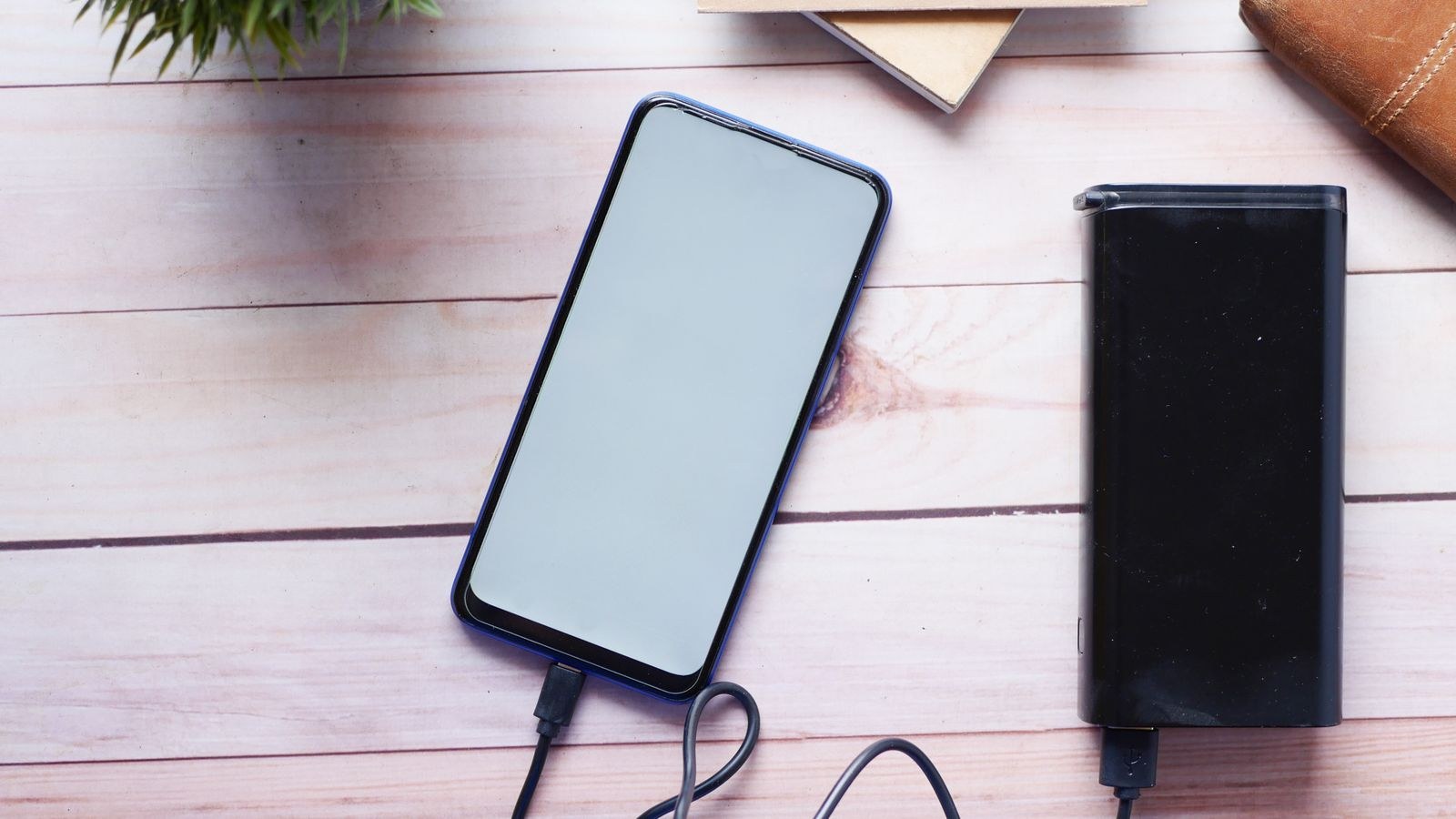
Before comparing models, list the devices that will realistically end up plugged into the pack. A phone, earbuds, and a smartwatch are a completely different job from a tablet, a mirrorless camera, and a USB-C laptop. Small devices need modest wattage and benefit from a pack you barely notice in a pocket. Laptops need high sustained output and a battery large enough to be worth the trip.
A useful shortcut is to check each device’s own charger. If your phone shipped with an 20W adapter, a power bank that outputs at least 20W on one port will charge it at full speed. If your laptop uses a 65W brick, a 30W pack will still charge it, but slowly and possibly only while the lid is closed. Matching the pack’s peak output to your most demanding device is the single decision that prevents disappointment.
How Many Refills Do You Want?
Think in refills rather than milliamp-hours. A typical modern phone battery holds roughly 4,000 to 5,000mAh, so a 10,000mAh pack realistically delivers about one and a half full phone charges after conversion losses. A 20,000mAh pack gets you close to three. A 5,000mAh slim pack is a top-up, not a rescue. Decide whether you need a top-up for a long day, a full spare for a weekend, or a genuine off-grid reserve, then buy the smallest pack that covers it. Extra capacity you never use is just weight.
Why mAh Never Equals Real Delivered Power
The capacity printed on a power bank refers to its internal lithium cells, which typically run at 3.6 or 3.7 volts. Your phone charges over USB at 5V or higher, so the pack must step the voltage up, and that conversion loses energy as heat. Add the overhead of the cable and the phone’s own charging circuit and you land at roughly 60 to 70 percent real-world efficiency for most packs.
That means a 10,000mAh pack delivers something like 6,000 to 7,000mAh of usable charge. Nothing is wrong with the pack; this is physics, and every brand faces it. The more honest specification is watt-hours, usually printed in small type on the underside. Watt-hours describe actual energy stored and are directly comparable between packs, which is why airlines regulate by watt-hours rather than mAh. When two packs claim the same mAh but list different watt-hour figures, trust the watt-hours.
Output Watts: The Spec That Decides Charging Speed
Wattage, not capacity, determines how fast anything charges. Modern USB-C power banks advertise output in watts, and the useful tiers are easy to remember. Around 18W to 20W is enough for fast phone charging. Around 30W handles tablets and small ultrabooks. Around 60W to 65W charges most thin-and-light laptops at close to full speed. Above 100W you are into workstation and gaming laptop territory, where packs get heavy and expensive.
Read the fine print on multi-port models. A pack advertised as 65W often means 65W total across all ports, so plugging in a second device drops the laptop port to 45W or less. Manufacturers publish a power-sharing table for exactly this reason. If you intend to charge a laptop and a phone simultaneously at full speed, you need a pack whose combined output covers both, not one whose headline number is split between them.
Pass-Through and Recharge Speed
Two often-ignored specs matter for daily use. Pass-through charging lets the pack charge your devices while it is itself plugged into the wall, which turns it into a desk hub overnight. Recharge input speed decides how long the pack is out of action. A 20,000mAh pack with a 5W input can take twelve hours or more to refill; the same pack with 60W USB-C input can be full in under two. If you travel on consecutive days, fast input is worth more than extra capacity. Pair a fast pack with a good wall source, whether that is a dedicated brick or one of the best USB-C outlets installed at your desk or bedside.
Ports and Protocols Explained Simply
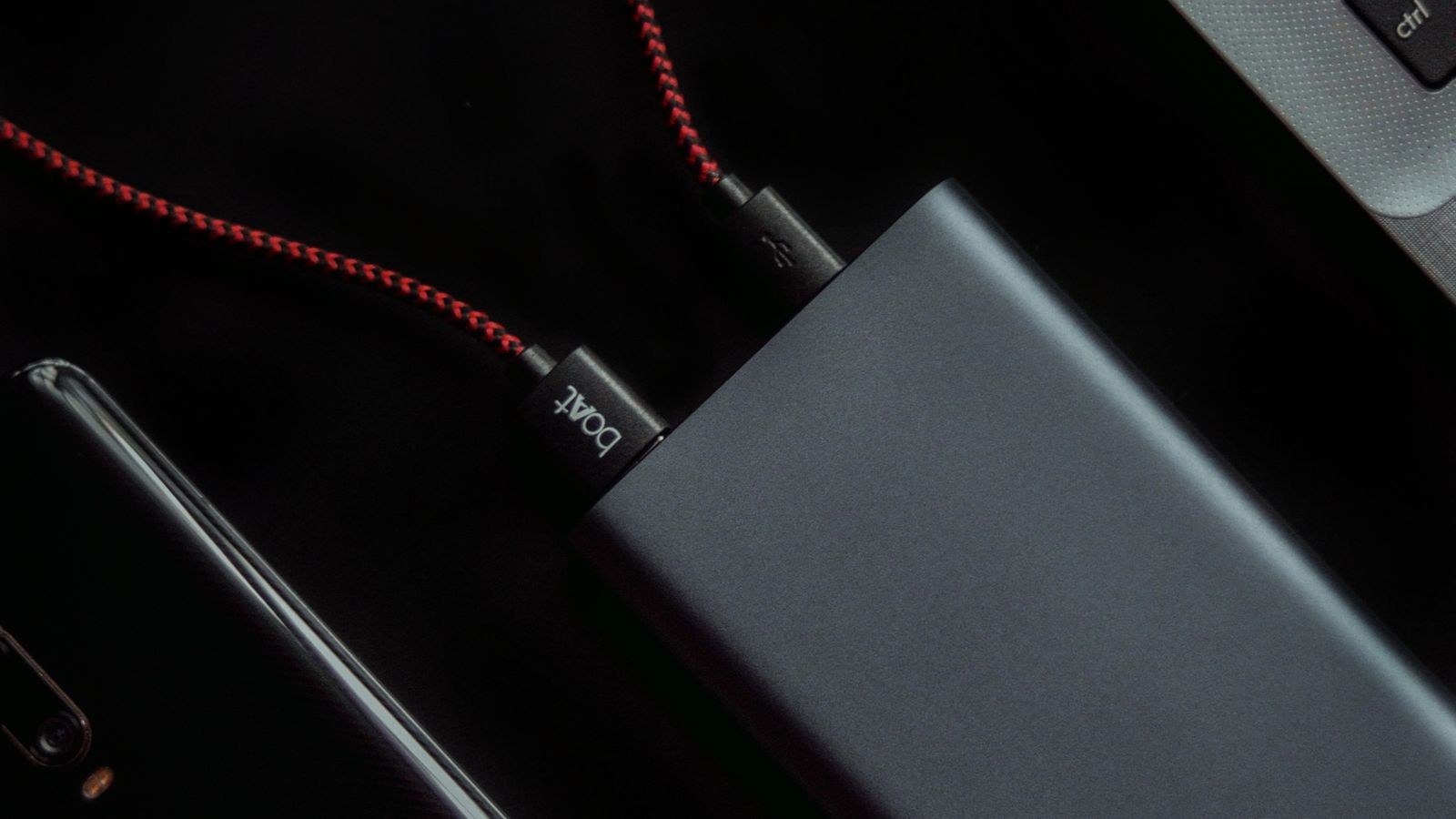
Port selection quietly decides compatibility. USB-C with Power Delivery is the standard worth prioritising, because it is what phones, tablets, laptops, handheld consoles, and most new accessories expect. A pack with at least one USB-C port that both inputs and outputs at high wattage will stay useful for years. USB-A remains handy for older cables, torches, and cheap accessories, but it is capped at lower speeds and is slowly disappearing.
Fast-charging protocols are the negotiation layer. Power Delivery is the universal one; Programmable Power Supply is an extension that fine-tunes voltage for even faster, cooler phone charging. Some brands add proprietary modes that only reach top speed with their own devices. You do not need to memorise the alphabet soup, but you should confirm the pack supports Power Delivery and lists your device’s required wattage rather than only a vendor-specific standard.
Built-in cables are a genuine convenience feature on newer packs, removing the classic failure of carrying a battery with no cord. Just check that the attached cable matches your devices, and that at least one free port remains for everything else. If you are also rethinking how you charge at home, comparing the best USB outlets and reading a focused USB outlet buying guide helps you decide what belongs in the wall versus what you should carry.
Size, Weight, and the Portability Trade-Off
Capacity has a physical cost. Lithium cells are heavy, and every extra 10,000mAh adds roughly 200 grams. A 5,000mAh slim pack disappears in a jacket pocket. A 10,000mAh model is the classic everyday compromise, about the size and weight of a phone. A 20,000mAh pack is a bag item, and anything larger is luggage. Laptop-capable packs also need bigger internals for heat management, so they are denser than the numbers alone suggest.
Be honest about carrying habits. A large pack left at home because it is heavy provides zero charge. Many people are better served by a small daily pack plus a larger one reserved for travel than by a single oversized model that goes everywhere in theory and nowhere in practice.
Airline Rules and Travel Considerations
Lithium batteries must travel in carry-on baggage, never in checked luggage. The widely applied limit is 100 watt-hours per battery without airline approval, which corresponds to roughly 27,000mAh at typical cell voltage. Packs between 100Wh and 160Wh usually require advance airline permission, and anything above 160Wh is generally refused outright. Most airlines also cap the number of spare batteries a passenger may carry.
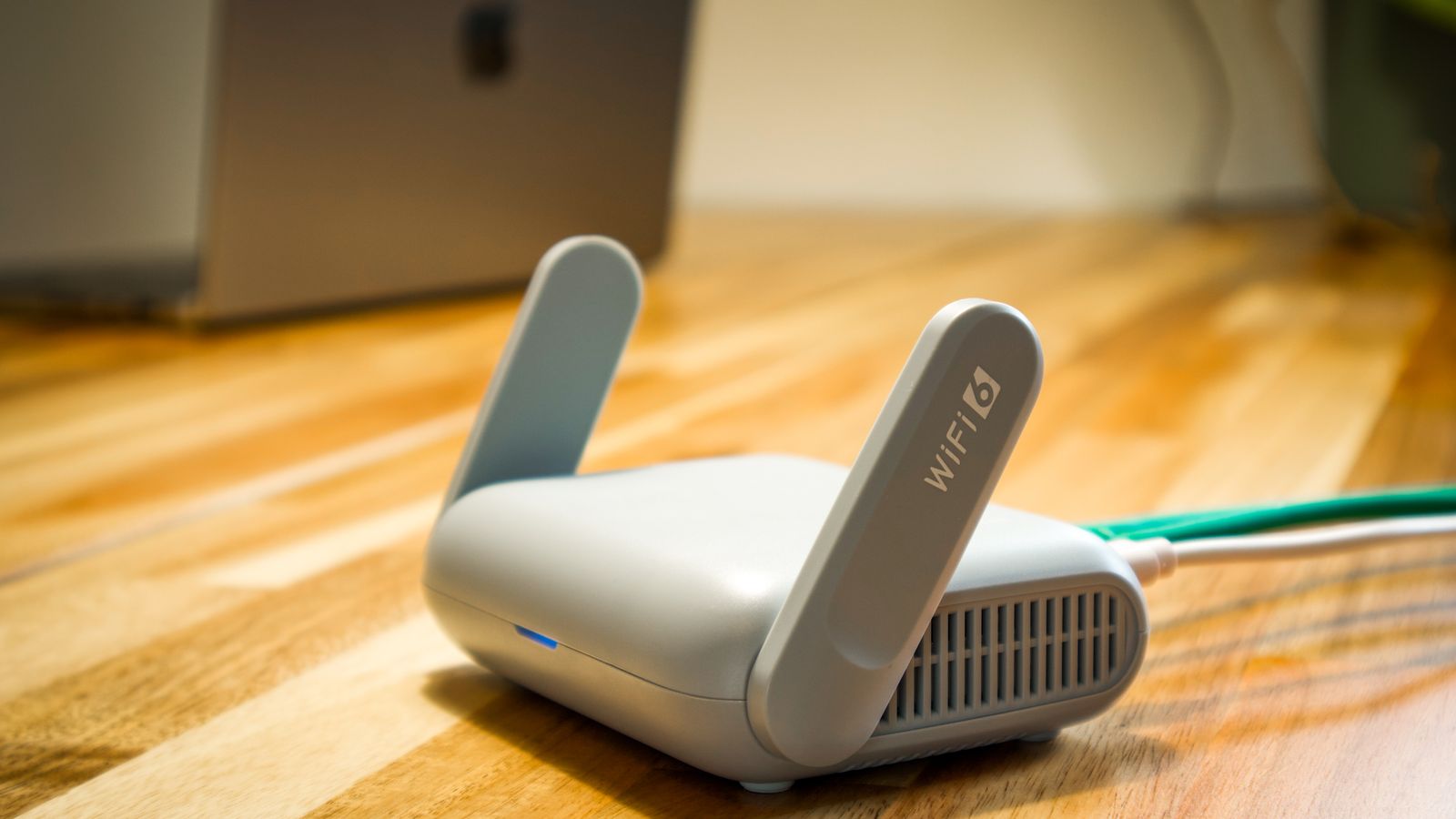
Practically, this means a 20,000mAh pack, around 74Wh, travels without fuss while a 30,000mAh model may not. Choose a pack with the watt-hour rating clearly printed on the case, because security staff check that label rather than doing conversions. Travellers who build a full mobile kit often pair the battery with a compact network device; our roundups of the best travel routers and the best portable routers cover models that run happily from a USB-C power bank in a hotel room.
Safety, Build Quality, and Lifespan
A power bank is a dense lithium battery you carry against your body, so build quality is not a luxury. Look for recognised safety certifications, over-current and over-temperature protection, and a manufacturer that publishes real specifications rather than only marketing figures. Packs that claim implausible capacity at a suspiciously low price are usually padding the number with undersized cells.
Expect roughly 300 to 500 full charge cycles before capacity noticeably fades, which is several years of normal use. Extend that life by avoiding extreme heat, not storing the pack fully empty for months, and keeping it around half charged if it will sit unused. Warm operation during fast charging is normal; a pack that becomes uncomfortably hot, swells, or smells is finished and should be recycled at a proper collection point, never binned.
Budget Tiers and Where the Money Goes
Entry-level packs, usually 5,000mAh to 10,000mAh with modest 18W output, cover phone top-ups cheaply and are ideal as a second pack for a bag you rarely empty. The mid tier adds 20,000mAh capacity, 30W to 65W USB-C output, fast recharging, and better cells, and is where most buyers find the best value because it covers phones, tablets, and light laptops in one device.
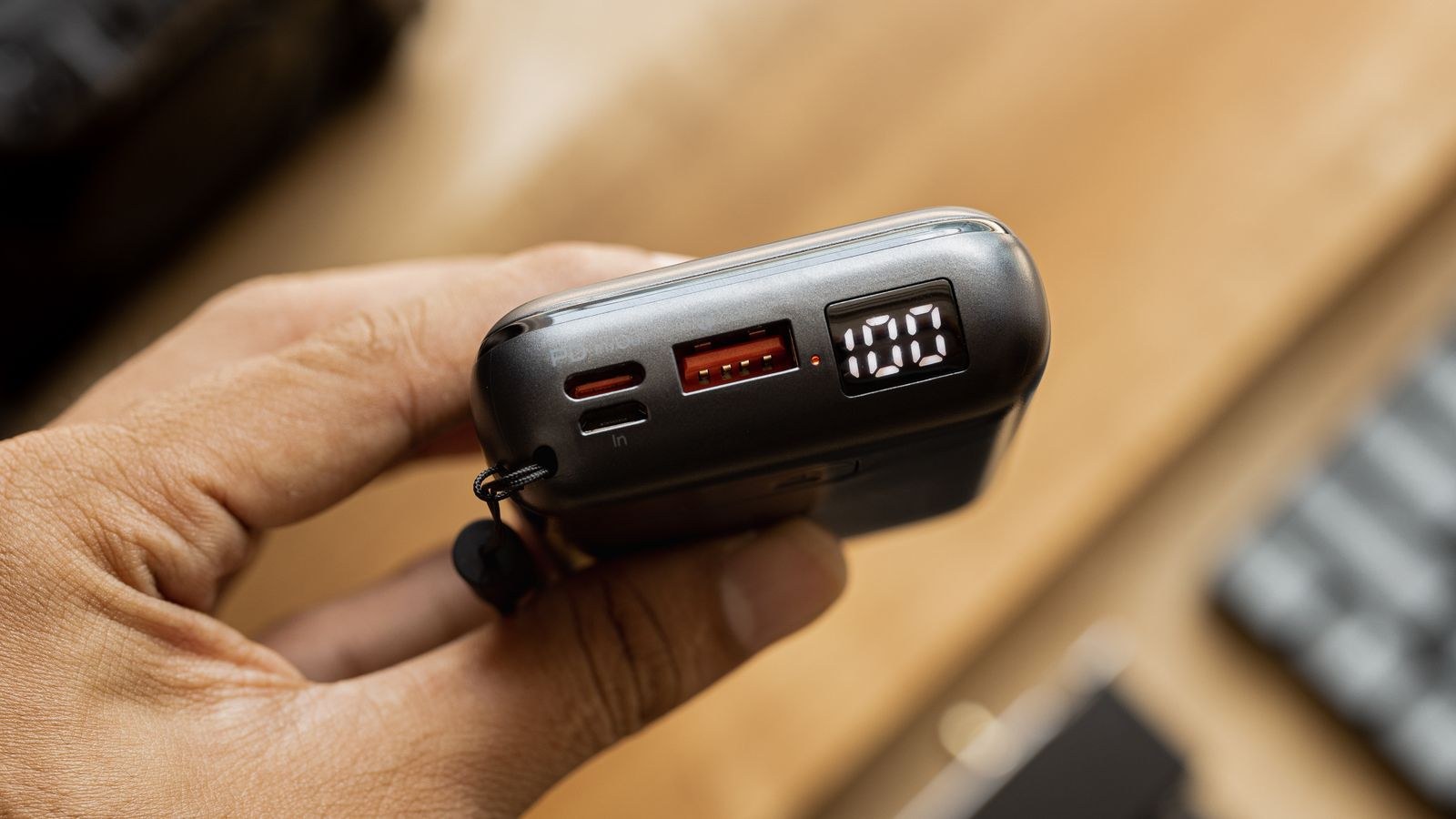
Premium packs justify their price with high combined wattage, multiple simultaneous fast ports, informative displays, and sometimes hot-swappable or wireless charging. Pay for that tier only if you genuinely charge a demanding laptop away from mains power. A useful rule: buy the output wattage you need first, then the smallest capacity that gets you through your longest realistic gap between outlets.
Common Mistakes That Waste Money
- Buying on mAh alone. Capacity says nothing about speed; a huge slow pack still trickles.
- Ignoring the power-sharing table. Headline watts are often shared, not per port.
- Forgetting recharge time. A pack that takes twelve hours to refill misses the next day.
- Using a low-rated cable. A cheap cord caps a 100W pack at a fraction of its ability.
- Overbuying capacity. Heavy packs get left behind, and some exceed airline limits.
Frequently Asked Questions
Why does my 10,000mAh pack only charge my phone once and a half?
Voltage conversion and heat losses consume roughly a third of the stored energy, so usable output is around 6,000 to 7,000mAh. That is normal and applies to every brand.
Can a power bank damage my phone?
A certified pack with proper protection circuits will not. Your phone negotiates the voltage it accepts, so a higher-wattage pack simply charges faster rather than forcing power into the device.
Do I need a special cable for fast charging?
Yes, above 60W you need a cable rated for 100W or 240W with an e-marker chip. Below that, any quality USB-C cable rated for the wattage will do.
Is wireless charging on a power bank worth it?
It is convenient for quick top-ups but noticeably less efficient than a cable, meaning fewer refills from the same capacity. Treat it as a bonus, not a primary feature.
How should I store a power bank I rarely use?
Keep it around half charged in a cool, dry place and top it up every few months. Long-term storage at zero charge can permanently reduce capacity.
Final Thoughts
The right power bank is the one whose output wattage matches your most demanding device, whose capacity covers your longest gap between outlets, and whose weight you will actually tolerate every day. Read watt-hours instead of mAh, check the power-sharing table on multi-port models, confirm recharge input speed, and verify the pack stays under the 100Wh airline threshold if you fly. Do that and you will skip the marketing arms race entirely, walking away in 2026 with a battery that quietly does its job instead of an oversized brick that never leaves the drawer.