Owen Bradley
 A wobbling table or chair is one of those irritations people live with for years, folding beer mats under a leg and hoping nobody notices. The fix is usually ten minutes of work, but only if you correctly identify what is actually wobbling. Roughly half the time the furniture is fine and the floor is uneven; the other half the legs are square and a joint has quietly worked loose. Those two problems need completely different solutions, and applying the wrong one is why the wobble always comes back. This guide covers how to fix wobbly furniture properly, from finding the short leg to fitting adjustable glides and re-gluing chair rails before they split.
Diagnose First: Floor or Furniture?
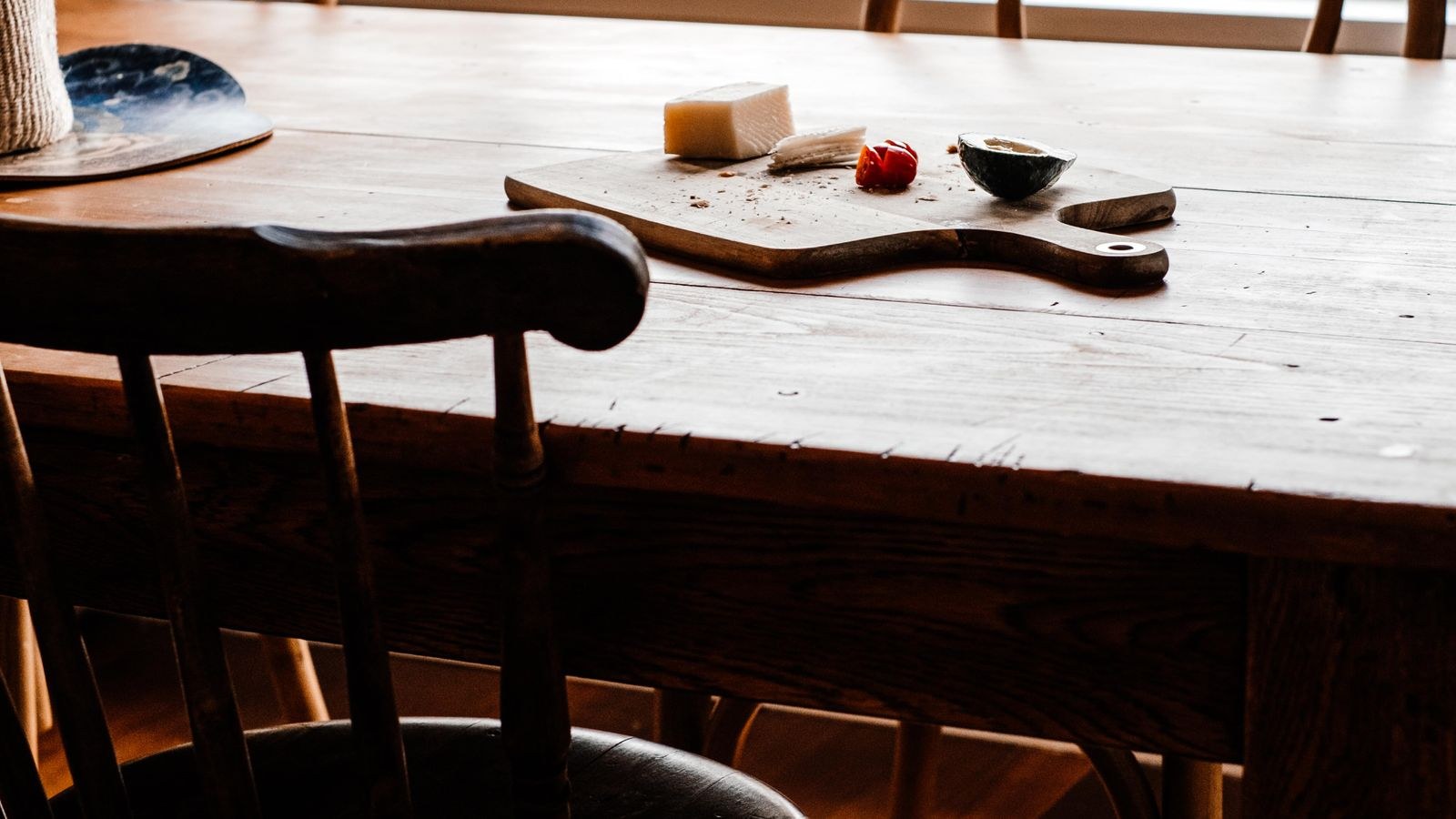
Before touching a tool, work out which of the two problems you have. Push down on the tabletop directly above each leg in turn. If the piece rocks between two diagonally opposite legs, one leg is short or the floor dips, and the frame itself is probably sound. Now grip the top and try to twist it side to side. If the frame flexes, shifts or creaks, the joints are loose and no amount of shimming will help.
The second test is decisive: slide the piece two or three feet across the room and try again. If the wobble disappears or moves to a different leg, the floor is the culprit. If it follows the furniture exactly, the furniture is at fault. Do this before anything else, because fitting glides to a piece with loose joints wastes an afternoon.
Tools and Materials
- Adjustable levelling glides or threaded feet for the permanent floor fix.
- Self-adhesive felt pads in several thicknesses for small differences.
- PVA wood glue for re-gluing loose joints; two-part epoxy for joints under heavy shock load.
- Ratchet or band clamps. A webbing strap clamp is ideal for pulling a chair frame square.
- Screwdrivers and a hex key set.
- A spirit level and a tape measure.
- A rubber mallet for knocking joints apart without damage.
- A wood rasp or block plane if a leg genuinely needs shortening.
Step by Step: Fixing a Rocking Piece on an Uneven Floor
- Set the piece where it will live. A floor fix is location-specific, so level it in its final position.
- Find the short leg. Press each corner down in turn. The leg that lifts when you press its diagonal opposite is the one not touching the floor.
- Measure the gap. Slide folded paper or a feeler gauge under the floating leg until it stops rocking, then measure that stack. Most gaps are under 3mm.
- Choose your fix by size. Under about 2mm, stacked felt pads are enough. Larger than that, fit threaded adjustable glides so you can dial it in exactly.
- Fit adjustable glides. Drill a pilot hole in the centre of each leg’s base sized for the T-nut, tap the T-nut in flush, then wind in the threaded glide. Fit them to all four legs, not just one, so the whole piece stays adjustable.
- Level with a spirit level. Place the level across the top in both directions and adjust the glides until the bubble centres. Adjust the short leg first, then fine-tune the others.
- Check for residual rock. Press each corner again. It should be dead solid with no movement at all.
- Lock the setting. Tighten any lock nuts on the glides so vibration and vacuuming cannot back them off.
Only shorten a leg as a last resort, and only when you are certain the floor is level and the leg is genuinely too long. Removing material is irreversible, and a piece cut level for one room will rock in the next.
Why Beer Mats and Wedges Fail
A folded card under a leg works until the piece is nudged an inch, at which point it slides off and the wobble returns. Wedges compress over time and hard shims can scratch or dent flooring. Adjustable glides solve the problem at the furniture rather than the floor, travel with the piece and can be re-tuned in seconds when you rearrange the room.
Step by Step: Tightening a Loose Frame
- Turn the piece over onto a blanket or carpet so you can see the underside and the joint hardware.
- Tighten every bolt and screw you can reach, working around the frame rather than fully torquing one at a time. Many wobbles disappear at this step alone.
- Look for corner blocks. Most quality tables and chairs have triangular blocks bracing each corner. If one is loose or missing, re-glue and re-screw it, or fit a metal corner brace.
- Identify the moving joint. Rock the frame gently and watch closely. The joint that opens and closes is your target.
- Open the joint properly. Tap it apart with a mallet rather than injecting glue into a closed gap. Glue squirted into a dirty, closed joint bonds to old glue and dust and fails within months.
- Clean both surfaces. Scrape old glue off the tenon and out of the mortise until you reach bare wood.
- Apply fresh glue and reassemble. Coat both mating surfaces thinly and push the joint fully home.
- Clamp square and check the diagonals. A band clamp around all four legs pulls a chair frame together evenly. Measure diagonally between opposite legs; equal measurements mean the frame is square.
- Leave it clamped overnight and keep the piece unloaded for a full day before use.
Chairs Need a Different Approach
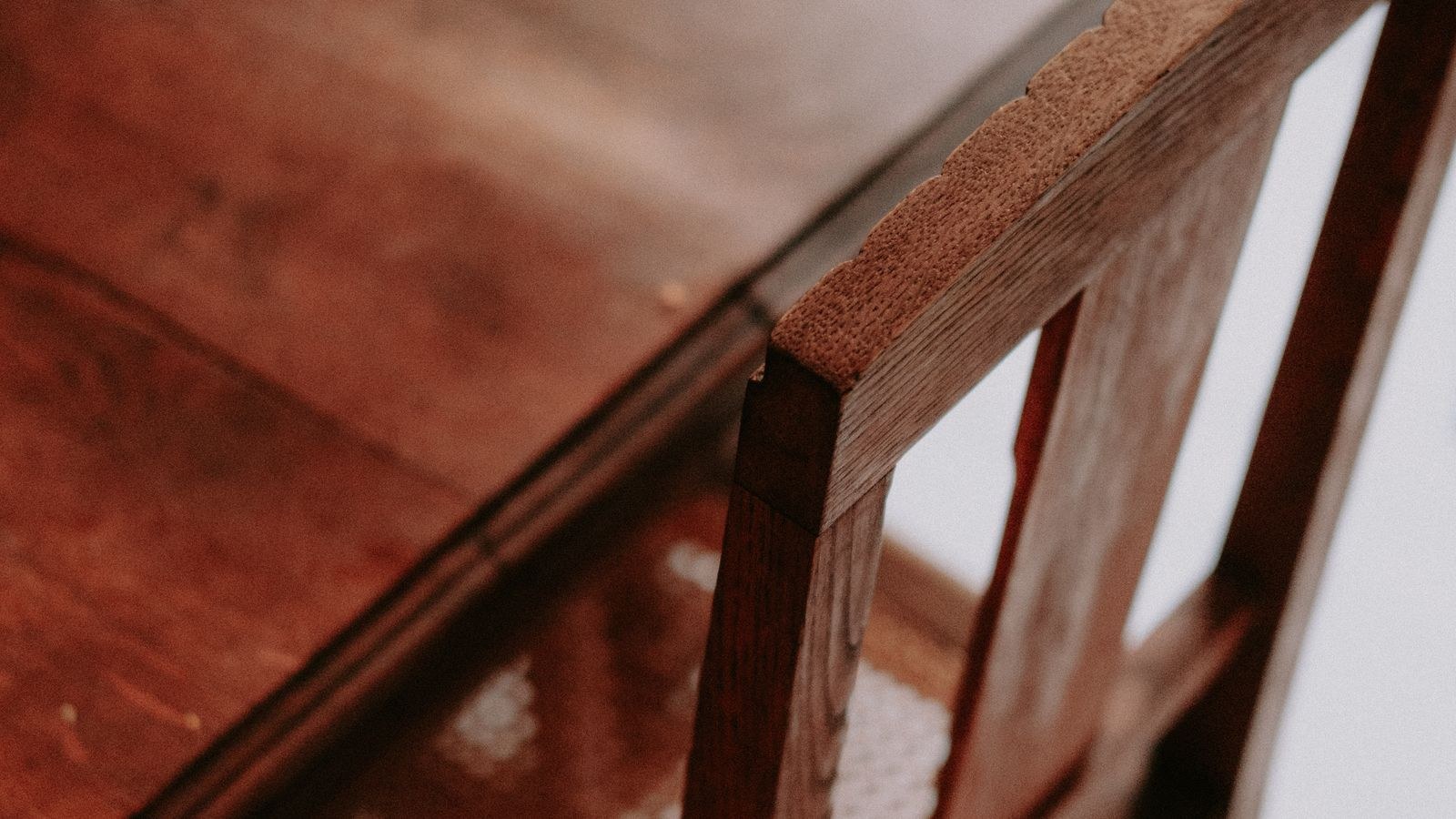
Chairs fail more often than tables because they take shock loads, sideways forces and constant movement. The joint that usually goes first is where the side rail or stretcher meets the leg, and a loose rail is the beginning of a split, not a cosmetic issue. Once you feel any play there, deal with it immediately: a rail re-glued while still snug is a ten-minute job, while one left to work loose eventually splits the leg and needs a much bigger repair.
Construction determines how repairable a chair is. Traditional mortise and tenon frames in the solid-timber designs among the best wood chairs come apart and re-glue cleanly. Bolted frames, common across many dining chairs and kitchen chairs, respond well to a simple bolt check every six months plus a threaded insert if a hole has stripped. Folding designs are their own case: wobble in the best folding dining chairs usually comes from worn pivot rivets rather than glue joints, and the fix is replacing the pivot hardware with a bolt, washer and nyloc nut. Tall seating needs the most attention of all, since the leverage on a bar stool is far greater than on a dining chair, so the frames on bar chairs deserve a tightening check twice as often.
Common Mistakes to Avoid
- Shimming before diagnosing. Half of all wobbles are joints, and a shim under a loose frame hides nothing for long.
- Injecting glue into a closed joint. Without cleaning and clamping, it bonds to dust and fails.
- Cutting a leg down. Irreversible, and wrong the moment the piece moves rooms.
- Overtightening bolts into wood. Excess torque strips the hole and creates a worse wobble.
- Using the piece before the glue cures. A joint loaded early is a joint that will fail again.
- Fitting a glide to one leg only. Level all four so the whole piece stays adjustable.
- Ignoring an early creak. Noise is the first symptom of a joint opening up.
Keeping Furniture Stable Long Term
Wobble prevention is mostly a maintenance habit. Check bolts on chairs, stools and tables twice a year, and always after moving house or rearranging a room. Keep timber furniture away from radiators and direct sun, since repeated drying and swelling loosens joints faster than use does. Lift chairs rather than dragging them, because dragging puts a sideways shock straight through the leg joints. Fit felt pads under every leg to reduce that shock and protect the floor at the same time. A five-minute check each spring and autumn through 2026 will catch nearly every joint before it becomes a repair.
Frequently Asked Questions
Should I fix the floor or the furniture?
Fix the furniture. Adjustable glides let you compensate for any floor, and they travel with the piece when you rearrange or move house.
What glue should I use on a loose chair joint?
Standard PVA wood glue is right for most timber joints. Use two-part epoxy only where the joint is loose-fitting or takes heavy shock, since epoxy fills gaps that PVA cannot.
Can I fix a wobbly table without taking it apart?
Sometimes. If the wobble is bolt-related, tightening the hardware and adding corner braces often solves it in place. If a glued joint has opened, it must come apart to be repaired properly.
How do I stop chairs wobbling again?
Check and re-tighten the frame hardware twice a year, lift instead of dragging, and re-glue any joint the moment you feel play rather than waiting for it to split.
Final Thoughts
Fixing wobbly furniture starts with an honest diagnosis. Move the piece and see whether the wobble follows: if it does, tighten and re-glue the frame; if it stays behind, level the piece with adjustable glides rather than shims. Clean and clamp any joint you re-glue, square the frame with a diagonal check, and give the adhesive a full day before loading it. Then adopt the maintenance habits that prevent the next one, twice-yearly bolt checks, felt pads on every leg and lifting rather than dragging. Ten minutes of the right work beats years of folded cardboard.