Owen Bradley
 Ask a manufacturer how many devices a router supports and you will get a confident number, often somewhere between 32 and 250. Ask a network engineer and you will get a question back: doing what, exactly? Router device limits are one of the most misunderstood specifications in home networking, because the theoretical maximum a device can track has almost nothing to do with the number of clients it can serve well. A router juggling sixty smart plugs that wake once an hour is in a completely different situation from one handling eight laptops on video calls. This guide explains what actually constrains a home network in 2026, how to estimate your own realistic ceiling, and the concrete signs that tell you it is time to add capacity rather than replace the router entirely.
What the Advertised Device Limit Really Means
When a specification sheet lists a maximum client count, it typically refers to the number of simultaneous connections the router’s firmware can track in memory, or an internally tested figure under light load. It is a ceiling imposed by the operating system, not a promise of performance. A router rated for 128 clients will indeed accept 128 associations, but nothing in that number guarantees each one gets usable throughput.
There is a second, harder limit set by your addressing scheme. A default home network hands out addresses from a pool that commonly holds around 250 usable entries, and many routers narrow that pool further out of the box. That is rarely the binding constraint in a house, but it is worth knowing the pool exists and can be widened in the DHCP settings if you genuinely approach it.
Airtime, Not Client Count, Is the Real Limit
Wi-Fi is a shared medium. On any given radio channel, only one device transmits at a time, and every client takes turns measured in fractions of a millisecond. That shared resource is called airtime, and it is the currency your network actually spends. A device consuming a large share of airtime affects everyone, regardless of how many clients are connected in total.
This is why counting devices misleads. Ten devices streaming high-bitrate video can saturate a band while eighty sensors reporting a temperature every few minutes barely register. Worse, slow devices are disproportionately expensive: an old client that only supports an older standard occupies airtime far longer to send the same amount of data, dragging down the whole channel. Removing or upgrading a handful of legacy devices frequently improves a congested network more than buying new hardware.
Why Distance Costs Airtime
A client at the edge of coverage negotiates a lower data rate to stay connected, which means every packet it sends takes longer on air. One distant device can therefore consume as much airtime as several nearby ones. Improving coverage is not only about eliminating dead spots; it directly increases how many devices the network can serve, because each one finishes its turn faster.
Estimating Your Household’s Realistic Ceiling
A practical method is to sort your devices into three buckets rather than counting them as equals. Heavy clients stream video, run video calls, download large files or game online. Moderate clients browse, sync files, handle music and check email. Light clients are sensors, plugs, bulbs, thermostats and similar hardware that exchange tiny amounts of data occasionally.
As a working rule, a modern dual-band router in a typical home comfortably handles a handful of heavy clients, a dozen or so moderate ones and a large number of light ones simultaneously. Push several heavy clients beyond that and you will notice degradation even though the total device count still looks modest. Meanwhile, thirty light devices may add almost nothing to perceived load. Count the heavy bucket first; it determines your experience.
Homes that have crossed into the heavy category on multiple fronts should look at hardware built for the job, which our roundup of the best routers for lots of devices covers by household size and connection speed.
The Specs That Genuinely Raise Capacity
Four hardware attributes actually increase how many clients a router serves well, and none of them is the advertised device limit.
- Spatial streams. A 4×4 radio can serve more clients at higher rates simultaneously than a 2×2 radio. This is the most direct capacity upgrade available.
- Band count. Adding a second 5GHz radio or a 6GHz band splits clients across more independent channels, and independent channels do not compete for the same airtime.
- Processor and memory. Connection tracking, encryption and firewall work all scale with client count. A faster processor with more RAM prevents the router itself becoming the bottleneck.
- Scheduling technologies. Modern standards let a router talk to several clients within a single transmission opportunity and schedule when devices wake, which sharply reduces contention in dense environments.
Of these, band count and stream count deliver the most obvious improvement in crowded homes. Models built around the multi-user scheduling features are collected in our guide to the best routers with MU-MIMO.
How a Third Band Changes the Maths
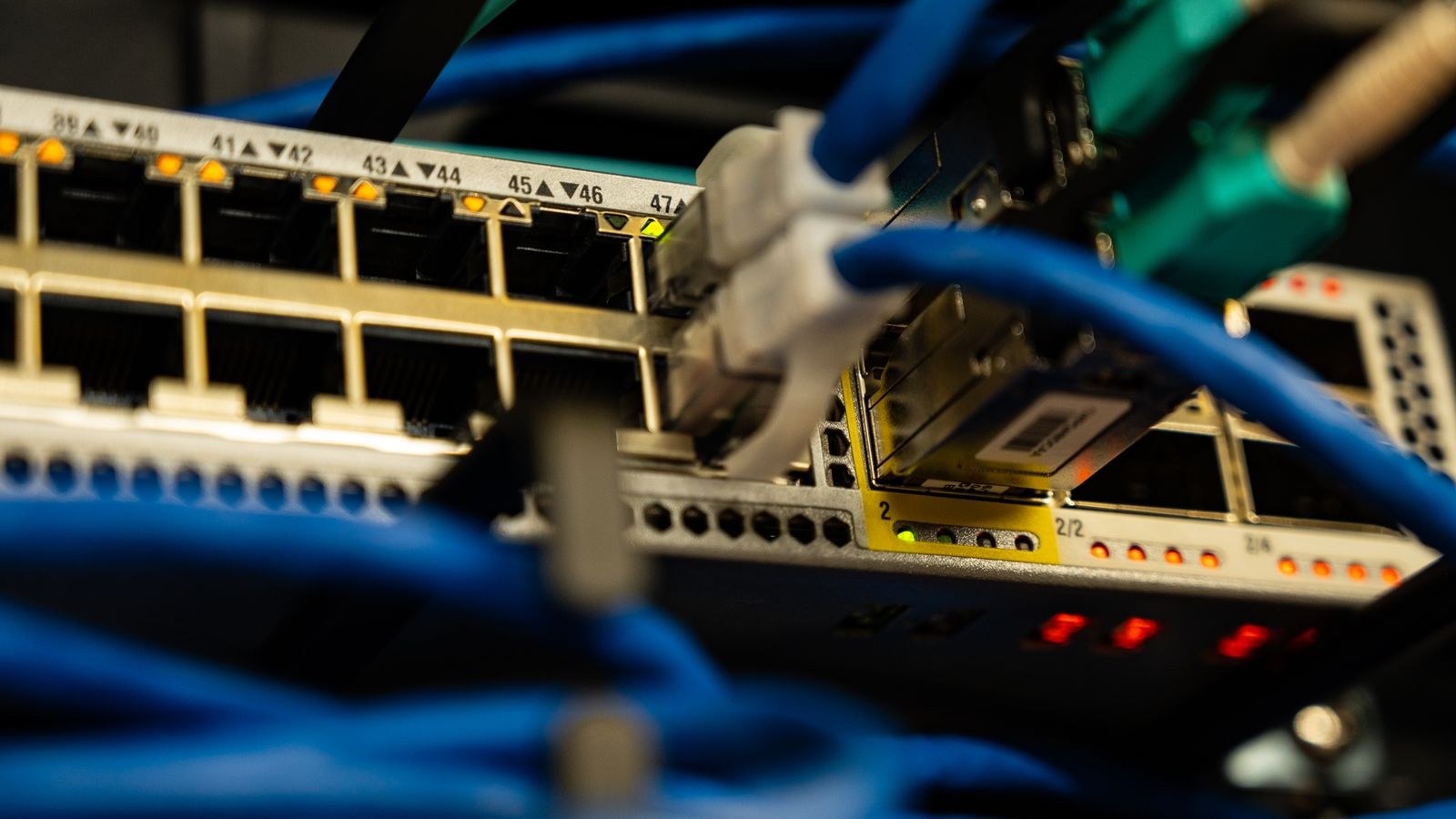
Adding a band is the closest thing to a free capacity increase, because it creates a second independent conversation space. With two 5GHz radios, a router can place bandwidth-hungry clients on one and everything else on the other, so a large download no longer steals airtime from a video call. In homes with heavy simultaneous use, this often produces a bigger improvement than any increase in headline speed.
Tri-band designs also help mesh systems considerably, since one band can be reserved for communication between nodes rather than shared with clients. If your network struggles specifically when several people are active at once rather than when any single device is transferring, an extra band is the upgrade to consider first. Options are compared in our roundup of the best tri-band routers.
Signs You Have Hit the Ceiling
Capacity problems have a distinctive signature that separates them from a simple lack of speed. Speed tests come back fine when the house is quiet but disappoint at peak times. Video calls stutter while a download runs elsewhere. Devices disconnect and reconnect, especially at the edges of coverage. Web pages hesitate for a second before loading rather than loading slowly. The router’s management interface itself becomes sluggish, and a reboot temporarily restores everything.
That last symptom is the clearest tell. If rebooting fixes things for a while, the router is running out of processing headroom or memory, not bandwidth. Contrast this with a genuine bandwidth shortage, where a single large transfer slows everything predictably and consistently. Diagnosing which pattern you have determines whether you need a faster internet plan, a stronger router, or more access points.
Adding Nodes Versus Buying a Bigger Router
When capacity runs short, there are two structurally different responses. Replacing the router with a more capable single unit raises capacity at the centre, which helps when devices are clustered nearby and the current hardware is simply underpowered. Adding mesh nodes or wired access points raises capacity by distributing clients across more radios and shortening the distance each device transmits over.
The second approach is almost always better in larger homes. Splitting forty devices across three access points means each radio serves a manageable group at short range and high data rates, which uses airtime efficiently. A single, more powerful router still forces all forty to share one set of radios and still leaves distant clients negotiating slow rates.
Wired Backhaul Doubles the Benefit
If you can run Ethernet to your additional nodes, do it. A wirelessly connected node spends airtime talking to the main router as well as to clients, effectively halving its usable capacity on a shared band. A wired node dedicates all of its wireless capability to clients. Powerline or coaxial adapters are imperfect but still better than pure wireless backhaul in most homes.
Practical Ways to Free Up Capacity Today
Before spending anything, several adjustments reclaim meaningful headroom. Move sensors, plugs and other light devices deliberately onto the 2.4GHz band, keeping 5GHz clear for laptops, televisions and phones that benefit from it. Retire or upgrade genuinely ancient devices that force the network into slow legacy rates. Wire anything that does not move: televisions, consoles, desktops and network storage give back airtime the moment they leave the wireless network.
Then look at channel selection. In flats and dense neighbourhoods, overlapping networks are a major hidden cost, and manually choosing a quieter channel can transform performance. Finally, review scheduled activity such as backups, cloud syncing and firmware updates, and shift them to overnight windows. Homes with genuinely large client counts should also plan hardware around that reality; our comparisons of the best routers for many devices and the best routers for multiple devices group models by the concurrency they handle rather than by peak speed.
Common Mistakes When Scaling a Home Network
The first mistake is treating the advertised client limit as a performance guarantee and buying purely on that number. It reflects a firmware table, not capacity, and two routers with identical claimed limits can perform very differently under load.
The second is upgrading the internet plan to fix a congestion problem. If the router runs out of airtime or processing headroom, more incoming bandwidth changes nothing, because the bottleneck sits inside the house. Test a wired device during a bad period: if the wired connection is fast while wireless is poor, the plan is not the issue.
The third is adding mesh nodes without thought to placement. A node placed too far from the main unit inherits a weak backhaul link and rebroadcasts a weak signal, which can make the network worse. Place each node where it still receives a strong signal, roughly midway between the router and the area needing coverage.
Frequently Asked Questions
Do smart home devices count toward the limit?
They count toward the connection table but consume very little airtime. A house with fifty sensors and plugs is usually fine; the same house adding five simultaneous 4K streams is not. Weight your count by traffic, not by unit.
Does a guest network reduce capacity?
A guest network shares the same radios and airtime, so it does not add capacity. It adds isolation and security, which is valuable for a different reason, but treat guest clients as part of your total load.
Is there a hard maximum I should never exceed?
Practically, once a single router is serving more than roughly forty active clients you should be planning additional access points, regardless of what the specification claims. Coverage geometry usually becomes a problem before the connection table does.
Will a faster router help if my internet plan is slow?
It can, for local traffic and for stability with many clients, but it will not raise your internet speed. If devices are competing for a small pipe from your provider, the plan is the constraint and the router upgrade will disappoint.
Final Thoughts
The answer to how many devices a router can handle is never a single number, and any specification that offers one is describing a table in firmware rather than your living room. Sort your devices by how much traffic they genuinely generate, identify whether your symptoms point to airtime contention, processing limits or plan bandwidth, and then respond accordingly. In most homes the best answer is not a bigger router at all but better distribution: more access points, shorter distances, wired backhaul where possible and heavy devices moved off the wireless network entirely. Build the network that way and the device count stops being a number you worry about.