Owen Bradley
 Walk down any router aisle and the same upsell appears at every price point: pay more, get a third radio. Tri-band routers are sold as the answer to crowded networks, big houses and heavy streaming, and sometimes they genuinely are. Just as often the extra radio sits almost unused while a dual-band model would have delivered identical results for considerably less. The dual band vs tri band question has no universal answer — it depends on how many devices you run, whether you use mesh backhaul, and how your home is shaped. This guide gives you a way to decide before you spend, so the third radio only gets bought when it will actually earn its keep.

What the Bands Actually Are
A dual-band router broadcasts on 2.4GHz and 5GHz. The 2.4GHz band travels furthest and passes through walls best, but it is slow, narrow, and shared with microwaves, cordless phones, Bluetooth and every smart plug in the house. The 5GHz band is much faster and far less crowded, at the cost of shorter range.
A tri-band router adds a third radio, and this is where buyers get caught out, because two very different products use the same word. Older and mid-range tri-band models add a second 5GHz radio. Newer Wi-Fi 6E and Wi-Fi 7 models add a 6GHz radio instead. These behave nothing alike, and the box rarely makes the distinction obvious.
The second-5GHz design splits your fast-band devices across two independent channels, halving contention. The 6GHz design opens an entirely new, empty band that only modern devices can use, but with noticeably shorter range. Both are “tri-band”; only one may suit you.
Reading the Naming Conventions
Class numbers like AX5400 or BE11000 are the sum of theoretical rates across all radios, which is why tri-band models always show bigger numbers. That total is arithmetic, not experience — no single device ever sees the combined figure. Ignore the headline number and look for the band list and the per-band rates instead.
Why Contention Matters More Than Speed
Wi-Fi is a shared medium. Only one device on a given channel transmits at a time, and everyone else waits their turn. A radio serving thirty devices is not slower because each one is slow; it is slower because each one queues. This is called airtime contention, and it is the single biggest cause of the “fast internet, sluggish Wi-Fi” complaint.
Adding a second 5GHz radio creates a second queue. Half your devices talk on one, half on the other, and average waiting time drops. That is the real mechanism behind tri-band’s benefit — not extra speed, but extra parallelism.
The catch is that contention only hurts when devices are genuinely active at once. Twenty idle smart bulbs waking for a heartbeat every few minutes consume almost no airtime. Four people streaming 4K while someone backs up a laptop consumes a great deal. Count concurrent heavy users, not total connected devices, and the decision gets much clearer. If your household really does run dozens of active clients, our roundup of the best routers for lots of devices compares the models built to handle that load.
The Mesh Backhaul Case
If there is one situation where tri-band is close to mandatory, it is wireless mesh. In a dual-band mesh, a satellite node uses the same 5GHz radio to talk to clients and to relay traffic back to the main unit. Every frame is handled twice on the same channel, so throughput at that node roughly halves — and halves again at a second hop.
A tri-band mesh dedicates the third radio to backhaul. Client traffic and node-to-node traffic no longer compete, and satellites deliver something close to full speed. In a large or awkwardly shaped home, this difference is far more noticeable than any spec-sheet comparison of peak rates. Our guide to the best tri-band mesh routers covers which systems dedicate the band properly rather than merely sharing it opportunistically.
The important nuance: if you can run Ethernet to your mesh nodes, wired backhaul removes the problem entirely and a dual-band mesh performs beautifully. Cable first, third radio second.
When Dual-Band Is Genuinely Enough
Dual-band routers cover a large majority of households well, and modern ones are not the compromise they once were. Wi-Fi 6 and Wi-Fi 7 dual-band models include OFDMA and MU-MIMO, which let a single radio serve multiple clients far more efficiently than older hardware could. A good current dual-band router handles a mixed household of phones, laptops, TVs and smart devices without complaint.
Choose dual-band with confidence if most of the following apply:
- Your home is a flat or a modest house where one router covers everything.
- Concurrent heavy usage peaks at two or three streams.
- Your internet plan is under roughly 500Mbps.
- You use wired connections for the most demanding devices.
- Your mesh nodes, if any, are connected by Ethernet.
Money saved here is far better spent on placement, cabling, or a second access point. Our comparison of the best dual-band routers shows how capable this tier has become, particularly at the upper end where hardware is otherwise identical to tri-band flagships.
When Tri-Band Earns Its Price
Tri-band starts making sense when one of these is true:
- Wireless mesh backhaul. The clearest and strongest case, as described above.
- Ten or more simultaneously active clients. Not connected — active. Large families, shared houses, home offices with several video calls running.
- Multi-gigabit internet. Splitting load across radios is one of the few ways to actually use it wirelessly.
- Mixed old and new devices. A second 5GHz radio lets you keep slow legacy clients away from your fast ones, so one old tablet does not drag a channel down.
- A dedicated high-demand room. A 6GHz radio serving a nearby office or gaming setup gives a clean, uncontested link.
Note that these are load and layout arguments, not speed arguments. Nobody’s single laptop gets faster because a third radio exists. For a deeper look at the specifications behind the 6GHz variant, the best tri-band routers comparison distinguishes the two designs clearly.
Band Steering, and Why It Sometimes Disappoints
Tri-band only helps if devices are distributed sensibly across the radios, and that job falls to band steering. The router watches signal strength and load and nudges clients toward the best radio. When it works, you never think about it. When it does not, you get a phone glued to 2.4GHz two metres from the router.
Most modern routers steer well, but some situations defeat them: devices with poor roaming implementations, smart home gear that only supports 2.4GHz and refuses to acknowledge steering hints, and networks where the user has manually split each band into its own name. If you need a specific device on a specific band, look for per-device band assignment rather than splitting SSIDs, which breaks roaming for everything else.
What Else to Check Before Buying
Ethernet Ports
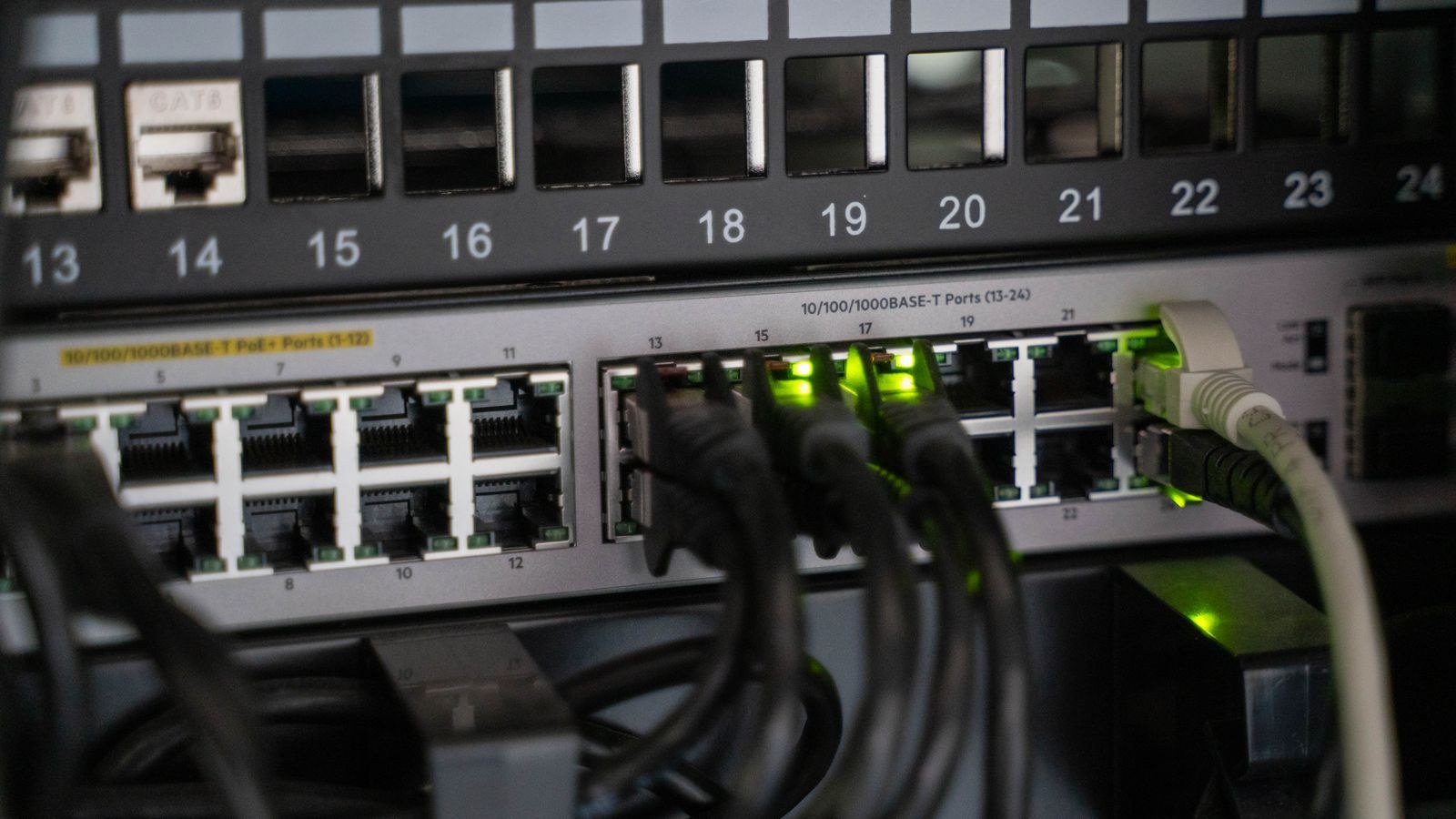
A tri-band router with only gigabit LAN ports caps every wired device at 1Gbps. If you have fast internet or a NAS, look for at least one 2.5Gbps port. Wired links also relieve wireless contention, which is often a cheaper fix than a third radio.
Processor and Memory
Many devices means many connection states to track. A weak CPU shows up as slow web page loads and sluggish management interfaces even when raw throughput looks fine. Dual-core is a minimum; quad-core is preferable for busy homes.
Antenna Streams
A 4×4 radio serves more clients simultaneously than a 2×2 radio and reaches further with beamforming. In many cases, upgrading stream count on a dual-band router delivers more real benefit than adding a third 2×2 radio.
If you are still weighing the fundamentals rather than this specific choice, our broader router buying guide walks through coverage, security features and firmware support alongside band configuration.
Budget Tiers
At the entry level, dual-band Wi-Fi 6 routers are inexpensive and perfectly adequate for flats and small houses on typical broadband. There is no reason to feel short-changed here.
In the mid tier you get a choice: a well-specified dual-band unit with 4×4 radios and multi-gig ports, or an entry tri-band. For a single-router home the dual-band usually wins; for a mesh kit the tri-band does.
At the top, tri-band and quad-band flagships add dedicated backhaul radios, 10Gbps ports and larger antenna arrays. These make sense for large homes with wireless mesh or genuinely multi-gigabit connections, and are largely wasted elsewhere. Households whose main constraint is client count should check the best routers for lots of devices shortlist, which weights processor and stream count rather than headline speed ratings.
Common Mistakes
- Confusing the two tri-band designs. Second 5GHz and 6GHz behave completely differently.
- Counting connected devices instead of active ones. Idle sensors do not create contention.
- Buying tri-band to fix coverage. More radios in one box does not extend range; more locations does.
- Splitting bands into separate network names. This disables steering and causes sticky clients.
- Using wireless backhaul when a cable was possible. Wired backhaul beats any third radio.
- Trusting the combined class number. It is the sum of radios nobody uses at once.
Frequently Asked Questions
Will a tri-band router make my internet faster?
Not on its own. It reduces congestion when many devices are active at the same time, but your internet plan sets the ceiling.
How many devices before I need tri-band?
Roughly ten or more simultaneously active clients is a sensible threshold. Total connected count, including smart home gear, is far less relevant.
Is a dual-band mesh ever a good idea?
Yes, when the nodes are wired. With Ethernet backhaul, dual-band mesh performs excellently and costs much less.
Does tri-band improve range?
No. Range depends on frequency, transmit power, antenna design and placement. A 6GHz third band actually has the shortest reach of all.
Can I mix a tri-band router with dual-band nodes?
Within the same vendor’s ecosystem it usually works, but backhaul falls back to the shared band, which removes the main advantage.

Final Thoughts
The third radio is not a scam, but it is oversold. It solves congestion and backhaul, and it solves them very well. It does nothing for range, nothing for a slow broadband line, and nothing for a household of five devices that are rarely busy simultaneously. Work out whether you have a genuine contention problem or a genuine coverage problem, because they have different answers: contention wants more radios, coverage wants more locations. Decide that first, and the dual-band versus tri-band question mostly answers itself — leaving you free to spend the difference on the ports, processor and placement that actually shape how your network feels every day in 2026.