Owen Bradley
 A shower head that once produced an even sheet of water and now sprays in three directions has almost certainly lost the fight with hard water. Dissolved calcium and magnesium precipitate out as water evaporates in the nozzles, and over months that deposit hardens into limescale that narrows the jets, blocks some entirely, and cuts flow through the whole fixture. The fix is straightforward chemistry rather than replacement. This guide covers how to descale a shower head with a simple vinegar soak, how to clear individual nozzles by hand, what to do when scale has built up inside the body where you cannot reach, and how to set a maintenance rhythm that stops the problem returning.
How to Tell It Is Limescale
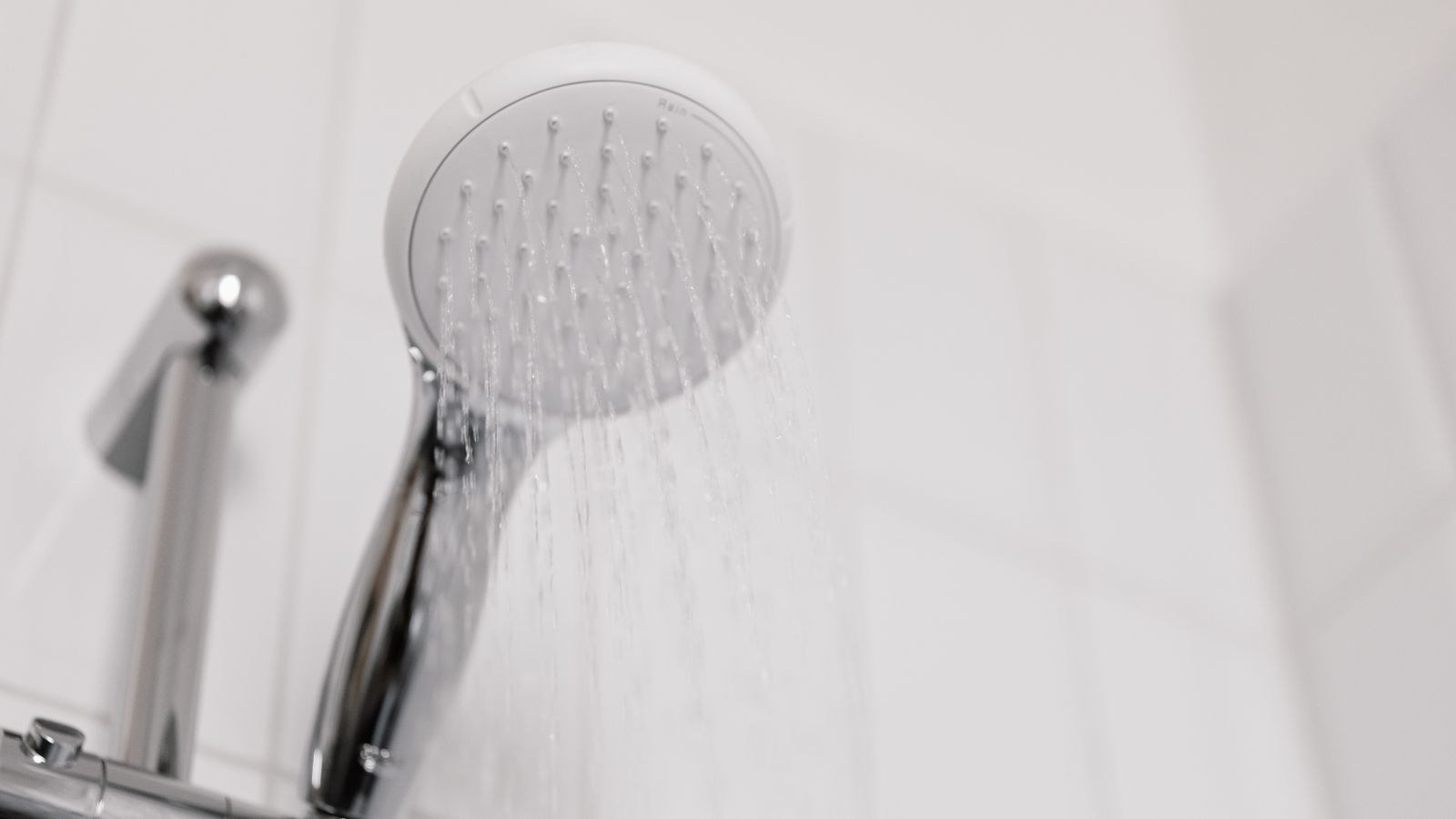
Scale announces itself in predictable ways. Jets spray at odd angles or cross each other. Water dribbles from part of the face while other sections run normally. Overall flow drops even though nothing else in the house has changed. White or chalky crust appears around the nozzle openings, and the face may feel gritty when you run a finger over it. In severe cases the spray pattern collapses entirely into a few strong streams.
If instead the pressure is weak evenly across every nozzle with no visible crust, the cause is more likely a blocked inlet screen, a partly closed valve, or genuinely low supply pressure rather than scale on the face. Scale problems are usually uneven, which is a useful first clue.
What You Need
- Distilled white vinegar, roughly one quart. Cleaning vinegar at higher acidity works faster on heavy scale.
- A sturdy plastic bag and a rubber band, zip tie, or twist tie.
- An adjustable wrench plus a cloth to protect the finish.
- An old toothbrush for scrubbing the face and threads.
- A sewing pin, toothpick, or paperclip for individual nozzle holes.
- PTFE thread seal tape for reassembly.
- A bowl or bucket if you plan to remove the head entirely.
Skip bleach, which does nothing to mineral deposits, and avoid abrasive scouring pads and metal picks on the visible finish, since scratches there are permanent and collect scale faster afterward.
How to Descale a Shower Head Step by Step
- Rub the nozzles first. Most modern heads use flexible rubber tips designed to shed scale under pressure. With the water off, press firmly and rub across the whole face with your thumb, then run the shower briefly to flush what came loose. On light buildup this alone restores the pattern.
- Set up a bag soak if rubbing is not enough. Fill a plastic bag with enough vinegar to submerge the entire spray face, raise it around the head, and secure it to the shower arm with a rubber band. Check that the face is fully covered and the bag is supported so its weight is not hanging on the connection.
- Time the soak to the finish. Chrome and stainless tolerate several hours or an overnight soak. Brass, brushed nickel, oil-rubbed bronze, gold, and other coated or plated finishes should come out after about thirty minutes, since extended acid contact can dull or strip the coating. When in doubt, do several short soaks rather than one long one.
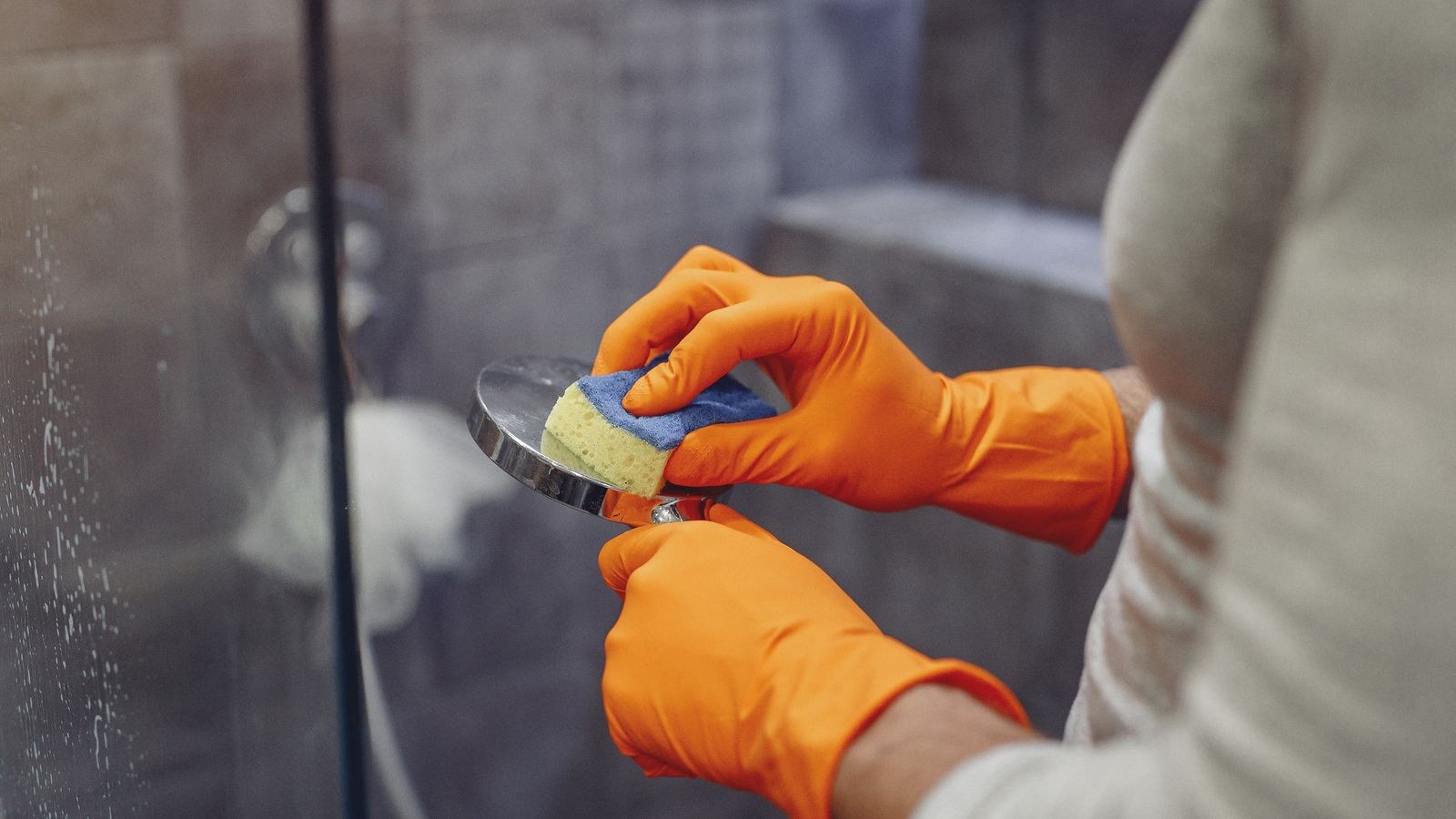
- Remove the bag and scrub the face. Work the toothbrush across the nozzles in circles. Softened scale should come away as white paste or flakes. Pay attention to the outer ring, where deposits are usually heaviest because those jets see the most evaporation.
- Clear stubborn jets individually. Push a pin or toothpick straight into any nozzle that is still blocked, working it in and out gently. Do not enlarge the opening or gouge the rubber, which permanently distorts the spray pattern. Rotate through every hole on the face, not just the obvious ones.
- Flush at full pressure. Run the shower on the highest flow setting for a couple of minutes to blow loosened debris out. Cycle through every spray mode if the head has them, since scale hides in the channels that only feed one pattern.
- Remove the head for a deep soak if problems remain. Wrap the connection nut in cloth, turn it counterclockwise with a wrench, and lift the head off. Submerge the whole thing in a bowl of vinegar so the interior passages and threads get treated, respecting the same time limits for the finish.
- Clean the inlet screen while it is off. Inside the inlet sits a small mesh or plastic filter that traps grit and scale flakes from the pipe. Ease it out with tweezers, rinse it under a strong tap, brush it if needed, and reseat it the same way round. A clogged screen is often the real reason for a flow drop.
- Rinse thoroughly before reinstalling. Flush the head with clean water until no vinegar smell remains, so residual acid is not sitting against seals and the finish.
- Reassemble carefully. Wrap the shower arm threads with two or three clockwise turns of thread tape, hand-tighten the head, then add only a light quarter turn with the cloth-wrapped wrench. Over-tightening cracks plastic connectors and crushes the washer.
- Run and check for leaks. Turn the water on and inspect the connection for drips. If it weeps, remove it and redo the thread tape rather than tightening harder.
Handling Heavy or Long-Neglected Scale
A head that has gone years without attention may not recover in one pass. Repeat the soak and scrub cycle two or three times, allowing the vinegar to work on a fresh surface each time as the outer crust is removed. For very heavy deposits a commercial descaler formulated for lime and rust works faster, but read the label carefully for finish compatibility and rinse exhaustively afterward.
There is a point of diminishing returns. If nozzles are cracked, the rubber tips have hardened and split, the internal flow diverter no longer switches cleanly between modes, or the body itself is scaled internally in passages you cannot reach, replacement is the sensible call. Shower heads are inexpensive relative to the time spent fighting a fixture that has already failed.
Mistakes That Cause Damage
- Soaking a plated finish overnight. Thirty minutes is the safe ceiling on brushed, bronze, or gold coatings.
- Using bleach. It has no effect on minerals and can degrade rubber seals.
- Scouring with steel wool or abrasive pads. Scratches ruin the finish and give scale more to grip.
- Enlarging nozzle holes with a drill or needle. This permanently wrecks the spray pattern and cannot be undone.
- Skipping the rinse. Leftover acid sitting against seals shortens their life.
- Over-tightening on reassembly. Hand tight plus a quarter turn is the whole specification.
Setting a Maintenance Routine
How often you need to descale depends almost entirely on your water. In a soft water area, a soak once or twice a year is plenty. With moderately hard water, plan on every three to four months. In a genuinely hard water area, every six to eight weeks keeps the pattern crisp, supported by a quick thumb rub across the nozzles every week or two, which takes seconds and prevents most buildup from ever hardening.
Knowing your actual water hardness turns that guesswork into a schedule. Test strips give a number in grains per gallon or parts per million in a couple of minutes, and our walkthrough on how to test water hardness explains how to read the result and what each range means for fixtures. Two other habits help: squeegee or wipe the shower head face after your last shower of the day so water is not left to evaporate in the nozzles, and run the shower hot for thirty seconds occasionally to flush the internal passages.
Treating the Cause Rather Than the Symptom
Descaling manages the effect. If your water is consistently hard, the more durable answer is to reduce the mineral load reaching the fixture in the first place, which also protects the water heater, the kettle, and the glass in the shower enclosure. An inline shower filter is the simplest version, sitting between the arm and the head with no plumbing work, and it reduces scale deposition while often improving how the water feels on skin and hair.
Hardware choice matters too. Heads with soft silicone nozzle tips shed deposits under finger pressure, while heads with drilled metal faces trap scale in openings you cannot clear. Our comparison of the best shower heads for hard water focuses on nozzle designs that resist clogging, and the roundup of the best shower filters for hard water covers inline units and their cartridge intervals. For a closer look at combination fixtures with filtration built into the head, the list of the best shower head filters for hard water is the right shortlist, and our hard water shower filtration guide explains the media types and what each one actually removes.
Frequently Asked Questions
How long should I soak a shower head in vinegar?
Chrome and stainless can soak overnight. Plated or coated finishes such as brushed nickel, bronze, or gold should be limited to about thirty minutes, repeated as needed rather than extended.
Can I use lemon juice instead of vinegar?
Yes, citric acid dissolves scale as well, though it usually works more slowly and costs more. A citric acid powder dissolved in warm water is an effective and low-odor alternative.
Will descaling restore lost water pressure?
It restores flow that scale was blocking, which often feels like a large improvement. It cannot raise the supply pressure itself, so if the whole house is weak, look at valves and fixtures instead.
Do I have to remove the head to clean it?
Not usually. The bag soak handles most cases. Remove it when the pattern stays poor afterward, when you want to clean the inlet screen, or when scale has formed inside the body.
Final Thoughts
Descaling is one of the highest-value ten-minute jobs in a bathroom. Rub the nozzles, bag-soak the face in white vinegar for a period suited to the finish, scrub with a toothbrush, clear stubborn holes with a pin, flush at full pressure, and clean the inlet screen if flow is still down. Reassemble with fresh thread tape and only light tightening. Then match your maintenance interval to your measured water hardness and consider filtration if scale keeps returning quickly. Do that and the shower keeps the even, forceful spray pattern it had when it was new, without the cost of replacing a fixture that was never actually broken.