Owen Bradley
 Renting does not mean living in a beige box for three years. It means being strategic about which changes are reversible, which are worth the small risk, and which will quietly cost you a chunk of your deposit at move-out. Renter friendly decorating is really a design constraint like any other: no permanent holes, no paint on the walls, nothing bolted to the floor, and everything has to come with you when the lease ends. Work inside those limits and a rental can look as considered as any owned home. This guide covers the surfaces, storage, lighting and soft furnishings that give you the biggest visual return with the smallest chance of a deduction.
Read Your Lease Before You Buy Anything
Every decision below is governed by one document. Most leases prohibit painting, permanent fixtures and anything that alters the structure, but the wording on nail holes varies enormously — some landlords accept small picture nails as normal wear, others charge per hole. Ask in writing before you assume. A short email confirming that small nail holes filled at move-out are acceptable takes two minutes and can save hundreds later.
Take dated photographs of every room the day you move in, including close-ups of existing marks, scuffed skirting and worn carpet edges. This is the single most valuable ten minutes of the whole tenancy, and it costs nothing.
Step-by-Step: Decorating Without Leaving a Trace
- Document the starting condition. Photograph every wall, floor and fixture before you unpack a box.
- Fix the lighting first. Bad light makes good decor look cheap. Add lamps before you buy anything decorative.
- Layer the floor. A large rug covers tired carpet or scuffed laminate and defines the room instantly.
- Address the windows. Swapping vertical blinds for curtains on a tension or bracket-mounted rod transforms a room more than any other single change.
- Bring in freestanding storage. Anything that must be screwed to the wall is a liability; anything that stands on its own is an asset you take with you.
- Treat the surfaces you hate. Peel-and-stick film handles ugly countertops, splashbacks and cabinet fronts.
- Add soft layers last. Cushions, throws and upholstery carry the colour scheme and cost nothing in deposit risk.
- Keep the original fittings. Box up every blind, shade and cabinet knob you remove, label it, and reinstall at move-out.
Walls Without Holes
Removable adhesive strips handle framed art up to roughly 16 pounds and release cleanly when pulled straight down rather than out. Apply them to fully cured paint only — fresh paint peels — and press for the recommended time before hanging. For larger art, leaning a big piece against the wall on a console, mantel or the floor sidesteps the question entirely and looks deliberately styled.
Peel-and-stick wallpaper is the boldest legal move in a rental. It works beautifully on smooth, matte, sealed walls and badly on textured or glossy ones, so test a small offcut in a corner and leave it a fortnight before committing to a whole wall. Confine it to one feature wall, or to the back of a bookcase or the inside of an alcove where the area is small and the impact is high.
Other no-hole options worth knowing: freestanding room dividers, leaning ladder shelves, over-door hooks, and adhesive picture ledges that let you rotate art without new fixings.
Windows Make the Biggest Difference
Nothing dates a rental faster than builder-grade vertical blinds. Curtains are the fastest fix, and there are two mounting routes that avoid drilling. Tension rods sit inside a window recess with no hardware at all and carry lightweight panels comfortably. For a wider or heavier hang, a bracket-mounted rod needs only two small anchor points that fill with a dab of spackle in seconds. Hang the rod high and wide — 4 to 6 inches above the frame and extending 8 to 10 inches past each side — so the window reads larger and the panels clear the glass when open.
Buy panels long enough to just kiss the floor; short curtains are the clearest signal of an unconsidered room. Ready-made sizing covers most rental windows without alteration, and the range of best ready-made curtains includes blackout linings that also help with the thin glazing common in older rental stock. The same tension-rod logic applies in the bathroom, where our guide on how to install a tension shower curtain rod covers getting it tight enough to stay up without denting the tile.
Furniture That Earns Its Place
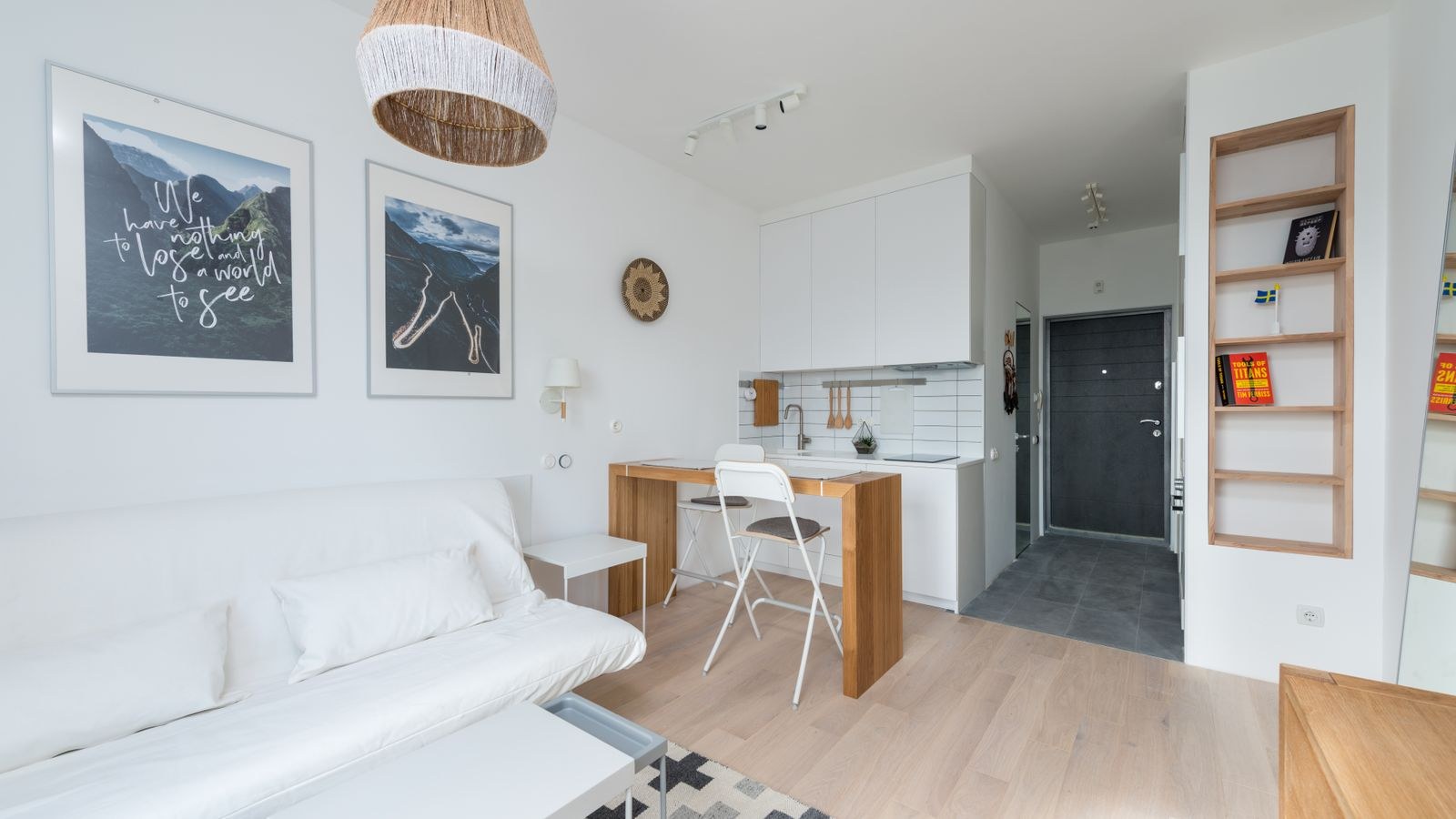
In a rental, furniture is the part of your decorating budget that genuinely comes with you, so it deserves the bulk of the spend. Two rules matter more than style. First, measure the doorway, hallway and stairwell before you buy anything large — a sofa that will not physically enter the apartment is an expensive lesson, and delivery teams will not force it. Second, favour pieces that suit more than one floor plan, because your next place will have a different shape.
Scale is the other trap. Oversized furniture in a small rental eats the floor and makes the whole place feel like storage. Look for tighter footprints, raised legs that let light travel under the frame, and modest arm widths. Options among the best apartment sofas are built around exactly those proportions, and if you are in a single room, the narrower profiles among sofas for studio apartments include sleeper and modular formats that change function through the day. Add flexible seating rather than a second large piece: a couple of light accent chairs can be pulled into a conversation group or pushed to the wall depending on how you are using the space that evening.
Lighting You Can Take With You
Most rentals ship with a single harsh ceiling fixture per room, which flattens everything beneath it. The fix is layers: a floor lamp in one corner, a table lamp at seating height, and something small and warm at a low level. Three light sources at different heights make a room feel finished in a way that no amount of decor can replicate. Plug-in wall sconces and clamp lights give directional light without wiring, and smart bulbs let you dim fixtures that have no dimmer switch — a genuinely transformative change for the price of a bulb.
Keep colour temperature consistent across the apartment, ideally in the 2700K to 3000K range for living areas, because mismatched warm and cool bulbs are a subtle reason rooms feel off. Fixtures sized for compact rooms are worth seeking out; the best apartment lighting picks focus on plug-in and freestanding formats that need no electrician and no landlord permission.
Floors, Kitchens and Bathrooms
A large area rug is the highest-impact purchase in a rental with unattractive flooring. Go bigger than instinct suggests — the front legs of all major seating should sit on it, which usually means an 8 x 10 foot rug in a standard living room rather than the 5 x 7 most people buy. Add a rug pad both to stop slipping and to protect the floor beneath from indentation.
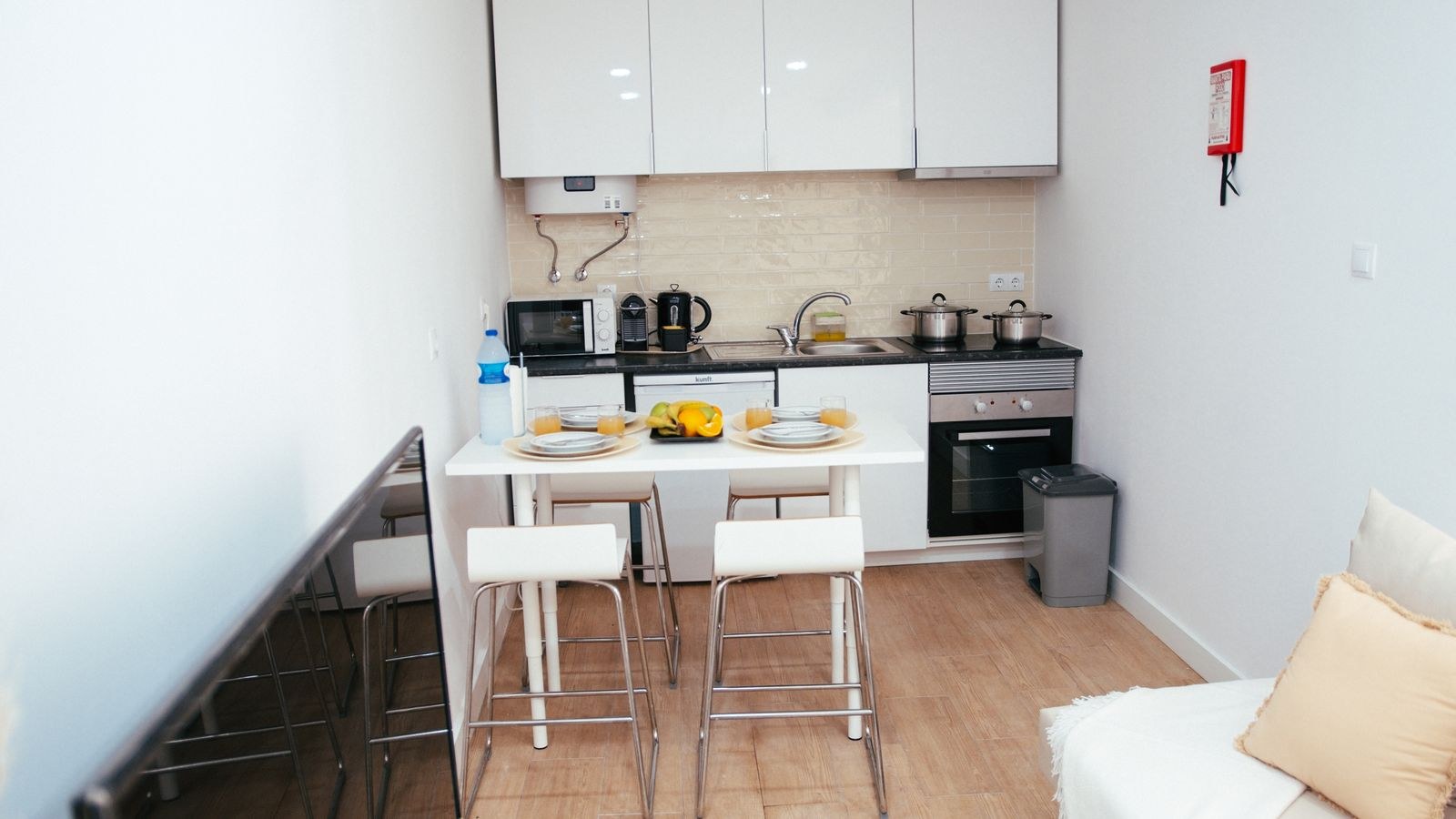
In kitchens, peel-and-stick tile film over a dated splashback and adhesive vinyl on cabinet doors handle the two worst offenders. Swapping cabinet handles is a five-minute job with a screwdriver as long as you keep the originals in a labelled bag. Bathrooms respond to the same treatment: a new shower curtain, a decent bath mat, removable vinyl floor tiles and a freestanding shelf unit will change the room without touching a single fixture.
Mistakes That Cost Deposits
- Painting without written permission, even in a neutral shade. Repainting charges are the most common deduction there is.
- Peeling adhesives off fresh or poorly bonded paint. Test in a hidden corner and always pull strips slowly downward.
- Losing the original blinds, shades and handles. Store every removed fitting in one labelled box from day one.
- Drilling into tile or cabinetry. Holes in hard surfaces cannot be filled invisibly and are always chargeable.
- Dragging furniture across floors. Felt pads under every leg cost almost nothing and prevent scratch claims.
- Leaving repairs to the final week. Fill and touch up holes a month before you leave so the spackle has time to dry and blend.
Frequently Asked Questions
Can I put nails in the walls of a rental?
Often yes, for small picture nails, but it depends entirely on your lease and landlord. Get an answer in writing, fill the holes with lightweight spackle before you leave, and sand them flush.
Is peel-and-stick wallpaper really removable?
On smooth, sealed, fully cured walls, generally yes. On textured, freshly painted or flat-finish paint it can lift the surface. Always test a small piece in an inconspicuous spot first.
What single change makes the biggest difference?
Lighting, followed closely by window treatments. Replacing one overhead bulb with three layered lamps changes how every other item in the room looks.
How do I make a small rental feel larger?
Raise the curtain rod above the window frame, choose furniture on visible legs, use a rug large enough to unify the floor, and place a mirror where it reflects a window rather than a blank wall.
Final Thoughts
Renter friendly decorating rewards a simple discipline: spend on the things that travel with you and improvise on the things that do not. Lamps, rugs, curtains, seating and textiles move to the next address and keep their value; peel-and-stick surfaces and tension rods handle the fixed elements you are stuck with for now. Photograph everything on day one, keep every original fitting in a labelled box, and check the lease before any change you cannot undo in an afternoon. Do that and you get a home that looks like yours, plus a full deposit back when the lease ends.