Owen Bradley
 Reading in bed while someone sleeps beside you is a small negotiation conducted every night. Too much light and your partner is awake and irritated; too little and you are squinting at a page, giving up after ten minutes. A book light solves this properly, but only if you set it up with some thought about beam angle, color temperature, brightness, and mounting position. This guide covers how to set up a book light for reading without disturbing a partner, from choosing the right light temperature to aiming the beam so it lands on the page and nowhere else.
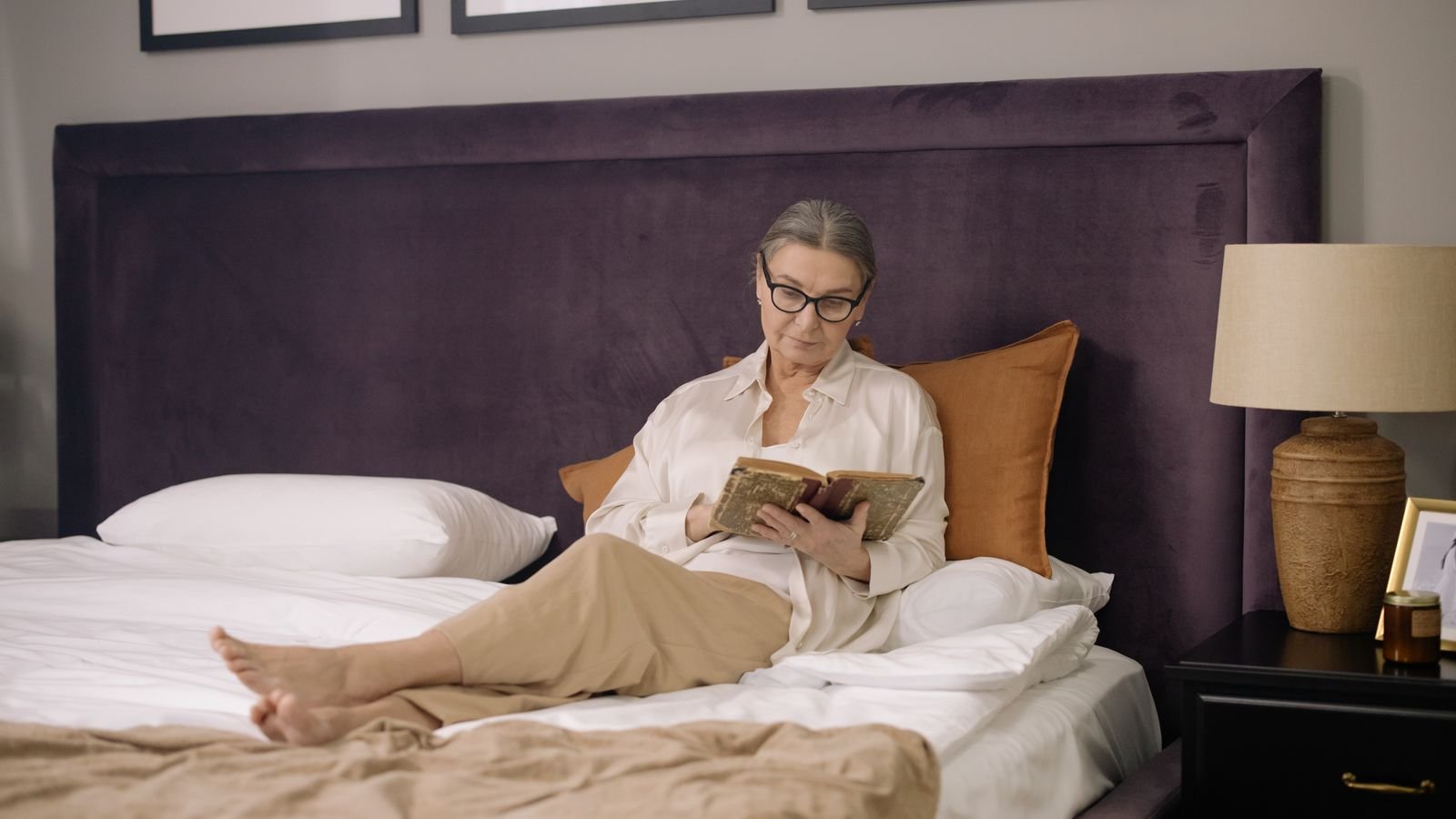
Why Ordinary Bedside Lamps Fail
A bedside lamp throws light in every direction. Even a dim one illuminates the whole room, bounces off the ceiling and walls, and reaches your partner’s face regardless of which way they turn. Worse, most bedside bulbs are 2700K to 4000K with a substantial blue component, and blue-rich light in the 460 to 490 nanometer range suppresses melatonin production strongly, disrupting sleep for both of you.
A book light works on the opposite principle. It puts a small, controlled pool of light on a page eighteen inches from your eyes and leaves the rest of the room dark. Because the page is close and reflective, you need surprisingly little output, often under 20 lumens, which is a fraction of what any lamp produces.
What Makes a Book Light Partner-Friendly
- A narrow, directional beam. Focused optics or a deep shade that stops light spilling sideways. Bare exposed LEDs are the worst offenders.
- Warm or amber color temperature. Look for 2200K to 3000K, or an amber mode. Warm light is dramatically less disruptive to sleep than cool white.
- Genuine dimming down to very low levels. Many lights have three steps and the lowest is still too bright. Stepless dimming is worth paying for.
- A flexible gooseneck. The ability to aim precisely is what makes the difference between contained light and a glow across the whole bed.
- Silent operation. No clicking switches, no buzzing driver, no bright charging indicator LED.
- Rechargeable battery with long runtime, so there is no cable running across the bed and no battery dying mid-chapter.
- A secure clip or mount that will not slip and does not require repositioning every few pages.
Clip-on models attach to the book cover and move with it, which is ideal for paperbacks. Neck-worn lights hang around your shoulders and aim two small heads down at the page, which suits e-readers and hardbacks. Headboard-mounted goosenecks give the best control and never need repositioning, but they are less portable. If you want to compare designs before buying, the current selection of best book lights and the wider range of best book lamps illustrate how much beam control varies between clip, neck, and headboard styles.
Step-by-Step Setup
- Charge it fully first. Most rechargeable book lights dim noticeably as the battery drops, which tempts you to turn the brightness up. Start at full charge.
- Set the color temperature to the warmest option. If your light has three modes, choose the amber or warm one and leave it there. Cool white is for daytime desk work, not for bed.
- Start at the lowest brightness. Turn it on at minimum with the room dark and your eyes adapted. You will be surprised how readable a page is at a level you would have dismissed as useless with the lights on.
- Position the light on your outside shoulder. Clip it to the edge of the book furthest from your partner, or mount it on the side of the headboard away from them. This puts your own body between the light source and the person sleeping.
- Angle the beam downward at roughly 45 degrees. Aim it so the cone lands on the page and stops. If you can see the beam crossing the duvet or striking the wall, it is aimed too flat.
- Check the spill from your partner’s side. Lie down where they sleep and look toward the light. You should see reflected page glow at most, never the LED itself. Adjust the gooseneck until that is true.
- Raise the brightness only if needed. Increase one step at a time and stop at the first level where reading is comfortable. Going brighter costs you both sleep quality.
- Prop the book up. Angling the book toward you rather than lying flat means the beam can come from a steeper angle, which contains the light further and reduces glare off glossy pages.
Getting the Light Level Right
For reading print at a normal distance, somewhere between 5 and 30 lumens delivered onto the page is plenty in a dark room. That is a small fraction of a bedside lamp’s output. The practical test is simple: if you can comfortably read a full paragraph without leaning in, you have enough light. If the white of the page looks bright rather than soft grey, you have too much.
Give your eyes ten minutes at the low setting before deciding it is insufficient. Dark adaptation continues for far longer than most people expect, and a level that seems dim in the first minute is often ideal by minute five. Matte pages need less light than glossy ones, and glossy stock throws glare, so a slightly steeper beam angle helps with art books and magazines.
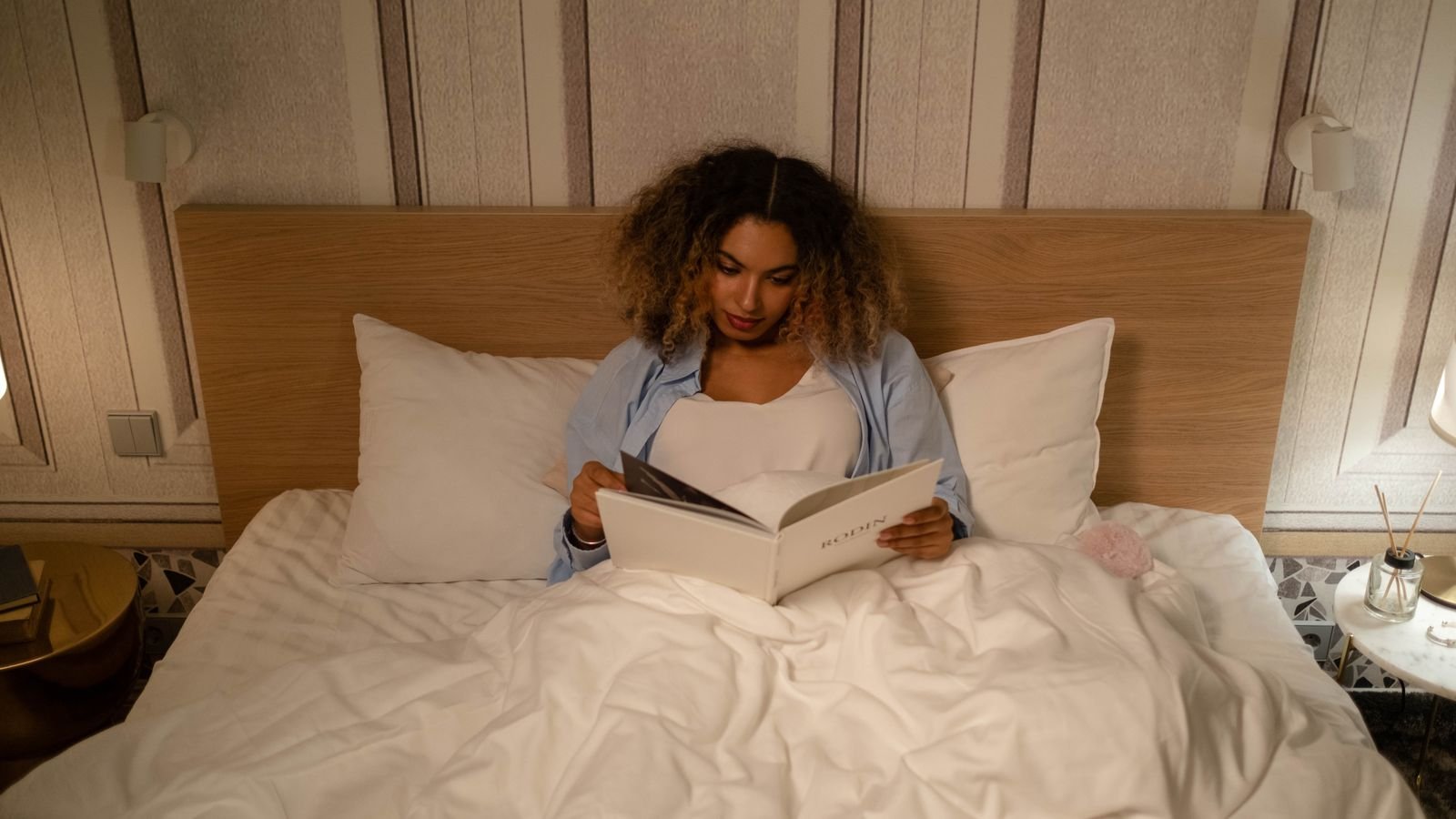
Extra Steps for a Very Light-Sensitive Partner
If your partner wakes at the faintest glow, layer a few more measures on top of good aiming. A sleep mask costs almost nothing and removes the problem entirely. A physical barrier, even a propped pillow between you, blocks a remarkable amount of spill. Tape a small piece of electrical tape over any charging or power indicator LED, which is often brighter than the reading light itself on its lowest setting.
Turn pages quietly and avoid the sudden movement of repositioning a clip mid-chapter, since motion and sound wake people as readily as light does. If you use an e-reader instead, set it to its warmest front-light temperature, drop the brightness to its lowest usable level, and consider a dark theme with light text, which reduces total emitted light substantially.
Common Mistakes to Avoid
- Using a cool white or daylight setting, which is both harsher on your partner and worse for your own sleep onset.
- Clipping the light on the inside edge of the book, pointing it straight at the person beside you.
- Running the brightness higher than needed because it was set that way in a lit room.
- Choosing a light with a bare exposed LED and no shade or optic.
- Leaving a charging cable stretched across the bed, which glows at the plug and gets caught in bedding.
- Aiming the beam flat, so it crosses the duvet and lights up the whole bed.
- Reading for hours right up to sleep, which no lighting choice can fully compensate for.
Maintenance and Battery Care
Charge the light before it fully depletes rather than running it flat every time; lithium cells last longer with partial cycles. Wipe the lens or diffuser occasionally, since a dusty lens scatters light in exactly the directions you spent time eliminating. Check the clip’s rubber pads for wear, because a clip that has lost its grip will slide and change your carefully set beam angle. If the gooseneck has gone floppy and no longer holds position, that is usually the end of a light’s useful life, since aim is the whole point.
Frequently Asked Questions
What color temperature is best for reading in bed?
2200K to 3000K, or a dedicated amber mode. Warm light contains far less melatonin-suppressing blue than the 4000K and above found in typical bulbs.
How bright does a book light need to be?
Far less than most people assume. Roughly 5 to 30 lumens on the page is comfortable in a dark room once your eyes have adapted.
Clip-on or neck light?
Clip-on suits paperbacks and moves with the book. Neck lights work better for hardbacks, tablets, and e-readers because they leave both hands free and keep a consistent angle.
Will a book light still affect my own sleep?
Minimally, if it is warm and dim. The bigger factor is how late you read. A warm, low-output light is close to sleep-neutral compared with a bedside lamp or a phone screen.
Can I use my phone instead?
You can, but a phone screen emits light directly at your face across a wide area, and even with night mode enabled it is a poorer choice than a properly aimed warm book light.
Final Thoughts
The whole trick is containment. Pick a light that is warm, dim, and directional; clip it on your outside shoulder; angle it down onto the page at about 45 degrees; and check the spill from your partner’s side of the bed before you settle in. Do that and you get to finish the chapter while the other half of the bed stays completely dark, which is the only version of this arrangement that works long term for both of you.