Owen Bradley
 Stairs are the single worst surface in a house to vacuum. They are vertical, they are narrow, they collect more grit and pet hair per square foot than any hallway, and every one of them has a corner, a riser, and an edge that a standard floor head simply cannot reach. The choice most people face is whether to wrestle a full-size upright up fourteen steps or to buy a dedicated handheld for the job. This guide compares handheld and upright vacuums for stairs across weight, suction, attachments, runtime, and technique, and gives you a clear way to decide which one belongs in your closet.
Why Stairs Are Genuinely Difficult
A staircase is a stack of small horizontal treads joined by vertical risers, with a nosing lip overhanging each one and a corner where tread meets riser that traps everything. Add a spindle balustrade or a carpet runner with exposed wood at the edges and you have four distinct surfaces within a single step.
Stair carpet also takes far more abrasion than flat flooring, so it holds embedded grit that only real agitation will lift. Meanwhile you are working one-handed on an unstable surface, which is why weight and balance matter more here than anywhere else in the house. Any honest comparison has to weigh cleaning power against how manageable the machine is when you are standing three steps up.
The Case for a Handheld Vacuum
A handheld is purpose-built for exactly this scenario. Most cordless handhelds weigh between two and four pounds, so you can hold one at arm’s length and work a tread thoroughly without your shoulder complaining. There is no cord to drag, no base unit to balance, and no risk of a heavy body tumbling down behind you.
The real advantage is the attachments. A motorized mini brush head, roughly six inches wide, fits a stair tread almost perfectly and provides genuine agitation for embedded pet hair. A crevice tool reaches the tread-riser corner and the gap beside the balusters. A dusting brush handles the spindles and the stringer. You can switch between them in seconds without setting the machine down.
The trade-offs are equally clear. Dust bins are small, often under half a litre, so you will empty mid-job on a full staircase. Runtime on a single charge ranges from about eight minutes at full power to twenty on eco mode, which is usually enough for one flight but not for a whole house. Raw suction is lower than a mains-powered upright, and filtration is often simpler.
The Case for an Upright Vacuum
An upright brings power that a handheld cannot match. Mains-powered motors and large motorized brush rolls lift deeply embedded soil from stair carpet in a way most cordless handhelds only approximate. Bins and bags are far larger, sealed HEPA filtration is common, and there is no runtime limit at all.
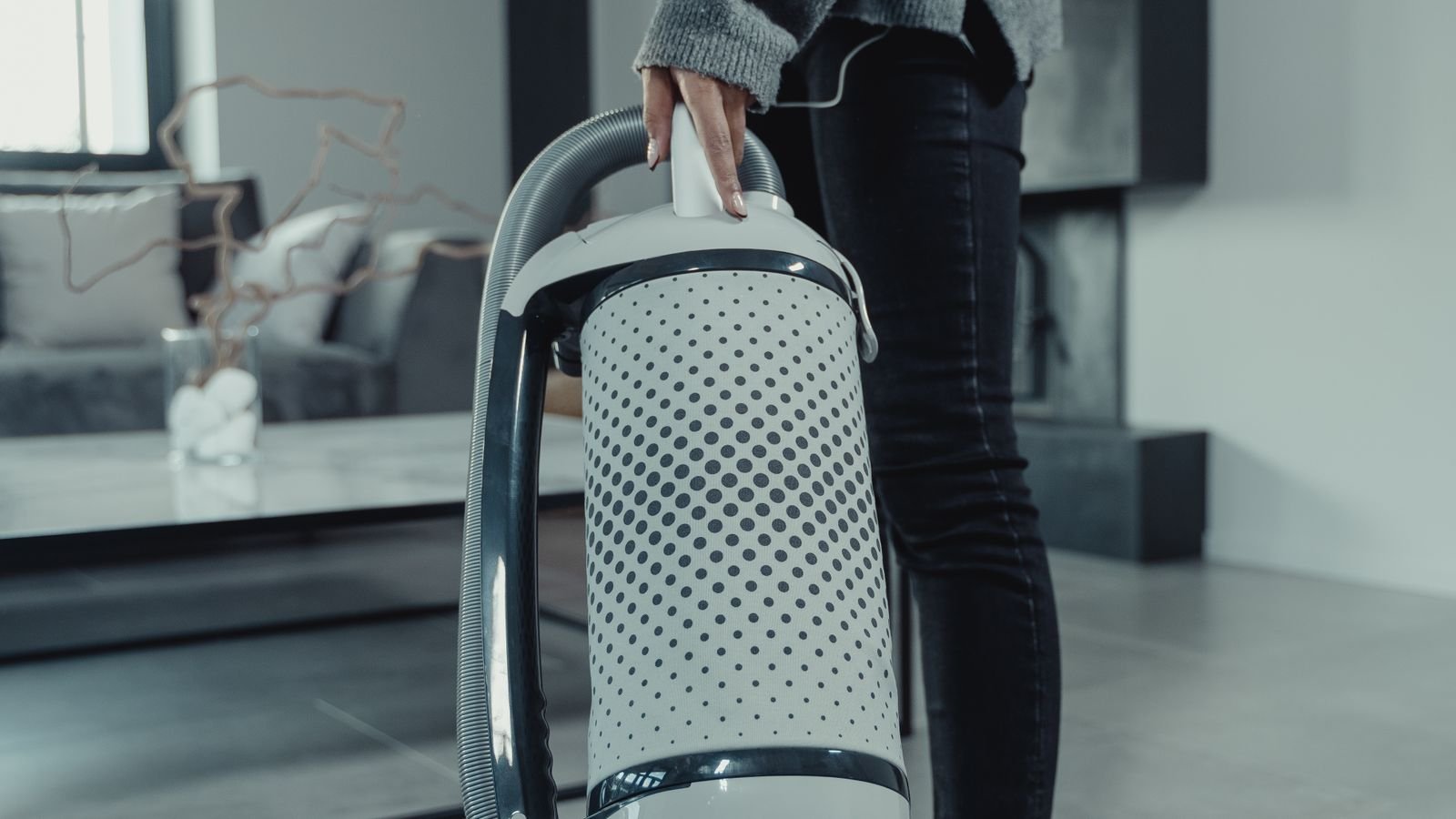
The catch is the form factor. A typical upright weighs 12 to 18 pounds. Carrying that up a staircase one step at a time while holding the hose is awkward at best and genuinely unsafe on a steep flight or for anyone with a shoulder, back, or balance issue. Most people compromise by leaving the body at the bottom or top of the stairs and working with the hose and wand, which is workable only if the hose reaches. Check the stretched hose length before assuming it will; many uprights offer six to twelve feet of reach, which covers a short flight but not a tall one, forcing you to reposition the body halfway.
Upright attachments also tend to be less refined for this job. Many include a small turbo tool driven by airflow rather than a motor, which works but stalls in thick pile. Some include no powered stair tool at all, leaving you with a passive upholstery head that pushes hair around rather than pulling it up.
Head-to-Head on What Matters
- Weight and safety: Handheld wins decisively. Two to four pounds versus twelve to eighteen is not a close comparison on a staircase.
- Deep cleaning power: Upright wins, particularly on dense or high-traffic stair carpet with years of embedded grit.
- Reaching corners and edges: Handheld wins, thanks to short crevice tools and a compact body.
- Capacity and runtime: Upright wins outright, with no battery limit and a bin several times larger.
- Pet hair: A tie, provided the handheld has a genuinely motorized mini brush rather than a passive one.
- Setup time: Handheld wins. Grab it off the charger and start; no cord, no outlet hunting.
- Hard-surface stairs: Handheld wins, since a hard upright brush roll can scatter debris and mark wood nosings.
- Cost per job: Upright wins if you already own one, since a handheld is an additional purchase.
How to Decide: Five Questions
- How many flights do you have? One short flight suits either. Two or more flights, or a tall staircase, makes the handheld’s convenience decisive and its runtime the thing to check.
- Carpet, wood, or a runner? Thick wall-to-wall stair carpet benefits from upright power. Bare wood or a narrow runner with exposed edges strongly favors a handheld with a soft brush and crevice tool.
- Do you have pets? Shedding animals mean you will clean stairs weekly, not monthly, and that frequency argues for whatever tool you will actually pick up, which is almost always the lighter one.
- Can you comfortably carry 15 pounds up a staircase? If the honest answer is no, the decision is already made.
- Does your upright’s hose reach the full flight? Measure it. If it does, an upright with a good powered stair tool may be all you need.
For most households the practical answer is a combination: keep the upright for the flat floors and use a cordless handheld for the stairs, upholstery, and car. If you are buying that second machine, comparing the current best handheld vacuums with attention to motorized brush attachments and battery runtime will narrow the field faster than looking at suction figures alone.
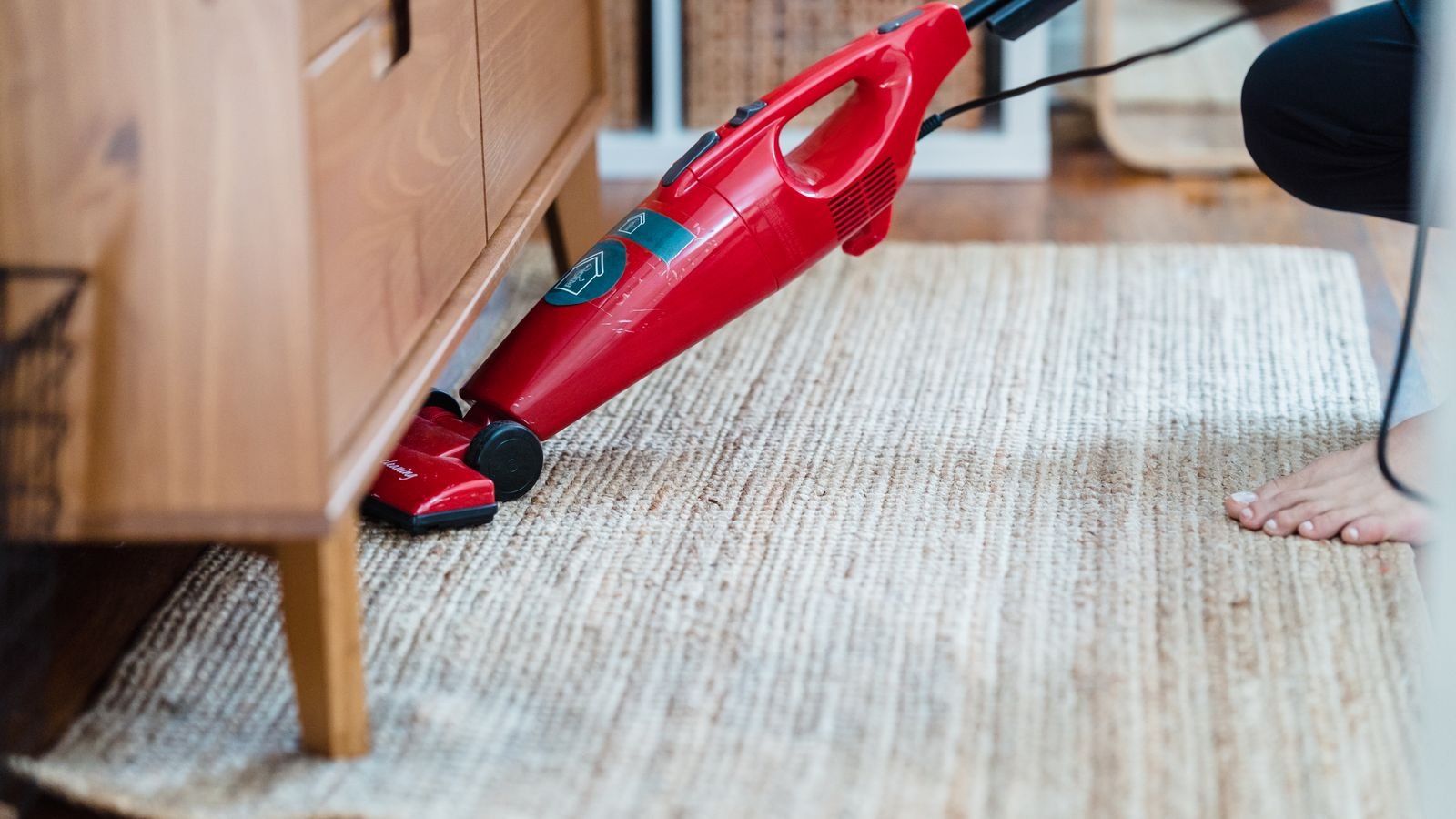
Technique: Cleaning Stairs Properly
- Dry dust first. Wipe down the handrail, spindles, and any ledges before vacuuming so falling dust lands on carpet you have not cleaned yet.
- Work top to bottom. Gravity is on your side, and you avoid re-soiling finished treads.
- Do the corner first. Run the crevice tool along the full width where each tread meets its riser, then along both side edges. This is where the majority of the grit lives.
- Then the tread face. Switch to the motorized mini head and make short overlapping passes across the tread, front to back, twice in each direction on carpet.
- Do not skip the riser. Vertical faces collect dust and pet hair, especially in households with dogs.
- Finish the spindles and stringer. A soft dusting brush along the balusters and the outer skirting board completes the job.
- Sit or kneel two steps below the one you are cleaning. It is stable, it saves your back, and it keeps the machine below you rather than above.
Common Mistakes to Avoid
- Balancing a heavy upright on a step while you work; if it goes, it takes the balustrade or you with it.
- Cleaning bottom to top and dragging soil back over finished treads.
- Using only the floor head and ignoring the corner where the real dirt accumulates.
- Letting a handheld’s filter clog, which silently halves suction within a few weeks.
- Running an aggressive brush roll on bare wood nosings, which scuffs the finish.
- Starting a full staircase on a half-charged battery and stalling at step nine.
Maintenance That Keeps Either One Working
Empty a handheld’s bin after every stair session, not when it looks full, because a small bin restricts airflow quickly. Rinse washable filters monthly and let them dry completely for at least 24 hours before reinstalling; a damp filter is the fastest way to kill suction and grow odor. Cut tangled hair off brush rolls with scissors every few weeks, since a bound roll stops agitating entirely. Store cordless units on the charger where the manufacturer recommends, and avoid leaving a battery fully depleted for long stretches.
Frequently Asked Questions
Is a handheld powerful enough for stair carpet?
A modern cordless handheld with a motorized mini brush handles routine hair and surface grit well. For deeply embedded soil in dense carpet, an upright or a periodic deep clean still does better.
Can I use my upright’s hose instead of buying a handheld?
Yes, if the hose reaches your whole flight and you have a powered or turbo stair tool. Measure the stretched hose length before assuming it will.
What attachment matters most for stairs?
A motorized mini brush head, roughly six inches wide. It is the single attachment that separates a tool that lifts pet hair from one that just moves it around.
How long does a handheld battery need to last?
Budget about a minute per step at full power. A fourteen-step flight wants at least fifteen minutes of realistic runtime, so check the rating in the mode you will actually use.
How often should stairs be vacuumed?
Weekly in a pet household or a busy family home, every other week otherwise. Stairs concentrate traffic, so they soil roughly twice as fast as adjacent flooring.
Final Thoughts
If you own a capable upright with a long hose and a powered stair tool, and your staircase is a single short flight of tough carpet, you already have what you need. For everyone else, a lightweight cordless handheld with a motorized mini brush is the tool that gets stairs genuinely clean, mostly because it is the one you will actually reach for. Match the machine to your surface and your staircase, use the corner-first technique, and the hardest surface in the house stops being a chore you postpone.