Owen Bradley
 Learning how to read a digital meat thermometer for perfect doneness is the fastest way to stop guessing in the kitchen. Colour, timing charts and the finger-press test are all unreliable proxies; internal temperature is the only measurement that actually tells you what is happening inside the food. But a thermometer only helps if you probe the right spot, wait for the reading to stabilise, and understand carryover cooking. Get those three things right and you will hit your target doneness consistently, from a weeknight chicken breast to a holiday roast.
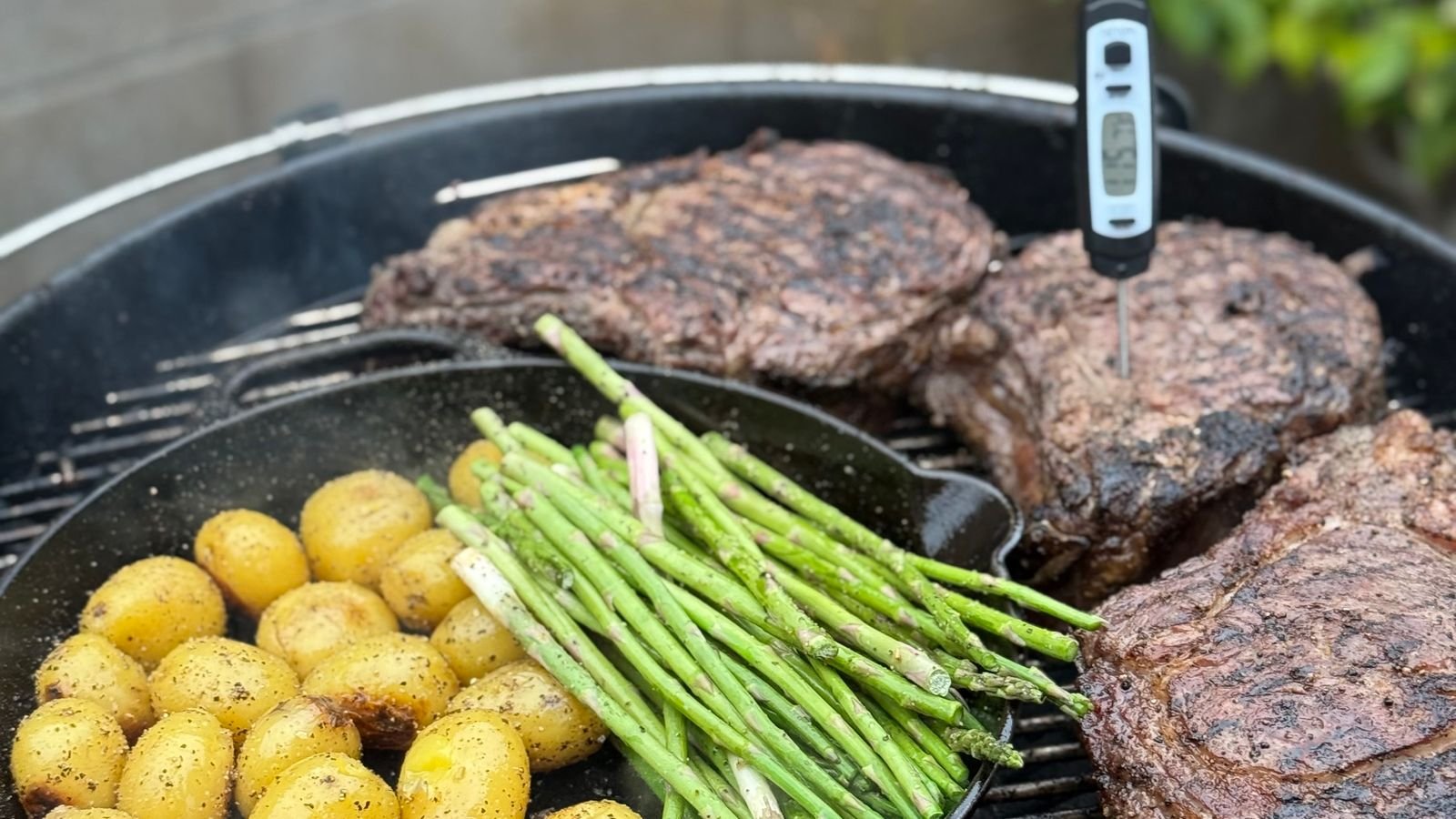
Know Which Kind of Thermometer You Are Holding
- Instant-read thermometers are handheld probes you insert briefly and remove. Good ones read in two to four seconds. They are the workhorse for steaks, chops, chicken pieces and checking a roast near the end.
- Leave-in probe thermometers have a heat-resistant cable and stay in the food throughout cooking, with the display outside the oven or grill. They are ideal for large roasts, whole birds and long smokes because you never open the door.
- Wireless probe thermometers are fully self-contained and report to your phone. Convenient for long cooks, and many predict finish time.
- Infrared thermometers read surface temperature only. They are useful for checking a pan or griddle but tell you nothing about the interior of meat.
Response time is the specification that matters most for an instant-read. A thermometer that takes fifteen seconds to settle means you are holding an oven door open, losing heat, and getting tempted to pull it early and misread. If you are comparing options, roundups of the best digital meat thermometers generally list both response time and accuracy tolerance, which are the two numbers worth caring about.
Step-by-Step: Taking an Accurate Reading
- Verify the thermometer is accurate first. Fill a glass with crushed ice and add cold water to the top. Stir, wait a minute, and insert the probe without touching the sides or bottom. It should read 32 degrees Fahrenheit within one or two degrees. Do this monthly, and after any drop.
- Insert into the thickest part of the meat. Aim for the geometric centre of the thickest section, which is the last place to reach temperature. On a whole bird, that is the deepest part of the breast and separately the inner thigh.
- Avoid bone, fat and gristle. Bone conducts heat and reads hotter than the surrounding meat; large fat pockets read differently too. Touching either gives a false high reading and undercooked meat.
- Do not push the probe through to the pan. If the tip exits the far side or touches hot metal, you are measuring the pan, not the food. Insert to roughly the centre and stop.
- Probe from the side on thin cuts. For steaks, chops, burgers and fish fillets under an inch and a half, insert horizontally through the edge so the sensor sits in the middle of the thickness. Probing from the top on a thin cut almost guarantees the sensor is in the wrong place.
- Know where the sensor actually is. On most instant-read probes the sensing element is in the last quarter inch of the tip, but on some it sits further back. Check your manual, because inserting only a few millimetres on a thermometer with a deeper sensor gives a meaningless number.
- Wait for the number to stabilise. Watch the display until it stops climbing and holds steady for two or three seconds. A moving number is not a reading.
- Slowly draw the probe back and watch for the low point. Push slightly past centre, then pull back gradually. The lowest number you see is the true coolest point, and that is the one that matters for safety and doneness.
- Take multiple readings on large or irregular cuts. A whole chicken, a bone-in roast or an odd-shaped brisket needs three or four checks in different areas. Cook to the coldest of them.
- Wipe the probe between readings. Clean it with a paper towel or hot soapy water, especially when moving from raw to cooked food, to avoid cross-contamination.
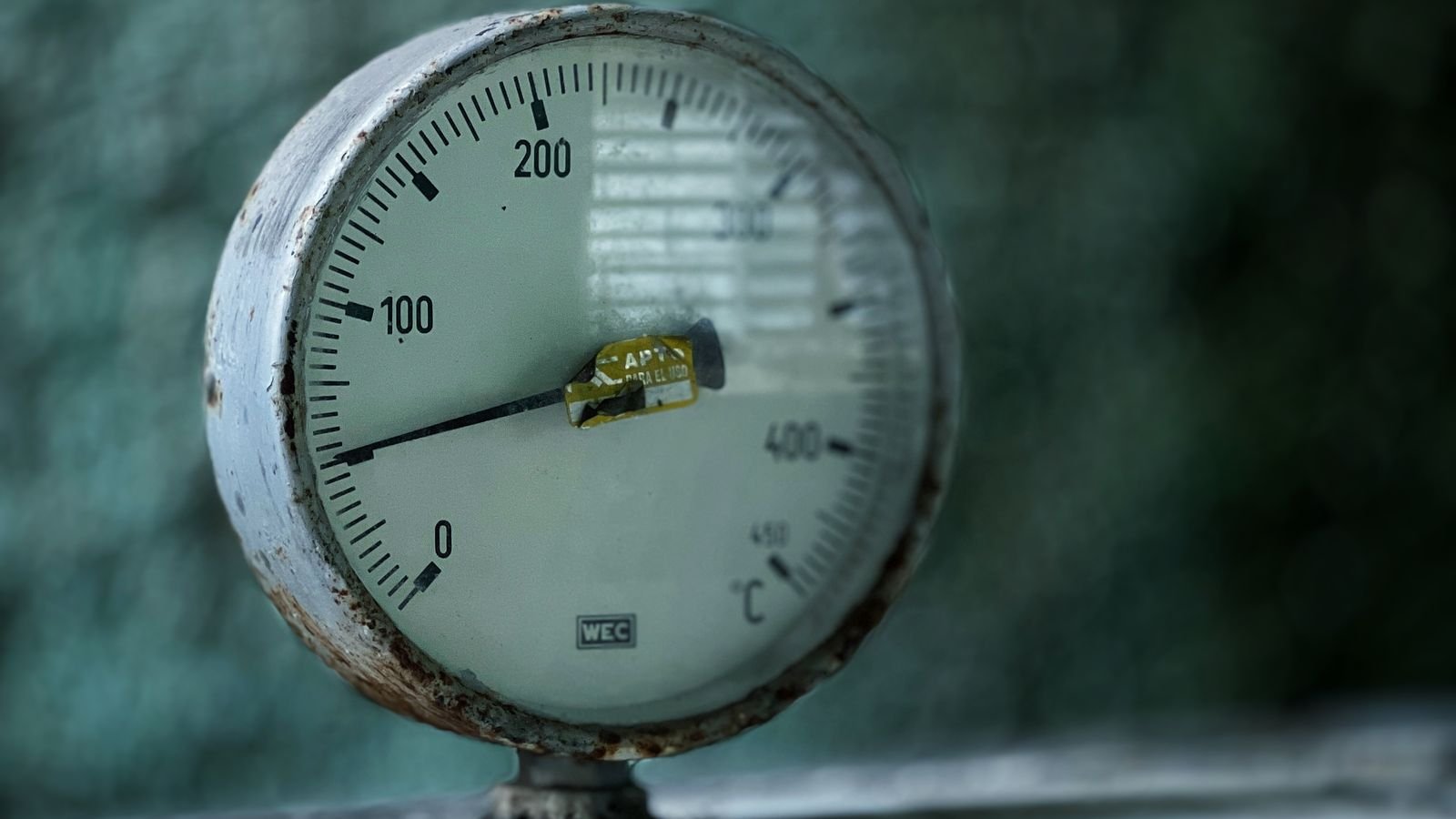
Target Temperatures and What They Mean
These are the pull-from-heat targets for beef, lamb and duck breast, before resting:
- Rare: 120 to 125 degrees Fahrenheit — cool red centre, very soft
- Medium rare: 130 to 135 degrees — warm red centre, the sweet spot for most steak cuts
- Medium: 140 to 145 degrees — warm pink throughout
- Medium well: 150 to 155 degrees — slightly pink, noticeably firmer
- Well done: 160 degrees and above — no pink, considerably drier
For poultry, cook to 165 degrees in the thickest part of the breast and thigh. Ground meat should reach 160 degrees throughout, because grinding distributes surface bacteria through the whole mass. Pork chops and roasts are excellent at 145 degrees with a short rest, which leaves them faintly pink and far juicier than the old well-done guidance. Fish is generally done at 130 to 140 degrees, with salmon often preferred nearer 125.
Carryover Cooking: The Part Everyone Forgets
Food keeps cooking after it leaves the heat because the hot exterior continues conducting inward. This is called carryover, and ignoring it is the most common reason people overshoot.
- Thin cuts like steaks and chops rise about 3 to 5 degrees while resting.
- Large roasts can rise 10 degrees or more, occasionally 15 on a big prime rib.
- Higher cooking temperatures produce more carryover because the thermal gradient between surface and centre is steeper.
The practical rule is to pull the meat from heat when it reads about 5 degrees below your target for steaks and chops, and 10 degrees below for large roasts. Then rest it — 5 to 10 minutes for individual portions, 15 to 30 minutes for a large roast — and check again just before serving. Resting also lets the muscle fibres relax and reabsorb juices, so slicing immediately loses moisture regardless of temperature.
Common Mistakes to Avoid
- Probing too shallow. The sensor must reach the centre. A surface reading is always misleadingly high.
- Hitting bone. Reads hot and leaves the meat around it underdone.
- Reading before the display settles. Wait for a stable number, not the first one that appears.
- Never calibrating. Thermometers drift, especially after being dropped. The ice water test takes two minutes.
- Submerging a non-waterproof unit. Many instant-reads are splash-resistant only. Check the rating before washing, and never put one in a dishwasher unless it says you can.
- Leaving an instant-read in the oven. Only leave-in probes are built to survive sustained oven heat. An instant-read left in will be destroyed.
- Ignoring carryover. Cooking to the target rather than below it means serving one doneness level higher than you intended.
- Opening the oven repeatedly to check. Every check costs heat and time. Use a leave-in probe for long cooks.
Care and Calibration
A thermometer is a measuring instrument and deserves a little care. Store it in its sleeve or a drawer where the probe cannot be bent. Replace the battery at the first sign of a dim or sluggish display, since low voltage causes erratic readings before it causes failure. Clean the probe after every use and dry it fully. Run the ice water test monthly and a boiling water check occasionally — water boils at 212 degrees at sea level, lower at altitude, so adjust your expectation if you live high up. If a unit reads consistently off and has no calibration adjustment, treat the offset as known and mentally correct for it, or replace the thermometer.
Frequently Asked Questions
Where exactly do I insert a meat thermometer?
Into the thickest part of the cut, at its geometric centre, avoiding bone, large fat deposits and the pan. On thin cuts, insert horizontally through the side.
How long should I wait for the reading?
A quality instant-read settles in two to four seconds. Wait until the number stops changing and holds for a couple of seconds before trusting it.
Why does my thermometer give different readings in the same piece of meat?
Because meat does not cook uniformly. Different depths and areas genuinely differ. Take several readings and cook to the lowest one.
Should I check the temperature before or after resting?
Both. Pull the meat below your target, then check again after resting to confirm carryover brought it where you wanted.
Can I leave an instant-read thermometer in the oven?
No. Only leave-in probe thermometers with heat-rated cables are designed for that. An instant-read will be damaged by sustained oven heat.
Final Thoughts
Reading a digital meat thermometer well is a small set of habits rather than a skill you have to develop over years. Calibrate it in ice water, probe the thickest part while avoiding bone and pan, draw back slowly and take the lowest stable number, then pull the food 5 to 10 degrees below your target and let carryover finish the job during the rest. Do that consistently and doneness stops being a matter of luck — the thermometer simply tells you the answer every time.