Owen Bradley
 Most kitchen fires start the same way: a pan left unattended for ninety seconds. What happens next depends almost entirely on what is within arm’s reach and whether you know how to use it. Reach for the wrong tool, or the right tool used wrongly, and a contained pan fire becomes a room fire in seconds. The fire extinguisher versus fire blanket debate is usually framed as a choice, but for a domestic kitchen it rarely is. They solve different problems, fail in different ways, and the sensible answer for most homes is to keep both, positioned so you can grab either without walking towards the flames. Here is how each one works, when to use which, and what to buy in 2026.
Why Kitchen Fires Are Different
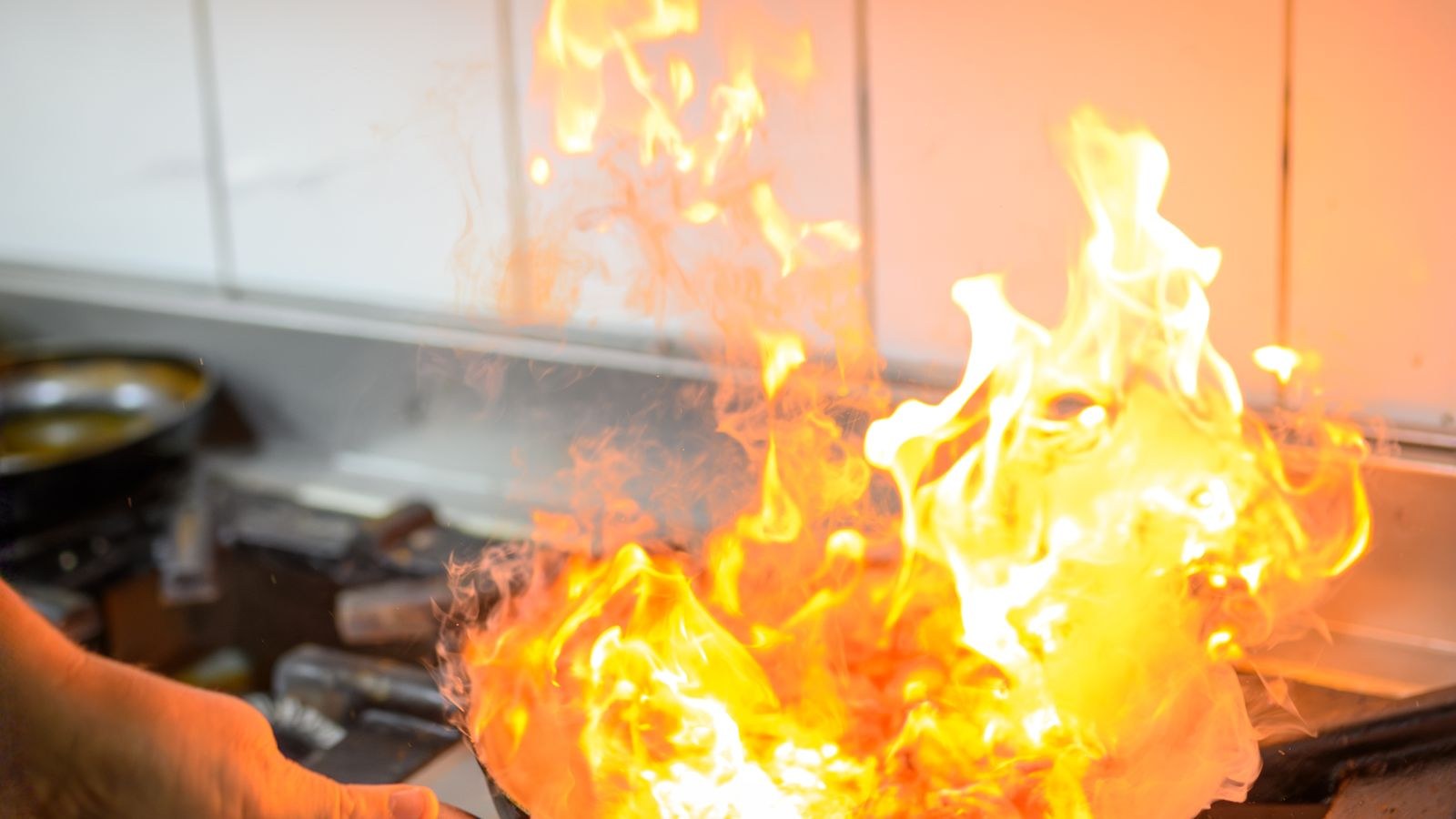
A kitchen fire is usually a cooking oil or fat fire, classified separately from ordinary burning materials because it behaves differently. Cooking oil ignites around 350 to 375°C and, once alight, sustains itself at temperatures far above the boiling point of water.
That temperature difference is why the most instinctive response is the most dangerous. Throwing water onto burning oil causes the water to flash to steam instantly, expanding roughly 1,700 times in volume and blasting burning oil across the room in a fireball. This is the single most common way a manageable kitchen fire becomes a house fire, and it is why neither a water extinguisher nor a wet cloth belongs anywhere near a pan fire.
The other quality of an oil fire is reignition. Oil holds heat, so smothering the flames is not the same as making the pan safe. If the oil is still above its ignition temperature when air reaches it again, it simply relights. Whatever you use has to stay in place long enough for the oil to cool.
How a Fire Blanket Works
A fire blanket is a sheet of woven glass fibre, usually one metre square or slightly larger, stored in a wall pouch with two pull tabs. It puts out a fire by smothering it, cutting off the oxygen supply completely.
Its advantages in a kitchen are considerable. It is silent and clean, leaves no residue at all, requires no aiming or technique beyond laying it down, and cannot spread burning oil the way a jet of extinguishant can. It also works on a person whose clothing has caught fire, which no extinguisher does safely, and it can be used to shield yourself while leaving a room.
The limitations are equally clear. A blanket only covers what it can physically cover, so it is useless on anything larger than the pan or small appliance in front of you. It requires you to approach the fire and place your hands directly above it, which is intimidating and genuinely dangerous if the flames are already reaching the extractor hood. And most domestic blankets are single-use once they have been in a fire.
Using a Fire Blanket Correctly
- Turn off the heat if you can reach the control without reaching over the flames.
- Pull both tabs to release the blanket from its pouch.
- Wrap the top edges around your hands so the fabric shields your fingers and wrists.
- Hold it up in front of you like a shield as you approach, keeping your face behind it.
- Lay it down over the pan from the near edge to the far edge, never dropping it from above, which pushes air and flame outwards.
- Leave it in place for at least 30 minutes and do not lift it to check. The oil must cool below its ignition point.
- Evacuate and call the fire service if the fire is not fully out within seconds.
How Fire Extinguishers Work
Extinguishers cover far more ground than a blanket, but the type matters enormously, and buying the wrong one for a kitchen is worse than useless.
- Wet chemical extinguishers are purpose-designed for cooking oil fires. They spray a fine mist of potassium salts that react with hot oil to form a soapy crust, sealing the surface while cooling it. This is the correct tool for a deep fat fryer or a substantial oil fire, and it is the only type rated specifically for cooking media.
- Dry powder extinguishers work on almost everything, including electrical fires, and are cheap and widely sold. But in an enclosed kitchen the powder cloud destroys visibility instantly, contaminates every surface and all exposed food, is unpleasant to inhale, and the discharge pressure can splash burning oil. Many fire services advise against powder indoors.
- Carbon dioxide extinguishers are excellent for electrical fires and leave no residue, which makes them useful for an oven, microwave, or appliance fire. They are poor on oil, because the high-pressure gas jet can scatter burning liquid and provides no cooling.
- Foam and water types must not be used on cooking oil at all.
For a domestic kitchen, a small wet chemical unit is the ideal primary extinguisher, with a CO2 unit as a sensible second if you want electrical coverage. Choosing between the types is covered in more detail in our home fire extinguisher guide, and specific domestic-sized options are compared in our roundup of the best home fire extinguishers.
Using an Extinguisher Correctly
The standard technique is remembered as PASS: Pull the safety pin, Aim at the base of the fire rather than the flames, Squeeze the handle, and Sweep side to side. For wet chemical units on oil there is one crucial modification: apply the spray gently and indirectly, ideally at a low angle or onto a surface above the pan so it falls softly, never as a direct jet into the oil.
Stand back roughly two metres, keep an exit route behind you at all times, and never let the fire come between you and the door. If the extinguisher does not visibly gain ground within a few seconds, stop, leave, close the door behind you, and call the fire service.
Direct Comparison for the Kitchen
For a small pan fire on the hob, the fire blanket is generally the better first response. It is faster to deploy, cannot scatter oil, leaves no mess, and there is nothing to aim. Most domestic kitchen fires are exactly this size.
For a deep fat fryer, a fire that has spread beyond the pan, or anything involving an appliance or the wall behind the hob, an extinguisher is the only realistic option, because a one-metre blanket cannot cover it. Extinguishers are also multi-use during a single incident and cover fires elsewhere in the house that a kitchen blanket never will.
On cost, a blanket is inexpensive and needs almost no maintenance. An extinguisher costs more, requires periodic pressure checks, and has a defined service life. On skill, a blanket is far more forgiving; extinguishers are frequently used wrongly under stress, and the most common error is aiming at the flames instead of the base.
Where to Put Them
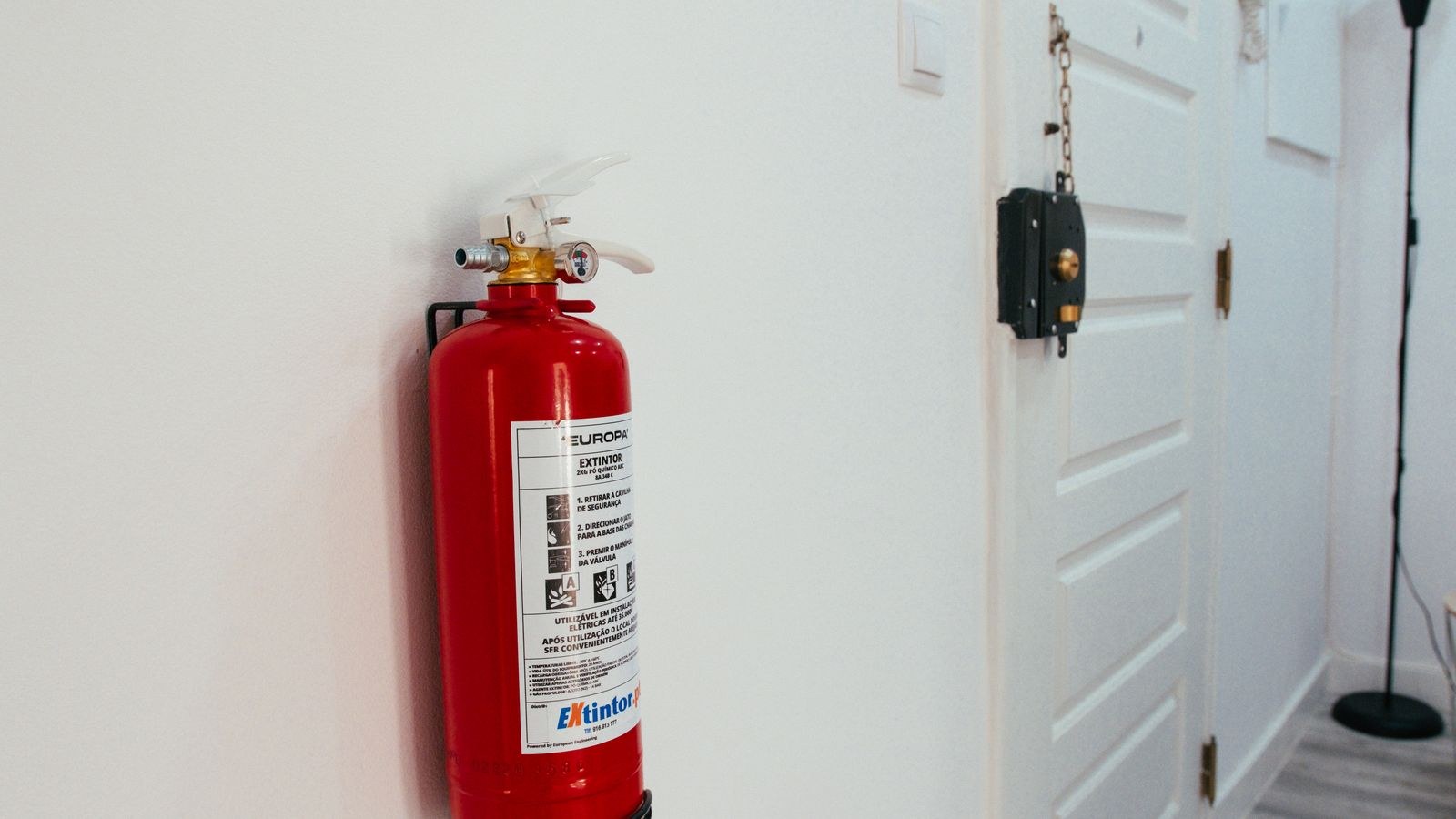
Placement is what makes either device useful. Mount both near the exit route, not next to the hob. Equipment stored above or beside the cooker is exactly where you cannot reach it during a hob fire. A good position is on the wall by the kitchen doorway, at around chest height, visible and unobstructed rather than shut inside a cupboard.
Make sure everyone in the household, including older children and any regular visitors, knows exactly where both are and has read the instructions before there is an emergency. A blanket nobody knows how to open is decoration. Consider a second extinguisher elsewhere in the home, typically a multipurpose unit in a hallway or near the garage, and pair all of it with working smoke alarms, since detection buys the seconds that make intervention possible at all. Broader planning for household equipment is covered in our fire safety buying guide.
When Not to Fight the Fire at All
Both devices are for small, contained fires you catch early. Leave immediately and call the emergency services if flames have reached the extractor hood, cupboards, or ceiling, if the room is filling with smoke, if the fire is bigger than the equipment you hold, if you would have to reach through flames, or if you are at all unsure.
Close the door behind you as you go, since a closed door slows fire spread dramatically. Never re-enter a property once you have left. A pan is replaceable and so is a kitchen; the decision to fight a fire should take no more than a couple of seconds and should always favour leaving.
Maintenance and Replacement
Check an extinguisher’s pressure gauge every few months, confirming the needle sits in the green band, and give it a gentle shake if it is a powder type to prevent the contents compacting. Most domestic units carry a service life of around five to ten years and should be replaced at the end of it regardless of appearance. Any extinguisher that has been discharged even briefly needs recharging or replacing immediately.
Fire blankets need almost nothing beyond checking that the pouch is intact, mounted securely, and not blocked by anything. Replace any blanket that has been used, that shows tears or scorching, or that has passed the manufacturer’s stated expiry date. Certified options for household use are compared in our roundups of the best fire extinguishers and the best fire extinguishers for home use.
Frequently Asked Questions
Can I use a fire blanket on a deep fat fryer?
Only if the fryer is small enough to be fully covered, and even then it is risky because the volume of hot oil retains heat for a long time. A wet chemical extinguisher is the appropriate choice for any substantial quantity of cooking oil.
Why not just use a damp tea towel?
Because the water in it turns to steam violently on contact with burning oil and can throw flames across the room. Household fabrics also ignite readily. Use a purpose-made fire blanket, which is designed to withstand the temperature.
Is a dry powder extinguisher acceptable in a kitchen?
It is better than nothing, but powder is a poor indoor choice. It eliminates visibility, contaminates the whole room, and its discharge can splash burning oil. Wet chemical is the correct type for kitchen use.
How long should I leave a fire blanket in place?
At least half an hour. Cooking oil stays above its ignition temperature long after the flames are out, and lifting the blanket early lets oxygen back in and can restart the fire immediately.
Do I really need both?
For most homes, yes. A blanket handles the small pan fires that make up the majority of kitchen incidents cleanly and simply, while an extinguisher covers everything larger and every fire outside the kitchen. Together they cost little and cover far more scenarios.
Final Thoughts
Fire extinguisher versus fire blanket is the wrong framing for a kitchen, because each covers the other’s blind spot. Keep a fire blanket by the door as your instant response to a pan fire, keep a wet chemical extinguisher nearby for anything bigger or involving significant volumes of oil, and never let water anywhere near burning fat. Mount both on the exit side of the room, make sure everyone knows how they work before they are needed, check them a couple of times a year, and be ready to abandon the attempt and leave the moment the fire outgrows what you are holding.