Owen Bradley
 Most office chairs are designed around a single assumption: your desk is about 29 inches tall. The moment that assumption breaks, the chair stops working. Raise a standing desk to 42 inches, sit at a drafting table, work at a kitchen island, run a lab bench or stand behind a reception counter, and a conventional chair leaves your feet dangling and your elbows well below the work surface. A drafting chair exists precisely to fill that gap. It is a tall chair with an extended gas cylinder and a footring, and for the right person it is transformative. For the wrong person it is an expensive, wobbly perch. This guide explains who genuinely needs a tall chair, how to size one correctly, and how it differs from the stools and perch seats that compete for the same money in 2026.
What a Drafting Chair Actually Is
A drafting chair is, in most cases, a standard task chair seat and backrest mounted on a taller cylinder, with a circular or D-shaped footring fitted around the column. That footring is the defining feature. Without it, your legs hang unsupported, blood pools in your feet and the pressure under your thighs becomes unbearable within an hour. With it, you get a stable platform for your feet at the correct relative height, and the chair behaves much like a normal one shifted upward.
Seat heights typically start around 22 inches and rise to 32 or even 34 inches, compared with roughly 17 to 21 inches on a conventional chair. The name comes from drafting tables, the steeply angled boards architects and engineers once worked at, but the modern audience is far broader. Anyone whose work surface sits above about 34 inches is a candidate.
Who Genuinely Needs One
- Standing desk users who want to sit sometimes. Rather than lowering the desk every time, a tall chair lets you drop into a seated position at the same desk height.
- Kitchen island and counter workers. Counters sit around 36 inches, bar tops around 42, both far above regular chair range.
- Drafting, art and craft. Angled boards, sewing tables and workbenches favour an elevated, slightly forward-leaning posture.
- Lab, medical and dental work. Bench heights are standardised well above desk height, and the perched posture aids precise hand work.
- Reception, retail and workshop staff. A tall chair allows brief rests without dropping out of eye contact with customers.
- Salon, barber and studio professionals. Working over a seated client requires elevation the standard chair cannot deliver.
If none of these describe you, and your desk is a normal fixed height, a drafting chair will actively hurt your ergonomics. Height for its own sake is not a benefit. Buyers exploring the category properly usually start with a shortlist like the best drafting chairs to see the real height ranges before committing.
How to Size a Drafting Chair Correctly
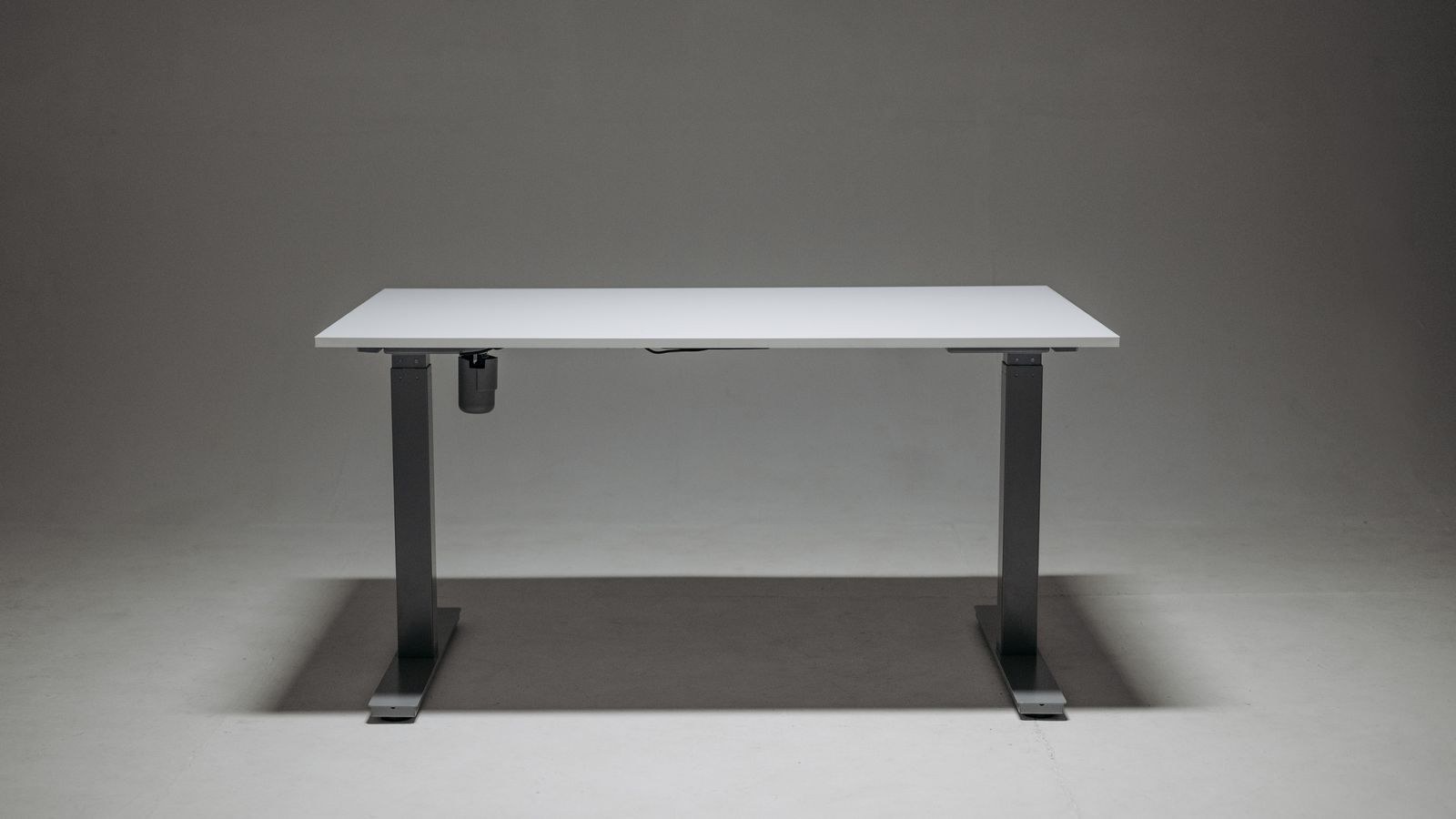
Sizing is where most purchases go wrong, and the arithmetic is straightforward. Measure the height from the floor to the underside of your work surface. Subtract roughly 9 to 11 inches for thigh clearance and elbow position, and that gives you the seat height you need. A 42-inch standing desk therefore wants a seat somewhere around 31 to 33 inches, which is at the very top of most drafting chair ranges.
Then check the other end. Gas cylinders have a fixed stroke, usually 8 to 10 inches, so a chair that reaches 32 inches at maximum will only drop to about 23 inches. If you also want to use the chair at a normal desk, that low limit will still be too tall. Buying one chair for two very different heights rarely works, and the honest answer is usually to choose the height you use most.
Getting the Footring Right
The footring should sit so your knees are at roughly a right angle when your feet rest on it, with thighs sloping very slightly downward. An adjustable footring is worth paying for, because a fixed ring positioned for an average user will be wrong for anyone notably taller or shorter. Check the ring diameter too: a narrow ring forces your feet together and creates hip tension, while a generous ring lets you shift position through the day.
Material matters more than it sounds. A textured or powder-coated ring holds shoes better than slippery chrome. If the ring is only supported at one point on the column, test how much it flexes under real weight before trusting it.
Drafting Chair vs Standing Desk Stool vs Perch Seat
These three categories overlap and are constantly confused. A drafting chair has a full backrest, a footring, casters and a five-star base, and is designed for sustained seated work. A standing desk stool or perch seat usually has a small saddle-style or tilting seat, minimal or no back, and often a weighted, rocking base rather than casters. It is designed for brief, active perching between standing periods, keeping your hips open at roughly 130 degrees.
The choice depends on how long you sit at a time. If you work seated at a raised desk for two or three hours at a stretch, you need a proper backrest and a stable footring, which points to a drafting chair. If you alternate every 20 to 30 minutes and mostly want to take weight off your legs, a stool is lighter, cheaper and far easier to move out of the way. Comparing the best standing desk stools against a full drafting chair is worth doing before you spend, because the two feel completely different in practice.
A third option, the best standing desk chairs category, sits between them: tall chairs with lighter frames and often a forward-tilting seat built specifically for sit-stand workflows rather than traditional drafting tables.
Stability and Safety at Height
Physics is not on your side when you raise a seat by a foot. The centre of gravity climbs, the tipping moment increases, and a base that felt perfectly stable at desk height can feel twitchy at counter height. Look for a base diameter of at least 26 inches on a tall chair, and prefer heavier metal bases over lightweight nylon.
Casters deserve real thought. Rolling backward as you climb onto a tall chair is genuinely dangerous, and it happens more often than people admit. Locking casters, braked casters that engage when unweighted, or glides instead of wheels all solve this. If you work on a hard floor, soft polyurethane wheels grip better than the hard plastic casters usually shipped as standard.
Weight capacity ratings also matter more here, because the longer cylinder puts extra leverage on the mechanism. Treat the stated capacity as a genuine ceiling rather than a suggestion, and be sceptical of very cheap tall chairs quoting the same capacity as their standard-height siblings.
Adjustments Worth Insisting On
Because you will sit in a more forward, perched posture, some adjustments matter more on a drafting chair than on a normal one. Seat tilt that lets the front edge drop a few degrees is genuinely valuable: it opens your hip angle and reduces the pressure under your thighs that plagues tall seating. Seat depth adjustment prevents the front edge digging into the back of your knees when you lean into the work surface.
Lumbar support should be adjustable in height as well as depth, because a perched posture places your lumbar curve differently than an upright seated one. Armrests are more optional here. Many drafting chairs are sold armless deliberately, since arms collide with high work surfaces and get in the way of drawing, cutting or lab work. If you do want arms, insist they drop low enough to clear your desk edge, and consider removable ones.
Materials, Comfort and Long Sessions
Seat construction carries more weight in a tall chair because you sit with less of your body weight on your feet and more on the seat edge. Dense, contoured foam with a waterfall front edge relieves the pressure point behind the knees far better than a flat slab of soft padding. Mesh seats can work well and run cool, but a cheap mesh panel with a hard frame rim under the thighs becomes painful quickly at height.
Backrests on drafting chairs tend to be mid-height by design, which suits the leaning-forward posture. A very tall back is rarely useful here, since you are seldom fully reclined. Fabric or mesh is generally preferable to leather, because perched work tends to be more active and generates more heat.
Budget Tiers and What You Get
Entry-level drafting chairs, roughly under $150, are usually a basic task seat on a long cylinder with a fixed chrome footring. They achieve the height and nothing more, and the footring position will suit some users and not others. They are a reasonable choice for occasional use at a craft table but tend to feel unstable during long sessions.
The mid tier, around $200 to $400, adds an adjustable footring, seat depth or tilt adjustment, a metal base and better foam. This is where most sit-stand users should be shopping, and where guides to the best drafting chairs for standing desks concentrate their picks, because sit-stand use demands the widest height range and the best stability.
Above that you are paying for weight-responsive tilt mechanisms, longer warranties, replaceable cylinders and genuinely refined seat shapes. If you spend most of your working week at a raised desk, that investment is easier to justify than it is for occasional use. Comparison lists covering the best chairs for standing desks are helpful for seeing where the price steps actually deliver something.
Common Mistakes to Avoid
The biggest mistake is buying a drafting chair without measuring the desk. People assume “tall” is a single category, then discover the chair maxes out three inches below where they need it. The second is buying one without a footring, or with a footring that cannot be adjusted, which turns a good seat into a circulation problem.
A third mistake is expecting a tall chair to double as a regular desk chair. The cylinder stroke rarely allows it. A fourth is underestimating floor protection: tall chairs concentrate more load per caster, and unsuitable wheels mark hard floors quickly. Finally, many buyers ignore the ceiling clearance issue in rooms with sloped ceilings or overhead cabinets, then find they cannot sit upright where they intended to work.
Frequently Asked Questions
Can I use a drafting chair at a normal desk?
Usually not comfortably. Most drafting chairs bottom out around 22 to 24 inches, which is several inches above the seat height a standard 29-inch desk requires. Your elbows will sit too high and your shoulders will fatigue.
Is a footring really necessary?
Yes, for anything beyond very brief use. Without foot support your legs hang, thigh pressure rises and circulation suffers within about half an hour. A footring is the single feature that separates a usable tall chair from an uncomfortable one.
Are drafting chairs bad for your back?
Not inherently. A drafting chair with adjustable lumbar support, a tiltable seat and a correctly positioned footring can support excellent posture. Problems arise from fixed footrings, flat seats and perching on the front edge without back contact.
How tall should my chair be for a standing desk?
Take your desk height at its raised position and subtract roughly 9 to 11 inches. Confirm that number falls comfortably inside the chair’s stated seat height range rather than at its absolute maximum.
Do I need casters or glides?
Casters are convenient but riskier at height. If you climb on and off frequently, choose locking or braked casters, or swap in glides. On hard floors, soft polyurethane wheels are the safer and quieter choice.
Final Thoughts
A drafting chair solves one problem precisely: it lets you sit properly at a work surface that is too tall for a normal chair. If your desk raises to standing height, your bench sits at counter level or your craft table is angled, it is the right tool and nothing else substitutes for it. Start by measuring your work surface, subtract around ten inches, and treat that seat height as a hard requirement rather than a preference. Then insist on an adjustable footring, a wide metal base, a waterfall seat edge and casters you can lock. Skip any of those and the chair will technically reach the height while making the hours you spend in it worse. Get them right and a tall chair quietly disappears into the background, which is exactly what a good chair should do.