Owen Bradley
 Headrests are the feature people most often add to their shortlist for the wrong reason. They look supportive, they suggest premium quality, and they usually add real money to the price. Yet plenty of the most respected ergonomic chairs in the world ship without one, and plenty of people who buy a headrest end up with more neck tension than they started with. The honest answer is that whether an office chair headrest helps depends almost entirely on how much you recline and how you position it. This guide explains who genuinely benefits, who does not, how to set the height correctly, and the quiet ways a badly placed headrest makes neck pain worse.
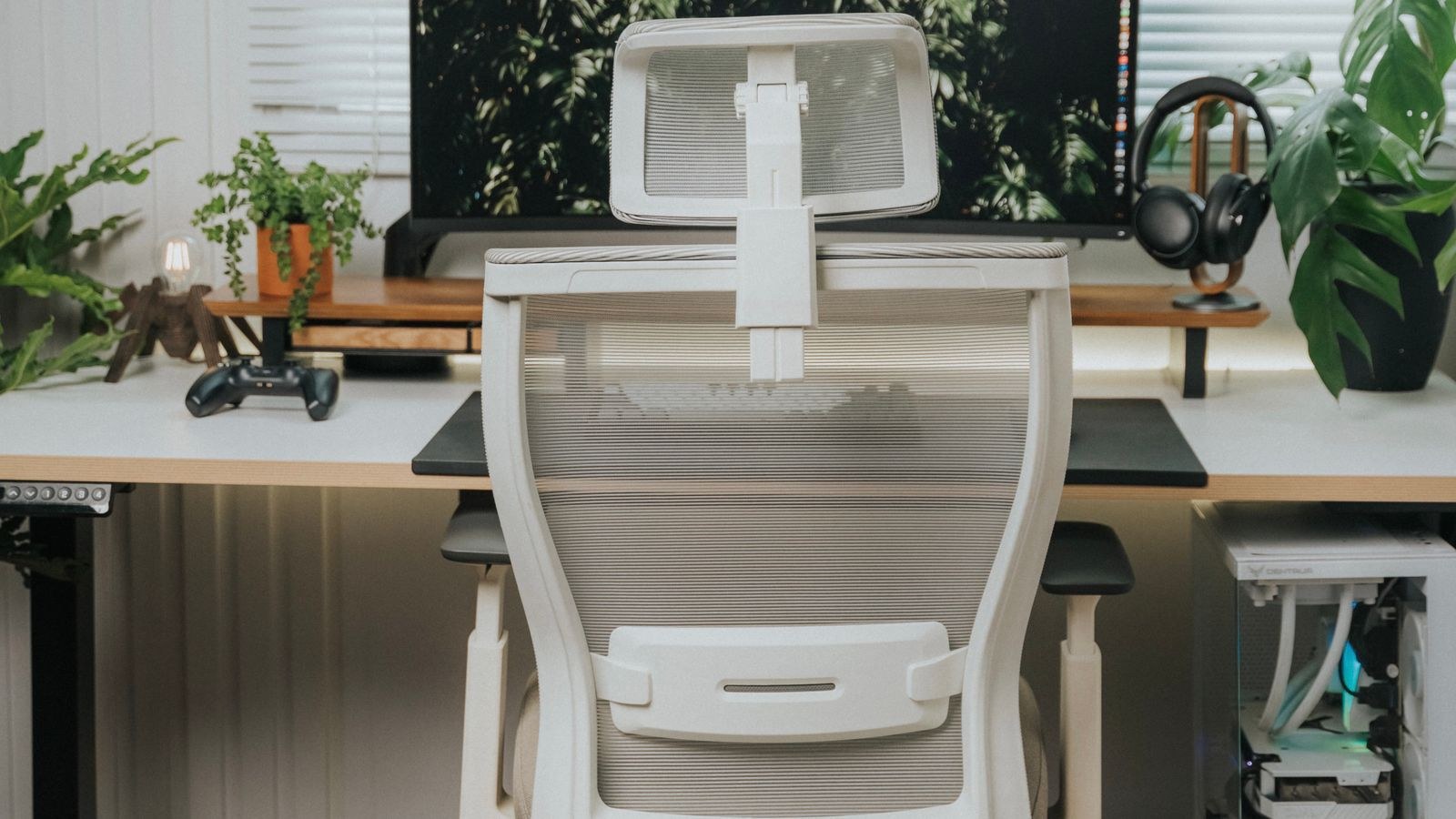
What a Headrest Is Actually For
A headrest supports the weight of your head when your torso is reclined past roughly 15 degrees. That is the whole purpose. Your head weighs somewhere around 10 to 12 lb, and when you sit upright that weight balances almost directly over your spine, so your neck muscles barely work. Lean back, and the balance point shifts behind you. Without something to catch it, the muscles at the front and side of your neck must hold your head up against gravity, which is exactly the low-grade continuous effort that produces stiffness by evening.
Notice what that means: a headrest is a recline accessory. When you are sitting upright and typing, your head is already balanced and a headrest behind you does nothing at all. This is why so many chairs designed for concentrated upright task work do not include one, and why adding one to that kind of chair rarely changes how your neck feels.
Who Genuinely Benefits
Some people get real value from a headrest and should treat it as a requirement rather than a luxury.
- Frequent recliners. If you lean back for calls, reading, thinking or video meetings for meaningful stretches each day, a headrest removes continuous neck load during those periods.
- People with existing neck problems. Anyone recovering from whiplash, managing cervical disc issues, or dealing with chronic upper trapezius tension usually finds a supported recline the most comfortable position available at a desk.
- Long-session gamers and video editors. Sessions of three hours or more in a semi-reclined posture benefit enormously from head support.
- Taller users. Above about 6’1″, many standard backrests stop below the shoulder blades, so a headrest is often the only way to get upper-body contact at all.
- Anyone who naps or takes breaks in the chair. Obvious, but genuinely relevant for shift workers and people working long days from home.
If you fall into any of those groups, our roundup of the best chairs with headrest is a sensible starting point, since the models there are designed around the recline rather than adding a pad as an afterthought. For workplace-focused designs with proper height and angle travel, our list of the best office chairs with headrests is the closer match.
Who Probably Does Not Need One
Equally, a large group of desk workers gain nothing. If you sit upright at a keyboard for most of your day, rarely recline past a few degrees, and take your breaks by standing up rather than leaning back, a headrest will spend your entire working life a few inches behind your skull doing nothing.
There is also a real downside for shorter users and for anyone working at a desk that forces a forward lean. In those cases the headrest often sits too low, catching the base of the skull or the top of the neck and pushing the head forward into exactly the chin-poke posture that causes neck pain. A headrest that pushes rather than supports is worse than no headrest at all.
Budget matters here too. On a chair under about $250, the money spent on a headrest is money not spent on the tilt mechanism, the lumbar system or the seat foam, all of which affect more of your day. Given a fixed budget and an upright working style, spend it below the shoulders first.

Getting the Height Right
Almost every complaint about headrests traces back to position. The rule is simple: the pad should meet the back of your head, roughly level with or just above the tops of your ears, not the back of your neck.
Supporting the neck itself is the classic mistake. The cervical spine is not built to take load from behind at that angle, and a pad pressed into it tips your chin upward or pushes your whole head forward. Both create tension. If you feel the headrest most strongly at the base of your skull, it is too low.
- Set your seat height, lumbar support and backrest angle first. Headrest position depends on all three.
- Recline to the angle you actually use for calls and reading, not bolt upright.
- Raise the headrest until it contacts the rounded back of your head above ear level.
- Adjust the tilt, if the chair has it, so the pad face is roughly parallel to the back of your head rather than angled into your neck.
- Check that your chin stays level. If it lifts or your gaze rises, the pad is pushing too far forward.
- Recheck after a week. Your preferred recline angle usually changes once the chair is broken in.
Types of Headrest and What They Cost You
Fixed headrests are moulded into the backrest with no adjustment. They are common on executive chairs and on cheaper high-back models. Like fixed lumbar support, they work beautifully if your height matches the design assumption and not at all if it does not.
Height-adjustable headrests slide vertically on a stem, typically over 3 to 4 inches. This is the minimum worth paying for, because head height above the seat varies more between people than almost any other measurement.
Height and angle adjustable adds a pivot so you can change the pad’s tilt. This matters more than it sounds, because the correct angle changes with how far you recline. Two-axis headrests are the practical sweet spot for most buyers.
Depth-adjustable headrests slide forward and back as well, which helps people with a more forward or more upright head carriage. It is a genuine refinement but well into diminishing returns.
Retrofit headrests clamp to an existing backrest. Quality varies enormously and many wobble or slip under load. They are worth trying on a chair you otherwise like, but do not expect a clamp-on pad to match an integrated design.
Headrests on Gaming Chairs
Racing-style chairs almost universally include a strap-on head pillow. Because the shell is tall and the seating position is often reclined, a headrest makes more sense here than on a typical task chair. The problem is the strap: it sets the height by cord length rather than by a track, so it drifts and often lands too low.
Fix it by shortening the strap until the pillow contacts the back of your head with the chair at your normal gaming recline. If it keeps sliding, a pillow with a proper buckle or an integrated adjuster is worth the upgrade. Our guide to the best gaming chairs with headrests covers models where the support is designed in rather than tied on, and if neck strain is your main complaint, the shortlist in our roundup of the best gaming chairs for neck support narrows further to designs that hold the head without pushing it forward.

Headrest or Taller Backrest?
These are not the same thing, and confusing them costs people money. A high backrest extends support up through the shoulder blades and upper thoracic spine. A headrest supports only the head. Many people who think they need a headrest actually need more back, because their current chair stops mid-back and leaves their shoulders unsupported when they lean.
If your complaint is between the shoulder blades rather than in the neck, a taller backrest is the answer and a headrest will not help. Our roundup of the best high back chairs is aimed at exactly that problem. If your complaint is specifically at the neck and only appears when you lean back, then a headrest is the right tool.
When a Headrest Makes Things Worse
There are three failure modes worth knowing before you buy.
It pushes your head forward. A pad set too far forward for your posture forces a chin-tuck or a forward head position and creates the tension it was meant to relieve. Depth adjustment or a slimmer pad fixes it.
It encourages you to stay reclined too long. A comfortable supported recline is genuinely restful, but posture variety is what protects your spine. If the headrest turns your chair into a permanent lounger, you lose the movement benefit of the tilt mechanism entirely.
It blocks a taller monitor setup. On some chairs, a large headrest sits high enough to interfere with a wall-mounted monitor arm or force you to sit further forward. Check clearance if your workspace is tight.
Frequently Asked Questions
Should the headrest touch my neck or my head?
Your head, at or just above ear level. Contact on the neck itself pushes the cervical spine forward and is the single most common setup error.
Do headrests help with neck pain from typing?
Usually not directly. Neck pain during upright typing comes from monitor height, keyboard distance and shoulder position. Raise the screen so its top edge is at eye level and fix that first.
Can I add a headrest to a chair that does not have one?
Sometimes. Some manufacturers sell a matching accessory that bolts to the frame, which is the best option. Universal clamp-on pads fit most backrests but vary widely in stability and can mark the upholstery.
Is a headrest worth it if I only recline for a few minutes a day?
Probably not. Below roughly 30 minutes of reclined time daily, the money is better spent on the tilt mechanism, lumbar adjustment or seat quality.
Are mesh headrests better than padded ones?
Mesh runs cooler and conforms more readily; padded pads feel plusher and are usually easier to position precisely. Both work well when the height is right, so treat adjustability as the deciding factor rather than material.
Final Thoughts
A headrest is a specific tool for a specific posture, not a general upgrade. If you recline for a real part of your day, have neck issues, or are tall enough that ordinary backrests leave you unsupported, buy one and insist on height and angle adjustment. If you sit upright and type, put that money into the mechanism and the lumbar system instead. Whatever you choose in 2026, set it against the back of your head rather than your neck, and reassess after a week of real use, because the right height is the difference between a feature that relieves tension and one that quietly creates it.