Owen Bradley
 The surface you rest your wrists on for eight hours a day deserves more thought than it usually gets. Most people choose a desk by shape, size and price, then discover two years later that the finish has bubbled near the coffee mug, the edge has worn shiny under their forearms, or the glass shows every fingerprint under a desk lamp. Desk top materials differ enormously in scratch resistance, weight, wrist comfort, repairability and cost, and none of them wins on every measure. This guide compares the main options honestly, explains the construction details that separate a durable top from a disposable one, and helps you match a surface to how you actually work.
What a Desk Top Actually Has to Survive
A work surface faces a specific set of stresses. It gets scratched by keyboard feet, laptop rubber and anything slid across it. It absorbs heat from mugs and laptop vents. It takes moisture from condensation and spills. Its front edge takes constant forearm pressure and skin oils. And it has to stay flat, because a top that bows in the middle looks cheap and makes monitor mounting awkward.
Different materials fail against different stresses. Solid timber scratches but sands out. Laminate resists scratches but cannot be repaired once chipped. Glass resists heat and moisture completely but shows every smear and can chip at the edge. Understanding which stress dominates your usage tells you which weakness you can tolerate.
Core Versus Surface
Most desk tops are not one material. They are a core, usually particleboard, MDF or plywood, with a surface layer bonded to it. The surface determines appearance and scratch resistance; the core determines weight, flatness, screw-holding strength and how well it survives moisture. A beautiful veneer over a low-grade particleboard core will sag under a heavy monitor and swell if water reaches the edge. Always look for both figures, not just the finish name.
Solid Wood: Warm, Repairable, Demanding
Solid timber, whether oak, beech, walnut or bamboo, offers the best combination of warmth, feel and repairability. It feels pleasant under the forearms because wood is a poor conductor and stays near room temperature. Scratches and dents can be sanded and refinished, so a solid top can be restored repeatedly across decades rather than replaced.
The trade-offs are weight, price and movement. Solid wood is heavy, which matters if you are mounting it on a sit-stand frame with a load limit. It also expands and contracts with humidity, so a poorly constructed slab can cup or split in a dry heated room. Bamboo, technically a grass laminated into panels, sidesteps much of that movement while keeping the look and repairability, which is why it dominates the premium standing desk market. For finished options in this category, the best wooden desks roundup shows how construction quality varies across similar-looking products.
Finish Matters as Much as Species
An oiled finish looks natural and is easy to spot-repair, but it offers limited protection against liquids and needs re-oiling every year or two. A lacquered or polyurethane finish forms a hard film that resists spills and scratches far better, but repairing damage means refinishing a whole section rather than a spot. Choose oil if you enjoy maintenance and want a natural feel, lacquer if you want to ignore the desk entirely.
Laminate and Melamine: The Practical Default
High-pressure laminate and melamine-faced board account for most office desks sold, and for good reason. The surface is a resin-impregnated paper fused to the core under heat and pressure, producing a hard, non-porous face that resists scratches, heat and moisture better than almost any finish you could apply to wood. It is light, flat, inexpensive and available in any appearance you like, including convincing wood grains.
Its weakness is repairability. Once the surface chips, usually at a corner or a drilled hole, there is no fix, only concealment. Cheap melamine boards also have thin edge banding that peels, exposing the core to moisture. Look for thick PVC or ABS edge banding, ideally 2mm, and a core described as high-density rather than standard particleboard. Well-made laminate tops last many years of daily use, which is why they appear on so much of the best computer desks lineup.
How to Spot Cheap Laminate
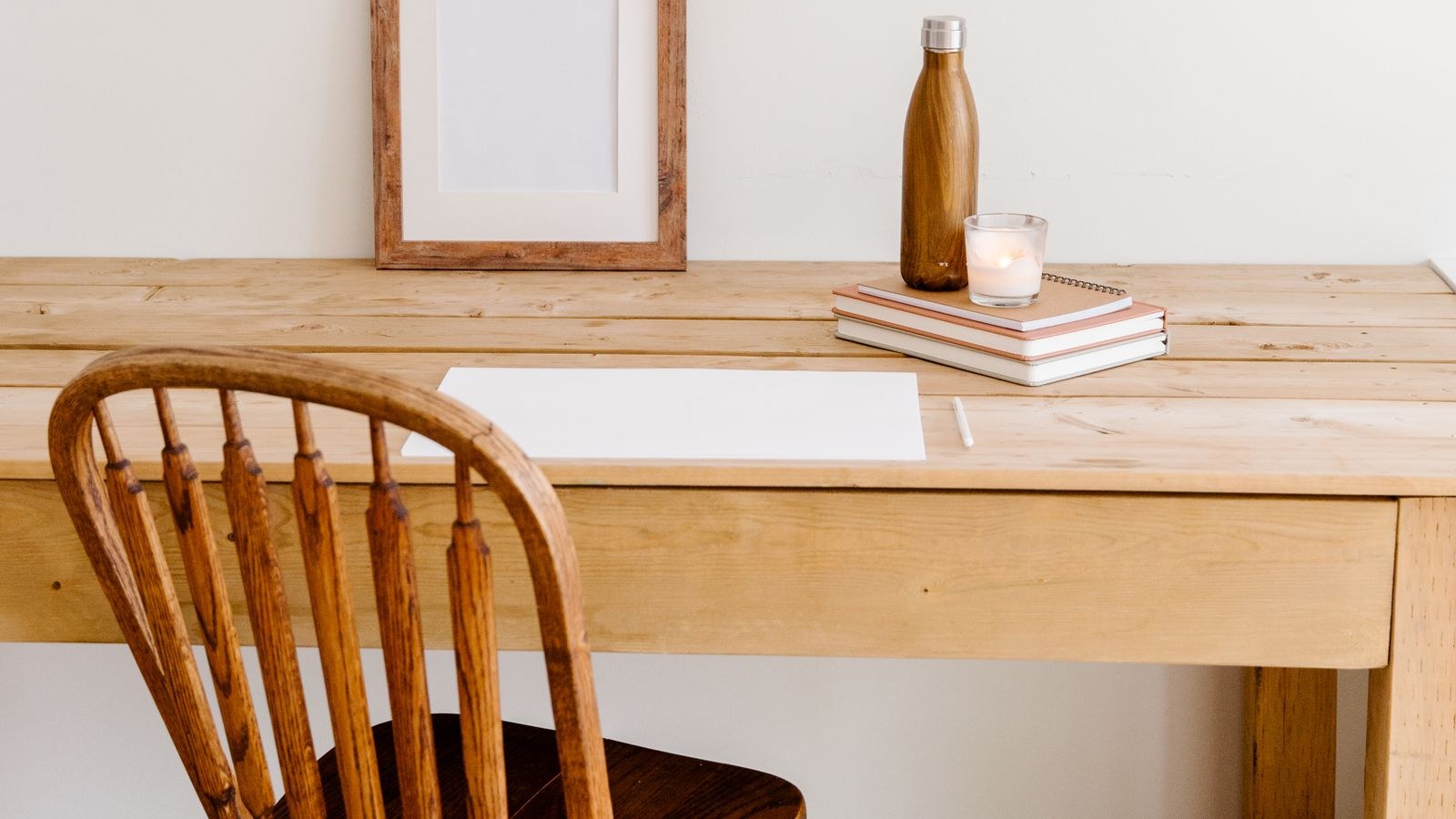
Check the stated thickness: 25mm cores stay flat under load where 15mm boards sag. Look at the underside, since quality boards are finished on both faces to balance moisture absorption, while cheap ones leave the underside raw. Press the edge banding with a fingernail near a corner; if it lifts at all it will peel eventually. Finally, weight is a clue, because a suspiciously light large top usually means a hollow core with a honeycomb cardboard filler.
Glass: Striking, Hygienic, High Maintenance
Tempered glass tops look excellent in modern rooms, resist heat and moisture completely, and wipe clean in seconds, which makes them genuinely hygienic in shared spaces. They also visually lighten a room because you see through to the floor, useful in small offices where a solid slab would feel oppressive.
Daily reality is less glamorous. Glass shows every fingerprint, dust particle and smear, so it needs wiping constantly to look its best. It is cold and hard against the forearms, which many people find uncomfortable during long typing sessions. Mice with optical sensors often fail on clear glass, requiring a mousepad. Cable management is awkward because everything under the desk is visible. And while tempered glass is strong across its face, edges and corners chip if struck. If the look justifies those compromises for you, the best glass desks guide covers which thicknesses and edge treatments hold up.
Frosted and Coated Options
Frosted or acid-etched glass hides fingerprints far better than clear glass and gives optical mice a surface to track on, solving the two most common daily annoyances. Smoked or tinted glass hides dust similarly while keeping a transparent look. Both cost more than plain clear panels, and both are worth the premium if you plan to actually work at the desk rather than photograph it.
Metal and Industrial Surfaces
Powder-coated steel and aluminium tops appear on workshop-style and industrial designs. They are exceptionally durable, completely unbothered by heat or moisture, and stay perfectly flat under heavy loads, which suits people running multiple monitors or heavy equipment. Powder coating resists scratching well, though deep gouges expose bare metal that can corrode.
The drawbacks mirror glass: metal is cold, hard and noisy under a keyboard, transmitting typing sound and vibration rather than damping it. It can also feel clinical in a domestic room. Many industrial designs solve this by combining a metal frame and edge with a timber insert, giving durability at the perimeter and warmth where your arms rest. The best metal desks and best industrial desks collections both show how those mixed constructions are executed.
Comparing the Materials Directly
- Solid wood: best feel and repairability, heavy, needs finish maintenance, highest cost per square metre.
- Bamboo: nearly all the benefits of timber with better dimensional stability and lighter weight.
- Laminate on a dense core: best value, excellent scratch and moisture resistance, not repairable once chipped.
- Tempered glass: most hygienic and visually light, worst for fingerprints, wrist warmth and mouse tracking.
- Powder-coated metal: most durable and flattest under load, cold and acoustically noisy.
No material tops every column, which is precisely why the market sustains all of them. The right answer depends on whether you prioritise appearance, longevity, comfort or cost, and being honest about that ranking before you shop saves a great deal of second-guessing.
Thickness, Edge Profile and Wrist Comfort
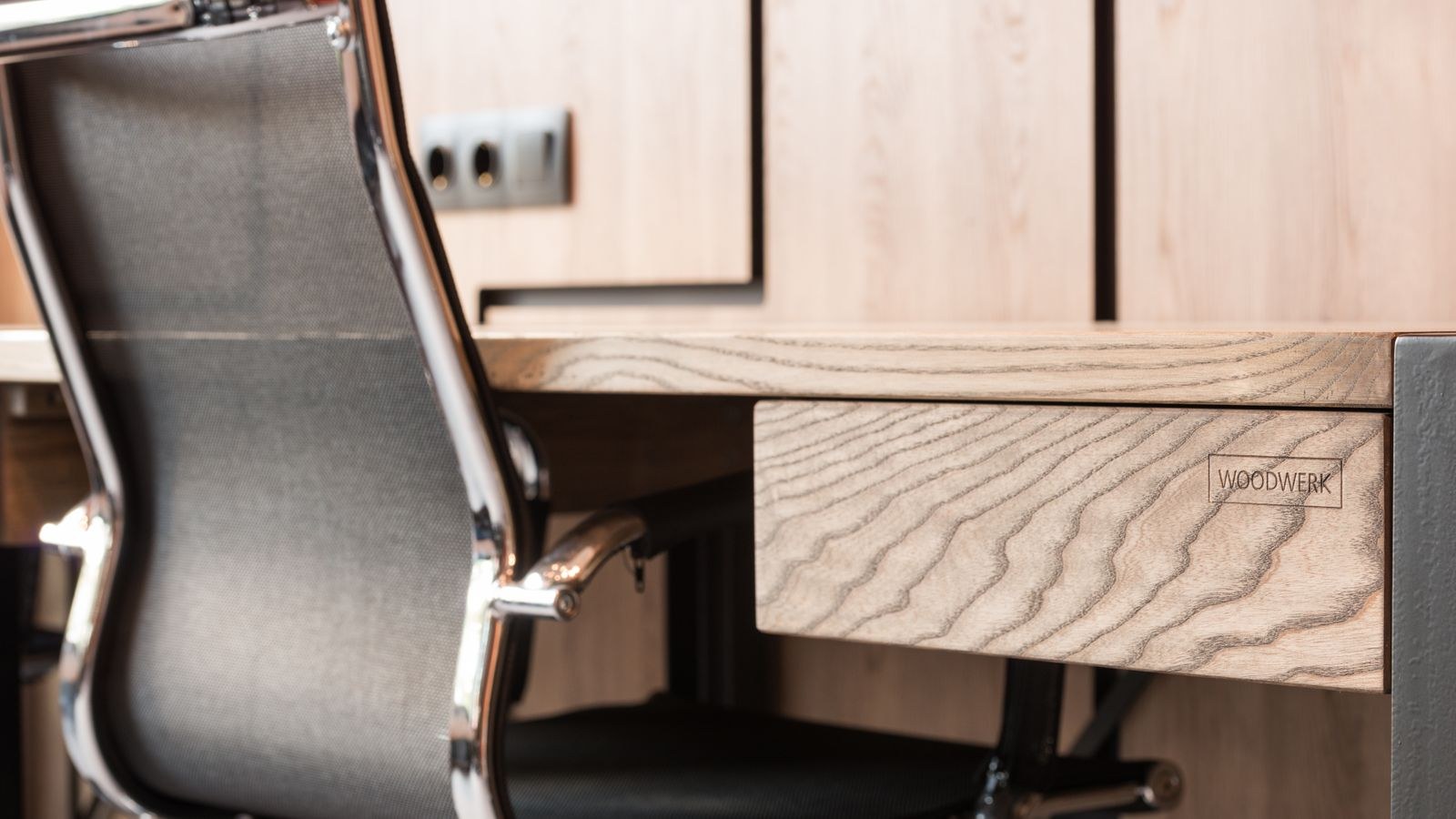
Two details affect daily comfort more than material choice. The first is thickness, which governs sag. A 25mm top spans a typical frame without visible bow, while thinner boards need a centre support. The second is the edge profile where your forearms rest. A sharp square edge concentrates pressure on the underside of your arm and, over months, causes genuine discomfort and even nerve irritation.
Look for a rounded, chamfered or bullnose front edge, or a soft PVC edge band with a radius. On glass, look for a polished or pencil-rounded edge rather than a flat ground one. This single detail is cheap to specify and impossible to add later, so check it before ordering rather than after.
Matching Material to How You Work
If you spend all day typing, prioritise a warm surface with a rounded edge: timber, bamboo or good laminate. If you eat at your desk or share it with children, prioritise a non-porous, wipeable surface: laminate or glass. If you mount heavy monitor arms, prioritise a thick dense core with good screw retention, which rules out hollow-core boards and complicates glass considerably.
If you use a sit-stand frame, check the frame’s load rating against the top’s weight before choosing solid timber, since a large hardwood slab can consume a significant portion of the available capacity before you place anything on it. And if you expect to keep the desk for a decade or more, repairability tips the balance strongly toward solid wood or bamboo, because those are the only surfaces you can restore rather than replace.
Frequently Asked Questions
Is solid wood worth the extra cost over laminate?
It is if you value the feel and want a surface you can refinish repeatedly. For pure durability against scratches and spills, quality laminate on a dense core actually outperforms an oiled timber top.
Do glass desks scratch easily?
Tempered glass resists scratching well from everyday items, but it is not immune to grit dragged across it, and chipped edges are the more common damage. The bigger daily issue is fingerprints rather than scratches.
What thickness should a desk top be?
Around 25mm is the practical standard for a full-width desk without centre support. Thinner tops can work on smaller spans or with additional bracing, but they sag noticeably once loaded with monitors.
Which material is best for a standing desk?
Bamboo and laminate are the usual choices because both stay flat and keep weight within the frame’s load rating. Heavy solid hardwood slabs work only on frames rated for the extra mass.
Can I put a monitor arm on any desk top?
Clamp-style arms need a solid, flat edge of adequate thickness and are risky on glass without a manufacturer-approved clamp. Grommet-mounted arms need a dense core that holds the fixing securely, which hollow boards do not provide.
Final Thoughts
Desk top materials involve trade-offs rather than a single best answer, and the useful approach is to decide which failure you can live with. Accept scratches and choose repairable timber, accept unrepairable chips and choose durable laminate, accept constant wiping and choose glass, accept a cold hard surface and choose metal. Then check the details that no material can compensate for: core density, thickness and a rounded front edge. Work through it in that order in 2026 and you will end up with a surface that still looks and feels right long after the initial appeal of any particular finish has settled into everyday use.