
 Owen Bradley
 Front doors get all the security attention, but back gardens are where most break-ins begin. A rear yard offers what a front porch never can: hedges that hide an intruder from the street, sliding doors and ground-floor windows that are easier to force, and a shed full of tools. Backyard security is about closing that gap without turning your garden into a compound. Done well, it is a layered system in which motion lighting removes darkness, cameras record the approach, sensors catch movement before anyone reaches the building, and simple landscaping choices make the whole property look like more effort than it is worth.
Start By Walking Your Own Perimeter at Night
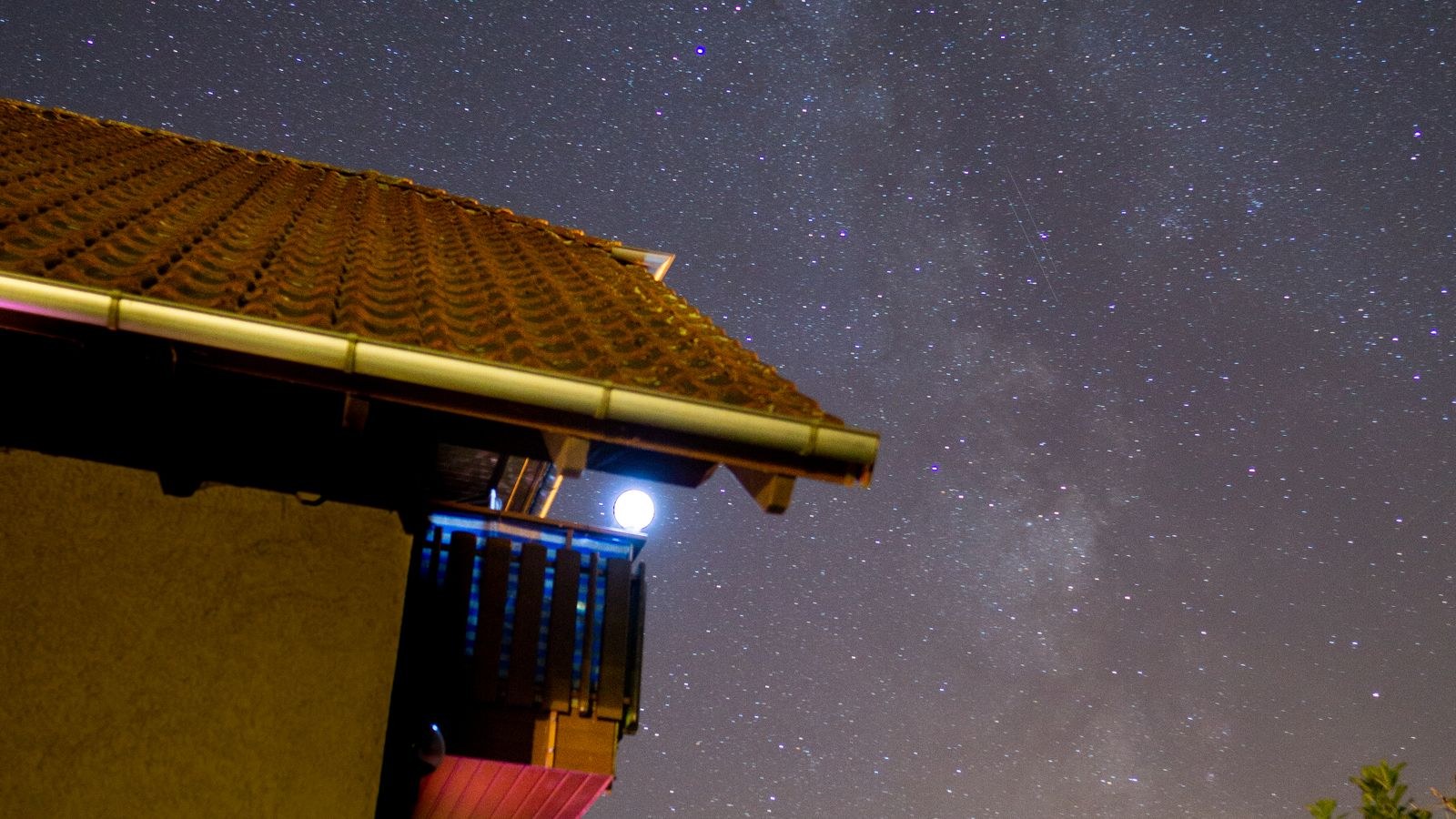
Before buying anything, do a survey after dark. Walk the boundary of your property as if you intended to get in, and note four things: where you could enter unseen, where you could stand without being lit, which windows and doors are reachable from that position, and what you could hide behind on the way. Take photos on your phone so the shadows are recorded rather than remembered.
That walk almost always produces the same short list: a side gate nobody locks, a dark stretch behind the garage, an unlit patio door, a fence panel with a bin beside it, and a shed visible from the alley. Those findings define your plan better than any generic checklist.
Map the Approach Paths
Intruders follow the easiest route, not a random one. Identify the two or three ways into your yard that require no climbing or noise, then concentrate lighting and detection along those paths rather than spreading coverage evenly. A sensor and a light on the single route someone must take is worth more than four devices scattered around the boundary.
Layer One: Lighting That Actually Deters
Light is the highest-value backyard security investment because it works on the psychology of the crime. Opportunists rely on being unobserved, and a yard that suddenly floods with light signals that someone might be watching.
The mistake most homeowners make is choosing brightness over placement. A single very bright floodlight creates a pool of glare and a wall of deep shadow behind it, and the shadow is where someone stands. Several moderate fixtures spaced along the approach produce far better real security than one blinding one.
How Much Light, and Where
- Brightness. Roughly 700 to 1,300 lumens per fixture suits a patio or path. Reserve 2,000 to 4,000 lumens for large open lawns or driveways, where the throw distance is longer.
- Color temperature. Around 3000K reads as warm and residential; 4000K to 5000K gives better perceived detail and works better with cameras. Mixing the two, warm near the house and cooler at the boundary, usually looks best.
- Height and aim. Mount at 8 to 10 feet and tilt downward so the beam lands on the ground rather than into eyes or neighboring windows. Uplighting is decorative and useless for security.
- Coverage. Aim for overlapping pools of light with no dark gap between them along the main approach.
Motion activation is what turns lighting from a utility bill into a deterrent, because the sudden change is the signal. Continuous low-level lighting plus a motion-triggered boost is the most effective combination: the yard is never pitch black, and any movement produces a visible jump in brightness. Fixtures built for this dual-mode behavior appear throughout our comparison of motion security lights, and if you want to understand beam angles and detection patterns before choosing placements, the motion sensor outdoor lighting guide covers the geometry in detail.
Tuning Motion Sensors So They Are Not Ignored
A light that triggers all night for cats and swaying branches gets switched off within a fortnight. Three adjustments prevent that. Reduce sensitivity until small animals no longer trigger it. Angle the sensor across the likely path of travel rather than facing it, since passive infrared detects lateral movement far more reliably than movement straight toward the lens. And set the timer to one or two minutes rather than ten, so a false trigger is brief. Sensors mounted at 6 to 8 feet, angled slightly down, and kept away from heat sources like vents and air conditioner condensers behave far better than ones mounted high and aimed wide. Standalone units with adjustable range and dusk-to-dawn scheduling give the most control, and the models covered among the best exterior motion sensor lights highlight which offer proper sensitivity trimming rather than a single on-off switch.
Layer Two: Cameras That Cover the Right Angles
Cameras do not stop anyone, but they change behavior when visible and they provide the record that turns a suspicion into a report. In a backyard, placement matters more than specification.
Prioritize three positions in order. First, the rear of the house looking outward, covering the patio door and ground-floor windows, since this is where an entry attempt happens. Second, the side passage or gate, which is the choke point almost every intruder must pass through. Third, any outbuilding or shed, which is often the first target and the source of tools.
Practical guidance for each camera:
- Mount at 9 to 10 feet, out of reach but low enough to capture faces rather than the tops of heads.
- Angle across the path of travel rather than straight down it, so a subject crosses the frame and presents a profile.
- Choose weather sealing of IP65 or better, and check the rated low-temperature limit if you have cold winters.
- Prefer models with a spotlight and a siren. Light plus noise interrupts an intrusion; silent recording does not.
- Enable person and vehicle detection and draw activity zones that exclude neighboring property and the street.
Wired power is more reliable for cameras that will trigger frequently, though solar-assisted battery units solve the very real problem of getting power to a fence line or shed. Our roundup of the best outside cameras separates models by power option and night performance, which are the two factors that decide whether a backyard camera is useful after dark.
Coordinate Lighting and Cameras
These two layers work together or they fight. A floodlight aimed directly into a camera lens destroys the image with glare, and a camera mounted right beside a bright fixture will constantly adjust exposure. Mount lights and cameras several feet apart, with the light behind or beside the camera and pointing the same direction.
Layer Three: Sensors and Early Warning
Lighting and cameras respond once someone has arrived. Sensors can tell you sooner, and inside the house that early warning is the difference between being surprised and being prepared.
Several sensor types suit a garden:
- Outdoor motion detectors mounted at the boundary or along the side passage, chimed to an indoor receiver, alert you to movement before anyone reaches the building. Dual-technology models that require both infrared and microwave confirmation cut false alarms dramatically outdoors.
- Gate and shed contact sensors are cheap, battery-powered, and unambiguous. A gate opening at 2 a.m. is a real event, not a swaying branch.
- Driveway and path beam sensors create an invisible line across an entry point and trigger only when it is broken, which makes them among the most reliable outdoor detectors available.
- Vibration sensors on shed doors or window frames detect an attempt to force entry rather than the presence of a person.
The most useful configuration chimes indoors rather than sending only a phone notification, because you hear it whether or not you are looking at a screen. Range, weather rating, and battery life are the specifications worth comparing, and the units covered among the best motion sensors vary widely on all three. Set outdoor sensors to notify quietly during the day and audibly at night, so daytime garden activity does not train you to ignore them.
Layer Four: Physical Barriers and Landscaping
Hardware works better when the yard itself resists entry. Several inexpensive changes have outsized effect.
Fences and gates. A fence of about 6 feet is the practical sweet spot: high enough to require deliberate climbing, low enough to stay neighborly. Trellis on top adds height that will not bear weight. Every gate should have a lock on the inside, ideally a keyed one rather than a slide bolt, and hinges should be fitted so the pins cannot be knocked out from outside.
Remove the climbing aids. Wheelie bins, garden furniture, log piles, and ladders stored beside a fence are the most common way people get over it. Store bins in front of the house or secure them to a post, and never leave a ladder outdoors.
Plant defensively. Thorny shrubs such as pyracantha, berberis, or climbing rose under ground-floor windows and along vulnerable fence lines are genuinely unpleasant to push through. Keep them below sill height so they deter without providing cover.
Cut the hiding places. Trim hedges and shrubs near the house to below window level and lift tree canopies so there is clear sightline across the yard. A garden you can see across at a glance is far less attractive to someone who needs to stay hidden.
Noisy ground. Gravel paths along the side of the house are an underrated alarm. Nobody crosses them quietly.
Securing the Rear of the House Itself
The garden layers exist to protect the building, so do not neglect the last few feet. Sliding patio doors are a frequent weak point: fit a secondary bar or foot lock in the track, and check the door cannot be lifted out when locked. Ground-floor windows should have key-operated locks, and French doors benefit from flush bolts on the inactive leaf. Keep the rear door lit and covered by a camera.
Putting It Together on a Budget
- Low spend: lock the side gate, remove climbing aids, trim hedges below window level, add two motion-activated lights on the main approach paths, and fit contact sensors on the gate and shed.
- Moderate: add a camera covering the rear of the house and a second on the side passage, upgrade to dual-mode lighting with a low continuous level, and add an outdoor motion detector chimed indoors.
- Comprehensive: full perimeter lighting with overlapping coverage, three or four cameras on a local recorder, beam sensors at each entry point, defensive planting, and reinforced locks on all rear openings.
The low-spend tier delivers most of the risk reduction, which is worth remembering before buying a large kit.
Common Mistakes
The most frequent error is buying brightness instead of coverage, producing glare and deep shadow rather than an evenly lit yard. The second is leaving motion sensors at factory sensitivity, which generates so many false triggers that the household stops reacting. The third is mounting a camera and floodlight on the same bracket, guaranteeing washed-out footage. The fourth is securing the yard while leaving the shed unlocked, handing over the tools needed to attack the house. The fifth is treating cameras as prevention; they are evidence, and lighting plus locks are prevention.
Frequently Asked Questions
Should backyard lights stay on all night or only on motion?
A combination works best. Low continuous light keeps the yard navigable and photographable, while a motion-triggered boost provides the sudden change that deters. Pure motion-only lighting leaves the camera blind between events.
Do solar lights work for security?
Decorative solar path lights do not. Larger solar security fixtures with a separate panel and a real battery can work well in sunny locations, but check winter runtime before relying on them.
How do I avoid annoying my neighbors?
Aim fixtures downward, use shields or hoods where available, keep sensitivity tuned so lights do not trigger on the pavement, and configure camera activity zones to exclude their property. A brief conversation before installation prevents most complaints.
Are visible or hidden cameras better?
Visible cameras prevent more incidents; concealed ones gather better evidence when prevention fails. Most homes are best served by obvious cameras at entry points and one discreet unit covering the wider yard.
Final Thoughts
A secure backyard is not the one with the most equipment; it is the one where an intruder is seen, lit, and recorded before reaching a door, and where nothing in the garden makes that approach easy. Walk your own boundary after dark, fix the gate and the hiding places first, light the approach paths with overlapping coverage instead of glare, place cameras and sensors where movement is forced through a choke point, and finish by hardening the rear doors and windows themselves. Layered that way in 2026, a modest budget produces a yard that most opportunists will simply walk past.









