Owen Bradley
 If your dishwasher has started leaving grit on glasses, film on plates or a sour smell when you open the door, the machine is almost certainly fine. What has happened is that the filter at the bottom of the tub has packed with food debris and the spray arm jets have partly blocked with lime and seeds. Both are user-serviceable parts, both come out without tools on most machines, and cleaning them takes about twenty minutes. This guide covers how to clean a dishwasher filter and spray arms properly, how to run a vinegar cycle that clears the rest of the system, and the maintenance rhythm that stops the problem returning.
Why the Filter and Spray Arms Get Blocked
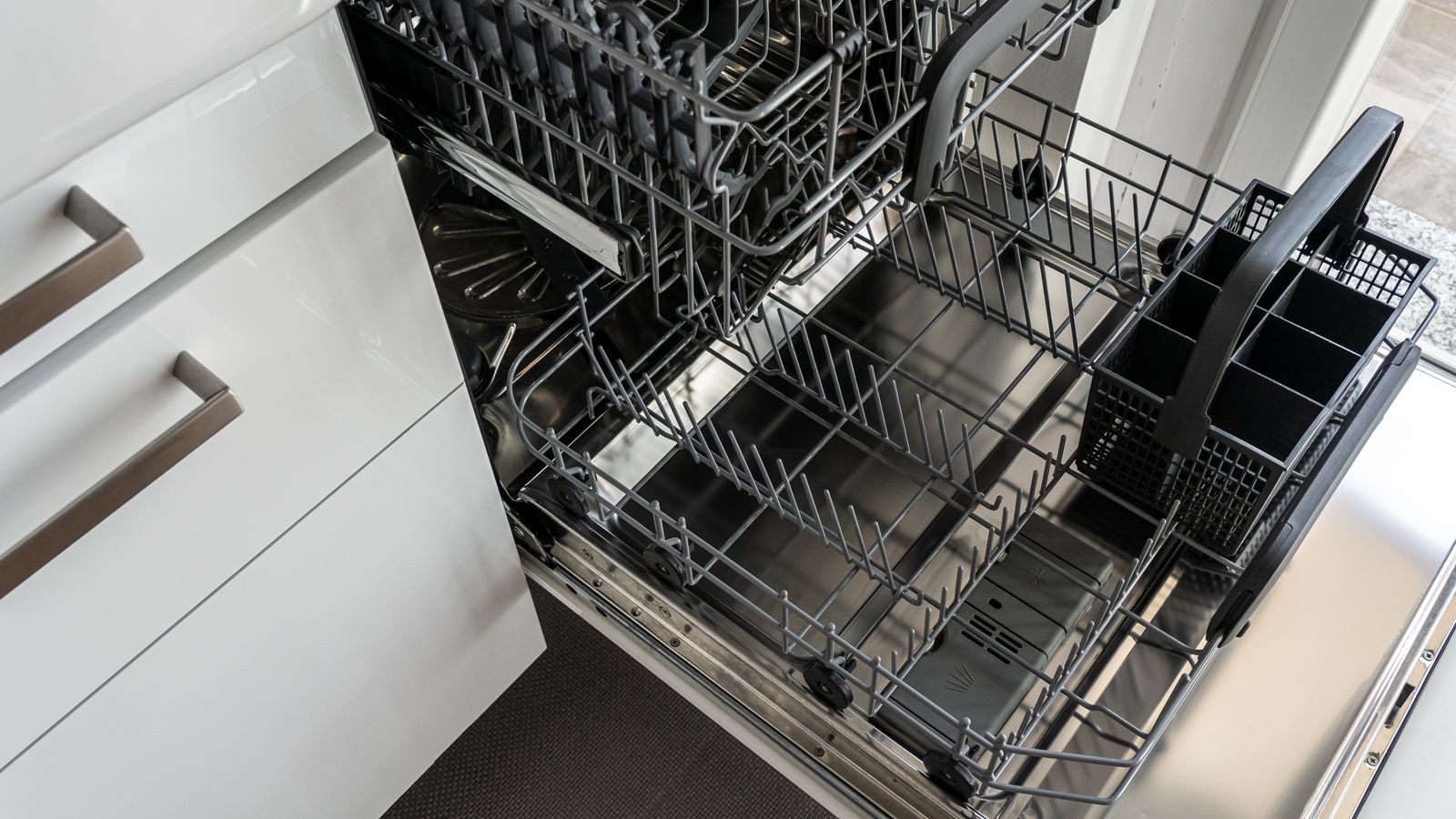
A dishwasher recirculates the same water many times during a cycle. The filter’s job is to catch food particles so the pump does not send them back onto your dishes. That works well until the mesh clogs, at which point water struggles through, pressure at the spray arms drops, and the debris the filter can no longer hold gets redeposited on everything in the racks.
The spray arms suffer from the opposite problem. Their small jets are sized to produce a high-pressure fan of water, so it takes very little to block one: a seed, a fleck of label paper, or a slow buildup of limescale in a hard-water area. A few blocked jets create dead zones where dishes simply do not get washed, which is why the top rack or the back corner often comes out dirty while everything else looks fine.
Symptoms of a Blocked Filter
- Gritty residue on the inside of glasses and cups.
- A cloudy white film that will not wipe off easily.
- Standing water in the base of the tub at the end of a cycle.
- A drain or sour odour when the door is opened.
- Dishes in one specific area coming out consistently dirty.
- The machine sounding louder or straining during the wash phase.
What You Will Need
- Rubber gloves, since the filter cavity is unpleasant and can contain sharp fragments.
- An old toothbrush and a soft-bristle washing-up brush.
- A toothpick, a straightened paperclip or a thin wire for the spray jets.
- Warm water and a mild dish soap.
- White vinegar, roughly a cup, and baking soda.
- A microfibre cloth and a damp sponge.
- A torch to inspect the sump and the underside of the arms.
How to Clean a Dishwasher Filter and Spray Arms
- Switch the machine off. Turn it off at the wall or the isolating switch so it cannot start mid-job, and let the tub cool if it has just run.
- Remove the bottom rack. Slide it out completely and set it aside so you have clear access to the floor of the tub.
- Locate the filter assembly. Look for a cylindrical mesh tube in the base, usually surrounded by a flat coarse filter plate. Most designs unlock with a quarter turn anticlockwise.
- Lift out both parts. Twist and lift the cylinder free, then lift out the flat mesh plate underneath it. Note how they seat together so reassembly is straightforward.
- Rinse under a running tap. Hold each part under warm running water and scrub gently with the toothbrush. Work from the clean side outward so debris is pushed off the mesh rather than through it.
- Soak stubborn buildup. If grease has hardened on the mesh, soak the parts in warm water with a drop of dish soap for ten minutes, then scrub again. Never use a wire brush, which tears the mesh.
- Clean the sump. With gloves on, wipe out the recess the filter sits in. Use the torch and remove any glass fragments, seeds, labels or bones. This cavity feeds the drain pump, so it must be clear.
- Remove the lower spray arm. Most lift straight off, or unscrew via a nut or clip at the hub. Note the orientation before you take it off.
- Clear every jet. Push a toothpick or wire into each hole to dislodge debris, then run water through the arm from the hub end and watch that each jet produces a clean stream. Repeat until all of them do.
- Do the same for the upper arm. Remove it if the design allows, or clear the jets in place. Do not forget the ceiling sprayer if your model has one.
- Wipe the door and seal. Clean the rubber gasket and the lip below the door where sludge accumulates, plus the detergent dispenser flap, which sticks when it gets crusted.
- Reassemble carefully. Refit the spray arms, check they rotate freely by hand, then drop in the flat filter plate and lock the cylinder back in with a clockwise quarter turn. A filter that is not locked lets debris straight into the pump.
Running a Vinegar and Baking Soda Deep Clean
Once the removable parts are clean, flush the plumbing you cannot reach. Place a dishwasher-safe bowl containing about a cup of white vinegar on the top rack of an otherwise empty machine and run the hottest normal cycle. The acid dissolves limescale in the spray channels, the heater and the recirculation hose, and it strips the greasy film that causes odour.
For a second pass, sprinkle a cup of baking soda across the floor of the tub and run a short hot cycle. This deodorises and lifts any remaining staining from the stainless steel. Do not combine vinegar and baking soda in the same cycle; they neutralise each other and you get the benefit of neither. If your water is very hard, a dedicated descaling product used every few months will do more than vinegar alone.
Do Not Forget the Drain Hose and Air Gap
If water still sits in the tub after a cleaned filter and a flush cycle, the restriction is further downstream. Check the drain hose where it loops under the sink for kinks, and if your setup has an air gap fitting on the countertop, unscrew the cap and clear the debris inside it. A blocked air gap is a common and easily missed cause of poor draining.
Mistakes to Avoid
- Using bleach in a stainless-steel tub. It pits and stains the interior and can damage seals.
- Scrubbing the mesh with anything abrasive, which tears the filter and lets debris through permanently.
- Refitting the filter without locking it. A loose filter is worse than a dirty one because it feeds the pump directly.
- Forcing a spray arm off. Check for a retaining nut first; cracked plastic hubs are not repairable.
- Over-rinsing dishes before loading. Modern detergents need some soil to work against, though large scraps should always be removed.
- Mixing vinegar and baking soda in one cycle, which cancels both.
- Ignoring the door gasket, which is where most persistent smells actually live.
A Simple Maintenance Schedule
Consistency beats intensity here. Scrape plates properly and check the sump for debris after each load. Rinse the filter under the tap once a week if you run the machine daily, or fortnightly for lighter use. Clear the spray arm jets and wipe the gasket monthly. Run a vinegar or descaler cycle every one to three months depending on water hardness, and top up rinse aid and dishwasher salt as the indicators prompt.
The same discipline pays off across every water-using appliance in the house. Washing machines build up the same combination of scale, detergent residue and biofilm, and running a monthly maintenance wash prevents it. Our roundup of washing machine cleaners covers liquid and powder formulas, while washing machine cleaner tablets are the simplest option if you want something you can drop in and forget. For a wider comparison of what actually removes limescale versus what only masks odour, see our list of cleaners for washing machines and the accompanying washing machine cleaner guide. Hard water leaves the same chalky film on tiles and glass, which is why many of the descaling formulas in our cleaning products for showers roundup work on similar chemistry.
Frequently Asked Questions
How often should I clean the dishwasher filter?
Weekly for daily users, fortnightly for two or three loads a week, and immediately if you see grit on clean dishes or water left in the tub.
Do all dishwashers have a removable filter?
Most modern machines do. Some older models use a self-cleaning hard-food disposer instead, which grinds debris but still benefits from a sump check.
Can I put the filter in the dishwasher itself?
No. It needs manual scrubbing under running water; a cycle simply redeposits the trapped grease back onto the mesh.
Why does my dishwasher smell even after cleaning?
Check the door gasket, the detergent dispenser and the drain hose. Odour that survives a filter clean is nearly always coming from one of those three.
Final Thoughts
A dishwasher that washes badly is usually a dishwasher that has not had its filter pulled out in a year. Twenty minutes with a toothbrush, a toothpick and a cup of vinegar restores full spray pressure, clears the odour and gets your glassware genuinely clean again. Build the filter rinse into your weekly routine, keep the jets clear and descale on a schedule, and the machine will keep performing like it did when it was new.