 Marcus Bell
Best Standing Desk Stools: A Complete Buying Guide for Active Sitting
Switching to a standing desk is a great first step toward a healthier workday, but standing all day is not the answer either. Your body craves movement, and that is exactly where the best standing desk stools come in. These tall, perch-friendly seats let you lean, rock, and shift your weight throughout the day, giving you a comfortable middle ground between sitting and standing. If you have been wondering how to choose the right one, this guide walks you through everything that matters so you can invest with confidence.
Below you will find a curated list of popular standing desk stools, followed by a practical framework for picking the model that fits your height, budget, and working style. We will keep the focus on how to choose rather than rating each product one by one, so you leave with the knowledge to decide for yourself.
Pros
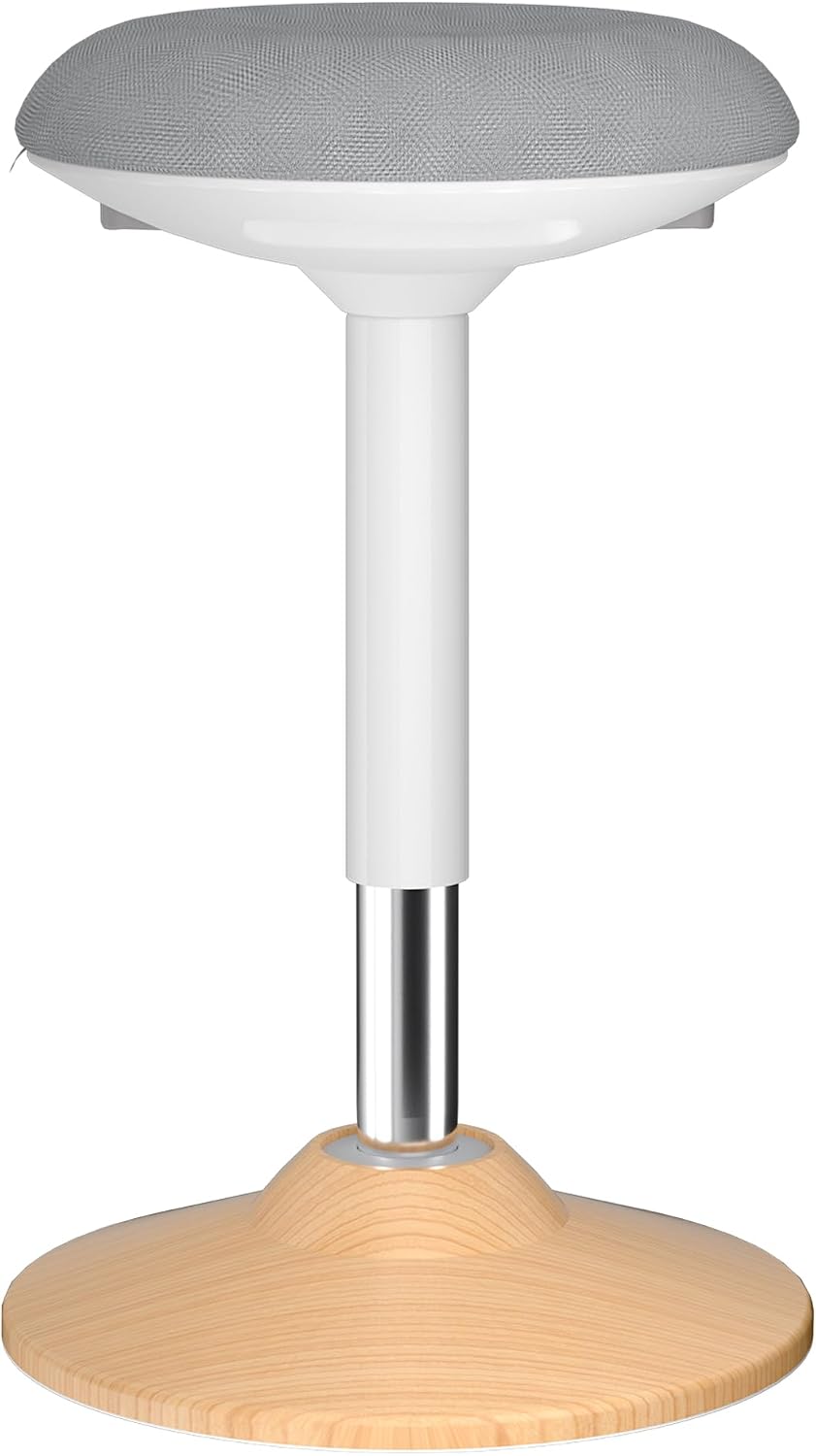
- Dynamic Active Sitting for Better Focus — Featuring a centered pivot
- Height Adjustable Stool for Standing Desk Workflows — Equipped with
- Thick Supportive Cushion for All-Day Comfort — Designed for comfort
- Physical footprint measures 15.8"D x 15.8"W x 19.7"H for spatial placement
- Rated load capacity of 440 Pounds
Cons
- Requires checking room space for Wobble Stool for Stand prior to installation
- Routine cleaning needed to maintain PA6+GF30/PP-TD20 appearance

Pros
- Designed with ACTIVE SITTING STOOL UPLIFT desks Engage Desk Stool offers a for reliable daily operation
- Designed with COMFORT AND SUPPORT A standing desk stool that doesnt sacrifice for reliable daily operation
- Designed with ERGONOMIC CHAIR DESIGN The superellipse seat shape has a soft for reliable daily operation
- Dimensions measure 13.1"D x 13.1"W x 31.4"H for spatial allocation
- Rated load capacity supports up to 250 Pounds
Cons
- Requires measuring doorways and room clearance for UPLIFT DESK Engage prior to placement

Pros
- Height adjusts from 22" to 29" via pneumatic lift for seated-to-standing-desk use
- Rated to support up to 275 lb
- 15.5-inch base slides under desks when not in use
- Non-slip rubber grip base stays stable on carpet and hard flooring
- Rounded base enables 360-degree rocking to engage core muscles while seated
Cons
- No backrest or armrests, so long stretches of seated work can tire the lower back
- Sold only in a White/Sand Grey colorway with no alternative finish
- Fixed rocking base has no locked, stationary position for users who prefer a still perch
The Vari Balance Stool adjusts from 22 to 29 inches using a pneumatic lift, covering seated desk heights through standing-desk counters in one motion.
- 15.5 inch round base with a 14.5 inch seat keeps the footprint compact under a desk
- Rated to support up to 275 lb
- Shell is built from polypropylene (PP) for a lightweight, wipeable surface
- Overall footprint measures 14.5 inches deep by 14.5 inches wide by 22 inches tall at the lowest setting
The rounded base is what lets the stool rock, tilt, and pivot rather than sitting rigid like a standard task chair, so the size numbers above translate into a seat that moves with the user instead of just holding them still.

Pros
- Dimensions of 22.44"D x 18.5"W x 36.45"H engineered for optimal spatial fitting
Cons
- Requires verifying placement clearance for 22.44"D x 18.5"W x 36.45"H prior to installation
- Requires gentle maintenance routines to preserve the Faux Leather, Metal, Sponge finish
- Load weight limits should not exceed 350 Pounds during active operations

Pros
- Pneumatic height adjusts from 24.5" to 34.1", covering both standard desk and standing-desk counter heights
- 20-inch chrome footrest ring rotates and adjusts, rare on drafting chairs that usually fix the ring in place
- Flip-up armrests move out of the way when not needed and adjust in height for different users
- 25.2-inch metal base with rolling casters keeps the tall seat stable while moving around a workspace
- Rated to support up to 295 lb on an SGS-tested gaslift mechanism
Cons
- Faux leather cover is not breathable the way mesh drafting stools are, which can feel warm during long sessions
- 24.5-inch minimum seat height is still taller than a standard office chair, so it won't suit a regular desk without a riser
- Tilt function is a fixed recline rather than an adjustable-tension mechanism found on ergonomic task chairs
Seat height adjusts pneumatically from 24.5" to 34.1", wide enough to pair with both a standard-height desk and a taller standing-desk counter. The 25.2-inch metal base and rolling casters support smooth movement despite the taller seated height typical of drafting chairs.
The gaslift mechanism is SGS-tested and rated to support up to 295 lb, with a 20-inch chrome footrest ring that spins and adjusts independently — a feature many fixed-ring drafting stools do not offer. The seat swivels a full 360 degrees for reaching different parts of a workspace without standing.

Pros
- Seat height adjusts from 12 to 24 inches in 2-inch increments to match table, counter or standing-desk height
- Rated to support up to 250 lbs on a non-skid base
- Tool-free assembly with no pistons or moving parts to maintain
- Integrated carry handle makes it easy to move between rooms or workstations
- Extra-thick cushion is designed for extended sitting sessions rather than brief use
Cons
- No backrest, so it is meant for active, shifting posture rather than long static sitting
- Tamper-proof height mechanism trades quick one-hand adjustment for a more deliberate reset process
- Single teal colorway is the only option in this listing

Pros
- Height adjusts from 18.5" to 28" via pneumatic lift, fitting desks of different heights
- Curved base supports up to 265 lbs while allowing a controlled rocking motion
- 12.625" wide foam-padded seat cushions extended sitting without a backrest
- Polypropylene frame with vinyl-covered foam wipes clean after messy classroom use
- Compact 13"D x 13"W footprint tucks under a desk when not in active use
Cons
- Backless design offers no lumbar or back support for long stationary sitting
- Sold in a single black colorway with no alternate finish
- Continuous rocking motion may distract users who need a fully stationary seat
The stool's seat height adjusts from 18.5" to 28" using a pneumatic gas lift, so one stool can move between a child-sized desk and a standard-height office desk. The base measures 13"D x 13"W, and the curved, nonslip foot supports a rated capacity of up to 265 pounds.
- Pneumatic height adjustment spans 18.5" to 28" for growing users or multiple desk heights
- 12.625" wide foam-padded seat cushions the sit bones during long stretches
- Curved base allows a controlled rocking motion while staying planted on the floor
The compact 13-inch square footprint means the stool slides under most desks for storage, though the lack of a backrest means it is not sized for reclining or lounging use.

Pros
- Seat height adjusts from 23.6 to 33.3 inches using buttons beneath the seat, covering desks and counters
- 8-degree tilt keeps hip and core muscles working instead of locking one fixed posture
- 264 lb load capacity paired with a floor-gripping rubber base ring
- 16.5 x 15 inch saddle-shaped pad under breathable polyester, with moulded carry handles
- Assembles with no tools by snapping the pole into the base and the seat
Cons
- No backrest, armrests or lumbar support, so it cannot replace a task chair for a full working day
- The rubber base grips rather than rolls, so it has to be lifted between positions instead of pushed
- Cover is not removable or machine washable, and this listing offers Ink Black only
Seat height adjusts from 23.6 to 33.3 in using buttons under the seat, a span wide enough to cover a standard 30-inch desk, a 36-inch kitchen counter and most standing desks in their raised position.
- Load capacity is 264 lb
- The pad measures 16.5 in deep by 15 in wide and is saddle-shaped, contouring to the hips rather than sitting flat
- The overall footprint is about 16.5 x 16.1 in, small enough to tuck under a desk when not in use
- Construction combines steel, plywood, foam, polypropylene and a polyester cover
Measure your work surface height and subtract roughly 10 to 12 inches to find the seat height you actually need, then confirm it falls inside that range before ordering.

Pros
- BIFMA-tested lift and tilt-tension mechanism adjusts height, seat tilt, and tilt tension independently
- Height-adjustable foot ring suits standing desks, sit-to-stand desks, and bar-height tables
- Waterfall-edge seat design relieves pressure behind the knees to support blood flow during long sitting
- Flip-up armrests let you tuck closer to a raised desk surface than fixed arms allow
- Nylon dual-wheel casters are built for stability at the taller seat heights this chair reaches
Cons
- Standing-desk height range makes it a poor fit at a standard-height desk, where the seat would sit too tall
- Certified wood seat board sits under mesh and foam, so the seat itself is firmer than an all-foam cushion
- Sold only in black, with no other finish or color offered

Pros
- Height-adjustable pneumatic cylinder adapts to sitting and standing desks
- Wobble balance base engages core muscles and encourages active sitting
- Plush rounded seat cushion provides 360-degree comfortable hip support
- Non-slip rubber base keeps stool anchored securely on hard floors
- Built-in handle grips make moving the stool around offices easy
Cons
- Active wobble movement requires balancing core muscles while seated
- Lacks a backrest for full spine reclining support during rest
What Exactly Is a Standing Desk Stool?
A standing desk stool is a tall seat designed to pair with a raised or height-adjustable desk. Unlike a traditional office chair, it encourages what experts call active sitting. Instead of locking you into one rigid posture, a good stool lets your core engage, your hips open, and your legs stay partially loaded. The result is less pressure on your lower back and more natural movement over the course of a long day.
Most models fall into two broad families. The first is the wobble or balance stool, which uses a rounded or tilting base so you can rock in any direction. Options like the Wobble Stool for Standing Desk and the SONGMICS Wobble Stool are built around this idea. The second family is the drafting-style stool, which looks more like a conventional chair but sits higher and usually adds a footrest ring. The DUMOS Drafting Chair and the HYLONE Drafting Chair are good examples of that approach.
Why Add a Stool to Your Standing Desk Setup?
Many people buy a standing desk with the best intentions, only to discover that standing for eight straight hours is genuinely tiring. Sore feet, aching knees, and lower-back fatigue creep in, and eventually the desk gets cranked back down and never rises again. A stool solves this problem by giving you a place to perch during longer tasks without abandoning the benefits of an elevated workstation.
The advantages stack up quickly:
- Reduced fatigue: Alternating between standing and perching spreads the load across different muscle groups.
- Better posture: The forward-leaning seat angle keeps your spine tall instead of slumped.
- Core activation: Wobble and balance models make your stabilizing muscles work gently all day.
- Space efficiency: Backless stools like the Storex Active Tilt Stool tuck neatly under a desk when not in use.
Key Features to Compare Before You Buy
With so many stools on the market, it helps to narrow your decision to a handful of features that actually affect your daily comfort. Here is what to look at first.
Height Range and Adjustability
This is the single most important spec. Your stool needs to reach the height of your desk while letting your feet touch the floor or a footring. Pay close attention to the adjustable range printed in the product details. The SONGMICS stool extends from about 23.6 to 33.3 inches, which suits very tall desks, while the Storex stool drops as low as 12 inches for shorter setups or kids. If you are on the taller side, a model like the UPLIFT DESK Engage Stool, reaching past 31 inches, gives you more headroom.
Base Type and Movement
Decide how much motion you want. A rounded, non-slip base delivers subtle rocking that engages your core, and models such as the Vari Balance Stool add a 360-degree rocking motion for even more freedom. If you prefer stability, a five-star wheeled base like the one on the Ergonomic Mid-Back Drafting Chair keeps you planted while still allowing swivel and roll. Think about your floor type too, since hard floors and rocking bases can get slippery without a good grip pad.
Weight Capacity and Build Quality
Check the load rating to make sure the stool comfortably supports you with margin to spare. Sturdy options like the Wobble Stool handle up to 440 pounds, while lighter designs sit closer to 275 pounds. A higher capacity usually signals a more robust frame and a longer lifespan, so it is worth factoring in even if you are well under the limit.
Seat Comfort and Cushioning
Because you perch rather than fully sit, the cushion matters more than you might expect. Look for a widened, thick seat pad if you plan to use the stool for extended stretches. Foam-padded seats such as the one on the Learniture Active Learning Stool stay comfortable over long sessions, while firmer PU leather tops like the DUMOS stool are easier to wipe clean in busy studio or lab environments.
Footrest and Backrest Options
Not everyone wants the same amount of support. Pure active-sitting fans often prefer backless designs that force the core to work. Others want the option to lean back occasionally. If you want a footrest ring for your legs, a drafting-style model like the HYLONE Drafting Chair or the IWMH Standing Desk Stool gives you a place to rest your feet during focused work.
How to Choose the Right Standing Desk Stool for You
Now that you know what to compare, let us translate those features into a simple decision process based on how you actually work.
For the Dedicated Active Sitter
If your main goal is to keep moving and strengthen your core, lean toward a wobble or balance stool with a rounded base and no backrest. These reward small, constant adjustments and pair beautifully with a desk you raise and lower throughout the day. The Wobble Stool and the Vari Balance Stool represent this category well.
For Long Focus Sessions
If you spend hours on deep work and want a stool that feels closer to a chair, a drafting-style seat with a footrest and a supportive mid-back is your friend. Something like the Ergonomic Mid-Back Drafting Chair with multi-function arms gives you adjustability when your energy dips later in the afternoon.
For Small Spaces and Shared Desks
Tight home offices and hot-desking setups call for a compact, backless stool that slides out of the way. Lightweight tilting models like the Storex Active Tilt Stool and the IWMH stool are easy to move between rooms and store when guests arrive.
For Studios, Labs, and Counters
If you work at a workbench, counter, or drafting table, prioritize height reach and a wipeable seat. Tall swivel stools with a footring, such as the DUMOS Drafting Chair and the HYLONE Drafting Chair, are purpose-built for these taller surfaces.
Setting a Realistic Budget
Standing desk stools span a wide price range, and more expensive does not always mean better for your situation. Entry-level options can be found under $75, mid-range models cluster around $130 to $170, and premium designs push toward $200. A budget-friendly pick like the DUMOS stool proves you can get solid ergonomics without overspending, while a higher-end choice such as the UPLIFT DESK Engage Stool adds refined motion and build quality for those who want the extra polish. Match the price to how many hours a day you will actually use the stool.
Getting the Most From Your New Stool
Buying the right seat is only half the equation. To feel the benefits, follow a few simple habits once your stool arrives.
- Set the height correctly: Adjust the seat so your elbows rest at roughly 90 degrees on the desk and your hips sit slightly above your knees.
- Alternate positions: Aim to switch between standing and perching every 30 to 60 minutes rather than staying in one pose.
- Ease into active sitting: If you choose a wobble model, start with short sessions and build up as your core adapts.
- Keep the base clean: Wipe non-slip pads occasionally so they keep their grip on smooth floors.
Frequently Asked Questions
Are standing desk stools worth it?
For most people who use a standing desk regularly, yes. A stool gives you a comfortable perch during longer tasks and prevents the fatigue that causes many people to abandon their standing routine altogether. The best standing desk stools essentially make your existing investment more sustainable.
Can I use a stool instead of a chair full time?
You can, but it takes adjustment. Active-sitting stools are designed for perching and shifting rather than long, static sitting. Many people rotate between a stool, standing, and a traditional chair to keep their body fresh across the workday.
Do wobble stools really strengthen your core?
They provide gentle, continuous engagement of your stabilizing muscles, which can help you stay aware of your posture. They are not a replacement for exercise, but they do keep your body subtly active instead of collapsing into a slump.
Final Thoughts
Choosing among the best standing desk stools comes down to matching a few key features to the way you work. Start with height range to ensure a proper fit, then decide how much movement you want from the base, and finally weigh comfort, capacity, and budget. Whether you gravitate toward a rocking wobble stool for active sitting or a supportive drafting chair for marathon focus sessions, the right perch will help you feel better and stay productive at your standing desk. Use the list above to compare your top contenders and pick the one that suits your space and style.