Owen Bradley
 Switching from a full-size tower to a compact desktop can free up significant desk space, but many people worry that a smaller case automatically means weaker performance. In reality, with careful planning around components, cooling, and expansion needs, a compact desktop can handle the same demanding tasks as a much larger tower. This guide walks through exactly how to downsize your desktop setup without sacrificing the power you rely on.
Step 1: Assess Your Actual Performance Needs
- List your main use cases. Write down the specific tasks you rely on your desktop for, such as video editing, gaming, spreadsheet-heavy work, or general browsing and office tasks. This determines how much raw power you actually need in a smaller footprint.
- Check current resource usage. Open your task manager or activity monitor during your typical workload and note how much CPU, memory, and GPU usage you actually consume. Many people over-provision their current tower far beyond what their daily tasks require.
- Identify any bottleneck components. If your current tower struggles with a specific task, note which component (CPU, GPU, storage speed, or RAM) is the limiting factor so you can prioritize it in your new compact build.
Step 2: Choose the Right Compact Form Factor
- Consider a mini-ITX build. This is the smallest common form factor that still supports a full-size graphics card in many cases, making it a strong choice if you need serious GPU performance in a small footprint.
- Consider a small form factor (SFF) prebuilt or barebones kit. These purpose-built compact systems are engineered specifically for balancing size and airflow, often outperforming a DIY build of similar dimensions.
- Consider a mini or micro desktop. For office work, web browsing, and light multitasking, an ultra-compact desktop the size of a small book can comfortably handle daily tasks while taking up minimal desk space. Reviewing a few of the best mini desktop computers is a good way to see what’s realistically achievable in this smaller category.
Step 3: Prioritize Components Carefully
- Choose a power-efficient CPU. Modern processors with strong performance-per-watt ratings generate less heat, which matters significantly more in a compact case with limited airflow than in a full tower.
- Select a compact but capable graphics card, if needed. Many GPU manufacturers now offer shorter, low-profile versions of their cards specifically for small form factor builds, delivering similar performance to full-size cards in a fraction of the space.
- Opt for an SSD over a traditional hard drive. Solid-state drives take up less physical space, produce no noise, and dramatically improve everyday responsiveness compared to spinning hard drives.
- Choose a high-efficiency power supply appropriately sized for your components. Compact cases often use SFX or SFX-L power supplies, which are smaller but fully capable of running demanding builds when correctly sized.

Step 4: Plan for Cooling and Airflow
- Prioritize a case with good airflow design. Look for compact cases with clear intake and exhaust paths rather than tightly sealed designs, since cramped spaces are more prone to heat buildup.
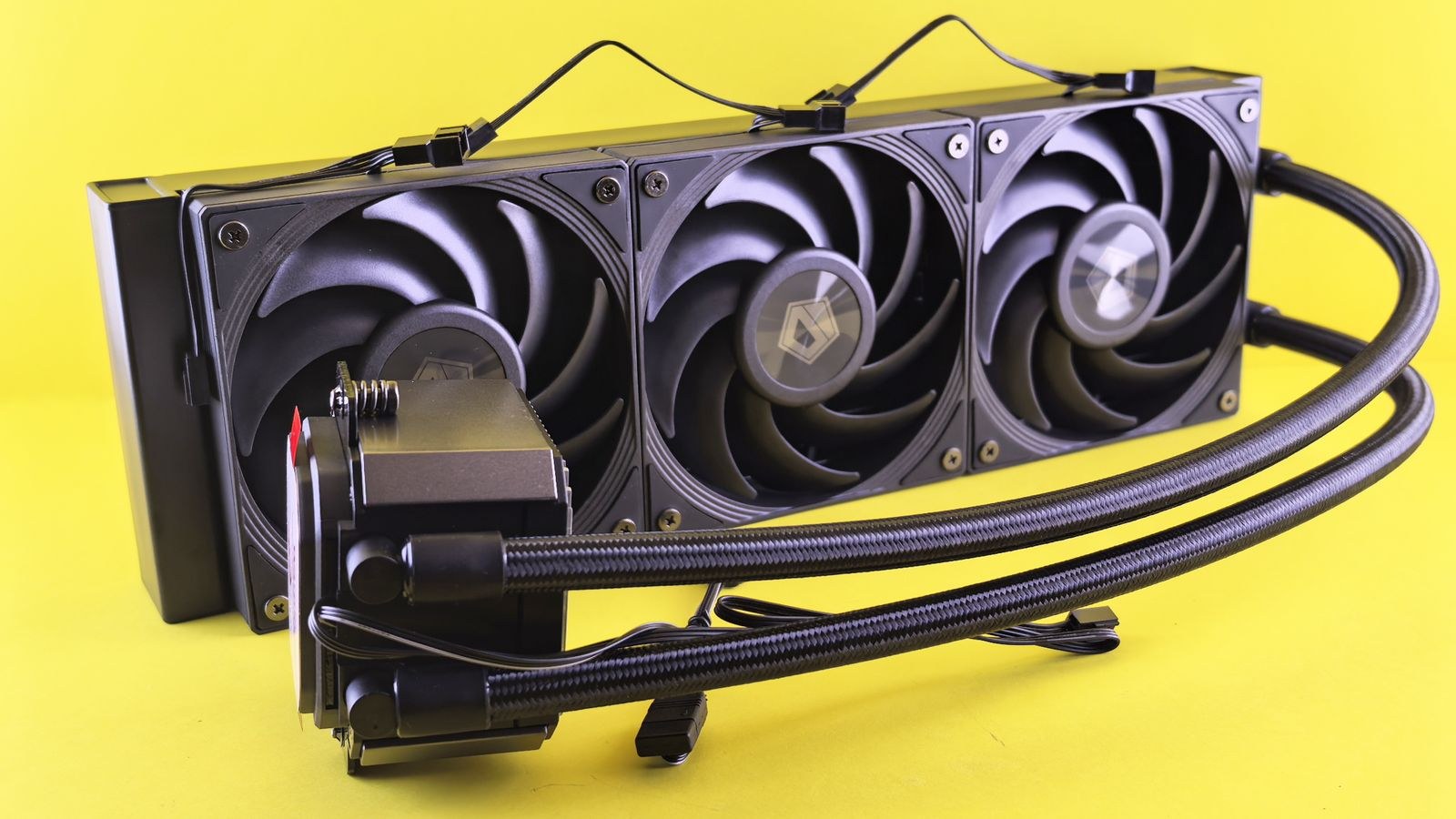
- Choose a low-profile CPU cooler rated for your processor. Compact builds often require specific cooler height clearances, so check your case’s maximum cooler height before purchasing.
- Position the finished desktop with breathing room. Even a well-designed compact case needs a few inches of clearance on all sides to pull in cool air and exhaust warm air effectively.
Step 5: Plan Around Expansion and Ports
- Check available ports before you buy. Compact desktops sometimes have fewer USB ports or expansion slots than full towers, so confirm the model supports your monitors, peripherals, and any external drives you rely on.
- Consider a USB hub or dock if needed. A compact desktop with limited ports can be supplemented with an external hub to restore the connectivity of a larger tower without adding much bulk.
- Verify upgrade paths. Some compact systems allow RAM or storage upgrades later, while others are more limited, so check documentation if future upgradability matters to you.
Tips for a Smooth Downsize
- Back up all your data before migrating to a new desktop, and consider cloning your drive if you’re keeping the same operating system.
- Test your new compact desktop under your heaviest typical workload for the first week to confirm thermals and performance hold up as expected.
- Keep your old tower until you’re fully confident the compact replacement meets your needs.
Common Mistakes to Avoid
- Choosing based on size alone without checking thermal design. A small case with poor airflow can throttle performance under sustained heavy use.
- Ignoring port and expansion limitations. Confirm you have enough USB and display outputs for your monitors and peripherals before committing.
- Underestimating power supply requirements. A compact power supply still needs to be correctly sized for your CPU and GPU combination.
- Overlooking noise levels. Smaller cases sometimes require faster-spinning fans to manage heat, which can be noticeably louder than a larger tower’s slower, larger fans.
Will a compact desktop really match a full tower’s performance?
For most everyday and even many demanding tasks, yes, as long as you choose power-efficient components and a case with solid airflow. The main trade-offs tend to be around extreme high-end gaming or heavy multi-GPU workloads, which are harder to fit in the smallest cases.
Is a mini desktop enough for office and productivity work?
Absolutely. For tasks like document editing, spreadsheets, video calls, and web browsing, a well-specified mini desktop handles the workload smoothly while taking up a fraction of the space of a tower.
Do compact desktops run hotter than full towers?
They can, if airflow isn’t planned carefully, since there’s simply less internal volume for hot air to disperse. Choosing efficient components and a case with a thoughtful airflow design largely offsets this concern.
Can I reuse parts from my old tower in a compact build?
Some parts transfer directly, such as your storage drives, RAM if it matches the new motherboard, and often the graphics card if it physically fits the smaller case. Others, like the power supply and CPU cooler, frequently need to be swapped for compact SFX or low-profile versions that fit the smaller enclosure.
Are mini desktops upgradeable?
It varies widely. Many mini and small form factor systems allow RAM and storage upgrades, while the most compact models solder components in place for space savings. If future upgradability matters to you, confirm the specific model’s serviceable parts before buying.
Managing the Trade-Offs of a Smaller Build
Downsizing successfully is largely about understanding where compact systems make compromises and deciding which ones you can live with. The most common trade-off is thermal headroom: a smaller case has less room for large heatsinks and slow-spinning fans, so keeping temperatures in check sometimes means slightly higher fan noise under heavy load. Choosing power-efficient components with strong performance-per-watt ratings is the single best way to sidestep this, because parts that produce less heat are far easier to cool in a confined space.
The second trade-off is expandability. Full towers offer multiple drive bays, extra PCIe slots, and abundant USB ports, while compact systems are more selective. Before committing, list every device you connect, from external drives to webcams to a second display, and confirm the compact model has the ports to match, or plan for a compact USB hub or dock to fill the gap. As long as you go in with clear expectations, the space savings almost always outweigh these limitations for a home or office desk.
Real-World Use Cases That Suit a Compact Desktop
- Office and productivity work. Document editing, spreadsheets, email, and video calls run flawlessly on even modest mini desktops.
- Content creation on a budget footprint. A well-specified mini-ITX build with an efficient CPU and a compact GPU handles photo editing and moderate video work in a fraction of the space.
- Home theater and living room setups. Compact desktops double as capable media machines that blend into a shelf or entertainment center.
- Clutter-free multi-monitor stations. Freeing desk space with a small tower leaves more room for monitor arms and accessories, which is why compact builds pair so well with dual-display workflows.
Final Thoughts
Downsizing to a compact desktop doesn’t have to mean giving up performance, as long as you plan your components, cooling, and expansion needs carefully before making the switch. If you’re ready to explore your options, take a look at the best mini desktop computers to find a model that fits both your workspace and your performance requirements.