Owen Bradley
 Hard floors look easy to clean and are surprisingly easy to clean badly. Hardwood, engineered wood, laminate, luxury vinyl and tile all share one trait: debris sits on the surface rather than embedding in it, so you do not need aggressive agitation. What you need instead is a machine that lifts fine dust without scattering it, picks up larger debris without pushing it around, and — most importantly — does not scratch a finish that costs a great deal to restore. A vacuum optimized for carpet can quietly damage a wood floor over months of use. This guide covers what makes a vacuum genuinely hard-floor-friendly, how to shop for the specific surfaces in your home, and the maintenance habits that keep floors looking new.
Why Hard Floors Need a Different Machine
On carpet, a stiff brush roll spinning at high speed is your friend — it beats dirt out of the pile so suction can carry it away. On a wood floor there is no pile, and that same stiff bristle does three unhelpful things. It flicks fine dust into the air instead of into the airstream. It scatters larger debris ahead of the head, so you chase crumbs around the room. And it drags any grit it has picked up across the finish, which is the mechanism behind the fine haze of micro-scratches that appears on well-vacuumed wood floors after a few years.
The second issue is the seal. Hard floors are flat, so a head with high suction and no airflow relief can lock down against the surface, making the vacuum hard to push and reducing airflow. Good hard-floor heads either have relief channels, adjustable suction, or a soft roller that maintains a small controlled gap.
Third is the debris profile. Hard floors accumulate a mixture of very fine dust and relatively large items — cereal, pet food, small stones tracked in on shoes. A single narrow slot inlet handles fine dust well and jams on the large stuff. Good designs accommodate both.
The Features That Matter Most
A Soft Roller or Brush-Roll-Off Setting
This is the single most important specification. A dedicated soft roller head — a fabric or plush cylinder rather than bristles — is the gold standard for wood. It sweeps fine dust into the airstream, catches larger debris rather than flinging it, and cannot scratch. If a machine does not offer one, it must at minimum let you switch the brush roll off entirely so you are cleaning by suction alone. A vacuum with a permanently spinning stiff bristle roll is the wrong tool for hardwood.
Rubber or Felt Wheels
Hard plastic wheels are a scratch risk in their own right, and they trap grit in the axle. Look for rubberized or felt-trimmed wheels, and inspect them periodically for embedded particles that will act like a stylus on your finish.
Adjustable Suction
Being able to dial suction down prevents the head sealing to the floor, makes the machine easier to push, and stops lightweight rugs being sucked up at the edges. On hard floors you rarely need maximum power.
Sealed Filtration
Because hard floors do not trap dust the way carpet does, that dust stays airborne and settles repeatedly. A vacuum that leaks fine particles back into the room makes hard floors look dusty again within hours. A properly sealed system with a HEPA filter makes a visible difference on wood and tile in a way that is less obvious on carpet.
Edge and Corner Performance
Dust collects along baseboards and in the gaps between planks. Heads with side inlets or bristle strips at the edges reach into that zone; heads with a flat closed edge leave a visible line of dust. A crevice tool covers the rest.
Illuminated Heads
Once a niche feature, now genuinely useful. Fine dust on a dark wood floor is nearly invisible under ceiling light. An LED or laser-illuminated head reveals what you are missing and typically results in a more thorough pass.
Matching the Vacuum to Your Specific Floor
- Solid hardwood with a polyurethane finish. Durable but scratch-visible. Soft roller strongly recommended, and keep grit out of the wheels.
- Engineered wood. Same surface considerations as solid wood; the wear layer is thin, so avoiding abrasion matters even more since refinishing options are limited.
- Oiled or waxed wood. The most delicate. Use suction only with a soft roller, and never anything with stiff bristles or a wet function unless the manufacturer specifically approves it.
- Laminate. Hard-wearing surface but the seams between planks are moisture-vulnerable. Vacuum freely; be cautious with any mopping combination.
- Luxury vinyl plank. The most forgiving hard floor. Tolerates most vacuum heads well and handles moisture better than wood or laminate.
- Tile with grout lines. Grout traps grit that suction alone struggles to lift. A soft roller helps, and a light bristle strip is acceptable here since the surface is not scratch-sensitive.
For side-by-side model comparisons, our roundup of the best vacuum for hardwood floors focuses on wood-specific head designs, while the broader best vacuum for hard floors guide covers tile, vinyl and laminate as well. If wood is essentially all you have, the best vacuum for wood floors comparison narrows the field further.
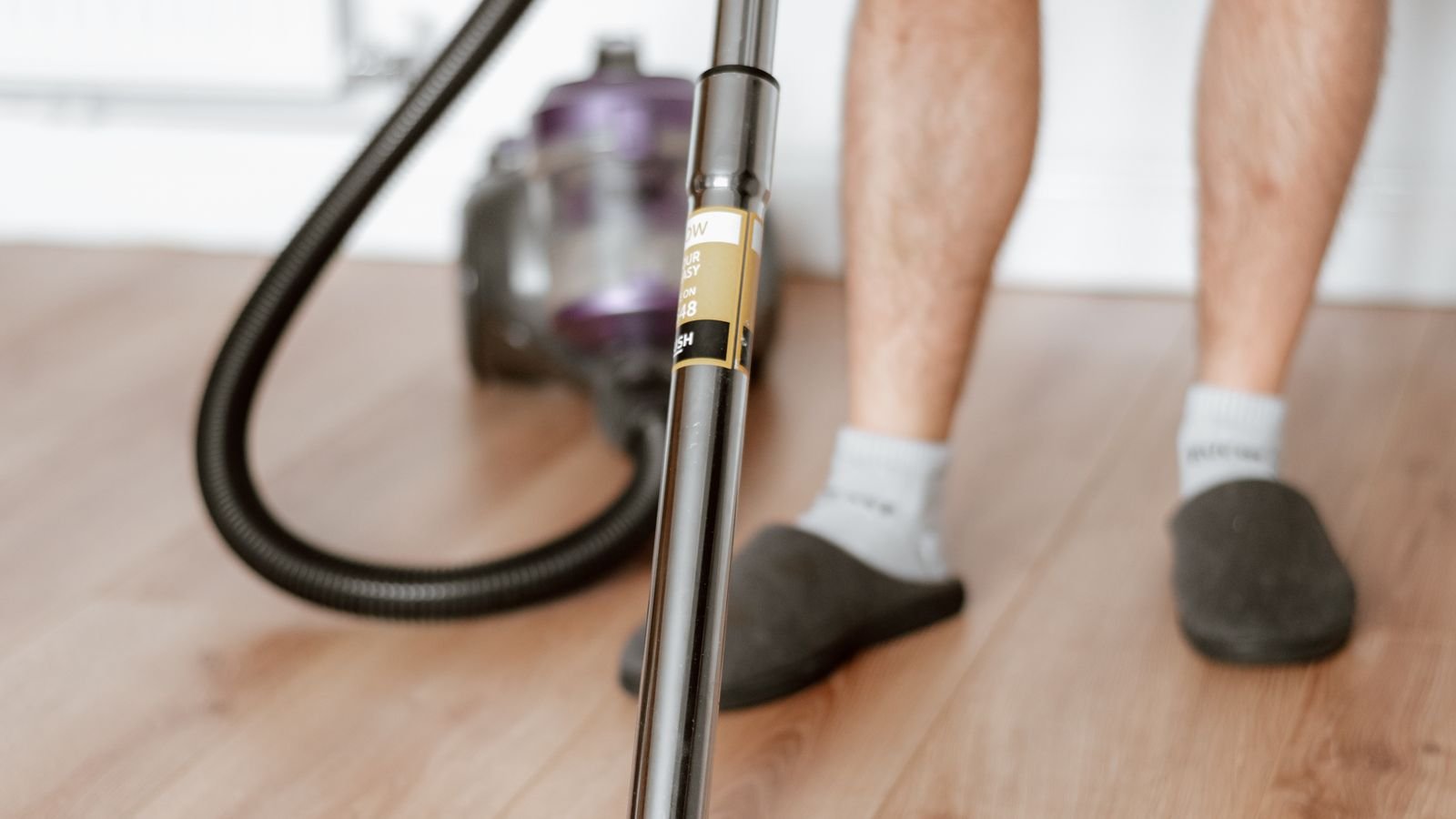
Choosing a Format for Hard-Floor Homes
Cordless Stick
The natural fit. Hard floors need frequent light passes rather than occasional deep cleans, and a stick vacuum on a wall dock delivers exactly that. Battery runtime is far less of a constraint on hard floors than on carpet because the head is not fighting pile resistance, so real-world runtime is often close to the quoted figure.
Canister
Excellent for hard-floor homes with stairs or mixed surfaces. The lightweight wand glides easily, hard-floor heads are usually well designed, and the larger bin means fewer interruptions than a stick.
Robot
Hard floors are where robots perform closest to their potential. Navigation is easier, there is no pile to penetrate, and many models mop on the same pass. A daily robot run plus a weekly manual pass keeps most hard-floor homes genuinely clean. Compare options in our best robot vacuums and mops guide.
Upright
Usable if it has a brush-roll-off switch, but generally overkill. Uprights are optimized for carpet agitation you do not need, and their weight makes them clumsy on floors that require gentle handling.
Vacuum, Mop or Both?
Vacuuming and mopping solve different problems. Vacuuming removes the dry grit that causes scratching; mopping removes the film of residue that dulls the finish. Neither substitutes for the other, and mopping over unvacuumed grit is actively harmful — you are dragging abrasive particles across the surface with a wet cloth.
Combination vacuum-mop machines are convenient and work well on vinyl and tile. On wood and laminate, apply real caution: excess water is the primary enemy of both. If you use one, choose a model with genuinely controlled moisture delivery, and never leave standing water on the surface. For oiled or waxed wood, skip wet cleaning altogether unless the floor’s finisher specifically approves it.
Common Mistakes on Hard Floors
- Using a carpet head on wood. The most common and most damaging error. Switch heads or switch the brush roll off.
- Vacuuming at maximum suction. It makes the machine hard to push, offers no cleaning benefit on a flat surface, and can lift the edges of area rugs.
- Never checking the wheels. A single grain of embedded grit in a hard plastic wheel will draw a line across a room. Inspect and clean them.
- Ignoring the filter. A clogged filter reduces airflow, and on hard floors that shows up immediately as dust left behind rather than pushed into pile.
- Over-wetting during mopping. Water in the seams of laminate or engineered wood causes swelling that cannot be reversed.
- Skipping entry mats. Most floor-scratching grit arrives on shoes. Good mats at every external door reduce the abrasive load more than any vacuum upgrade.
Maintenance Routine That Protects the Finish
- Clear the soft roller of hair and threads weekly. Wrapped hair reduces contact with the floor and holds grit against it.
- Wash the roller itself if the manufacturer permits, and let it dry fully before reinstalling.
- Wipe the wheels and the underside of the head. This takes thirty seconds and prevents the majority of vacuum-caused scratching.
- Empty the bin before it is full so airflow stays high; fine dust chokes airflow faster than bulky debris.
- Wash or replace filters on the manufacturer’s schedule. On hard floors, filtration quality is directly visible in how quickly dust returns.
- Check the head’s sealing strips or felt trim for wear and replace them when they harden.
Budget Expectations
Entry Level
Under roughly $150 you will find corded sticks and basic canisters with a hard-floor setting. They clean adequately but filtration is usually unsealed and heads scatter larger debris. Fine for a small apartment with light traffic.
Mid Range
Roughly $200 to $400 buys a proper soft roller head, sealed filtration and usable cordless runtime. This is where hard-floor cleaning quality genuinely improves and where most homes should aim.
Premium
Above roughly $500 you get illuminated heads, automatic surface detection that adjusts suction as you move from wood to rug, longer batteries and better materials. The convenience and thoroughness gains are real, though the basic cleaning result on a flat wood floor is not dramatically different from mid-range.
Frequently Asked Questions
Will a regular vacuum scratch my hardwood floors?
It can, over time. The risk comes from stiff brush roll bristles and from grit trapped in hard plastic wheels rather than from suction. Use a soft roller or turn the brush roll off, and keep the wheels clean.
How often should I vacuum hard floors?
Two to three times a week in living areas, more in entryways and kitchens. Dust and grit are visible sooner on hard surfaces and, more importantly, grit left underfoot is what abrades the finish.
Is a soft roller head really necessary?
It is the single biggest quality-of-life improvement for hard floors. It stops fine dust being flicked away, catches larger debris instead of pushing it, and eliminates scratch risk from the roller. If you only upgrade one thing, upgrade this.
Can I use a robot vacuum on hardwood?
Yes, and hard floors are where robots perform best. Check that the model uses soft or rubberized wheels and that the side brushes are not stiff enough to mark the finish. Keep the floor clear of cables so it does not drag them.
Should I buy a vacuum-mop combo for wood floors?
Only one with carefully controlled moisture, and never for oiled or waxed wood. Excess water is the main cause of irreversible damage to wood and laminate. On vinyl and tile, combos are excellent.
Final Thoughts
Hard floors reward a gentler, more frequent approach than carpet. Choose a machine with a soft roller or a brush-roll-off setting, sealed filtration and non-marking wheels, then run it often rather than aggressively. Add good entry mats to cut the amount of abrasive grit reaching the floor in the first place, and keep the head and wheels clean so the vacuum stays a cleaning tool rather than a polishing-away one. Whether you go cordless, canister or robot depends on your layout and habits, but any of those formats can be excellent on wood with the right head. Browse our hard-floor comparisons for 2026 to see which specific models pair the right head design with the filtration and runtime your home needs.