Owen Bradley
 Throw pillows are the cheapest way to change how a room feels and the easiest place to waste money. Most people buy covers they like, drop them on the sofa, and wonder why the result looks flat rather than styled. The reason is almost never the fabric. It is the insert that has gone limp, the size that is too small for the seat depth, or a set of five pillows that all measure the same and all say the same thing. This throw pillow guide covers the standard sizes, the difference a good insert makes, and the combinations that actually work on sofas, sectionals, beds and chairs, so what you buy in 2026 looks intentional rather than accidental.
The Standard Sizes and What Each One Is For
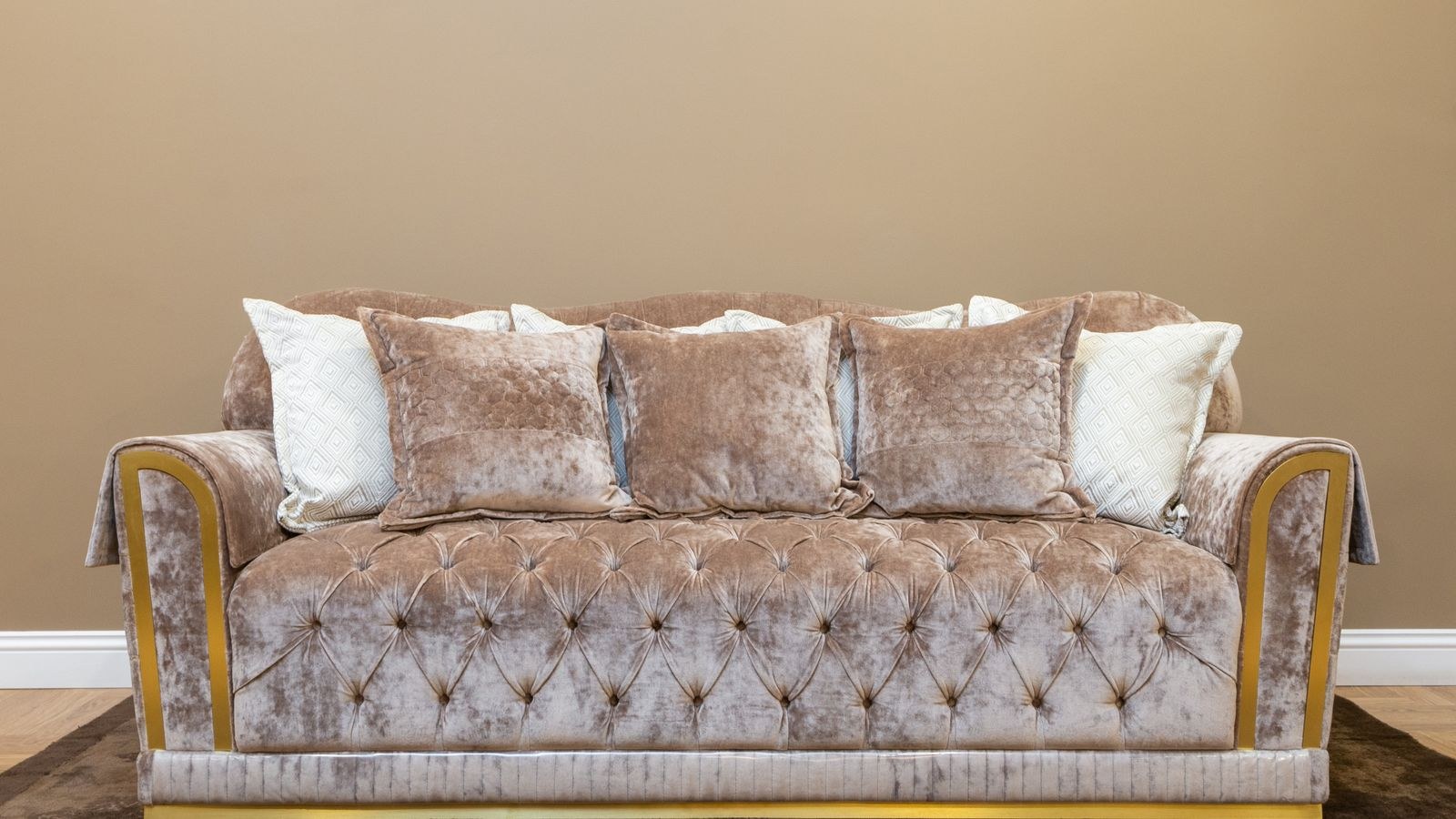
Throw pillows come in a surprisingly small set of standard dimensions, and knowing them makes shopping straightforward. 18×18 inches is the most common size sold, but it is slightly small for a modern deep-seated sofa and often disappears against a tall back. 20×20 is the reliable default for a standard three-seat sofa, substantial enough to hold its shape and support your back. 22×22 and 24×24 suit deep sectionals, oversized seating and floor cushions, and they are what makes a big sofa look properly furnished rather than under-dressed.
Rectangular formats do a different job. 12×20 and 14×20 lumbar pillows sit in front of larger squares, adding depth to the arrangement and genuine lower-back support. 12×24 gives a longer, sleeker line that suits contemporary sofas. Small 16×16 squares are best on accent chairs, dining chairs and window seats, where a full 20-inch pillow would swallow the seat.
Match the size to the furniture, not the other way round. A rough guide: measure the seat depth and the back height, and choose a pillow whose dimension is around one-third of the sofa’s back height. Low-backed mid-century sofas take 18 or 20-inch squares; tall, deep contemporary sectionals need 22 or 24.
Inserts: Where the Difference Actually Lives
The single biggest determinant of how a pillow looks is the insert inside it, not the cover. A great cover over a flat polyester pad looks limp within weeks, while an ordinary cover over a well-filled insert looks expensive.
Down and feather inserts are the standard for a reason. They compress into that soft karate-chop crease, plump back up when fluffed, and drape naturally against a sofa back. A blend of around ninety-five percent feather to five percent down gives most of the look at a lower price than pure down, which is softer but flattens faster and costs considerably more. The trade-offs are allergies, occasional quill poke through thin covers, and the need to fluff them regularly.
Polyester fibre inserts are hypoallergenic, washable and inexpensive. Cheap ones mat down into a lumpy pancake within months. Better ones use a spiral or gel-treated fibre that recovers its loft far longer. They hold a firm, rounded shape rather than draping, which suits a more structured contemporary look.
Down alternative inserts try to split the difference, using clustered microfibre to mimic the softness and compressibility of down without the allergens. Quality varies widely, so weight is a useful proxy; a heavier insert almost always outperforms a light one of the same size.
The Two-Inch Overfill Rule
Always buy an insert two inches larger than the cover. A 20-inch cover wants a 22-inch insert. This one habit does more for the look of a sofa than any other trick, because it fills the corners completely, removes the empty flaps at the edges and gives the pillow enough body to hold a crease. Buying an insert the same size as the cover leaves the corners hollow and the whole thing looking deflated from the moment you unpack it.
Choose covers with hidden zips rather than envelope backs if you plan to remove them for washing often; envelope closures are cheaper but tend to gape once the insert is generously sized. Check that the zip runs along a full edge rather than a short section, which makes stuffing a two-inch-oversized insert much less of a fight.
Fabrics and How They Wear
Fabric decides both feel and lifespan. Cotton and linen are breathable, casual and easy to wash, though linen creases readily, which reads as relaxed or messy depending on your taste. Velvet adds depth and catches light beautifully, and cotton velvet ages more gracefully than polyester velvet, which can crush and shine at the corners. Wool and boucle bring texture and warmth but shed and pill in the first months. Performance fabrics woven from solution-dyed acrylic or treated polyester resist stains and fading, which matters enormously in homes with children, pets or strong sunlight.
Look at construction as well as material. A cover with piped or flanged edges holds a crisper shape than a plain seam. Heavier weaves resist snagging from claws and zips. If the sofa itself is a statement fabric, plain pillow covers in a complementary texture usually work better than competing patterns; our roundup of the best velvet sofas shows how much texture the upholstery alone can bring, and how little the pillows then need to do.
Combinations That Work
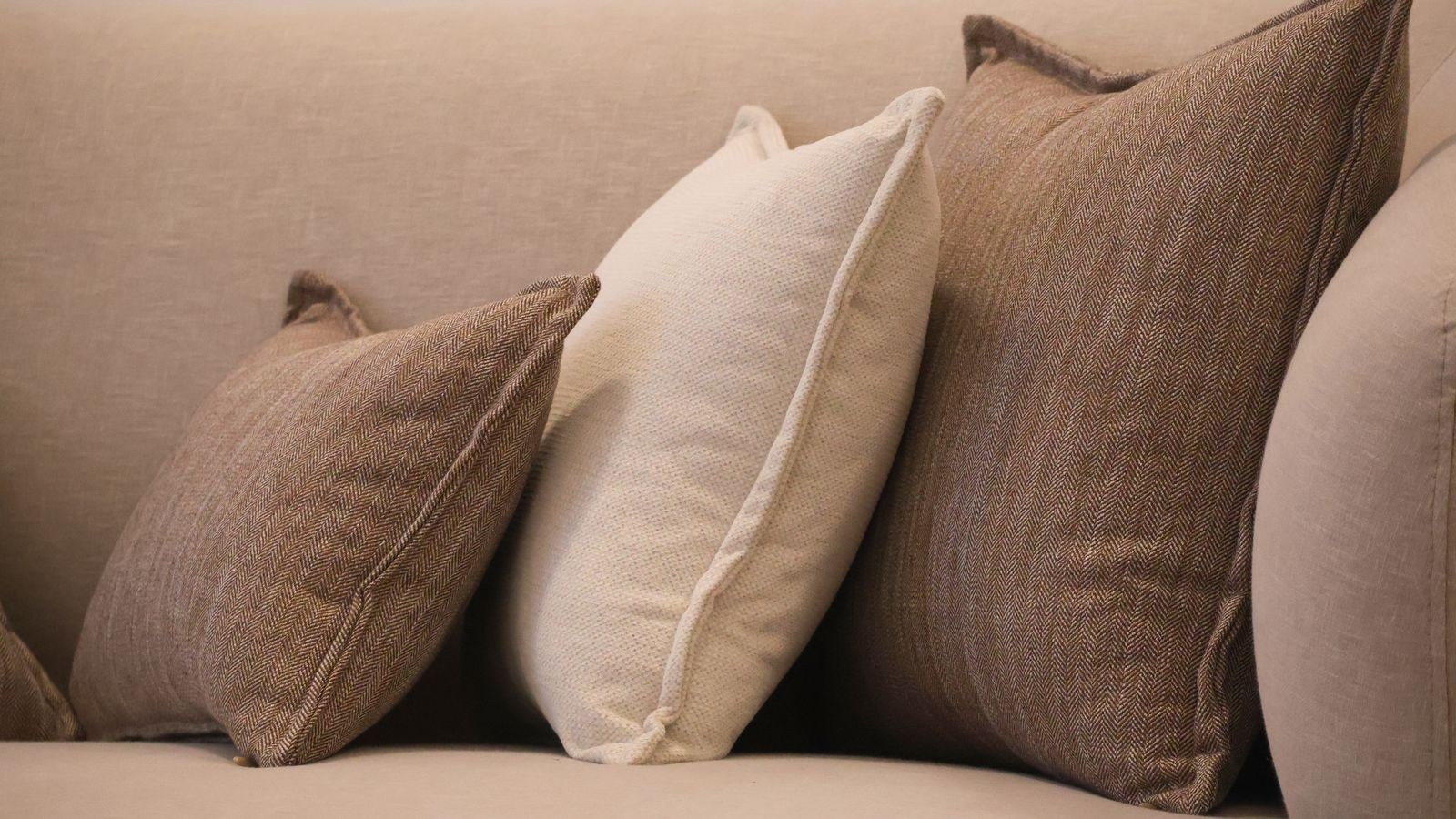
The most useful principle in pillow styling is to vary three things: size, texture and pattern scale. If every pillow on the sofa is the same size in the same weave, the arrangement reads as a matching set rather than a designed group. Change at least two of the three and the whole thing comes alive.
For pattern specifically, use a mix of one large-scale pattern, one small-scale pattern or stripe, and one or two solids or textures. All-large patterns fight each other; all-solids look bland. Keep the colours within a tight family drawn from something already in the room, such as a rug, a piece of art or the curtains, so the pillows feel connected rather than dropped in.
Odd numbers generally look more natural than even ones on a single-length sofa, though symmetry has its place in formal rooms. A classic and dependable arrangement is a pair of 20-inch squares at each end, a 22-inch square inside one of them, and a single lumbar pillow in the centre. That gives you variation in size, a focal point, and something you can actually lean on.
Sofas, Sectionals, Beds and Chairs
A standard three-seat sofa carries three to five pillows comfortably. More than that and you spend your evenings relocating them to the floor. Anchor the ends with the largest squares and step down in size toward the middle.
Sectionals need more and bigger. The long chaise arm swallows small pillows, so start at 22 or 24 inches in the corner and work outward, using five to seven pieces across the whole run. Our comparison of the best sectional sofas covers the depths and back heights that determine how large those corner pillows need to be.
Beds work in layers from back to front: sleeping pillows against the headboard, then euro squares at 26 inches, then standard 20 or 22-inch squares, then a lumbar in front. Keep the total count manageable, since anything you remove every night eventually stops going back on.
Accent chairs take exactly one pillow, and usually a lumbar rather than a square, because a large square fills the seat and makes the chair unusable. Our guide to the best accent chairs shows the seat dimensions that make this obvious once you measure them.
Layering Pillows With Throws and Upholstery
Pillows rarely work alone. A folded throw draped over one arm or laid diagonally across a corner adds the texture that stops a pillow arrangement looking staged, and it links the colours together. Choose a throw that picks up a secondary colour from the pillows rather than matching the dominant one exactly, and let it hang with a soft fold rather than folding it into a tight rectangle. Our roundup of the best throws for sofas compares weights and materials that drape well without sliding off.
The upholstery underneath sets your limits. A dark or heavily textured sofa needs fewer, larger and simpler pillows. A pale, plain sofa can carry more pattern and colour without looking busy. If you are buying the sofa and the pillows together, deciding the upholstery first and treating pillows as the accent is far easier than trying to make a fixed pillow palette work on a new sofa. Comparisons like our best sofas guide outline the seat depths and cushion firmness that determine how much back support the pillows will need to add.
Budget Tiers and Where to Spend
Spend on inserts, save on covers. A good feather or dense fibre insert lasts for years and can be re-covered a dozen times, so it is the part worth paying for. Covers are seasonal, replaceable and easy to swap when your taste changes.
At the entry level, cover-only purchases paired with quality inserts give the best value by far, and buying covers without inserts is also far cheaper to store and to ship. Mid-range spending buys better fabrics, hidden zips and finished seams that survive washing. At the top end you are paying for designer textiles, hand-finished trims and made-to-order sizes, which makes sense for one or two focal pillows rather than a whole set.
Care, Fluffing and Common Mistakes
Fluff feather inserts every few days by holding two corners and pushing them together, then shaking. Rotate pillows between the ends of the sofa so one does not take all the leaning. Wash covers according to the label and reinsert while slightly damp so the fabric relaxes into shape. Spot-clean rather than fully washing anything with a delicate weave or a pieced construction.
- Buying the insert the same size as the cover. The most common error, and the reason so many pillows look deflated.
- Choosing every pillow at 18×18. Too small for most modern sofas and too uniform to look styled.
- Using cheap flat polyester pads. They mat within months and no cover rescues them.
- Matching everything. A set that matches the sofa exactly reads as a showroom display.
- Over-piling. Anything you have to move to sit down will end up on the floor permanently.
- Ignoring the room’s existing palette. Pull colours from the rug or art rather than choosing in isolation.
Frequently Asked Questions
What size throw pillow is best for a standard sofa?
20×20 inches for most three-seat sofas, stepping up to 22 or 24 inches for deep sectionals and dropping to 16 or 18 inches for accent chairs and small settees.
Should the insert be bigger than the cover?
Yes, by two inches. A 20-inch cover takes a 22-inch insert. This fills the corners and gives the pillow enough body to hold its shape.
Feather or polyester inserts?
Feather blends drape better and look more expensive; quality polyester is hypoallergenic, washable and holds a firmer shape. Both work, but avoid the cheapest flat fibre pads either way.
How many pillows should a sofa have?
Three to five on a standard sofa and five to seven across a sectional. If you have to move them every time you sit down, you have too many.
Final Thoughts
Throw pillows reward a small amount of arithmetic and one non-negotiable habit. Size them to the furniture rather than defaulting to 18×18, buy inserts two inches larger than the covers, and vary size, texture and pattern scale across the group instead of buying a matching set. Pull your colours from something already in the room, keep the count low enough that the sofa stays usable, and put your money into inserts that will outlast several rounds of covers. Do that and a handful of pillows will change the character of a room more decisively than almost anything else you can buy for the same price.