Owen Bradley
 A subwoofer is the one component in a home audio system that can transform everything or ruin everything, depending entirely on choices most buyers never think about. Get the size, cabinet type, and position right and the whole soundstage grows: bass guitars gain texture, film effects gain scale, and your main speakers suddenly sound clearer because they are no longer straining. Get it wrong and you get a boomy, one-note thump that draws attention to itself and makes every track sound the same. This subwoofer buying guide walks through driver size, sealed versus ported cabinets, amplifier power, room matching, and the placement rules that separate a good install from an expensive annoyance.
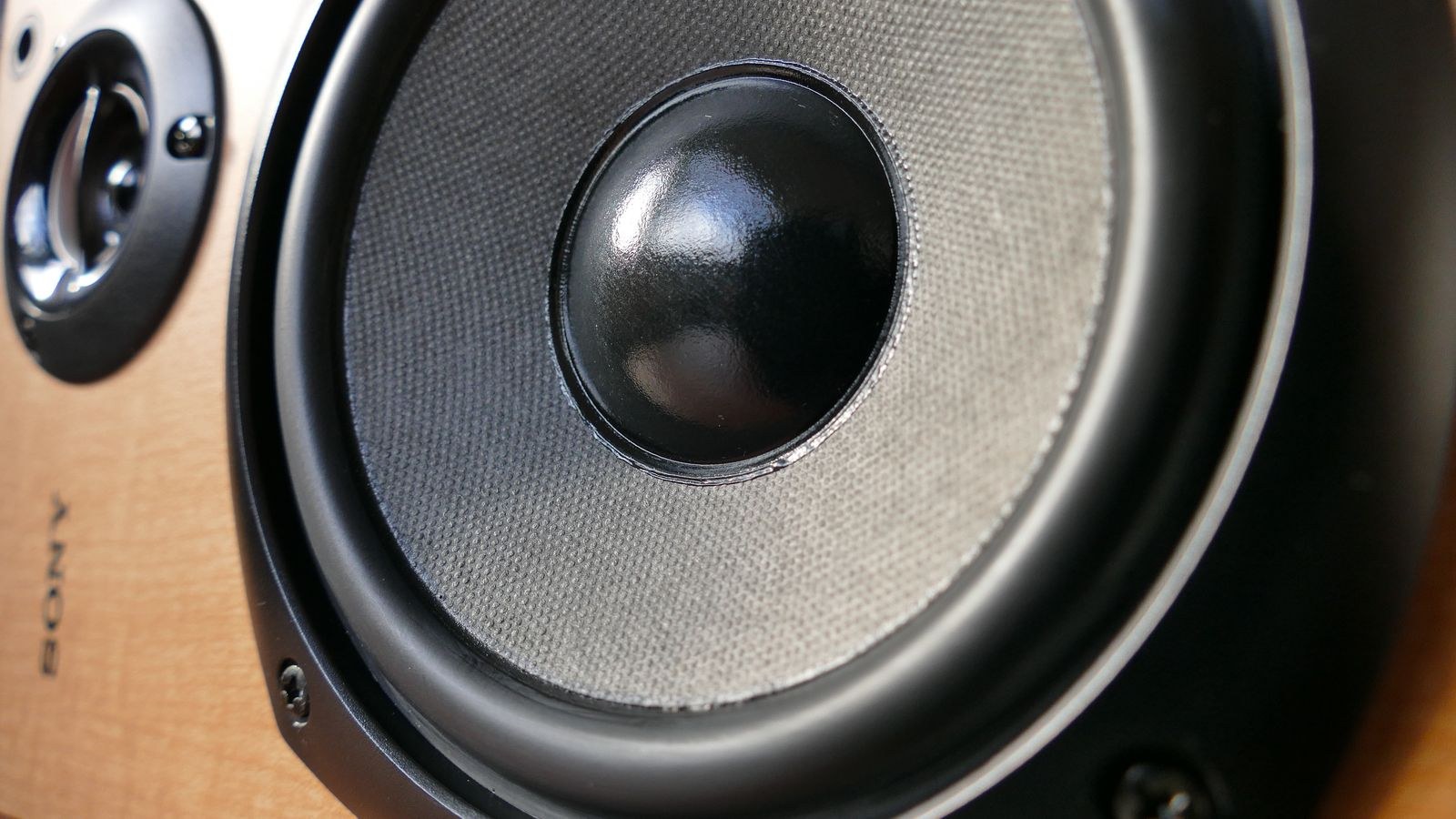
Why a Subwoofer Improves More Than Just Bass
The obvious job of a subwoofer is to reproduce the lowest octaves, roughly 20Hz to 80Hz, that most main speakers cannot reach convincingly. The less obvious benefit is what it does for the rest of the range. When you cross a subwoofer in, your main speakers stop trying to produce deep bass, which means their woofers move far less. Less excursion means less distortion in the midrange, so voices and instruments become cleaner even though nothing changed above 80Hz.
That is why adding a subwoofer to a pair of compact monitors often sounds like a bigger upgrade than replacing the monitors with towers. You gain extension and you gain clarity at the same time. If you are building from scratch and want cabinets that partner well with a sub, our roundup of the best bookshelf speakers flags which designs cross over cleanly in the 70 to 90Hz region.
Driver Size: How Much Cone Do You Need
Subwoofer drivers commonly come in 8, 10, 12, and 15 inch diameters. Larger cones move more air per stroke, which means more output for less excursion and generally lower distortion at high volume. Smaller drivers tend to start and stop faster on paper, though modern designs blur this distinction considerably.
Match the driver to your room volume rather than chasing the largest option. As a working guide, an 8 or 10 inch driver suits rooms under about 200 square feet, a 12 inch driver is the versatile choice for most living rooms between 200 and 400 square feet, and a 15 inch driver, or a pair of smaller subs, earns its place in large open-plan spaces or dedicated cinema rooms.
Be wary of judging by diameter alone. Excursion, the distance the cone can travel, matters just as much as area. A high-excursion 10 inch driver in a well-braced cabinet with a powerful amplifier will outperform a lazy 12 inch driver in a thin box every time.
One Subwoofer or Two?
Two smaller subwoofers almost always beat one large one, and the reason has nothing to do with output. Bass frequencies interact with room boundaries to create peaks and nulls, spots where bass is exaggerated and spots where it vanishes. A second subwoofer placed elsewhere in the room fills in the other unit’s nulls, smoothing the response across a much wider listening area. If your budget stretches to two modest subs rather than one large one, take the pair.
Sealed Versus Ported Cabinets
The cabinet design determines the character of the bass more than almost anything else. A sealed enclosure is an airtight box. The trapped air acts as a spring, producing a gentle roll-off, tight transient response, and excellent control. Sealed subs are typically smaller for a given driver size and are the favourite of music listeners who value accuracy over sheer volume.
A ported or bass-reflex enclosure adds a tuned tube that lets the rear wave of the driver reinforce output around the tuning frequency. The result is noticeably more output for the same amplifier power, and deeper extension, at the cost of a steeper roll-off below tuning and slightly less precise transient control. Ported designs dominate home cinema use because film soundtracks demand raw output in the 25 to 40Hz range.
There is a third variant worth knowing: the passive radiator design, which replaces the port with an undriven cone. It behaves much like a ported box but avoids port noise and works in a smaller cabinet, which is why it appears in compact models. If your priority is film impact, the systems highlighted in our guide to the best home theater speakers show how ported subs are typically matched to a full surround array.
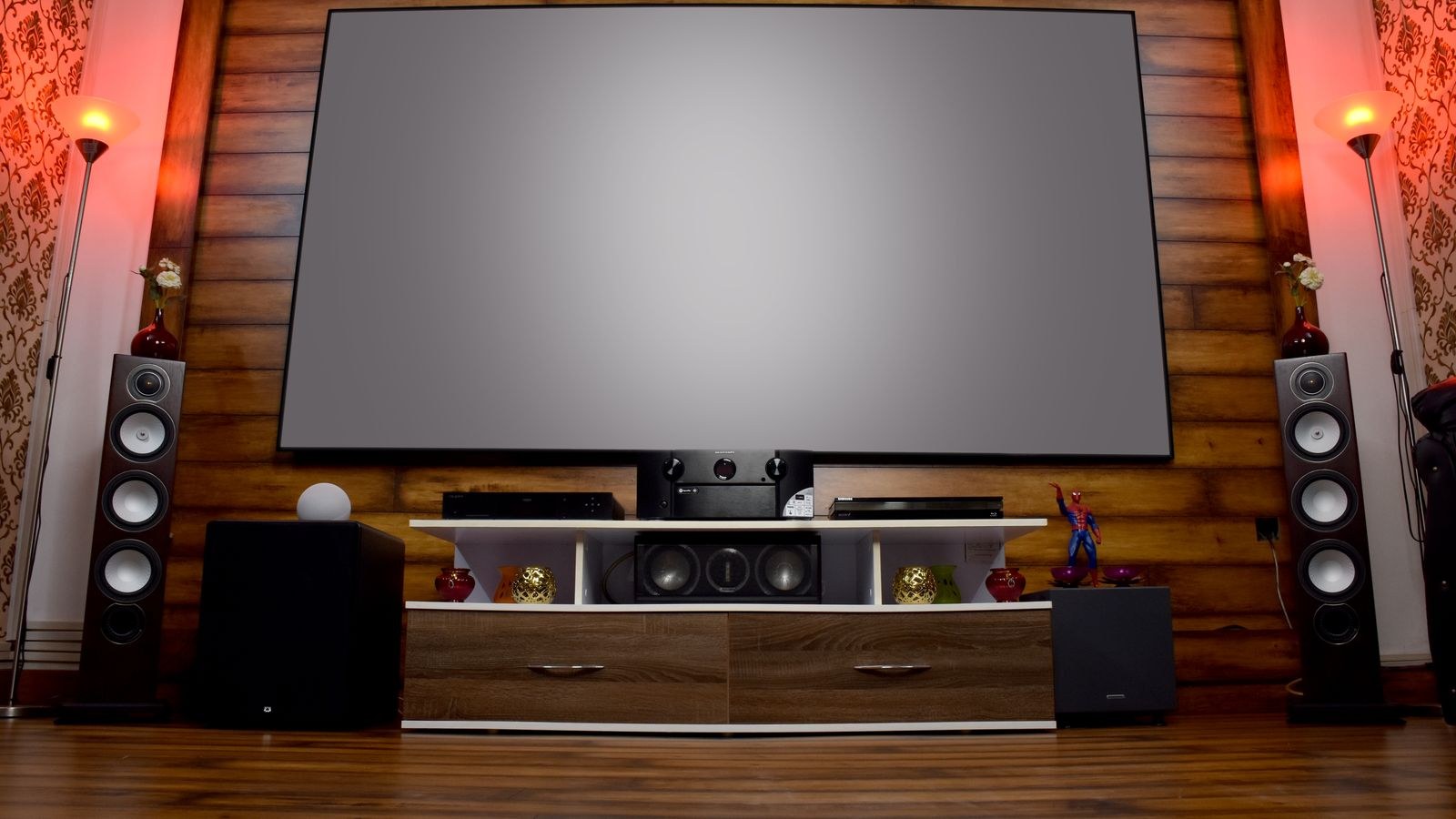
Amplifier Power and How to Read the Spec
Almost every home subwoofer is self-powered, with a dedicated amplifier bolted to the rear. Manufacturers quote power in two ways, and only one is useful. RMS or continuous power tells you what the amplifier can sustain. Peak or “dynamic” power is a brief maximum that means very little in practice. A sub quoted at 300W RMS is a serious device; one quoted at 1000W peak with no RMS figure deserves scepticism.
For most living rooms, 200 to 400W RMS is a comfortable range. Large rooms and cinema use benefit from 500W and up. Remember that bass output follows a punishing curve: every extra 3dB of output requires double the power, so headroom is genuinely valuable rather than a marketing indulgence.
Connections and Crossover Settings
Most subwoofers offer an LFE input, a single RCA connection that carries the dedicated low-frequency effects channel from an AV receiver. This is the connection to use for any home cinema system, because the receiver handles bass management centrally. Set the subwoofer’s own crossover dial to bypass or to its maximum position so it does not filter the signal twice.
For a two-channel system without bass management, you will use stereo line inputs or, on some models, speaker-level inputs that tap the amplifier output. Here the subwoofer’s built-in crossover does the work. Set it roughly 10Hz above the point where your main speakers start to roll off, typically 80Hz for compact monitors and 60Hz for larger cabinets.
Also check the phase control. A subwoofer sitting several feet from your main speakers can arrive slightly out of step, cancelling bass rather than adding it. Play a bass-heavy track, flip the phase switch between 0 and 180 degrees, and keep whichever setting sounds fuller from your seat. Systems that already include a matched sub, like those in our list of best speakers with subwoofer, arrive with phase and crossover pre-matched, which removes most of this guesswork.
Placement: The Free Upgrade Most People Skip
Where you put a subwoofer changes its measured response by more than any specification on the box. Corners reinforce bass heavily, which sounds impressive at first and usually turns muddy. Positions along a wall midway between corners often give a flatter result. The only reliable way to find the right spot in your room is to test.
- Place the subwoofer temporarily in your listening seat, at roughly ear height.
- Play a track or test tone with sustained, varied bass on repeat.
- Crawl slowly around the perimeter of the room at floor level, listening at each candidate position.
- The spot where the bass sounds most even and articulate, not simply loudest, is where the subwoofer should live.
- Move the sub there, reset the level so bass is present but never draws attention to itself, then set the phase.
This so-called subwoofer crawl costs nothing and routinely produces a bigger improvement than spending twice as much on the unit itself. Avoid tucking a sub inside a closed cabinet or behind heavy furniture, and give ported models several inches of clearance so the port is not obstructed.
Matching a Subwoofer to a Multi-Channel System
In a surround system, the receiver’s bass management sends everything below the crossover point from every channel to the subwoofer, plus the dedicated LFE track. Set all speakers to “small” in the receiver menu, even if they are large towers, unless you have a specific reason not to. This relieves your main speakers of deep bass duty and lets the sub, which is designed for the job, handle it.
Use your receiver’s automatic calibration if it has one, then verify by ear. Automatic systems occasionally set subwoofer level too high, so trimming it a few decibels afterwards is common. If you are assembling a package rather than building piece by piece, our comparison of the best 5.1 speakers covers bundles where the sub is voiced to match the satellites out of the box.
Budget Tiers and What Extra Money Buys
Entry-level subwoofers, generally compact sealed or small ported 8 to 10 inch models, add useful weight to a small room and are a clear improvement over no sub at all. They will not reach the bottom octave, and they compress when pushed.
The mid range is where most buyers should aim. A 10 or 12 inch driver with 200 to 400W of clean amplification, a braced cabinet, and proper level, phase, and crossover controls covers the vast majority of homes with room to spare.
High-end models buy you genuine sub-25Hz extension, far higher output before compression, heavy cabinet bracing, and often built-in room correction that measures your space and applies corrective filters. That correction is the standout feature at this tier, because it addresses the room, which is the limiting factor in almost every system. If your priority is impact in a large space, the models featured among the best speakers with high bass illustrate what serious output costs.
Common Mistakes That Ruin Bass
Setting the level too high is the near-universal error. A correctly integrated subwoofer should be inaudible as a separate source. If you can point at the sub and say “that is where the bass comes from”, turn it down until you cannot.
Corner-loading by default is the second mistake. Corners are convenient, not correct. Run the crawl before you commit.
Double filtering is a third: leaving the sub’s own crossover engaged while the receiver is also applying one produces a sagging response just below the crossover point. Bypass the sub’s filter whenever you use the LFE input.
Finally, buying an oversized sub for a small room causes more problems than it solves. A large driver in a small space excites room modes hard and turns every bass note into the same note. Match output to volume.
Frequently Asked Questions
What crossover frequency should I use?
80Hz is the standard starting point and works for most compact and mid-sized speakers. Use a higher figure, around 100 to 120Hz, for very small satellites, and a lower one, around 60Hz, for large towers with genuine bass capability.
Does a subwoofer need to be near the main speakers?
Not necessarily. Below about 80Hz the human ear struggles to localise sound, so the sub can sit some distance from the mains. The room response, not visual symmetry, should decide the position.
Will a subwoofer annoy my neighbours?
Low frequencies travel through structure far better than high ones, so yes, bass is the part most likely to transmit. Isolation feet or a decoupling platform reduce structural coupling, and keeping the level modest matters more than any accessory.
Is a sealed or ported subwoofer better for music?
Sealed designs are usually preferred for music because their gentler roll-off and tighter transient response suit acoustic bass and kick drums. Ported designs excel where sustained low-frequency output matters most, which is typically film.
Final Thoughts
The best subwoofer purchase is rarely the biggest one. Measure your room, pick a driver size and cabinet type that suit both its volume and the content you actually listen to, insist on an honest RMS power figure, and then spend an hour on placement and level before you judge the result. A modest, well-placed, carefully integrated subwoofer beats an expensive one dropped into a corner and turned up. Get those fundamentals right and the whole system, not just the bottom octave, sounds better for it.