Owen Bradley
 Keys are a technology we have tolerated for a very long time despite their obvious flaws: they get lost, they get copied without your knowledge, they cannot be revoked, and they tell you nothing about who came and went. Smart locks replace that with credentials you can issue, schedule and cancel from your phone, plus a log of every entry. The category has matured enough that reliability is no longer the concern it once was, but choosing well still requires understanding lock types, connectivity, power and — most importantly — whether the thing will physically fit your door. This guide covers how smart locks work, what actually determines security, and how to choose one that suits your home rather than the marketing.
The Main Types of Smart Lock
Full Replacement Deadbolts
The entire deadbolt is swapped for a smart unit with an interior motor and an exterior keypad, touchpad or reader. This gives the most integrated result and the widest feature set, including keypad entry for people without a smartphone. It changes the exterior appearance of your door, which may matter for aesthetics or for a rental agreement.
Retrofit Interior Units
These mount over your existing deadbolt on the inside of the door and turn the thumb-turn mechanically. The exterior stays completely unchanged, your existing keys keep working, and installation is genuinely simple. Ideal for renters and for anyone who wants to keep a specific door hardware finish. The trade-off is bulk on the interior side and, usually, no exterior keypad.
Smart Levers and Handlesets
The smart mechanism lives in the handle rather than a separate deadbolt. Common on interior doors, garage entry doors and offices. Less secure than a deadbolt for an exterior door unless paired with one.
Lock Boxes and Keypad Safes
Not smart locks in the strict sense, but a practical alternative where changing the lock is not permitted. A connected key safe lets you issue temporary access codes for a physical key.
How You Get In: Credential Types
- Keypad codes. The most universally useful method. Works for guests, cleaners and children without any app or phone, and codes can be permanent, temporary or scheduled. Look for a keypad that resists wear patterns — either backlit touchscreens that scramble digit positions or physical buttons that do not show grease marks.
- Phone app and Bluetooth. Convenient at close range and generally reliable, but slower than a keypad if the app has to wake up.
- Auto-unlock via geofencing. The door unlocks as you approach. Genuinely magical when it works, and unreliable enough on some setups that you should not depend on it as your only method.
- Fingerprint readers. Fast and convenient in good conditions. Performance drops with wet, cold or dirty fingers, and outdoor readers face weather that indoor sensors never see.
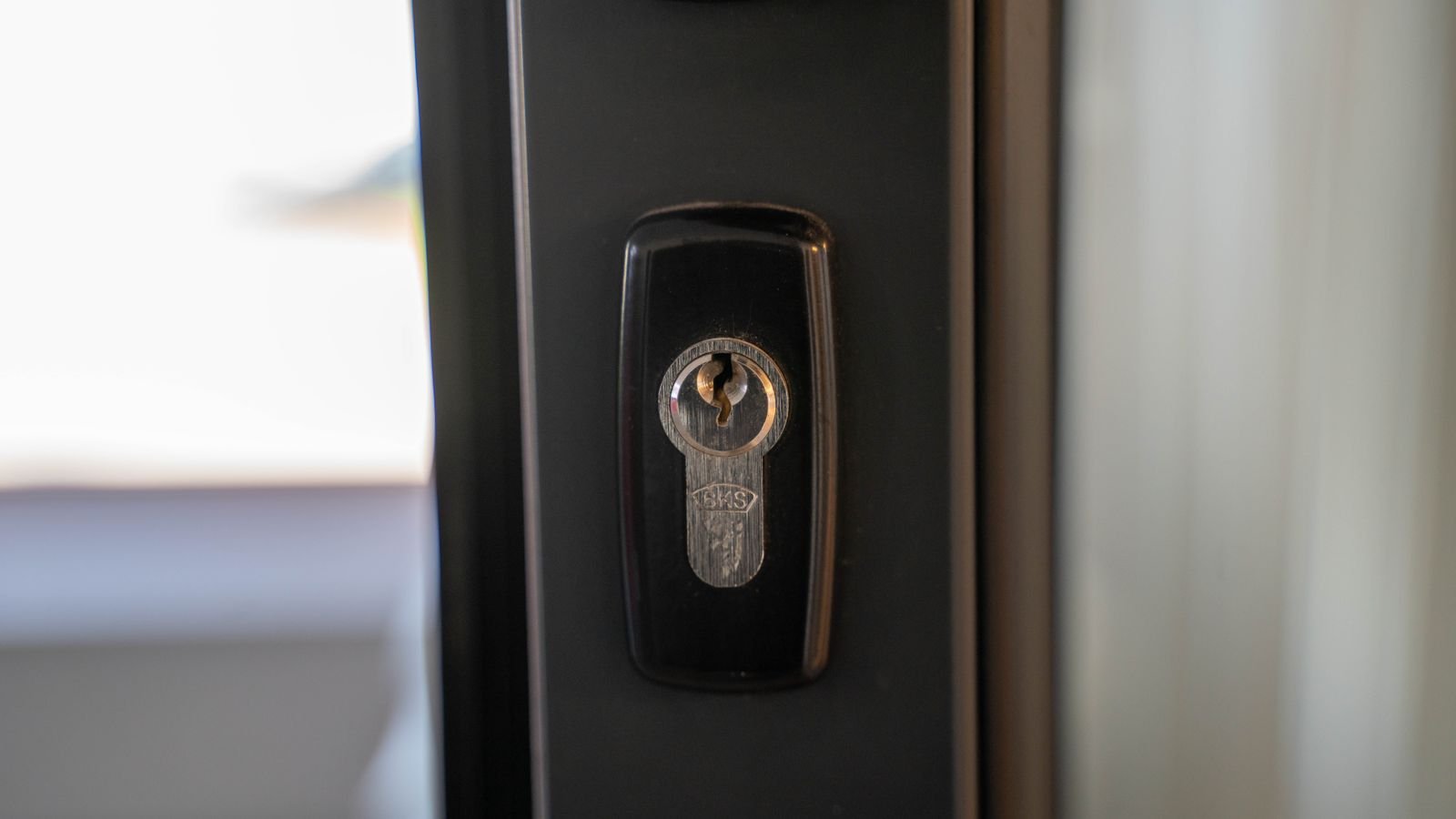
- Physical key backup. Many locks keep a traditional keyway as a fallback. This is reassuring but also preserves the traditional lock’s vulnerabilities, since a cheap cylinder can be picked or bumped regardless of the electronics.
- NFC and digital keys in a phone wallet. Increasingly common, fast, and works even when the phone battery is low on some platforms.
The best setups offer at least two independent methods, so a dead phone or a failed sensor never leaves you outside.
Connectivity: The Decision That Shapes Everything
How the lock talks to the outside world determines what it can do and how long its batteries last.
- Bluetooth only. Simple, cheap, excellent battery life, no hub needed. But no remote access — you cannot check or change anything when you are away, which removes a large share of the appeal.
- Wi-Fi built in. Full remote control with no extra hardware. The cost is battery life: a Wi-Fi radio in a lock is power-hungry, and replacement intervals are noticeably shorter.
- Z-Wave or Zigbee. Low-power mesh protocols requiring a hub. Excellent battery life, fast local response, and very reliable. The right choice if you already run a smart home hub.
- Thread and Matter. The current direction of the industry. Low power like Zigbee, with cross-platform compatibility so the lock is not tied to one ecosystem. Favor Matter support on anything bought today.
- Bluetooth plus optional bridge. A common compromise: the lock stays low-power, and a small plug-in bridge provides remote access. Good battery life with remote features, at the cost of one more device.
What Actually Determines Security
It is easy to focus on encryption and forget that most break-ins are physical. Both layers matter.
Physical Security
Look for an ANSI/BHMA grade. Grade 1 is commercial-strength, Grade 2 is solid residential, Grade 3 is basic. For an exterior door, Grade 2 is the sensible minimum. Beyond the lock itself, the strike plate and the door frame are usually the weak point — a lock bolted into a thin strike plate with short screws will lose to a kick regardless of its grade. Fitting a reinforced strike plate with three-inch screws that reach the framing stud is one of the cheapest and most effective security upgrades available, and it costs a fraction of the lock.
Digital Security
Look for encrypted communication, two-factor authentication on the account, and a manufacturer with a track record of shipping firmware updates. Check that codes can be revoked instantly and that the activity log records both app and keypad events. Consider what happens to the lock if the company’s servers go away — a lock that requires cloud service to function locally is a long-term risk.
Privacy
Entry logs are sensitive data. Understand what the manufacturer stores, for how long, and who in your household can see it. Locks with local-only operation keep that data at home.
Fit: Check Before You Buy
- Backset. The distance from the door edge to the center of the bore hole, typically 2 3/8 or 2 3/4 inches. Most locks are adjustable, but confirm.
- Door thickness. Standard exterior doors are around 1 3/4 inches. Thicker or thinner doors may need an extension kit.
- Bore hole diameter. Usually 2 1/8 inches for the main hole and 1 inch for the edge bore.
- Interior clearance. Retrofit units are bulky. Check that the interior assembly does not foul a storm door, a handle, or a door that swings back against a wall.
- Door material and alignment. A door that binds or needs lifting to lock will defeat a motorized bolt. Fix alignment before installing; this is the most common cause of “the lock keeps jamming”.
- Weather exposure. An unsheltered door in a harsh climate needs a lock rated for the temperature range and ingress protection.
Batteries and What Happens When They Die
Smart locks run on batteries, and the interesting question is not how long they last but what happens when they run out. Good locks give escalating low-battery warnings through the app and an audible alert at the door for weeks beforehand. Most also provide an emergency power option — external contacts where you can hold a 9V battery to wake the lock, a USB-C port, or a physical key override.
Expect roughly three to six months from a Wi-Fi lock in regular use and up to a year or more from Bluetooth, Zigbee, Z-Wave or Thread models. Use good quality lithium or alkaline cells as specified and avoid rechargeable NiMH unless the manufacturer approves them, since their lower voltage can cause premature low-battery warnings. Set a calendar reminder to change them proactively rather than waiting for the warning.
Features Worth Having
- Auto-lock after a set delay. Solves the genuine security problem of a door left unlocked, and is the feature most owners say they value most.
- Scheduled and one-time codes. Cleaners on Tuesdays, a dog walker at midday, a contractor for one afternoon — all without you being home or reissuing anything.
- Door position sensor. Distinguishes between locked and actually closed. A bolt extended into empty air is a common and dangerous false confidence.
- Activity log with named users. Knowing that a specific person arrived at a specific time is far more useful than a generic unlock event.
- Tamper and forced-entry alerts. Notifies you if the lock is attacked or removed.
- Integration with cameras and alarms. A doorbell camera that shows who is entering when a code is used ties the system together usefully.
Common Mistakes
- Installing on a misaligned door. Motors are not strong enough to force a sticking bolt. Fix the alignment first.
- Keeping the original strike plate. Upgrading the lock and leaving a flimsy strike plate with short screws misses the actual weak point.
- Relying on a single entry method. Always have a backup — a keypad code, a physical key, or a spare with a trusted neighbour.
- Ignoring Wi-Fi coverage at the door. Front doors are often at the edge of router range. Weak signal means unreliable remote control and faster battery drain.
- Using obvious codes. Birthdays, house numbers and 1234 defeat the purpose. Use codes that are not guessable from public information.
- Never reviewing access. Codes issued to former cleaners, guests and contractors accumulate. Audit them a couple of times a year.
Frequently Asked Questions
Are smart locks less secure than traditional locks?
Not inherently. A well-made smart lock with a Grade 2 rating and a reinforced strike plate is at least as strong physically as a comparable traditional deadbolt, and it removes key-copying and lost-key risks. The additional digital attack surface is real but far less commonly exploited than simple physical force.
What happens if the batteries die while I am out?
You get weeks of warnings first. If it does happen, most locks accept an emergency external power source or retain a physical key override. Check which option your chosen model offers before buying.
Can I install a smart lock myself?
Retrofit interior units take about ten minutes with a screwdriver. Full deadbolt replacements take roughly half an hour on a door with standard bore holes. Only a door needing new holes drilled calls for more skill or a locksmith.
Do smart locks work during a power cut?
Yes — they are battery powered and operate normally. What you lose is remote access, because your router and any hub are down. Keypad and Bluetooth entry continue to work.
Can renters use smart locks?
Retrofit interior models are designed for exactly this. They leave the exterior hardware and existing keys untouched and can be removed without a trace when you move out. Always confirm with your landlord first.
Which connectivity type should I choose?
If you have a smart home hub, Z-Wave, Zigbee or Thread gives the best combination of battery life and reliability. If you have no hub and want remote access, choose Wi-Fi or a Bluetooth model with a bridge, and prioritize Matter support for future flexibility.
Final Thoughts
Choose a smart lock by working through fit, credentials, connectivity and physical grade in that order. Measure your door and check the alignment before anything else, decide which entry methods your household genuinely needs, pick a connectivity approach that matches your existing smart home, and do not compromise on the strike plate and screws that carry the actual load. A lock that fits properly and offers two independent ways in will serve you for years; a feature-rich one on a binding door will frustrate you within a month. Our comparisons of the best smart locks, the best smart deadbolts and the best smart door locks break down current models by type and connectivity, and the smart locks for front doors guide focuses specifically on weather-exposed main entries for 2026.