Owen Bradley
 The kitchen is where smart home ideas either prove themselves or quietly die. It is a room full of heat, water, grease, and people in a hurry, which means gadgets that demand attention get unplugged fast. The smart kitchen devices that survive are the ones that fade into the background: a plug that starts the coffee before you are awake, a leak sensor that catches a dishwasher hose before it ruins the floor, a speaker that sets three timers at once while your hands are covered in flour. This guide covers what actually earns counter space, what to skip, and how to build a kitchen that helps without turning cooking into a software project.
Start With the Problem, Not the Product
Kitchens generate a specific set of recurring frustrations, and each maps to a device category. Write down which of these you actually experience before buying anything: forgetting whether you turned off the oven or a burner, arriving to a cold coffee maker, hands too messy to touch a phone or timer, poor light over the cutting board, no early warning for a leak under the sink, or groceries spoiling because a fridge door was left ajar.
Most people find only three or four apply. That short list is your shopping list. The kitchen punishes speculative purchases more than any other room, because every device you do not use is occupying an outlet or a square foot of counter that you genuinely need.
Smart Plugs: The Highest-Value Kitchen Device
Nothing in the kitchen delivers more per dollar than a smart plug. The coffee maker is the classic use: a schedule starts it at 6:40 and coffee is waiting, no new appliance required. But the more valuable use is the reverse. A plug with an auto-off timer on a slow cooker, kettle, toaster oven, or countertop grill removes an entire category of anxiety. If you have ever driven back home to check whether something was left on, that alone justifies the purchase.
The critical spec is amperage. Kitchen appliances with heating elements draw far more than a lamp, and a plug rated for 10 amps should not be handling a 15-amp countertop oven. Check the appliance nameplate and the plug rating and leave headroom. Physical size matters too, since kitchen outlets are often behind appliances or in tight backsplash positions. Reviewing the best smart plugs with an eye on load rating and body depth prevents both a fire hazard and a daily annoyance. Energy monitoring is a bonus here, because an old second refrigerator in the garage is frequently the largest hidden line on a power bill.
What Not to Put on a Smart Plug
- Anything that must not restart unattended after a power outage, such as a stovetop-adjacent air fryer.
- Your primary refrigerator. A schedule glitch or a plug failure means spoiled food, and modern fridges gain nothing from being switched off.
- Appliances that exceed the plug’s rated amperage, even briefly at startup.
- Devices with their own critical timers that reset on power loss and then behave unpredictably.
Voice Control Is Genuinely Useful Here
Voice assistants get a lot of criticism as gimmicks, but the kitchen is the one room where the case is airtight. Your hands are wet, greasy, or holding something hot roughly half the time you are in there. Setting multiple named timers by voice, converting measurements mid-recipe, adding an item to a shared shopping list the moment you notice it is running out, and turning lights on without touching a switch are all small wins that repeat several times a day.
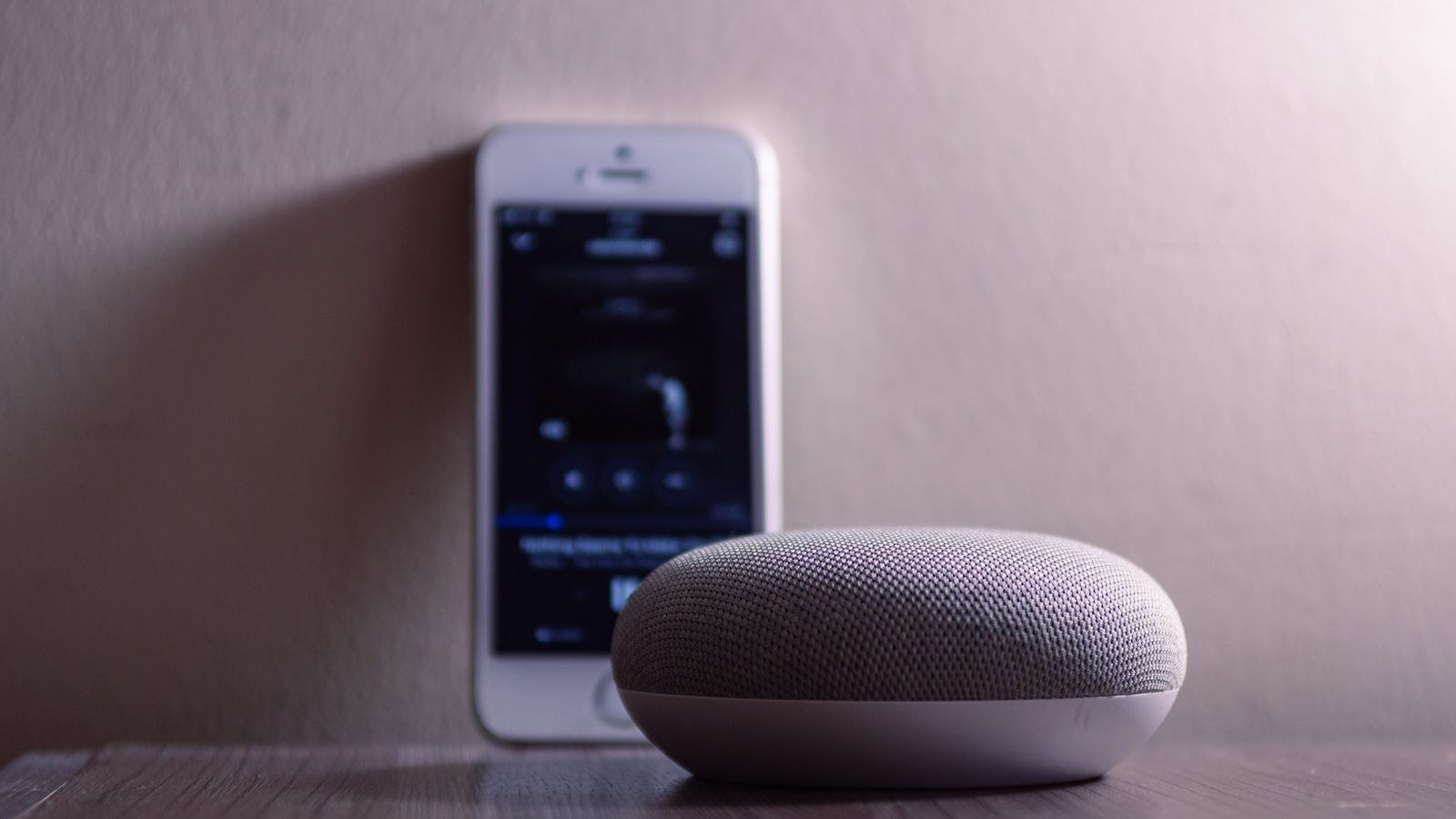
Placement matters more than model. Put the speaker where it can hear you over a range hood and running water, which usually means away from the sink and off the same surface as noisy appliances. When comparing the best smart speakers for kitchen use, prioritize far-field microphone performance and a physical mute switch over audio fidelity.
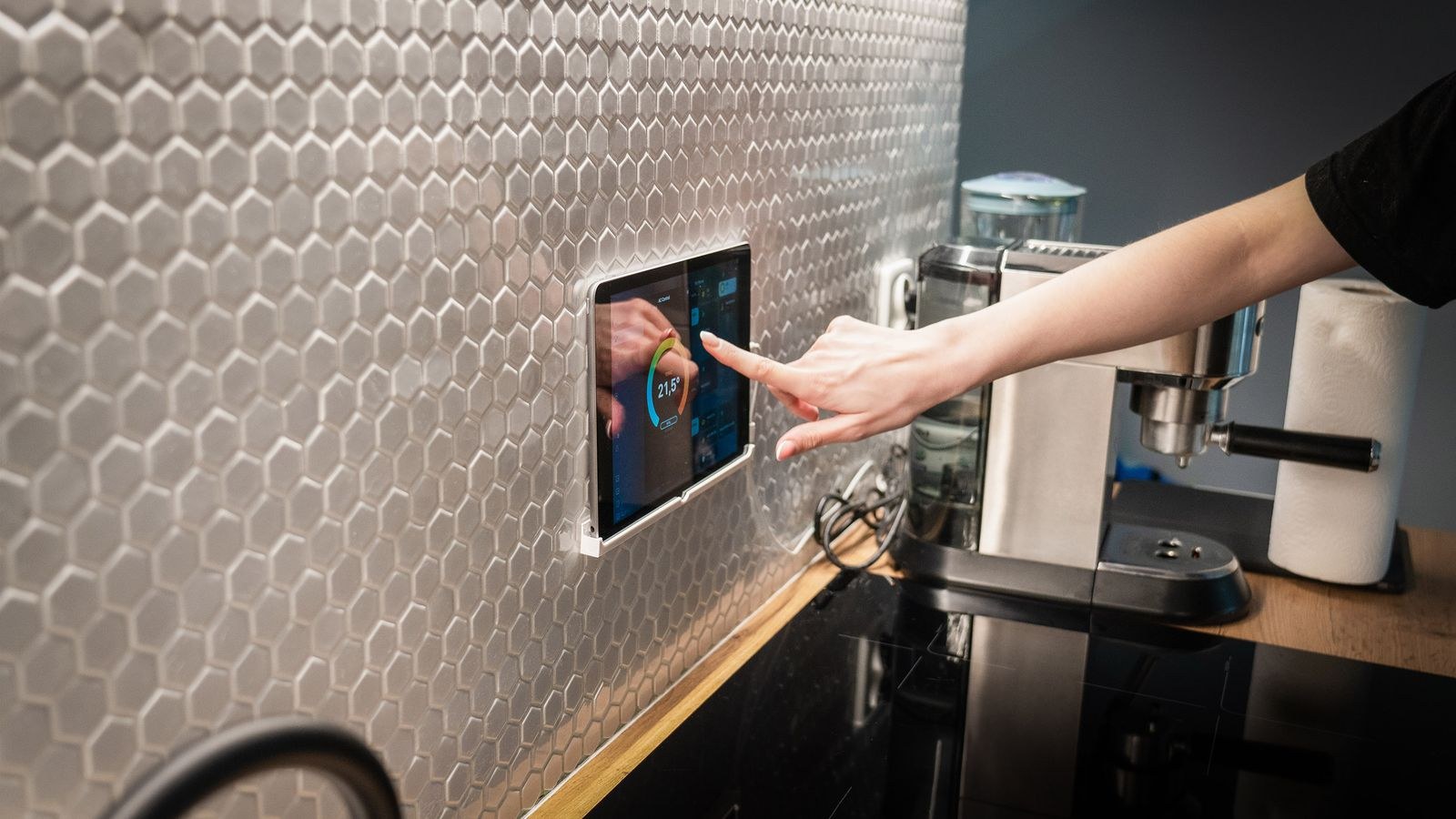
A screen changes the calculation considerably. A display shows recipe steps, timers with visible countdowns, and video from a doorbell camera while you cook. For many households it becomes the de facto family control panel. If that appeals, the field of best home hubs with screens covers sizes from small counter units to wall-mounted panels, and the larger ones often double as a hub for sensors so you do not need separate hardware.
Leak Sensors: The Cheapest Insurance in the House
A kitchen has at least three failure points that flood quietly: the supply line and drain under the sink, the dishwasher hose, and the refrigerator ice maker line. All three tend to fail slowly, soaking a cabinet base or subfloor for weeks before anyone notices. By then the repair is measured in thousands.
Leak sensors cost very little, run for a year or more on a coin cell, and sit flat on the cabinet floor. Place one at the lowest point under the sink, one behind or beside the dishwasher, and one behind the refrigerator if the ice maker line is accessible. Configure the alert as a phone push plus an audible alarm on a nearby speaker, because a silent app notification at 2 a.m. helps no one.
For a larger upgrade, an automatic shutoff valve on the main line can cut water when any sensor trips. That is a plumbing job rather than a plug-in purchase, but in a home with a history of leaks it is the single most consequential smart device you can install.
Lighting That Actually Improves Cooking
Kitchen lighting is usually bad in a specific way: a single bright ceiling fixture casting your own shadow over the cutting board. The fix is layered light, and smart controls make layers practical. Under-cabinet strips handle task lighting on the counter, the overhead handles general brightness, and a dimmed accent layer handles evening use when you just want to find a glass of water.
Because kitchen fixtures are often multi-bulb or integrated LED, a wall switch is frequently the better control point than individual bulbs. A smart switch handles a whole fixture at once, keeps the wall control working normally for guests, and does not care how many bulbs are in the can lights. Comparing the best smart light switches is worth doing carefully, since a dimmer needs to match your LED load and a switch may need a neutral wire present in the box. If you rent or your box lacks a neutral, battery-powered wireless controllers paired with smart bulbs achieve a similar result without wiring.
One automation is worth setting up on day one: a low-brightness warm nightlight scene under the cabinets, triggered by motion after 11 p.m. It is the automation kitchen owners report using most and the one they miss most when it breaks.
Faucets, Fridges and the Expensive End
Smart faucets deliver touchless or voice-activated water, which is more useful than it sounds when handling raw meat or when your hands are covered in dough. Measured dispensing, where you ask for a specific volume, is a real convenience for baking. The tradeoff is installation complexity and the need for power under the sink. If you cook often and are already replacing a faucet, look at the best smart faucets before buying a conventional model, since the price gap has narrowed considerably.
Smart refrigerators are the category where enthusiasm should be lowest. The screens and cameras add substantial cost, the software ages faster than the compressor, and a fridge is expected to last well over a decade. A door-open contact sensor and a temperature sensor inside cost a fraction of the premium and deliver most of the practical benefit. The same skepticism applies to connected ovens and dishwashers: remote notifications are nice, remote start is limited by safety interlocks anyway, and the appliance’s core job is unaffected.
Building It in the Right Order
- Leak sensors under the sink and dishwasher. Cheapest, highest downside protection.
- A smart plug on the coffee maker, and a second with auto-off on whichever countertop appliance worries you.
- A speaker or display positioned where it can hear you over the hood fan.
- Under-cabinet lighting on a smart switch or controller, with a dim night scene.
- Motion or contact sensors for pantry and cabinet lighting once the basics are working.
- Faucet or major appliance upgrades only when you are replacing the item anyway.
Mistakes to Avoid
The biggest is automating things that need judgment. Cooking appliances should never turn on unattended on a schedule; automate off, not on. The second is placing sensors and speakers where heat and steam reach them, which shortens their life dramatically. Keep electronics away from the range hood plume and out of direct steam from a kettle.
A third mistake is over-relying on a single voice assistant for safety-critical tasks. A timer that fails because the network dropped is a burnt dinner. Keep a mechanical timer in a drawer. Finally, do not install smart switches on circuits you have not identified at the breaker panel, and never work on kitchen wiring with the power on.
Frequently Asked Questions
Can I put my refrigerator on a smart plug?
You can, but you should not switch it. If you want monitoring, use an energy-monitoring plug rated well above the compressor’s startup draw and disable all scheduling, or better, use a separate temperature sensor inside.
Do smart kitchen devices work without internet?
Some do. Devices with local control through a hub continue responding when the internet drops. Cloud-only devices lose app and voice control but keep their manual switches working.
Is a display better than a speaker for the kitchen?
For most cooks, yes. Visible timers and on-screen recipe steps are the two features that get used constantly, and many displays double as a sensor hub.
Where should leak sensors go exactly?
At the lowest point of the cabinet under the sink, on the floor immediately beside the dishwasher, and behind the refrigerator near the ice maker line. Water follows gravity, so height matters more than proximity to the pipe.
Are smart appliances worth the premium?
Rarely, on their own. Buy the appliance that cooks or cleans best at your budget and add connectivity with cheap external sensors if you want it.
Final Thoughts
A good smart kitchen is unglamorous. It is a plug that stops the kettle, a sensor that catches a leak, a light that comes on dim at midnight, and a voice that sets three timers while your hands are busy. Skip the expensive connected appliances, spend the money on the cheap devices that solve daily friction, and add complexity only when a real problem calls for it. Build it that way in 2026 and the kitchen will feel smarter without ever feeling complicated.