 Owen Bradley
 Shower curtains look like a five minute purchase until you are standing in the aisle deciding between a fabric curtain, a plastic liner, a fabric liner, and something sold as an all-in-one that claims to replace both. The choice affects whether water ends up on your bathroom floor, how often you are scrubbing mildew, whether the bathroom smells of vinyl for a fortnight, and how the room looks. This guide breaks down the three approaches, explains the materials and measurements that actually matter, and helps you decide which combination suits your bathroom rather than someone else’s.
Curtain, Liner, Combo: What Each One Actually Does
The confusion starts because these three words describe overlapping products. Here is the honest division of labour.
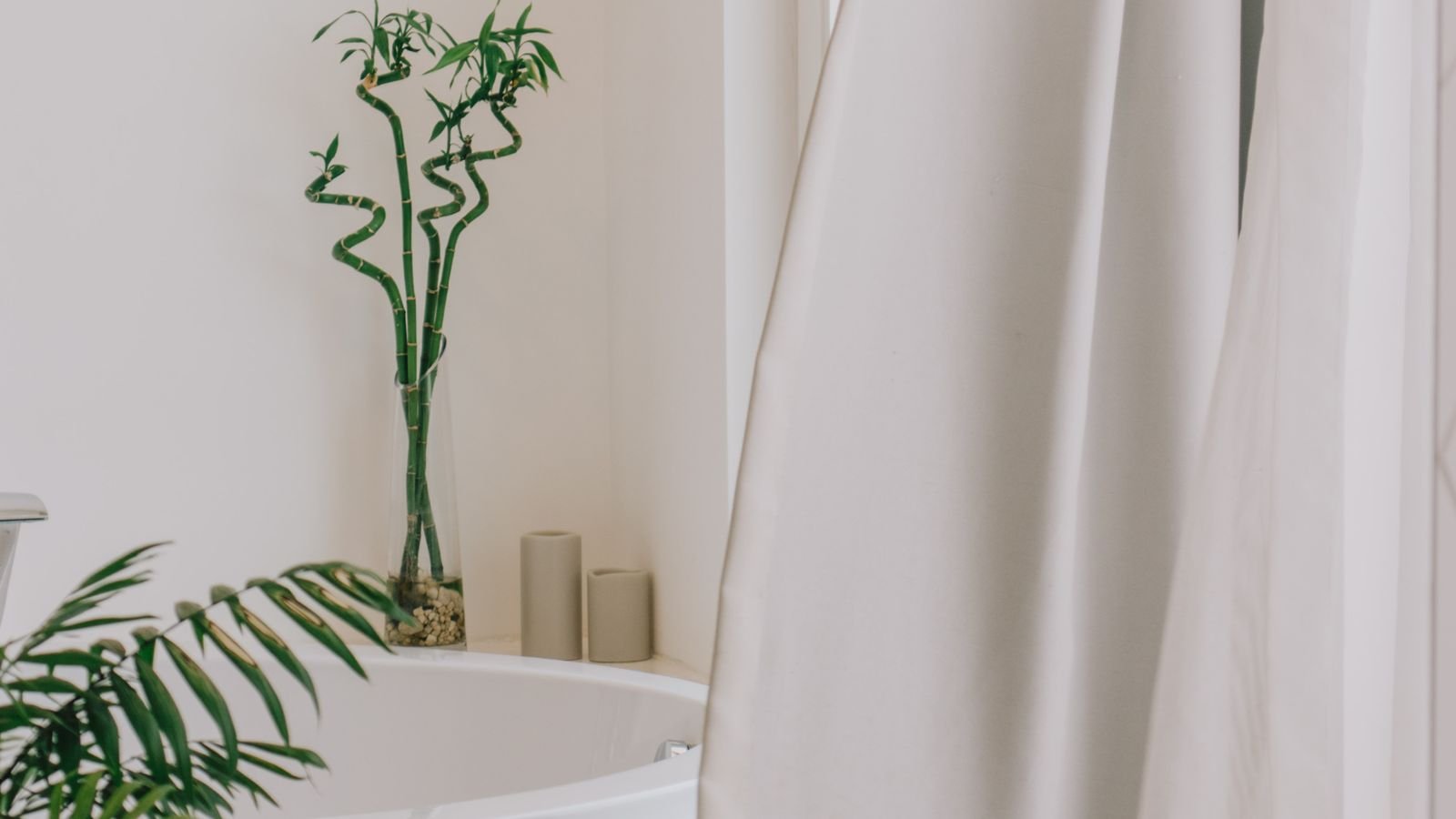
- Shower curtain: the decorative outer layer. Usually fabric, hangs on the outside of the tub or tray, and is not designed to be the waterproof barrier. It stays dry in normal use.
- Liner: the functional waterproof layer that hangs inside the tub. It takes the direct spray, tucks inside the rim, and is meant to be replaced or washed regularly.
- Combo: a single curtain, usually treated polyester or a heavy waterproof fabric, that tries to do both jobs. Fewer layers, less to wash, but less redundancy.
The classic two-piece setup is a fabric curtain plus a separate liner. It is more forgiving because the layer that gets soaked is cheap and replaceable, while the layer you look at stays clean. A combo saves money and effort but means that when it wears out, the whole thing goes. For a broad view of what is available in each category, start with the best shower curtains overview.
Fabric Curtains: Materials Compared
Fabric curtains are chosen for how they look and hang, but the fibre still affects performance.
- Polyester: the workhorse. Water-resistant, quick drying, resists mildew reasonably well, machine washable, holds printed patterns cleanly. Best all-round default.
- Cotton and cotton blends: softest drape and the most textile-like appearance. Absorbs moisture, so it needs good ventilation and a liner behind it or it stays damp and grows mildew.
- Linen and linen blends: beautiful texture, expensive, wrinkles by design, and needs the most care. A luxury choice for a well-ventilated bathroom.
- Microfiber: heavy, opaque, drapes well and dries fast. Can look slightly synthetic up close.
- Waffle weave and jacquard: textured polyester or cotton blends that add visual interest without a printed pattern.
Weight matters as much as fibre. A heavier curtain hangs straight, resists the billowing that happens when hot water creates a pressure difference, and does not cling to your legs mid-shower. Fabric-specific options are compared in our best fabric shower curtains roundup.
Liners: PEVA, EVA, PVC and Fabric
Liners are where material choice has real consequences for smell, safety and lifespan.
- PVC (vinyl): cheapest and fully waterproof, but responsible for the strong chemical smell of a new liner and generally the option people are trying to move away from.
- PEVA and EVA: chlorine-free plastics that are the standard replacement for PVC. Far less odour, still fully waterproof, still inexpensive. PEVA is the most common option on shelves now.
- Fabric liners: tightly woven polyester with a water-repellent finish. They breathe, dry faster than plastic, do not cling, and go straight in the washing machine. They repel rather than block water, so they need to be hung correctly.
- Nylon and ripstop: light, durable, quick drying, often used in hotel-style setups.
Fabric liners have largely won on user experience: no crinkling noise, no clinging, no plastic smell, and washable indefinitely. Plastic liners still win on absolute waterproofing and price. Compare the options in the best shower curtain liners guide, with cloth-specific picks in the best fabric shower curtain liners comparison.
Sizing: The Measurement Most People Get Wrong
Standard curtains are 72 by 72 inches, which suits a standard alcove tub with the rod at typical height. That is where the standardisation ends.
- Stall showers: narrower, often 54 inches wide. A 72 inch curtain in a stall bunches badly and traps water in the folds.
- Extra long: 78, 84 or 96 inches, needed when the rod is mounted high, when you have a raised ceiling, or when you want the curtain to skim the floor outside a walk-in tray.
- Extra wide: 108 inches or more for a double curtain setup or a large freestanding tub.
Measure from the rod to the floor, then subtract two inches so the curtain clears the ground and does not wick water outward. For an alcove tub, the liner should hang inside the tub with several inches of overlap below the rim. If a curtain is a few inches too long, raising the rod is usually a better fix than letting it pool.
Small Bathrooms and Awkward Layouts
In a tight bathroom the curtain is a large proportion of the visible surface, so it drives how big the room feels. Light colours, vertical stripes and semi-sheer top panels all help. Avoid heavy dark prints on a curtain that sits within arm’s reach of the door.
Clinging is the most common complaint in narrow enclosures, caused by warm air rising inside the curtain and pulling it inward. Weighted hems, magnets at the base, or a curved rod that pushes the curtain outward all solve it. Layout-specific advice is in the best shower curtains for small bathrooms guide.
Mildew, Odour and Health Considerations
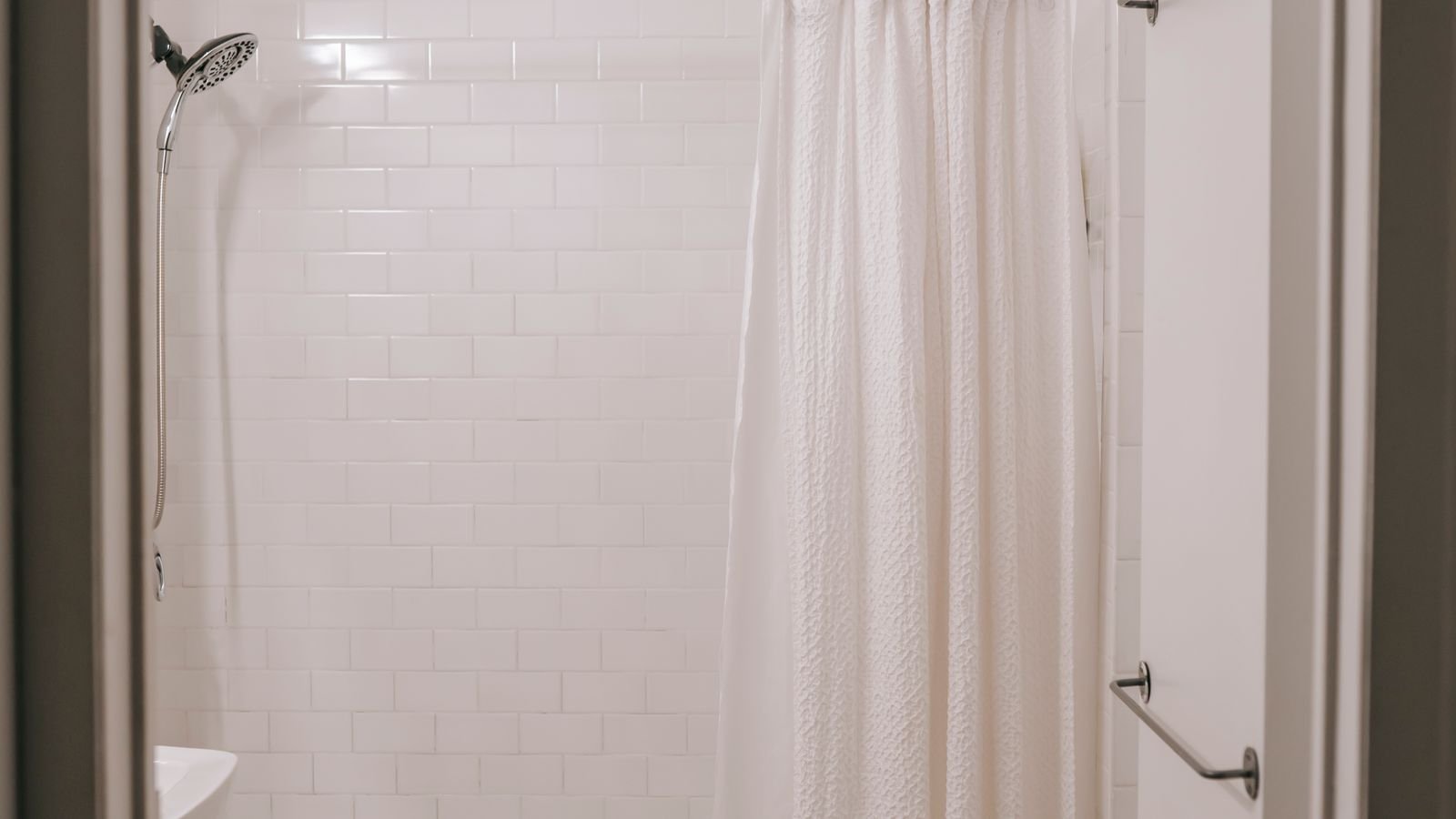
Mildew is a moisture problem, not a curtain problem, but the curtain is where you see it first. Three habits do most of the work: pull the curtain fully closed after showering so it dries flat rather than in damp folds, run ventilation for at least fifteen minutes after, and wash the liner monthly rather than waiting for spots to appear.
Most fabric curtains and fabric liners are machine washable on a warm gentle cycle. Plastic liners can go in the machine too, on cold with a couple of towels for agitation, then be hung to drip dry rather than tumbled. Antimicrobial treatments help but wear off with repeated washing, so treat them as a bonus rather than a solution.
On chemical safety, the strong new-liner smell is off-gassing from plasticisers. Choosing PEVA, EVA or a fabric liner avoids it almost entirely. If you are sensitive, air a new liner outdoors for a day before hanging it. Certification labels for low-emission textiles are worth looking for, and our best non-toxic shower curtains guide covers which materials and certifications are meaningful.
Hardware Details Worth Getting Right
The curtain is only half the system. A few hardware choices make a disproportionate difference:
- Rod shape: a curved rod adds several inches of elbow room inside a standard tub for no cost to the room.
- Rings versus hooks: roller ball rings glide silently and will not snag; simple hooks are cheaper but drag.
- Reinforced grommets: metal grommets outlast punched holes in plastic by years. Torn header holes are the top reason liners get binned early.
- Weighted hem: a sewn-in weight strip or magnets keeps the liner in place and stops billowing.
Budget Tiers: What You Get for the Money
- Entry level: a basic PEVA liner and a printed polyester curtain. Functional, replaceable annually, no frills. Perfectly sensible for a rental or a guest bathroom.
- Mid range: a heavier woven polyester curtain with reinforced grommets plus a washable fabric liner. This is where the noticeable jump in feel and longevity happens.
- Premium: cotton, linen or a heavy textured weave, hemmed properly, with a high-quality fabric liner and roller rings. Looks like a piece of furnishing rather than a bathroom accessory.
Value tends to peak in the middle tier. A good liner improves daily experience more than an expensive outer curtain does, so if you split your budget unevenly, favour the liner. The best quality shower curtains comparison shows what the construction details look like at each price point.
Choosing in Four Questions
- Is your bathroom well ventilated? If not, avoid cotton and pick a fast-drying polyester or fabric liner.
- Do you mind washing an extra item? If yes, a well-made combo curtain is the low-maintenance route.
- Do you hate the feel of plastic? Then a fabric liner is worth the modest extra cost immediately.
- Is the enclosure narrow? Prioritise a curved rod and a weighted hem before worrying about the pattern.
Frequently Asked Questions
Do I really need both a curtain and a liner?
Not always. A dedicated waterproof combo curtain works fine on its own. But the two-layer approach lasts longer overall because the layer taking the water abuse is the cheap one.
How often should a liner be replaced?
A plastic liner that is washed regularly typically lasts six to twelve months. A fabric liner, washed monthly, can last several years.
Should the liner go inside or outside the tub?
Always inside. The liner hangs within the tub so water runs back in; the decorative curtain hangs outside and stays dry.
Why does my curtain blow inward during a shower?
Warm rising air lowers the pressure inside the enclosure. A weighted hem, magnets, or a curved rod that increases the enclosed volume all reduce it.
Can I put a shower curtain in the dryer?
Fabric curtains and fabric liners usually tolerate low heat. Plastic liners should be hung to drip dry, since heat warps and stiffens them permanently.
Final Thoughts
The right shower curtain setup is the one that matches your ventilation, your enclosure size and how much laundry you are willing to do. If you want the simplest reliable answer: a heavy polyester curtain outside, a washable fabric liner inside, a curved rod, and roller rings. That combination keeps water where it belongs, resists mildew, washes easily and looks good, and it will not need rethinking for years. Measure the drop before you order anything, and the rest of the decision becomes straightforward in 2026.