Owen Bradley
 Every air conditioner sold today wears a SEER number on its yellow energy label, and shoppers are told in the same breath that a higher one saves money. What almost nobody explains is how much money, over how long, and under what conditions. A unit rated at 20 can cost thousands more than one rated at 14, and in some homes that premium never comes back. This article gets SEER rating explained in plain language: what the number actually measures, why the industry switched to SEER2, how to run the payback math for your own house, and when spending up genuinely pays off versus when it is simply an expensive badge. By the end of it you should be able to look at two price tags in 2026 and know which one is the better deal for your climate and your cooling habits.
What SEER Actually Measures
SEER stands for Seasonal Energy Efficiency Ratio. It is a simple fraction: the total cooling output a system delivers over a typical cooling season, measured in BTU, divided by the total electrical energy it consumed over that same season, measured in watt-hours. A system that produces 10,000,000 BTU of cooling while drawing 700,000 watt-hours earns a SEER of roughly 14.3.
The word seasonal is the important part. Unlike EER, which measures efficiency at a single fixed outdoor temperature, SEER averages performance across a range of conditions that approximate a real summer. That makes it a better predictor of your actual bill, because your air conditioner spends far more hours at mild 80-degree afternoons than it does at the 95-degree peak everyone worries about.
Higher SEER means more cooling per unit of electricity. It does not mean more cooling, period. A 3-ton unit at SEER 20 and a 3-ton unit at SEER 14 both remove roughly 36,000 BTU per hour; the efficient one simply uses less power to do it. Capacity and efficiency are separate decisions, and confusing them is the single most common mistake buyers make.
SEER2 and Why the Numbers Changed
In recent years the testing standard was revised, and the result is SEER2. The change was not cosmetic. Under the old procedure, equipment was tested against a static external pressure of 0.1 inches of water column, which is unrealistically easy compared to the ductwork in a real house. SEER2 raises that test pressure to 0.5 inches, forcing the blower to work against resistance closer to what it faces in the field.
The practical consequence is that SEER2 figures run roughly 4.5 to 5 percent lower than the old SEER number for the same physical machine. A unit that once claimed 16 now reads about 15.2. Nothing got worse; the ruler changed. Minimum legal efficiency also varies by region now, with the southern and southwestern United States held to higher floors than the north because their cooling seasons are longer.
When you compare quotes, make sure every number is on the same scale. A contractor quoting “16 SEER” against a rival’s “15.2 SEER2” may be selling you the identical class of equipment. Ask explicitly which standard each figure uses, and if you shop across a wide field, browsing a curated list like the best HVAC air conditioners is a useful way to see how current ratings cluster by price tier.
The Payback Math, Step by Step
Here is the calculation that actually settles the question. Estimate your annual cooling hours, multiply by your system’s capacity in BTU per hour, and you have seasonal cooling load. Divide that by SEER to get watt-hours, divide by 1,000 for kilowatt-hours, and multiply by your electricity rate.
Take a 36,000 BTU system running 1,000 cooling hours a year in a moderately warm climate, at 16 cents per kWh. At SEER 14 that is 36,000,000 divided by 14, or about 2,571 kWh, costing roughly $411 a season. At SEER 20 the same load costs about 1,800 kWh, or $288. The annual saving is around $123.
Now weigh that against the price gap. If the high-efficiency system costs $2,500 more installed, simple payback lands near twenty years, which exceeds the equipment’s realistic life. If the gap is $900, payback drops to about seven years and the upgrade looks sensible. The lesson is that no SEER number is universally worth it; only the ratio of price premium to annual saving decides.
The Three Variables That Swing the Result
- Electricity rate. At 30 cents per kWh the saving above nearly doubles and payback halves. At 10 cents, high SEER rarely justifies itself.
- Runtime hours. A house in Phoenix may run 2,000 hours a season; one in Seattle might run 250. More hours means faster payback.
- How long you will stay. Payback periods only matter if you own the home long enough to collect. Selling in three years hands the savings to the buyer.
Diminishing Returns Are Real
Efficiency gains are not linear, and this catches people out. Moving from SEER 10 to SEER 14 cuts energy use by roughly 29 percent. Moving from 14 to 18 cuts it by another 22 percent. Going from 18 to 22 saves only about 18 percent more, and each of those steps costs progressively more in hardware.
In dollar terms, the first upgrade is usually excellent value, the second is often reasonable, and the third is frequently a luxury purchase. Unless your rates are high and your season is long, the sweet spot for most households sits somewhere in the mid-to-upper teens rather than at the top of the catalogue. If you are replacing a standard-capacity system, comparing options among the best 3 ton air conditioners is a practical way to see where that curve flattens for a typical home.
What High-SEER Units Give You Besides Efficiency
The efficiency number is only part of the story. Manufacturers reach high SEER using variable-speed compressors and multi-stage blowers, and those components deliver comfort benefits that never appear on the label.
A single-stage unit is a light switch: full blast or off. It cools the thermostat quickly, shuts down, and leaves humidity behind, producing the clammy cold that people describe as feeling wrong. A variable-speed system instead runs long, gentle cycles at partial capacity. That maintains steadier temperatures room to room, pulls far more moisture out of the air, and runs noticeably quieter because the compressor rarely hits full speed.
For some households the dehumidification and noise reduction are worth more than the electricity saving. If a quiet bedroom matters to you, that alone can tip the decision, and roundups of the best air conditioners for homes illustrate how closely low noise tracks with the higher-rated variable-speed designs.
SEER on Window and Portable Units
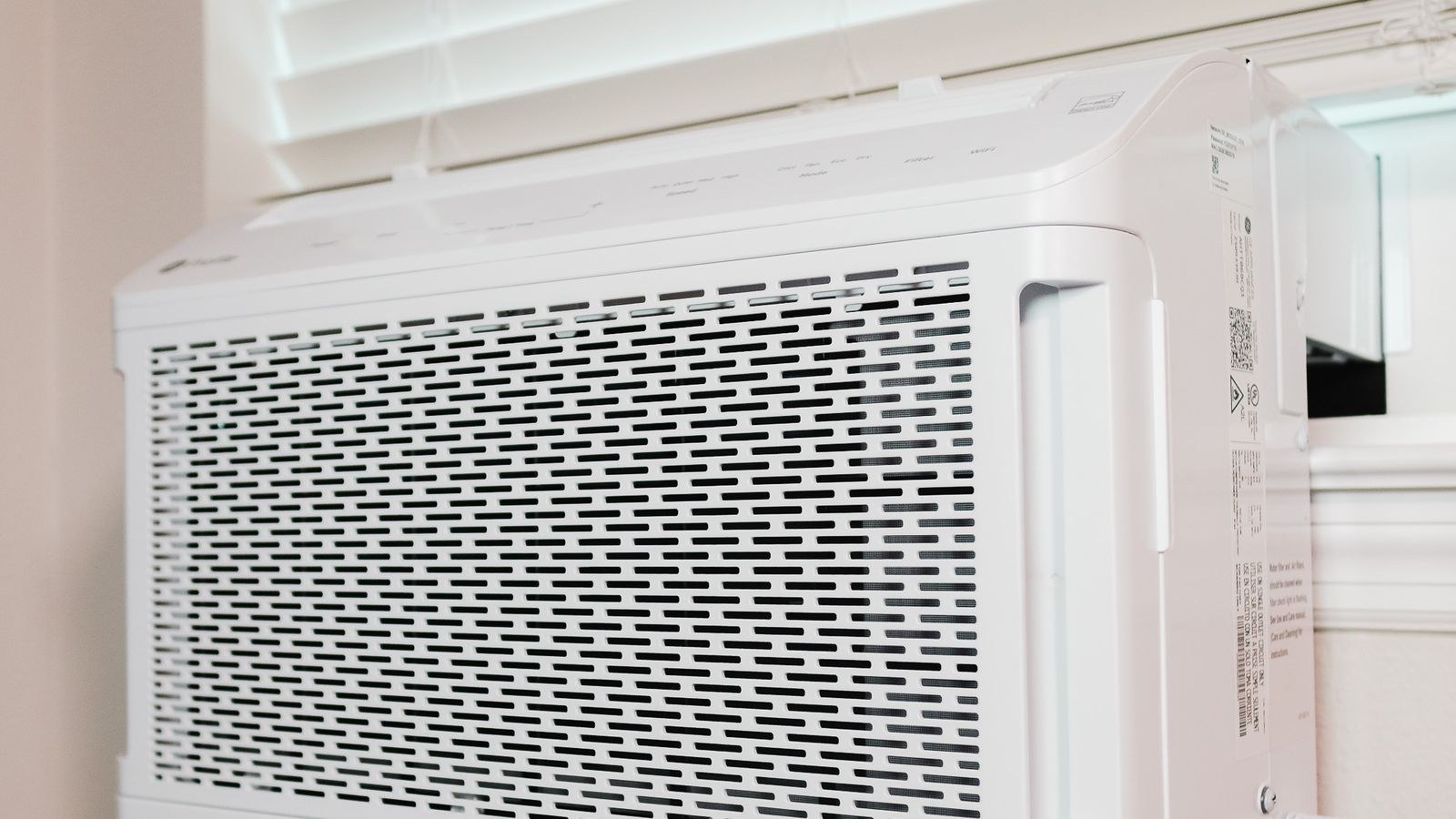
Room air conditioners follow a different scale. Historically they were rated with EER, a single-point measure, and newer models carry CEER, which folds in standby power draw. You will occasionally see SEER quoted on a window unit, but do not compare it directly to a central system’s number.
Because window units are cheap and their price spread is narrow, the payback math tilts strongly toward buying efficient. Paying $60 more for a substantially better-rated model that runs all summer in a bedroom is an easy call, unlike a $2,500 premium on a whole-house system. Shoppers focused on that category can start with the best energy efficient window air conditioners to see how ratings map to real running costs at that scale.
Why Installation Beats the Rating
A SEER number is earned in a laboratory under ideal conditions. Your house is not a laboratory. Studies of field performance repeatedly find installed systems delivering well below their rated efficiency, and the causes are almost always installation faults rather than equipment defects.
Undersized or leaky ductwork forces the blower to fight for airflow. Incorrect refrigerant charge, even by a few ounces, drags efficiency down measurably. Oversizing is the most damaging error of all: a system too large for the load short-cycles, never reaching steady-state efficiency and never running long enough to dehumidify. A properly installed SEER 15 system will outperform a carelessly installed SEER 20 system every single season.
Insist on a room-by-room load calculation rather than a rule-of-thumb estimate based on square footage. Ask about duct sealing and static pressure testing. If you are replacing a heating system at the same time, matched equipment matters too, which is why many buyers evaluate the best furnace and air conditioner pairings together rather than piecemeal.
Common Mistakes That Waste the Premium
The first mistake is buying high SEER for a house with poor insulation or leaky windows. Sealing and insulating typically costs less than the efficiency upgrade and reduces the load itself, which saves money on every component downstream.
The second is chasing rebates without checking the net figure. Utility incentives can genuinely close the price gap, but some rebates require equipment tiers that cost more than the rebate returns. Calculate the after-rebate premium, not the headline discount.
The third is ignoring maintenance. A high-SEER system with a clogged filter, a dirty condenser coil, or a slow refrigerant leak drifts steadily toward mediocre performance. The premium you paid evaporates within a couple of neglected seasons. If you want the efficiency you bought, budget for annual service.
A Quick Decision Framework
- Long cooling season and high electricity rates? High SEER usually pays back comfortably. Look upper teens or above.
- Short season or cheap power? Buy near the regional minimum and spend the difference on insulation or duct sealing.
- Struggling with humidity? A variable-speed high-SEER system is worth it for the comfort alone, regardless of payback.
- Moving within five years? Choose reliable mid-tier equipment; you will not recover the premium.
- Ductwork in poor condition? Fix that first. It limits what any rating can deliver.
Homeowners weighing whole-house replacement will find it useful to see how these tiers play out across real product classes, and a survey of the best air conditioners for homes gives a sense of where the price steps sit between efficiency levels.
Frequently Asked Questions
Is a higher SEER rating always better?
Technically yes for energy use, financially no. Above the mid-teens the extra cost often outruns the savings unless your climate is hot, your season long, or your electricity expensive. Run the payback calculation before assuming the upgrade pays.
What is a good SEER rating today?
Regional minimums sit around 14 to 15 SEER2 depending on where you live. Most households land well with something in the 15 to 18 range, reserving the top tier for hot climates or homes with serious humidity problems.
Does SEER affect heating performance?
No. SEER measures cooling only. Heating efficiency for a heat pump is measured by HSPF or HSPF2, and furnace efficiency by AFUE. A system can rate highly on one and modestly on the other, so check both figures.
Will a high-SEER unit cool my house faster?
No, and often the opposite. Efficient variable-speed systems deliberately run longer at lower output because that is where they are most efficient and where they remove the most moisture. Speed of cooling comes from correct capacity sizing, not from the SEER number.
How long before a high-SEER unit pays for itself?
Divide the installed price premium by your calculated annual saving. Anything under eight years is usually worth doing; anything over fifteen rarely is, because equipment life and repair costs eat the return.
Final Thoughts
SEER is a genuinely useful number, but it answers only one question: how much cooling does this machine produce per unit of electricity. It says nothing about whether the price premium suits your climate, your rates, or how long you plan to stay. Do the arithmetic with your own electricity price and your own runtime hours, then check whether the comfort benefits of variable-speed operation matter to your household. Most importantly, spend on correct sizing, sealed ducts, and a careful installation before spending on a bigger number, because a well-installed mid-tier system beats a badly installed premium one every time. Approach your 2026 purchase that way and the efficiency label becomes a tool rather than a sales pitch.