Owen Bradley
 Rope light, strip light, tape light. Three names, three very different products, and a shopping experience that gets confusing fast because retailers use the terms almost interchangeably. The distinction matters more than most people expect. Buy a rope light for a job that needs bright, even task illumination and you will be disappointed by how dim it looks. Buy a slim adhesive tape light for a garden path and you will be replacing it after the first heavy rain. This guide lays out exactly what separates the three, how each one performs on brightness, flexibility, durability, and cost, and which one belongs in each part of your home and yard so your next purchase lands right the first time.
The Short Version of the Difference
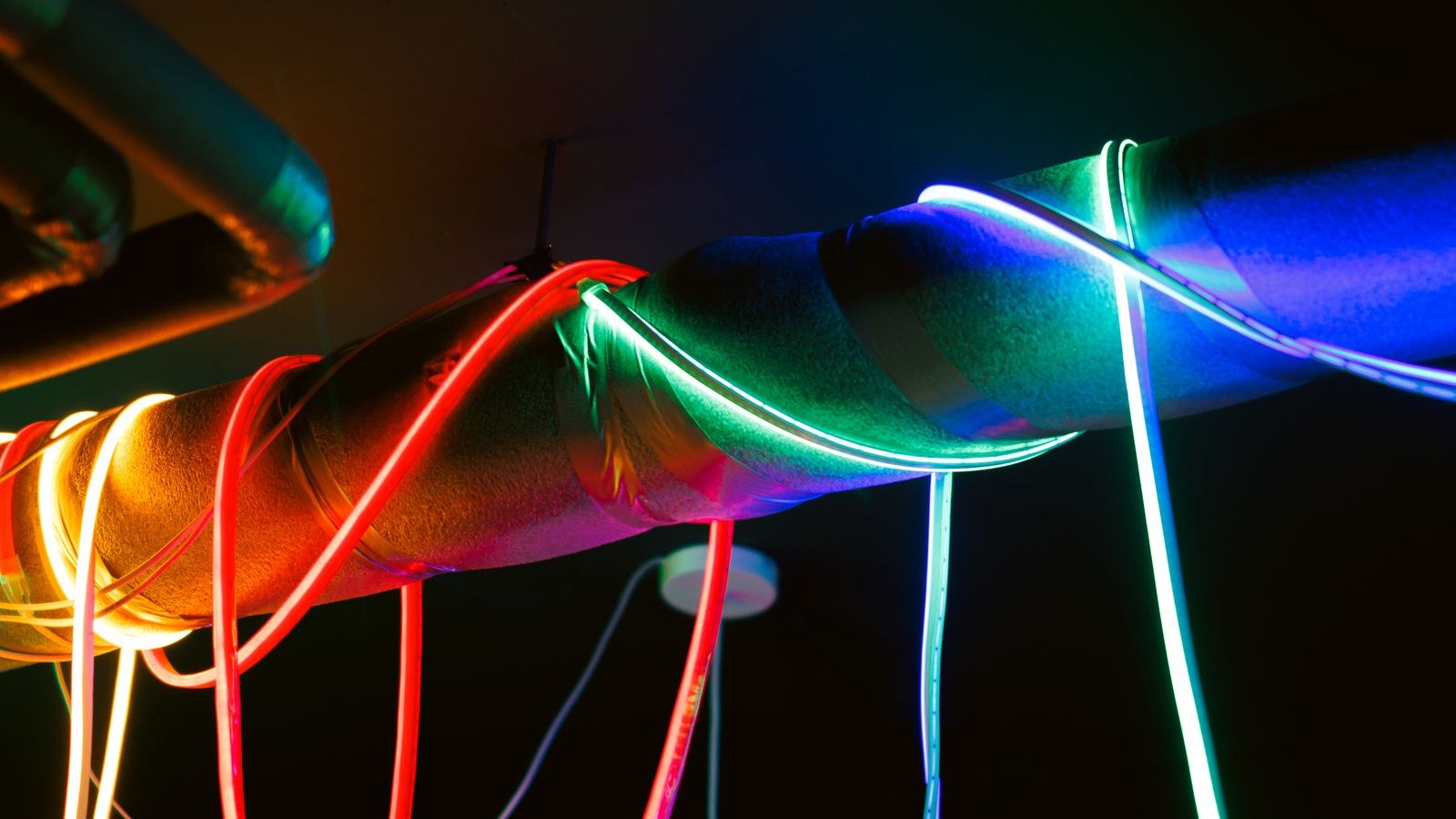
A rope light is a round, flexible tube of PVC or silicone with small lights sealed inside. It looks like a glowing garden hose. A strip light is a flat, flexible circuit board carrying surface-mounted LEDs, usually sold on a reel with adhesive backing. A tape light is, in practice, a thinner and more discreet version of a strip light, often with better adhesive and a lower profile designed to disappear into a channel or under a cabinet edge.
The most useful way to think about it: rope light is decorative and rugged, strip light is bright and versatile, tape light is strip light optimized to hide. That framing gets you most of the way to the right answer before you compare a single spec.
Rope Lights Explained
Rope lights emit light in a full 360-degree circle because the diodes sit inside a translucent round tube. That makes them ideal when the light source is meant to be seen rather than hidden. Wrapped around a deck railing, a pergola post, or a tree trunk, a rope light reads as a continuous glowing line from every angle.
The sealed tube is also the durability story. Most rope lights are rated IP65 or higher out of the box with no extra work, which means rain, snow, and dust are non-issues. You can staple them to a fence, bury them in a planter bed, or leave them outdoors year-round. Traditional rope lights used incandescent bulbs and ran hot; modern LED versions run cool, use a fraction of the power, and last vastly longer.
The trade-off is brightness and control. Rope lights typically produce far less light per foot than a good strip, often in the range of 100 to 250 lumens per meter compared to 800 or more from a decent strip. They also come in fixed colors or simple chasing patterns rather than fully addressable effects, and cut points are usually spaced a foot or more apart. For decorative outlining, that is fine. For lighting a work surface, it is nowhere near enough.
If a warm decorative outline is exactly what you want for a patio, staircase, or event setup, the picks in our guide to the best LED rope lights focus on weather sealing, tube quality, and connector systems that let you run long spans without failures.
Where Rope Lights Shine
- Deck and porch railings that need year-round weather resistance.
- Wrapping columns, posts, trees, and pergola beams.
- Outlining rooflines, awnings, and event tents.
- Garden bed borders and pathway edging.
- Anywhere the tube itself will be visible and needs to look intentional.
Strip Lights Explained
Strip lights are the workhorse of modern LED lighting. A flat flexible PCB carries LEDs in a straight line, most commonly 30, 60, or 120 per meter, with adhesive backing and cut marks every few inches. They run on 12V or 24V DC through a power supply, and they come in every configuration imaginable: single color, tunable white, RGB, RGBW, and addressable strips where each diode can be controlled independently.
Brightness is where strips pull ahead decisively. A mid-grade strip delivers several times the output of a rope light per meter, and high-density options push much higher. That makes strips genuinely useful for illuminating a surface, not just decorating an edge. The directional emission, roughly 120 degrees, concentrates light forward instead of scattering it in a circle, so more of what you pay for lands where you want it.
Control is the second advantage. Strips work with dimmers, smart controllers, app-based scenes, music sync, and voice assistants. If you want your lighting to change with the time of day or react to what is on screen, strips are the category to shop.
The catch is that most bare strips are indoor products. Standard reels carry no ingress rating at all, and even IP65 silicone-coated versions are splash resistant rather than truly weatherproof. They also need a properly sized power supply, and long runs at 12V suffer voltage drop that dims the far end. Our overview of the best LED strip lights breaks down which densities and voltages suit which room sizes.
Tape Lights Explained
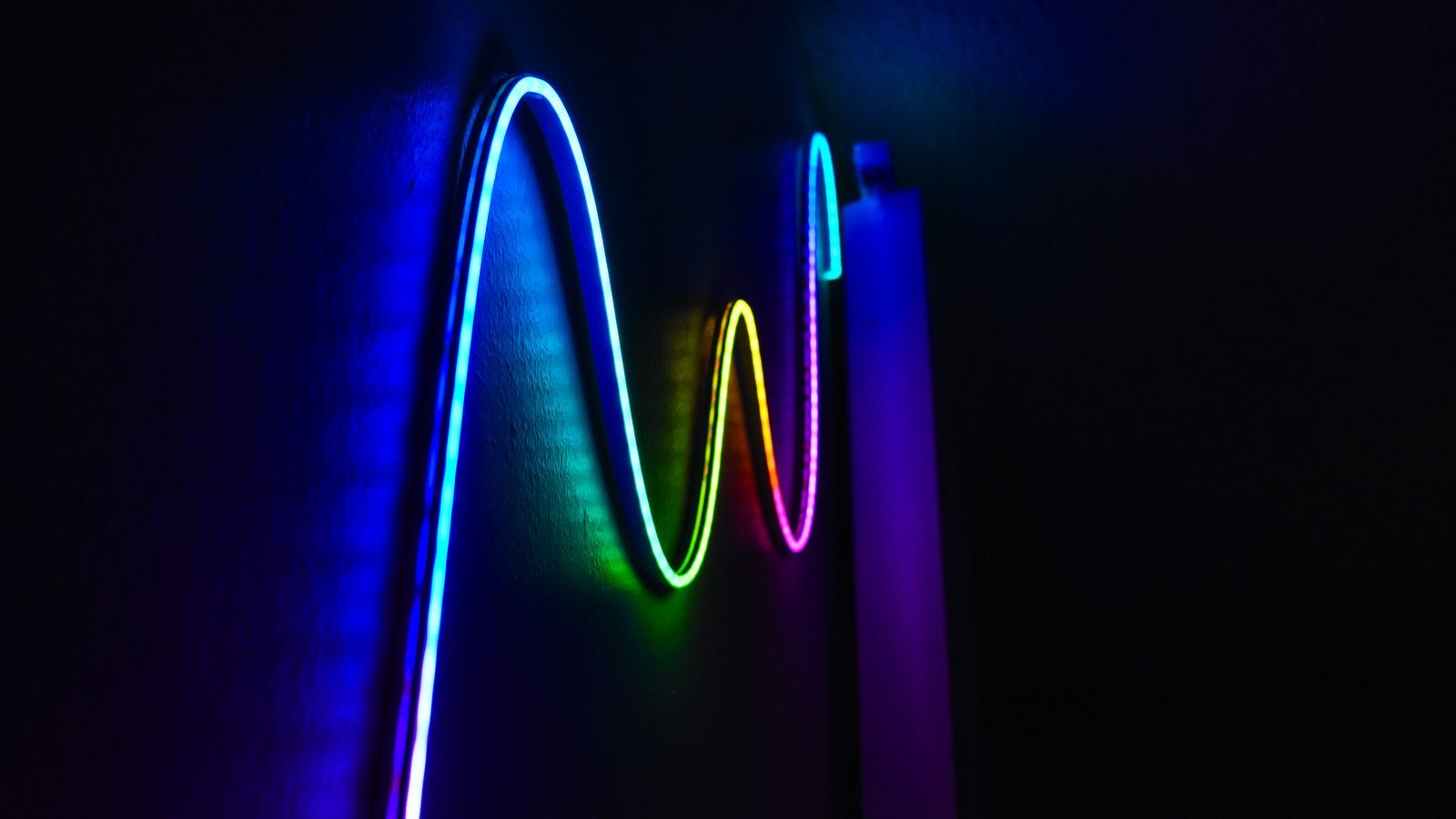
Tape light is the low-profile, install-friendly branch of the strip family. The board is thinner, often only 8 to 10mm wide and under 2mm thick, the adhesive is usually a stronger 3M product, and the whole thing is designed to tuck into an aluminum channel or hide behind a lip where nothing thicker would fit.
Because the emitter technology overlaps heavily with strip lights, tape lights match them on brightness and color options. The real differences are physical: tighter cut spacing for precise fitting, better adhesion for overhead mounting, and dimensions that let the fixture vanish completely. Many tape products also use COB construction with a continuous phosphor layer, producing a dot-free glowing line rather than visible points, which matters enormously when the light reflects off a glossy countertop.
Tape lights cost more per foot than basic strips and they are less forgiving to remove once installed, since good adhesive tends to take the paint with it. For built-in cabinetry, cove lighting, shelving, and toe-kick installs, though, the extra cost is well spent. Compare options in our guide to the best LED tape lights if your project involves tight channels or glossy surfaces.
Head to Head on the Factors That Matter
Brightness
Strip and tape lights win by a wide margin. Rope lights are decorative-grade output. If you need to read, cook, or work under the light, do not buy rope.
Flexibility and Shape
Rope light bends in any direction, including sideways, which makes it the only easy choice for wrapping a post or spiraling around a trunk. Strip and tape bend along one axis only; forcing a sideways bend cracks solder joints. For curves in a single plane, tape handles tighter radii than thicker strips.
Durability and Weather
Rope light is the clear winner outdoors thanks to its sealed tube. Strips and tape need at least IP65 for damp locations and IP67 or higher for real exposure, plus sealed connectors and an outdoor-rated driver. If your project lives outside, start with the best outdoor LED strip lights rather than adapting an indoor reel with silicone sealant, which rarely holds up past one season.
Installation Effort
Rope light usually comes as a finished kit with a plug and mounting clips, so installation is close to plug and play. Strips and tape require calculating total wattage, choosing a driver, planning cut points, and often mounting a channel. Budget an afternoon for a well-done strip install versus an hour for rope.
Cost
Rope light is cheapest per foot for decorative coverage. Basic strips are cheapest per lumen. Tape light costs the most upfront, especially once you add channels and diffusers, but delivers the cleanest finished look. Factor in the power supply and accessories when comparing, because a $20 reel with a $30 driver and a $25 channel is not a $20 project.
Matching the Light to the Job
Here is a practical mapping for the most common household projects:
- Under kitchen cabinets: tape light in a channel, high CRI, warm to neutral white.
- Ceiling cove or crown molding: tape or strip, 24V for long runs, dimmable.
- Behind a TV: addressable strip with a controller for bias lighting and color sync.
- Closet and pantry: basic strip or battery-powered tape with a motion sensor.
- Deck railing and pergola: rope light, IP65 or better, wrapped and clipped.
- Garden path edging: rope light or IP67 outdoor strip in a protective channel.
- Stair treads: tape light in a nosing channel for a dot-free line.
- Garage and workshop: high-output strip on aluminum channel, cool white.
Mistakes That Cost People Money
The most expensive error is buying an indoor strip for an outdoor job because the listing photo showed a patio. Check the actual IP rating and confirm the connectors and power supply are outdoor rated too, since water usually gets in at the joints rather than through the strip itself.
The second is undersizing the driver. Multiply watts per meter by your total length, then add at least 20 percent headroom. A supply running flat out gets hot, sags in voltage, and fails early.
Third, people run 12V strips far longer than the voltage supports. Beyond about five meters, the far end visibly dims. Switch to 24V or inject power at both ends. Finally, many installs fail because the surface was never cleaned. Wipe with isopropyl alcohol, let it dry, then press the adhesive down firmly along the entire length, and add clips for anything overhead.
Frequently Asked Questions
Is tape light just another name for strip light?
Functionally they overlap, and many retailers use the terms interchangeably. In practice tape light means the thinner, lower-profile, stronger-adhesive version built to hide inside channels, while strip light covers the broader category including wider, higher-power reels.
Can I cut rope light to length?
Yes, but only at the marked cut points, which are typically spaced every 18 to 36 inches. That coarse spacing means you cannot fit an exact custom length the way you can with strip or tape, which cut every few inches.
Which uses the least electricity?
Per foot, rope light draws the least because it produces the least light. Per lumen delivered, modern LED strips are more efficient. Compare watts per meter alongside lumens per meter rather than looking at wattage alone.
Do rope lights work indoors?
They do, and they look great outlining a bar, a bedroom ceiling perimeter, or a home theater riser. Just remember the output is decorative, so pair it with proper ambient lighting rather than relying on it as a room’s main source.
Can I connect different brands together?
Rarely without adapters. Voltage, pin order, and connector pitch vary between manufacturers. Buy the strip, controller, and power supply as a matched system, or be prepared to solder.
Final Thoughts
Choosing between rope, strip, and tape lights gets simple once you stop comparing product names and start describing the job. If the light will be visible, exposed to weather, and mostly decorative, rope light is rugged, cheap, and forgiving. If you need real illumination with color control and smart features indoors, strip light gives you the most capability per dollar. If the fixture must disappear into a cabinet, cove, or stair nose and produce a flawless line of light, tape light earns its premium. Decide the location, the required brightness, and whether the hardware will be seen, and the right category picks itself. Spend the savings on a quality power supply and proper mounting hardware, because those two choices determine whether your installation still looks good years from now in 2026 and beyond.