Owen Bradley
 Retail loss is rarely one dramatic event. It is a slow accumulation of shoplifted merchandise, till discrepancies, sweethearting at the register, delivery shortages at the back door, and fraudulent return claims that nobody can disprove. A camera system built for a house will not solve any of that reliably, because the questions a store needs answered are different: who handled that transaction, what left through that door, and can the footage stand up when a claim is disputed. This guide explains how to design retail and loss-prevention camera coverage properly, what specifications genuinely matter, and how to plan an installation that earns its cost in 2026.

What Retail Cameras Are Actually For
Retail surveillance serves four distinct purposes, and a system optimised for one may be poor at another.
- Deterrence. Visible cameras and public-view monitors reduce opportunistic theft before it happens.
- Evidence. Footage clear enough to identify a person or a transaction, and retained long enough to matter when a claim surfaces weeks later.
- Internal loss control. Register overwatch, stockroom monitoring, and back-door coverage, which together address the substantial share of shrink that originates inside the business.
- Operations. Queue length, staffing coverage, display effectiveness, and dwell time, which turn a cost centre into a source of business insight.
Being explicit about which of these you are buying for shapes camera placement more than any specification. A deterrent camera can be obvious and wide-angle; an evidence camera must be tight, well-lit, and positioned at face height on a path everyone walks.
Coverage Planning: The Zones Every Store Needs
Work from a floor plan rather than walking around with a camera in hand. There are six zones that appear in nearly every retail loss-prevention design.
Entrances and Exits
Every person entering and leaving should pass one camera positioned to capture a clear frontal face at roughly chest to head height. This is the single most valuable camera in the store. Mount it low enough that hats and hoods do not obscure the face, which usually means around 7 to 8 feet rather than ceiling height, and manage backlight from glass doors carefully.
Point of Sale
Each register needs a camera that captures the till, the merchandise on the counter, the customer, and the employee’s hands. Void-heavy transactions, refunds without merchandise, and undercharging friends all become visible only when the frame includes both hands and the drawer. Integration with the register system so transaction data overlays the video is the feature that transforms this from footage into an investigative tool.
High-Value Merchandise
Cosmetics, electronics, spirits, and small high-margin items concentrate loss, and the high-resolution models featured among the best 4k security cameras earn their price here more than anywhere else on the floor. These aisles justify tighter framing and higher resolution than the sales floor generally.
Sales Floor and Blind Spots
General floor coverage tracks movement between zones and eliminates dead corners behind tall fixtures. Concealment happens where sight lines break, so walk the floor at customer eye level and note every spot where you cannot be seen.
Stockroom and Receiving
The back door is where large-volume loss occurs. Cover the receiving dock, the stockroom aisles, and the path between them. This is also where footage most often settles disputes with carriers over short deliveries.
Exterior and Parking
Exterior cameras deter vehicle break-ins, document slip-and-fall claims, and capture vehicles associated with organised theft. Licence plate capture requires a dedicated camera at a controlled angle and distance, not a general overview.
Resolution, Lenses, and the Pixels-on-Target Rule
Resolution alone tells you very little. What matters is pixel density at the subject, commonly discussed as pixels per foot. A 4K camera surveying an entire store from a corner may deliver worse identification than a 1080p camera framed tightly on a doorway.
Useful rules of thumb: roughly 20 pixels per foot detects that a person is present, around 40 recognises someone you already know, and 60 or more is needed for reliable identification of a stranger. Licence plates typically need higher still. Work backwards from the identification you need at each location to the field of view, and only then choose resolution.
Lens choice follows the same logic. Wide-angle lenses cover more floor with less detail; narrower lenses cover a doorway or register with far more usable detail. Varifocal lenses let you tune the field of view during installation, which is worth the premium in a space with unusual geometry. Comparisons of the best retail security cameras generally list both sensor resolution and lens options, which is the pairing to evaluate.
Camera Types and Where They Belong
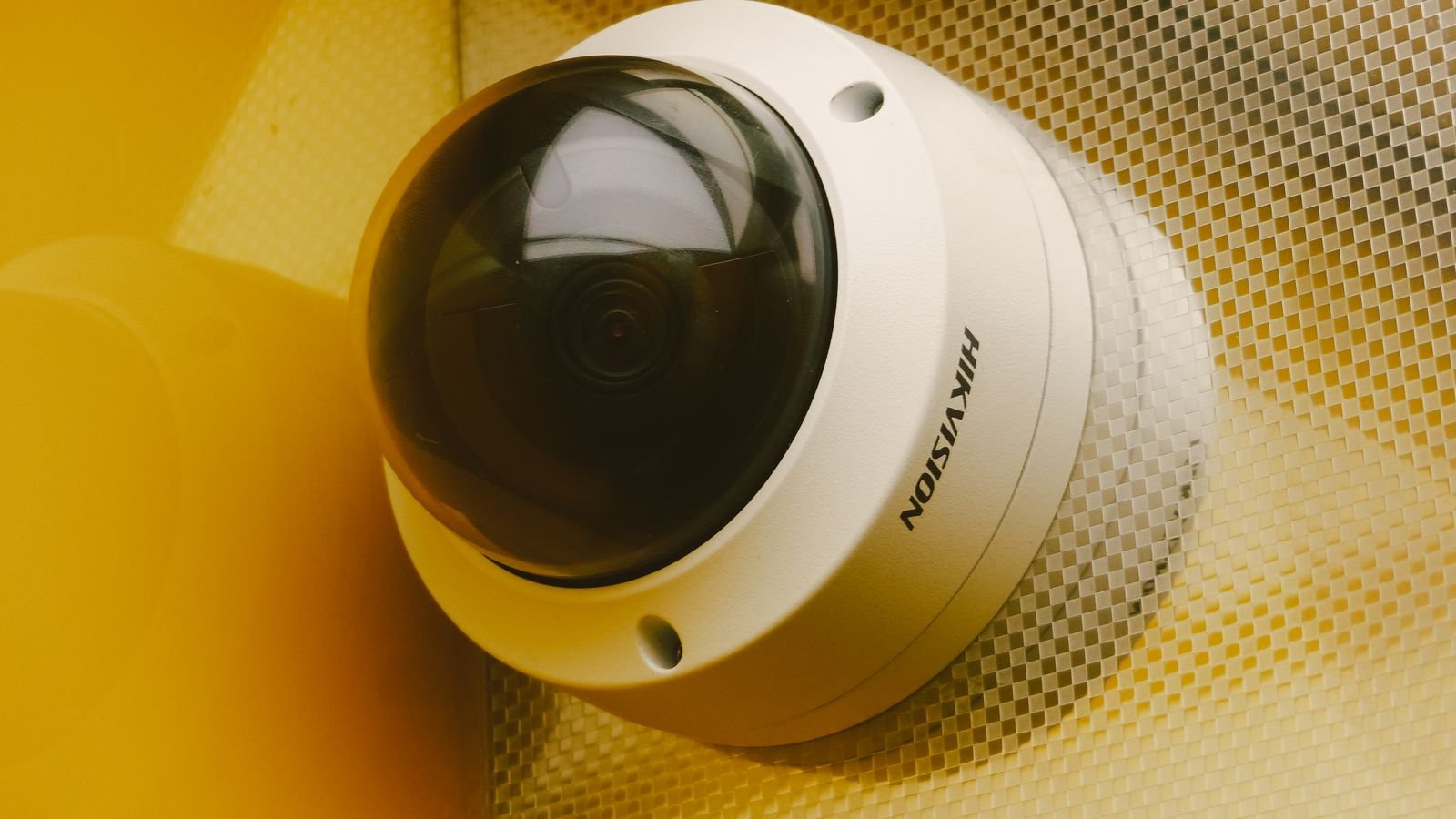
- Dome cameras are discreet, vandal-resistant, and conceal aiming direction. Standard for sales floors and ceilings.
- Turret cameras avoid the infrared glare that dome bubbles cause at night and are easier to aim precisely. Often the better technical choice indoors.
- Bullet cameras are obviously visible, which is exactly what you want for exterior deterrence, and typically offer longer-range optics. Many of the best outside cameras use this form factor for exactly that reason.
- PTZ cameras pan, tilt, and zoom under operator or preset control. Valuable in large stores with an active monitoring room, largely wasted in a small shop with nobody watching.
- Fisheye and multi-sensor cameras cover a wide area from one mount point, useful for open floors where you want continuity of movement rather than facial detail.
Recording, Storage, and Retention
Retention length is a business decision with real cost implications. Many retailers find that thirty days is the practical minimum, because chargebacks, employee complaints, and insurance claims routinely surface weeks after the event. Some categories and jurisdictions push that to sixty or ninety days.
Storage requirements scale with camera count, resolution, frame rate, and compression efficiency. Modern compression dramatically reduces the footprint compared with older codecs, and configuring lower frame rates on low-activity zones while keeping registers and doorways at full rate is a sensible way to control cost.
Choose the recording architecture deliberately. A network video recorder on site keeps footage under your control and works without internet, but a fire or a burglary can destroy it. Cloud recording survives physical loss and enables remote review across locations, at a recurring cost and with bandwidth demands. Hybrid setups that record locally and mirror critical cameras offsite are increasingly the default for multi-store operators. This is territory where the best professional security camera systems separate themselves from consumer gear, and where the wider best business security camera systems comparisons are worth studying.
Lighting, Analytics, and Integration
Lighting is the most underrated variable. A backlit entrance turns every arriving customer into a silhouette, and no amount of resolution recovers a face from that. Look for wide dynamic range on any camera facing glass, and consider adding fill lighting near the door rather than buying a more expensive camera.
Analytics have become genuinely useful rather than a marketing bullet. Line-crossing and intrusion detection on the back door, loitering detection near high-value shelves, people counting for conversion metrics, and heat mapping for merchandising all produce actionable output. Point-of-sale integration remains the highest-value analytic in retail, because it turns thousands of hours of footage into a searchable list of suspicious transactions.
Budget Planning
- Small shop, 4 to 8 cameras. Entrance, two registers, stockroom, back door, and a couple of floor views. A capable recorder and mid-tier cameras cover this without professional monitoring.
- Mid-size store, 8 to 24 cameras. Adds high-value aisle coverage, exterior views, and point-of-sale integration. Professional installation becomes worthwhile for cabling and aiming.
- Large store or multi-site, 24 cameras and up. Centralised management, cloud mirroring, analytics licensing, and structured cabling. Budget for ongoing administration, not just hardware.
Across all tiers, resist spreading a fixed budget evenly. Spend disproportionately on the entrance, the registers, and the back door, and accept lower specification on general floor coverage.
Legal and Staff Considerations
Surveillance in a workplace carries obligations that vary by jurisdiction, and getting this wrong can turn evidence into liability. Post clear notice that recording is in progress. Never place cameras in restrooms, changing rooms, or break areas where employees have a reasonable expectation of privacy. Audio recording is restricted far more tightly than video in many places, so treat microphones as a separate decision requiring specific advice.
Control access to footage. Define who can review recordings, log every export, and store evidence clips with a documented chain of custody. A system where any manager can quietly browse hours of staff footage creates a culture problem and weakens the evidentiary value of everything it produces.
Common Mistakes to Avoid
- Mounting everything at ceiling height. You get excellent footage of the tops of hats.
- Buying resolution instead of framing. Pixels on target beats megapixels every time.
- Skipping the back door. High-volume internal loss concentrates at receiving.
- Under-provisioning storage. A system that overwrites in seven days is useless for chargeback disputes.
- Ignoring backlight at entrances. The most important camera is the one most often ruined by daylight.
- Never reviewing footage. A recorder nobody opens is a very expensive deterrent sticker.
Frequently Asked Questions
How many cameras does a small retail store need?
Most single-room shops are well served by six to eight: one entrance, one per register, one stockroom, one receiving door, and two floor views. Add coverage for each high-value display area beyond that.
How long should retail footage be retained?
Thirty days is a practical baseline because disputes and claims commonly surface weeks later. Higher-risk categories and multi-site operations frequently extend to sixty or ninety days.
Is cloud or local recording better for retail?
Local recording keeps control and avoids recurring fees but is vulnerable to theft or fire. Cloud survives physical loss and simplifies multi-site review at a subscription cost. Hybrid recording, local with critical cameras mirrored offsite, balances both.
Can I record audio in my store?
Audio is regulated much more strictly than video in many jurisdictions, sometimes requiring consent from all parties. Treat it as a separate legal question and get specific advice before enabling microphones.
Do cameras actually reduce shoplifting?
Visible cameras reduce opportunistic theft, and public-view monitors amplify that effect. Determined and organised theft is less deterred, which is why cameras work best combined with staff training, merchandising choices, and consistent review of footage.
Final Thoughts
An effective loss-prevention system is a coverage plan first and a hardware purchase second. Map your zones, decide what each camera must prove, frame for pixels on target rather than headline resolution, and put your money into the entrance, the registers, and the receiving door. Then retain footage long enough to be useful, integrate transaction data if you run more than a couple of registers, and build the habit of actually reviewing what you record. A modest system that is well aimed and regularly reviewed outperforms an expensive one nobody has opened since installation day.