Owen Bradley
 An outdoor outlet looks like an indoor one with a plastic lid on it. Electrically, it is a very different animal. Everything outside a wall faces rain, wind-driven spray, snow melt, insects, ultraviolet degradation, and a temperature swing that indoor devices never see. Get the weatherproofing wrong and the failure is not a nuisance, it is a shock hazard or a tripped circuit every time the sprinklers run. This guide explains how outdoor receptacles are rated and protected, what the enclosure terminology actually means, and how to choose the right combination of outlet, cover, and protection for your project in 2026.
The Three Layers of Outdoor Protection
Outdoor electrical safety is built in layers, and buyers often think about only one of them. A properly specified installation has all three.
- Ground fault protection that cuts power within milliseconds when current leaks to ground, which is what actually prevents electrocution.
- A weather-resistant receptacle built with corrosion-resistant contacts, UV-stabilised plastic, and materials rated for cold-weather impact.
- An enclosure or cover that keeps water off the face of the device, both when nothing is plugged in and while a cord is in use.
Skipping any one layer undermines the others. A premium in-use cover over a standard indoor receptacle is still a corroding indoor receptacle. A weather-resistant outlet with no ground fault protection is still a shock risk. Plan all three together.
Ground Fault Protection Explained
A ground fault circuit interrupter monitors the difference between current flowing out on the hot conductor and returning on the neutral. If more than a few milliamps go missing, meaning it is finding another path such as through a person standing on wet ground, the device disconnects almost instantly. Every outdoor receptacle in a dwelling should be on ground fault protection, without exception.
You can achieve this two ways. A GFCI receptacle at the outlet location protects itself and anything wired downstream of it, and gives you a local test and reset button. Alternatively, a GFCI breaker at the panel protects the entire circuit, which is tidier but means walking to the panel every time a nuisance trip occurs. For most outdoor installations the local receptacle is more convenient, particularly for landscape lighting circuits where a wet connector can trip the protection during a storm.
Test the device monthly by pressing test and then reset. A GFCI that does not trip on test has failed and must be replaced, and outdoor units are exposed to the conditions most likely to age them.
Weather-Resistant Receptacles: What the Marking Means
Unlike the standard interior devices covered in roundups of the best outlets for home use, a receptacle marked WR is built specifically for damp and wet locations. The differences from a standard device are real, not cosmetic: plated contacts and corrosion-resistant mounting hardware, a polymer body formulated to survive years of ultraviolet exposure without becoming brittle, and construction tested for impact at low temperatures. An ordinary indoor receptacle installed outdoors may work for a season and then crack, discolour, and lose contact tension.
Also look for tamper-resistant construction, marked TR, which uses internal shutters that only open when both blades are inserted simultaneously. Outdoor outlets are frequently within reach of children in a yard, and the combined WR/TR device is now the sensible default for exterior work. Reviewing a broad set of the best outdoor outlets is the quickest way to see which models pair weather resistance with usable GFCI ergonomics.
Covers: Damp Location Versus Wet Location
This is the distinction that trips up most homeowners, and it is worth getting exactly right.
Damp Location Covers
A flip-lid or bubble cover rated for damp locations protects the receptacle when nothing is plugged in. As soon as a cord is inserted, the lid cannot close and the outlet is exposed. These are appropriate only for locations sheltered from direct rain, such as a deep covered porch or the underside of a soffit.
Wet Location In-Use Covers
An in-use cover, sometimes called a bubble cover, is a deep hinged enclosure with cord entry slots along the bottom edge. It stays closed and sealed over the receptacle while a cord is plugged in, which is the entire point. Any outlet exposed to rain, snow, or sprinkler spray needs one. They come in various depths, and a shallow cover will not close over a bulky transformer plug or a right-angle adapter, so measure what you actually intend to plug in.
Mounting Orientation and Gaskets
Covers ship with a foam or rubber gasket that seals to the wall. Install it. Mount boxes so cord slots face downward, seal the top and sides of the enclosure to the siding with exterior-grade sealant, and deliberately leave the bottom edge unsealed so any water that gets in can drain out rather than pool inside.
Boxes, Conduit, and Entry Points
The receptacle is only as protected as the box behind it. Outdoor work calls for a box listed for wet locations, typically cast aluminium or heavy PVC with threaded hubs, not a standard indoor plastic box pushed through a hole in the siding. Unused hubs must be plugged with proper closure plugs.
Where cable runs outside, it needs mechanical protection. Conduit rated for sunlight exposure is standard above grade; direct-burial cable is used below grade at the depth your local requirements specify. The point where a cable passes through an exterior wall is the most common water entry path in the whole installation, so slope the penetration slightly downward toward the outside and seal it thoroughly.
Choosing by Application
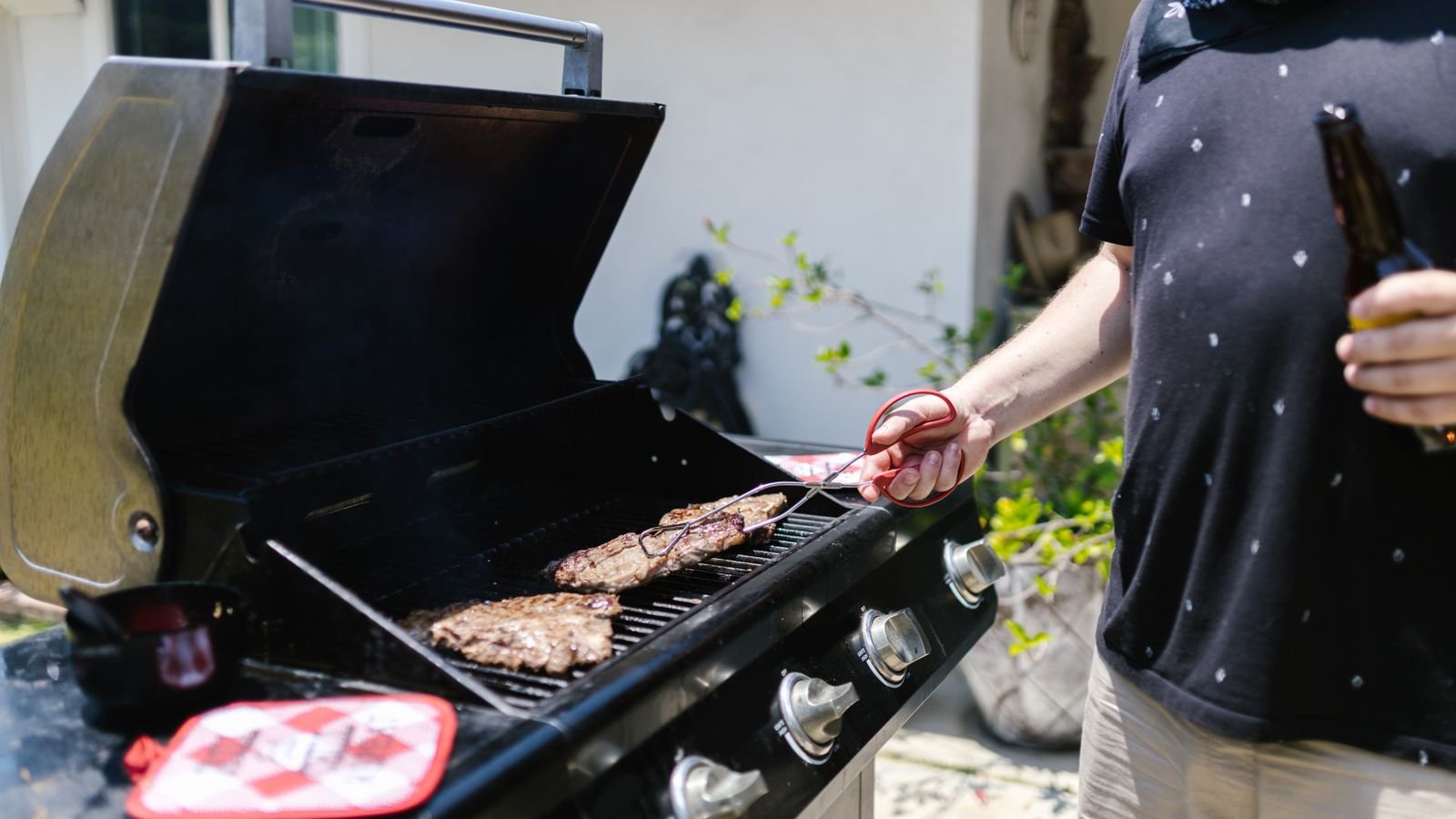
- Patio and deck outlets for grills, string lights, and speakers need a wet-location in-use cover deep enough for chunky transformer plugs.
- Front and back door outlets used seasonally for holiday lighting benefit from being paired with a scheduled control so the display runs itself. Comparing the best outdoor timers alongside your outlet choice saves adding a second weatherproof enclosure later.
- Garden and landscape outlets mounted on a post away from the house should use a purpose-built weatherproof pedestal rather than a bare box on a stake.
- Garage and workshop exterior outlets often serve power tools and pressure washers, so pay attention to circuit capacity rather than just the receptacle rating.
- Pool and spa areas have distinctly stricter distance and bonding requirements, and are an area where professional involvement is genuinely warranted.
Adding Smart Control Outdoors
Scheduling and remote control are increasingly popular outdoors, mostly for lighting and seasonal displays. Two approaches exist. A weatherproof plug from the wider best outdoor light timers category sits in the existing outlet under an in-use cover, which is inexpensive and requires no wiring, though the cover must be deep enough to accommodate it. Alternatively, an in-wall smart receptacle replaces the device entirely for a cleaner result.
Whichever you pick, verify the operating temperature range. Many connected devices are specified only down to freezing, and a plug that works in October can go offline in January. Weather-rated outdoor models exist specifically for this reason, and the best outdoor smart plugs comparisons usually list cold-weather ratings and enclosure ingress protection, which are the two specs that matter most here.
Budget Tiers
- Under $25. A weather-resistant tamper-resistant receptacle plus a basic flip cover. Adequate only for genuinely sheltered locations on an already GFCI-protected circuit.
- $25 to $60. A WR/TR GFCI receptacle with a proper wet-location in-use cover and a listed weatherproof box. This is the correct specification for the majority of exterior locations.
- $60 to $150. Heavy-duty cast enclosures, deep in-use covers with lockable lids, weatherproof smart receptacles, and outdoor-rated timer enclosures.
- $150 and up. New circuit runs including conduit, trenching, a panel breaker, and a landscape pedestal. At this point most of the cost is labour and materials rather than the device.
Installation Checklist
- Shut off the breaker and verify with a non-contact tester before touching any conductor.
- Confirm the circuit has ground fault protection, either at the panel or at this device.
- Use a box and cover listed for wet locations, with all unused openings plugged.
- Install a WR-marked receptacle and connect the ground securely to the box and device.
- Fit the cover gasket, orient cord slots downward, and seal the top and sides only.
- Test GFCI operation, then test again with a plug in place and the cover closed.
If the job involves a new circuit, trenching, or anything near water features, hand it to a licensed electrician. Exterior work is also frequently subject to inspection, and permits exist precisely because these installations fail in dangerous ways.
Maintenance and Troubleshooting
Twice a year, open every outdoor cover and look inside. You are checking for insect nests, corrosion greening on the contacts, cracked gaskets, and standing water. Press test and reset on the GFCI. Replace covers that no longer close firmly, since a warped lid defeats the entire enclosure.
Nuisance tripping after rain almost always points to water intrusion somewhere on the circuit, and the culprit is usually a cord connector lying on wet ground rather than the outlet itself. Elevate connections, use covered cord connectors for long-term setups, and unplug seasonal equipment during heavy weather. Persistent tripping in dry conditions suggests a failing device or damaged cable, and warrants investigation rather than a reset habit.
Frequently Asked Questions
Do all outdoor outlets need GFCI protection?
Yes. Outdoor receptacles in dwellings require ground fault protection, whether provided by a GFCI receptacle at the location or a GFCI breaker feeding the circuit. This is the layer that actually prevents electrocution.
What does the WR marking mean on a receptacle?
WR indicates weather-resistant construction: corrosion-resistant contacts and hardware, UV-stabilised plastics, and verified low-temperature impact performance. It is required for receptacles in damp and wet locations.
Can I use a regular indoor outlet under a good cover?
No. A cover keeps direct water off, but humidity, condensation, and temperature cycling still reach the device. An indoor receptacle will corrode and become brittle, and it does not meet requirements for exterior installation.
What is the difference between a flip cover and an in-use cover?
A flip cover protects the outlet only when nothing is plugged in and suits sheltered damp locations. An in-use cover is a deep enclosure that remains closed around a plugged-in cord and is required wherever rain or spray can reach the outlet.
Can outdoor outlets be used year-round in freezing weather?
Weather-resistant receptacles are built for it. The components most likely to fail in cold are electronics such as smart plugs and timers, so check their stated minimum operating temperature before leaving them installed through winter.
Final Thoughts
Weatherproofing an outdoor outlet is not one purchase but a stack of correct choices: ground fault protection on the circuit, a WR-marked tamper-resistant device, a wet-location box, and an in-use cover deep enough for what you actually plug in. Get those four right and the installation will run for years with nothing more than a seasonal inspection. Get any one wrong and you will meet the failure eventually, usually during the first serious storm. Start by identifying whether your location is genuinely sheltered or genuinely exposed, because that single answer determines most of the rest of the specification.