Owen Bradley
 Open-plan offices were sold as engines of collaboration, and for many people they have turned out to be engines of distraction. The problem is rarely a single loud noise. It is the constant layer of conversation, keyboards, printers, air handling and phone calls that never quite fades into the background. A noise cancelling headset for office use is the most direct fix available, but it is a harder purchase than buying consumer headphones, because an office headset has to do two jobs at once. It must quiet the room for you, and it must make you sound clear to everyone on your calls. This guide covers how to weigh those demands against comfort, battery life and price so you buy once rather than three times.
How Active Noise Cancellation Actually Works
Active noise cancellation uses microphones on the outside of each earcup to sample incoming sound, then plays an inverted version of that waveform through the drivers so the two cancel each other at your eardrum. It is elegant physics, and it has clear limits worth understanding before you spend money.
ANC is extremely effective on low-frequency, continuous sound: air conditioning, ventilation rumble, traffic hum, aircraft cabins, the drone of a busy floor. It is much weaker against sudden, high-frequency sound, which is exactly what human speech is. This is why people are sometimes disappointed on day one. They expected the colleague two desks away to vanish and instead found the room simply got calmer and less tiring.
Passive Isolation Does Half the Work
The physical seal matters as much as the electronics. Well-designed earcups with dense memory foam pads block a great deal of mid and high frequency sound before any processing happens, and that passive isolation is what actually reduces speech intelligibility around you. Over-ear designs with a full seal isolate best; on-ear designs sit lighter and cooler but leak considerably more.
Judge any headset on the combination rather than the ANC specification alone. A model with modest cancellation and excellent pads frequently outperforms a model with aggressive processing and thin pads in a real office. Our roundup of the best noise cancelling headsets weighs both halves of that equation.
Transparency Mode Is Not a Gimmick
A good transparency or ambient mode pipes outside sound through the microphones so you can hear a colleague or an announcement without removing the headset. In an office this gets used constantly, and the quality varies far more than the marketing suggests.
Poor implementations sound hissy, hollow or unnaturally loud, and people stop using them. Good implementations sound close to natural, with your own voice at a believable volume so you do not shout. Test this specifically if you can, because a headset with average ANC and superb transparency is often more pleasant to live with all day than the reverse.
The Microphone Is Where Office Headsets Are Won
Consumer headphones are designed to sound good to the wearer. Office headsets have to sound good to everyone else, and that is a different engineering problem. If you spend hours on calls, the microphone deserves at least as much attention as the cancellation.
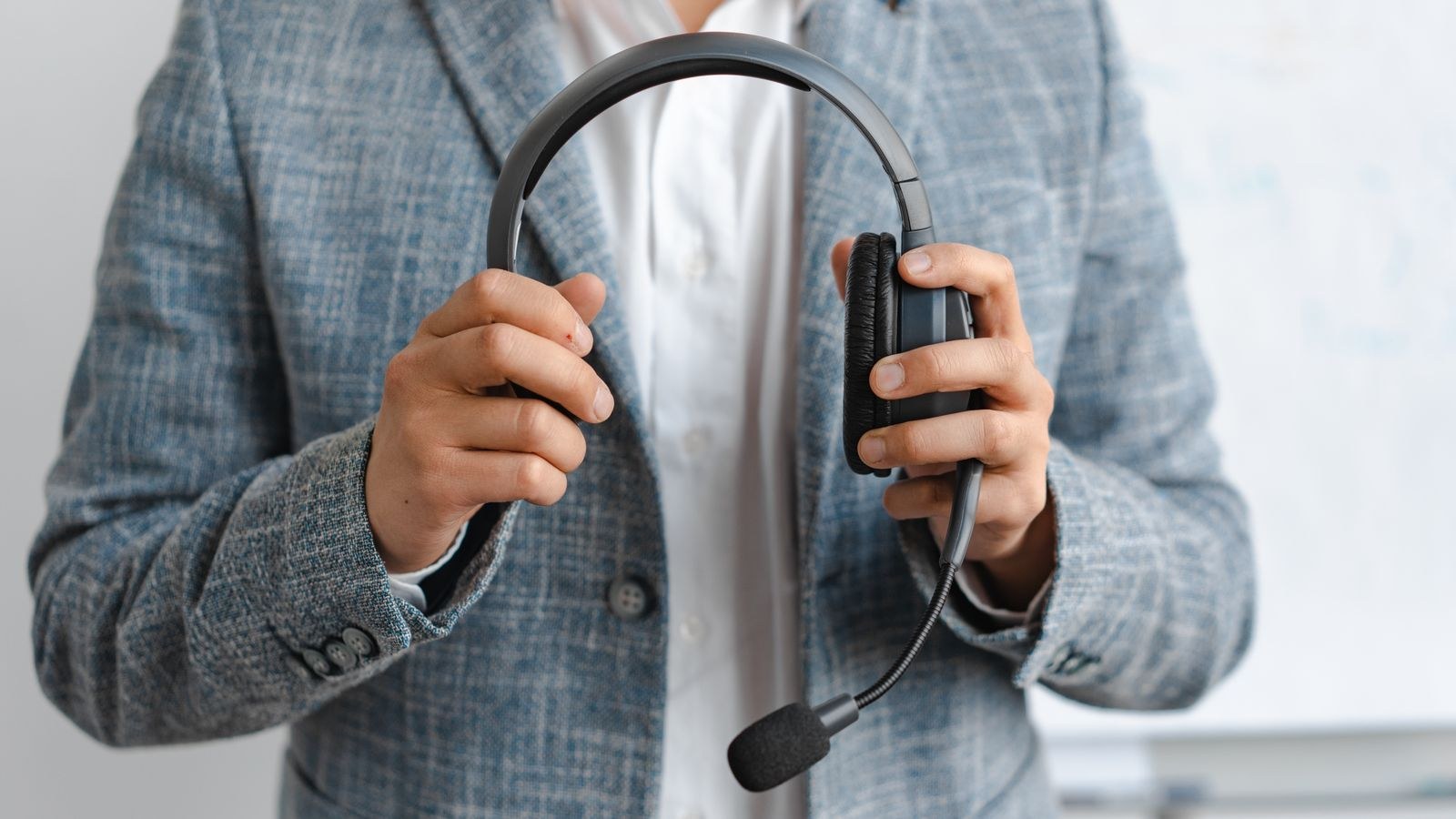
- Boom microphones sit close to your mouth and are the most reliable option in a noisy room. They pick up far less ambient sound simply because of proximity, and they still lead on raw intelligibility.
- Retractable or detachable booms give you call quality during the day and a clean look on the commute home.
- Beamforming arrays use several small microphones in the earcups to focus on your voice and suppress everything off-axis. The best are genuinely good; budget implementations sound thin and cut the beginnings of words.
- Sidetone, which feeds a little of your own voice back into the earcups, is easy to overlook and hugely important. Without it, sealed headphones make you talk too loudly and tire your voice.
Always judge microphones by listening to a real recording rather than reading a frequency range. If calls are the core of your role, our comparison of the best headsets for calls ranks models specifically on how they sound to the person at the other end.
Comfort Over an Eight-Hour Day
Comfort is the specification nobody prints and everyone eventually cares about most. A headset that feels fine for twenty minutes in a shop can become intolerable by mid-afternoon, and an uncomfortable headset simply stops being worn.
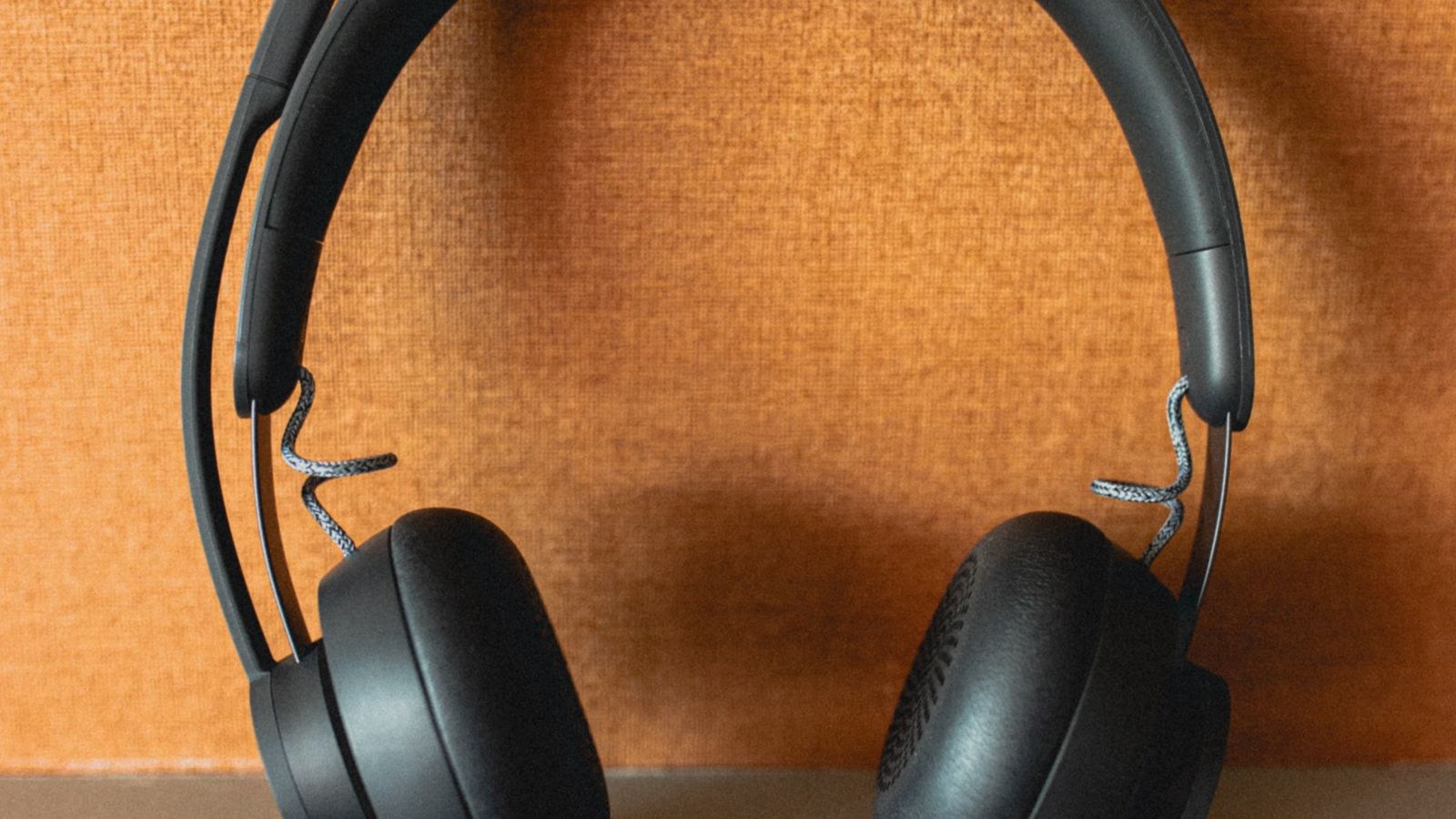
Weight is the first factor. Under roughly 250 grams tends to disappear on your head; above 350 grams you will notice it by the afternoon. Clamping force is the second, and it trades directly against isolation, since a tighter seal blocks more sound but presses harder. Look for headbands with genuine padding across the crown rather than a thin strip of plastic.
Earpad material decides the rest. Protein leather seals best and looks smart but traps heat, which becomes uncomfortable in a warm room. Fabric or mesh pads breathe far better at the cost of some isolation. Whichever you choose, confirm the pads are user-replaceable, because they compress and flake long before the electronics fail, and a fifteen-pound pad swap can add years to a headset. Models that get this right appear in our list of the best comfortable headsets.
Glasses, Earrings and Long Hair
If you wear glasses, clamping force matters more than usual, because the arms press into your temples through the pads. Softer memory foam that moulds around the frames is the practical fix. Try before you commit if at all possible, and give any candidate at least half an hour on your head.
Connectivity: Bluetooth, Dongles and Cables
Office headsets typically offer three connection routes and the differences are practical rather than academic.
Bluetooth connects to anything, including your phone, and is the most flexible option. Look for multipoint support, which lets the headset hold connections to your laptop and phone simultaneously so an incoming call does not require re-pairing. This single feature transforms daily use.
A dedicated USB dongle gives a more stable link and usually better microphone bandwidth, because it can bypass the older Bluetooth call profiles that make voices sound narrow and compressed. Many business headsets ship with one for exactly this reason.
A wired connection never drops, never needs charging and remains the reliable fallback for an important presentation. A headset that offers all three covers every situation. For an overview of the wireless side, see the best bluetooth headsets and check specifically for multipoint and a modern codec.
Battery Life and Charging Habits
Treat manufacturer battery claims as a best case measured at moderate volume with ANC on and no calls. Real call time is typically shorter than the quoted music playback figure, sometimes by a third, because the microphones and radio work harder.
Aim for a headset that comfortably clears a full working day with ANC engaged, which in practice means a quoted figure of at least 25 to 30 hours. Fast charging is the feature that actually rescues you, since fifteen minutes on the cable providing several hours of use turns a flat battery from a crisis into an inconvenience. Check also whether the headset works while charging over USB, and whether ANC still functions when the battery dies, as some models fall back to passive mode gracefully while others simply stop.
Budget Tiers and What Each Buys You
Spending more delivers real improvements, but they arrive in a predictable order.
- Entry tier. Basic ANC that handles steady hum, adequate microphones for internal calls, lighter build quality, and battery life that usually covers a day. Fine if calls are occasional.
- Mid tier. The value sweet spot. Noticeably stronger cancellation, a usable transparency mode, better pads, multipoint Bluetooth and a microphone that holds up on client calls.
- Premium tier. Best-in-class cancellation, natural transparency, refined comfort for very long sessions, superior call clarity in noisy rooms, and companion software with equalisation and firmware updates.
The mid tier is where most office workers should land. Beyond it you are paying for refinement rather than capability. If you are equipping a home workspace rather than a shared floor, the priorities shift slightly toward microphone quality and away from raw isolation, which is the angle our guide to the best headsets for home office setups takes.
Common Mistakes Worth Avoiding
The first is buying purely on ANC marketing and discovering that speech still reaches you, because no headset removes conversation entirely. The second is ignoring the microphone completely, which is how people end up sounding distant and muffled on every call despite spending a lot. The third is choosing a heavy, tightly clamping model for maximum isolation and then leaving it on the desk because it hurts.
Two more catch people out. Skipping multipoint means constant manual re-pairing between laptop and phone, which is a small irritation repeated twenty times a day. And overlooking replaceable earpads shortens the useful life of the headset to whenever the foam gives up, which is typically eighteen months to two years of daily wear.
A Quick Decision Checklist
- What is the dominant noise? Steady hum favours strong ANC; nearby conversation favours passive isolation and a tight seal.
- How many hours of calls do I take? Heavy call loads justify a boom microphone and a dongle.
- Will I wear it all day? Prioritise weight, clamping force and breathable pads.
- Do I switch between devices? Insist on multipoint Bluetooth.
- Can the pads be replaced? If not, factor a shorter lifespan into the price.
Frequently Asked Questions
Will ANC block my colleagues talking nearby?
Not completely. Active cancellation targets low, continuous frequencies, while speech sits higher up. It will reduce the overall noise floor so voices are less intrusive and less tiring, and a good passive seal will muffle them further, but no headset erases conversation.
Are earbuds good enough for office use?
Noise cancelling earbuds work well for short calls and travel, and they are far more discreet. For all-day wear most people prefer over-ear models, which spread pressure better, isolate more, hold much larger batteries and generally carry stronger microphones.
Does ANC cause headaches or pressure?
A minority of people feel a sensation of pressure, similar to changing altitude, from strong cancellation. If that describes you, choose a headset with adjustable ANC levels so you can dial it back, and lean on passive isolation instead.
Do I need a boom microphone if the headset has beamforming?
Not necessarily. High-end beamforming arrays perform very well in moderate noise. In a genuinely loud room, though, a boom placed near your mouth still has the physical advantage and remains the safer choice for critical calls.
Is Bluetooth call quality worse than a dongle?
Often, yes. Older Bluetooth voice profiles limit microphone bandwidth so you sound narrow and compressed. A dedicated USB dongle or a headset supporting a modern voice codec avoids that and makes a clearly audible difference to listeners.
Final Thoughts
The right office headset is a balance rather than a champion in any single category. Enough cancellation to lift the drone of the floor, a seal comfortable enough to forget about, a microphone that makes you easy to listen to, multipoint pairing so devices stop fighting, and a battery that clears the day with room to spare. Get those five right and the headset stops being equipment you think about and becomes the thing that lets you concentrate. Shop with that list in 2026, weigh comfort as heavily as any printed specification, and you will find that the quieter working day was well worth the money.