Owen Bradley
 Mouse marketing runs on big numbers. A 26,000 DPI sensor, an 8000Hz polling rate, a 650 IPS tracking ceiling and a 50G acceleration rating all appear on the same box, and almost none of them describe something you will feel. Meanwhile the settings that genuinely change how a mouse behaves, like lift-off distance, effective sensitivity and surface calibration, are buried three menus deep in software most people never open. This guide explains what each specification actually measures, which ones change the experience, and which are pure filler. Read it once and you will stop paying for headline figures and start tuning the handful of things that matter.
DPI and CPI: What the Number Really Means
DPI stands for dots per inch, and CPI, counts per inch, is the more technically accurate term for the same thing. Both describe how many movement counts the sensor reports for every inch the mouse physically travels. At 800 DPI, moving the mouse one inch sends 800 counts to the computer; at 3200 DPI, the same inch sends 3200. Higher DPI therefore means the cursor or crosshair moves further for the same hand movement.
That is the whole story. DPI is not a measure of precision, accuracy or sensor quality, despite being marketed as if it were. A 26,000 DPI sensor is not more accurate than the same sensor set to 800; it simply reports more counts per inch. Since the extra counts describe the same physical movement, raising DPI past a certain point mostly amplifies the tiny tremor in your hand, making fine aim harder rather than easier.
Effective Sensitivity Is the Number That Matters
What determines how far you turn in a game is DPI multiplied by the game’s in-game sensitivity setting. A player at 400 DPI with an in-game sensitivity of 2 and a player at 800 DPI with a sensitivity of 1 turn at exactly the same rate. This is why comparing DPI figures between players tells you almost nothing on its own.
The practical measurement to use instead is centimetres per 360: how far you must move the mouse to spin a full circle in game. Low-sensitivity shooter players typically sit somewhere between 30 and 50cm per 360, which demands arm movement and a large pad. Higher-sensitivity players sit under 20cm and aim mostly with the wrist. Pick a figure, achieve it with a moderate DPI, and stop changing it so muscle memory can build.
Choosing a Sensible DPI Step
Most competitive players use 400, 800 or 1600 DPI, with 800 the most common default. These values keep the sensor in a range where its native resolution is well behaved and leave in-game sensitivity to do the fine tuning. Very high DPI has one legitimate use: driving a high-resolution or multi-monitor desktop where the pointer otherwise crawls across the screen. Even there, 3200 is usually plenty. If a genuinely high ceiling matters for your workflow, our roundup of the best high DPI mouse options covers sensors that stay stable at the top of their range rather than merely advertising a large number.
Polling Rate Explained
Polling rate is how many times per second the mouse reports its position to the computer, measured in hertz. At 125Hz that is once every 8 milliseconds. At 1000Hz, once every millisecond. Newer mice advertise 2000Hz, 4000Hz and 8000Hz, shortening the interval to half, a quarter or an eighth of a millisecond.
The jump from 125Hz to 1000Hz was genuinely transformative, turning a visibly choppy cursor into a smooth one. The jumps beyond that are subject to sharply diminishing returns. Going from 1000Hz to 8000Hz saves at most 0.875ms of reporting delay, which is a small fraction of a single frame at 144Hz and far smaller than the variability in human reaction time. Blind testing consistently shows most players cannot distinguish them.
There is also a cost. High polling rates generate far more USB interrupts, and on modest processors that overhead can reduce frame rates measurably, which hurts far more than the fraction of a millisecond it saves. The sensible default is 1000Hz. Try higher if your system has headroom, but verify your frame rate before and after rather than assuming it is free. For a broader view of what actually reduces end-to-end delay, see our picks for the best low latency mouse models, which weigh measured response rather than advertised polling.
Where Latency Actually Comes From
Total delay between your hand moving and the screen updating is a chain: sensor sampling, firmware processing, click debounce, wireless radio transmission if applicable, USB polling, operating system input handling, game engine tick, render time and finally display response. Polling is one small link. Click debounce alone, the deliberate delay some mice apply to filter switch bounce, can exceed the entire gain from raising polling eightfold. When comparing mice, a short debounce and clean firmware beat a big polling number every time.
Lift-Off Distance: The Underrated Setting
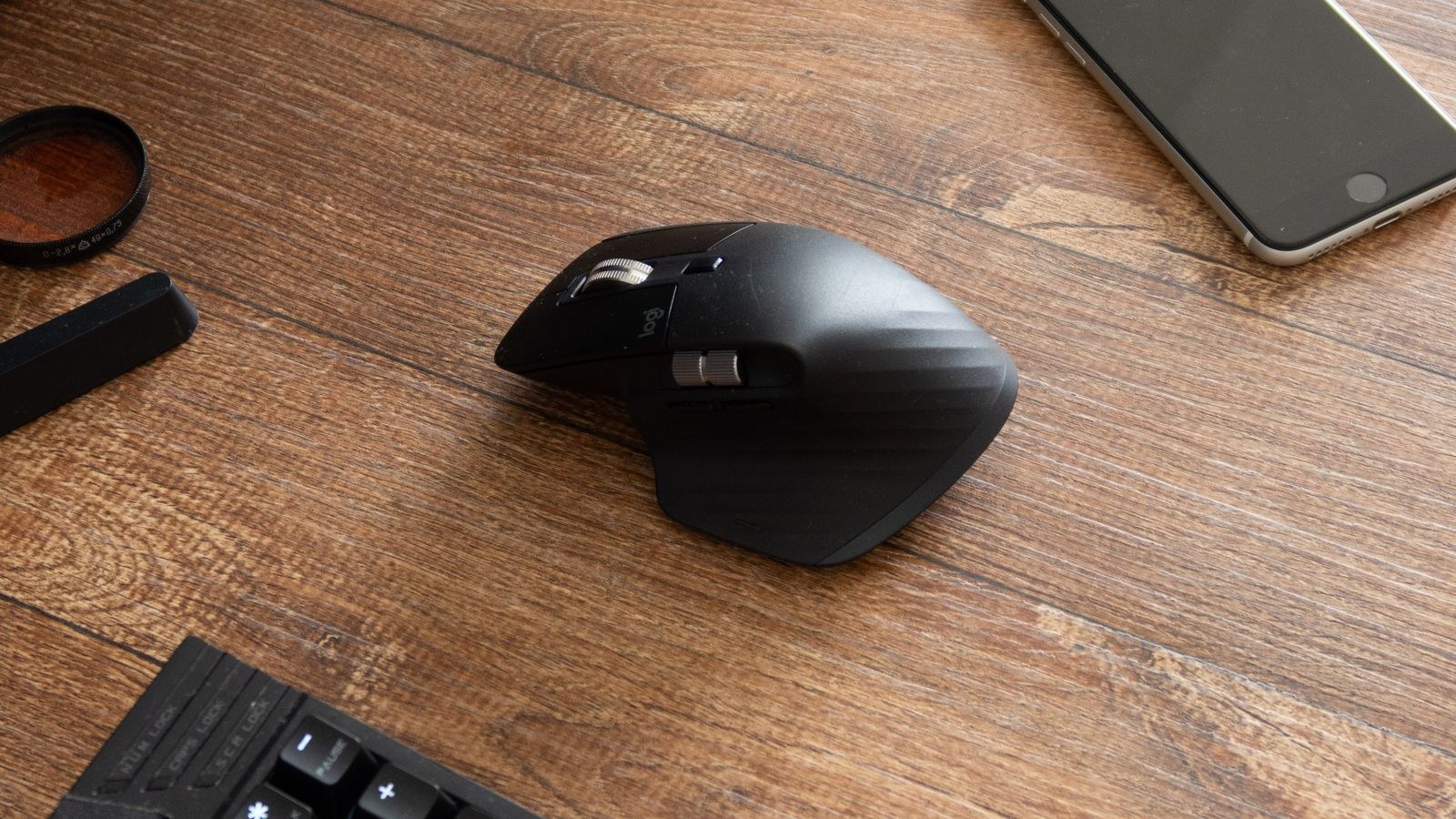
Lift-off distance, often shortened to LOD, is the height at which the sensor stops tracking when you raise the mouse off the pad. It matters because low-sensitivity players lift and reposition constantly, and any tracking that continues during the lift drags the crosshair somewhere you did not intend.
Set it too high and every reposition nudges your aim. Set it too low and the sensor may cut out on a soft cloth pad that compresses under your grip, or on a slightly uneven surface. Most quality mice offer a calibration routine, usually one or two millimetres of adjustment, and running it against your actual pad takes about two minutes. It is the single highest-value setting change most players never make.
Two related sensor behaviours deserve a mention. Angle snapping, sometimes called prediction, silently straightens near-horizontal movements into perfectly straight lines. It flatters your handwriting and ruins your aim, so turn it off. Smoothing averages recent movement to reduce jitter, adding delay in exchange; on a good sensor it is unnecessary. If precision work is your priority, our roundup of the best mouse for precision highlights models where these behaviours are off by default or fully adjustable.
IPS, Acceleration and Sensor Ceilings
Maximum tracking speed is quoted in inches per second, or IPS. It is the fastest the mouse can move while still reporting movement correctly. Exceed it and the sensor loses track, producing a spin-out. Modern sensors reach 400 to 750 IPS, and a fast human arm swipe at low sensitivity reaches perhaps 150 to 200 IPS. Anything above about 400 IPS is comfortably beyond human capability, so the difference between 500 and 750 is decorative.
Maximum acceleration, quoted in G, measures how hard the sensor can be accelerated before it loses tracking. Ratings of 40G and up are far past what a hand produces. Note that this specification is entirely separate from mouse acceleration, the software behaviour where a faster physical movement produces a proportionally larger cursor movement. That behaviour breaks the fixed relationship between hand distance and in-game rotation, which is exactly what muscle memory depends on, so disable it in both your operating system settings and any driver software.
Sensor Resolution Versus Native Steps
Some sensors have preferred native DPI steps and interpolate between them, which can introduce very slight irregularity at unusual values. On current flagship sensors this is largely a solved problem and any step in the useful range performs identically. It is another reason to stop worrying about DPI granularity and focus on setting a sensitivity you can repeat.
The Surface Underneath Changes Everything
Sensors read the texture of the surface below them, so the pad is part of the sensing system rather than an accessory. Cloth pads give more stopping friction and a consistent, easily read texture; hard pads glide faster and can produce a slightly different tracking character. Glossy, reflective or transparent surfaces confuse optical sensors badly, which is why a bare glass desk is the worst possible mousing surface.
Pad size should follow your sensitivity. If you play at 40cm per 360, a small pad guarantees you run out of room mid-turn no matter how good the sensor is. Thickness matters too, because a thick soft pad compresses under grip pressure and changes effective lift-off distance. Recalibrate LOD after any pad change, and compare surfaces using our list of the best gaming mouse pads before blaming inconsistent aim on the mouse.
Wireless, Battery and Reporting Consistency
On wireless mice, the specification that matters is not peak polling rate but consistency of reporting under real conditions. A crowded 2.4GHz environment, a receiver plugged into a rear port behind a metal case, or a low battery can all introduce dropped or delayed reports that no headline number reveals. Use a short USB extension to bring the receiver onto the desk near the mouse, and keep it clear of other wireless dongles.
Battery figures are usually quoted with lighting off and at 1000Hz. Enabling per-key lighting and raising polling to 4000Hz can cut runtime by more than half, sometimes dramatically. If you intend to run high polling wirelessly, check the manufacturer’s figures for that specific mode rather than the headline number, and plan to charge more often than the box implies.
A Short Guide to Setting Your Mouse Up Properly
- Turn off operating system pointer acceleration and set pointer speed to the default middle notch.
- Set a moderate DPI, ideally 800, and adjust in-game sensitivity to reach your target centimetres per 360.
- Set polling to 1000Hz and confirm your frame rate is unaffected before experimenting higher.
- Run the lift-off distance calibration on the pad you actually use, then test a few lifts.
- Disable angle snapping, smoothing and any driver-level acceleration option.
- Save all settings to onboard memory so they survive on another machine without software installed.
- Leave the configuration alone for at least two weeks so muscle memory can form.
Common Mistakes
The most common is buying by DPI ceiling, a figure that tells you nothing about how a mouse performs. The second is constantly adjusting sensitivity, which prevents muscle memory from ever settling and is far more damaging to aim than any hardware limitation. The third is enabling acceleration, whether deliberately or by leaving a driver default on, which breaks the consistent relationship between hand movement and rotation. A fourth is buying an expensive mouse and pairing it with a small or worn pad. A fifth is chasing 8000Hz polling on a system whose processor cannot spare the overhead, then losing frames for an imperceptible gain.
Frequently Asked Questions
Does higher DPI make my mouse more accurate?
No. It only makes the cursor move further per inch of hand movement. Beyond a moderate level it amplifies hand tremor and makes fine adjustments harder.
Is 1000Hz polling enough?
For virtually everyone, yes. The improvement beyond it is a fraction of a millisecond and is offset by increased processor overhead on many systems.
What is a good lift-off distance?
As low as your pad allows without the sensor cutting out during normal use. Calibrate on your own surface rather than trusting a default setting.
Should I use the same DPI in every game?
Yes, and ideally the same centimetres per 360 too. Consistency across titles is what allows one set of muscle memory to serve all of them.
Do sensor specifications differ much between good mice now?
Barely. Flagship sensors from recent generations all track cleanly at any speed a human can produce, so shape, weight, switches and connection quality should decide your purchase. For competitive shapes tuned around those priorities, see our picks for the best mouse for esports.
Final Thoughts
Once a mouse uses a competent modern sensor, its specification sheet stops predicting how it will perform. Set a moderate DPI, hit a repeatable centimetres-per-360 figure, poll at 1000Hz, calibrate lift-off on your own pad, and switch off every form of acceleration and smoothing. Then leave it alone. Those five steps deliver more improvement than any upgrade to a bigger headline number, and they cost nothing beyond ten minutes of setup time in 2026.