Owen Bradley
 Every motion sensor promises to detect movement, but the technology inside the housing decides whether it triggers reliably on a person walking up your driveway or nuisance-trips every time a branch sways. Passive infrared, microwave, ultrasonic, and dual technology sensors each read the world differently, and each has a specific set of environments where it shines and fails. This guide compares motion sensor types head to head so you can match detection method to location, whether you are lighting a hallway, arming a garage, or covering a long stretch of backyard fence in 2026. Understanding the differences takes about ten minutes and saves years of false alarms.
How Motion Detection Actually Works
All motion sensors answer the same question, but they gather evidence in two fundamentally different ways. Passive sensors sit quietly and listen for changes in the energy already present in the room, most commonly infrared heat. Active sensors emit their own signal, whether radio waves or sound, and watch for changes in the reflection that comes back.
That distinction drives everything else. Passive sensors use almost no power and cannot be detected, which makes them ideal for battery devices. Active sensors see through obstacles and detect much subtler motion, but they consume more power and can reach into places you did not intend to cover, such as through a wall into the next room.
PIR: Passive Infrared, the Default Choice
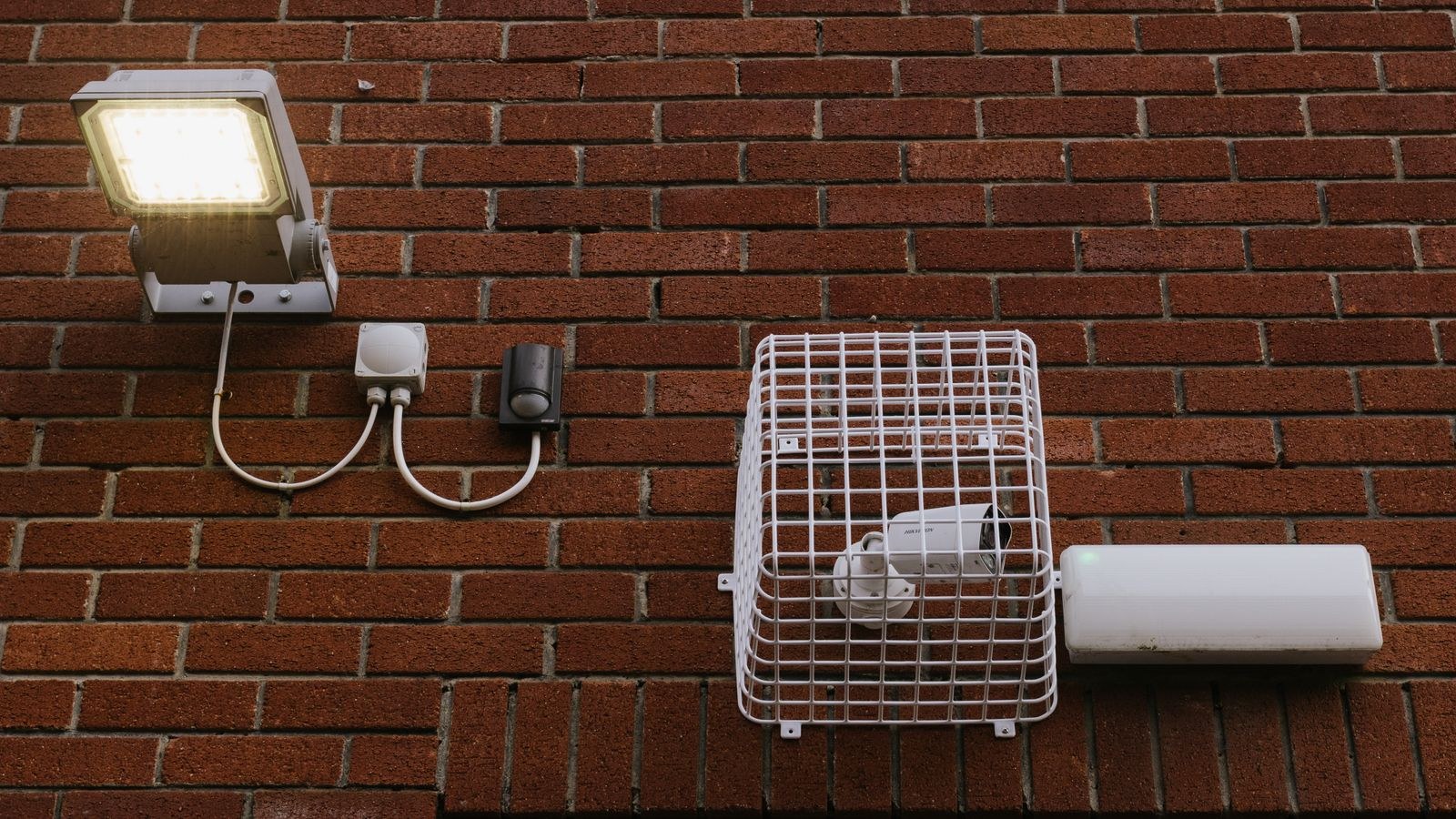
Passive infrared sensors detect the heat signature of a warm body crossing their field of view. Behind the plastic lens sits a segmented Fresnel array that divides the field into zones. When a heat source moves from one zone to another, the sensor registers a rapid change and triggers. This is why PIR sensors respond strongly to someone walking across their view and weakly to someone walking directly toward them.
PIR is the technology in most residential motion lights, security sensors, and occupancy switches, and for good reason. It is inexpensive, draws so little current that a coin cell can run a sensor for years, and it almost never triggers on inanimate objects because those objects are the same temperature as the background. Typical range runs 20 to 40 feet with a detection angle between 90 and 180 degrees.
Where PIR Falls Short
The weaknesses are predictable. PIR needs line of sight, so furniture, partitions, and glass block it entirely. It struggles in hot weather when ambient temperature approaches body temperature, reducing the contrast it depends on. It also misses very slow movement and movement straight along its axis. Outdoors, direct sun on the lens and heat radiating off a driveway can both cause misreads. If you want proven general-purpose options, our list of the best motion sensors covers PIR units sized for rooms, hallways, and entryways.
Microwave Sensors: Seeing Through Obstacles
Microwave sensors transmit a continuous low-power radio signal and measure the Doppler shift in the returning waves. Because radio waves pass through drywall, glass, wood doors, and thin plastic, a microwave sensor detects motion in places a PIR unit cannot see. They also cover more ground, commonly 40 to 80 feet, and detect motion in any direction rather than favoring cross-traffic.
Sensitivity is the other advantage. Microwave units register very small movements, which makes them useful in offices and reading rooms where a PIR sensor might switch the lights off on someone sitting still at a desk. The cost of that sensitivity is false triggering: moving curtains, ceiling fans, HVAC airflow, rain, and even people in an adjacent room can all set off a poorly adjusted microwave sensor.
Adjusting Microwave Sensitivity
Nearly every microwave sensor includes a sensitivity dial or app setting, and it is not optional. Start low, walk the space, and raise sensitivity only until the sensor catches the movement you care about. If the unit keeps firing when nobody is present, the signal is almost certainly reaching past a wall or into an HVAC path. Reducing sensitivity or physically reorienting the unit fixes most cases.
Dual Technology: Requiring Two Votes
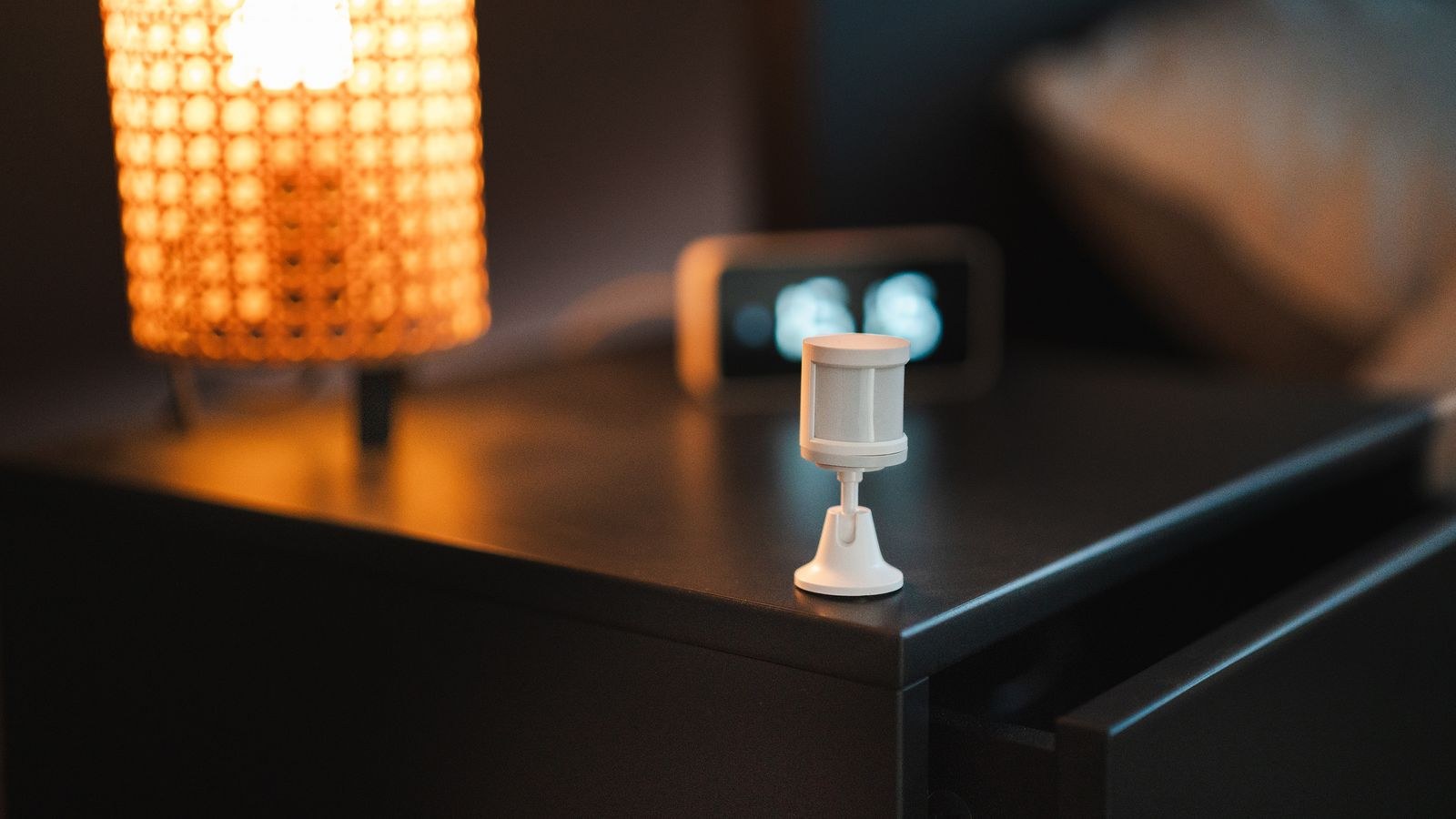
Dual technology sensors combine PIR and microwave in one housing and, critically, require both to detect motion before triggering. That logical AND is the whole point. A swaying branch triggers the microwave element but produces no heat signature, so nothing happens. A sunbeam warming the floor triggers the PIR element but creates no Doppler shift, so again nothing happens. Only a warm body actually moving satisfies both.
The result is dramatically fewer false alarms, which is why dual tech dominates commercial security installations and high-value residential applications. The tradeoffs are higher cost, higher power draw that usually rules out battery operation, and a slightly higher chance of missing a genuine event, since a person creeping very slowly may fail one of the two tests.
When Dual Tech Is Worth the Premium
Choose dual technology anywhere a false alarm is genuinely costly or annoying: a garage that borders a busy street, a warehouse with overhead doors, a bedroom-adjacent hallway where a 2 a.m. false trigger wakes the house, or any sensor tied into an alarm system that dispatches. In a simple closet or pantry light, the extra expense buys nothing meaningful.
Ultrasonic and Other Detection Methods
Ultrasonic sensors emit high-frequency sound above human hearing and measure the reflection. They fill rooms rather than projecting in a cone, which means they detect motion around corners and behind partitions, making them excellent for restrooms with stall dividers and L-shaped offices. They are also very sensitive to small motions. The downsides are susceptibility to air movement from vents, potential irritation to pets that hear the frequency, and reduced accuracy in rooms with lots of soft, sound-absorbing material.
Two other approaches appear in modern devices. Video analytics use a camera and software to identify people, vehicles, and animals, offering excellent discrimination and the ability to ignore specific zones, at the cost of privacy considerations and processing power. Radar and mmWave presence sensors detect breathing and micro-movements, so they know a stationary person is still in the room, which solves the classic problem of lights switching off on someone sitting quietly.
Matching Sensor Type to Location
- Front porch and entryway: PIR handles this well, since approaching visitors cross the field and the range requirement is short.
- Driveway and long side yard: Microwave or dual tech, because PIR range often falls short and weather false alarms are more likely outdoors.
- Hallway and stairwell: PIR is ideal; movement is always crosswise and the space is small.
- Home office or study: Microwave or mmWave presence sensing, so lights do not switch off on someone typing quietly.
- Garage or workshop: Dual tech, which resists the temperature swings and airflow that fool single-technology units.
- Bathroom: Ultrasonic or dual tech, because partitions and shower enclosures block infrared line of sight.
- Closet and pantry: Simple battery PIR is more than adequate and costs the least to run.
Specs Worth Comparing Before You Buy
Beyond the detection method, a handful of numbers determine whether a sensor performs. Detection range tells you the maximum useful distance, but read it alongside coverage angle, since a 180-degree unit and a 110-degree unit at the same range cover very different areas. Mounting height is specified for a reason: hanging a sensor designed for 8 feet at 15 feet stretches its zones and creates blind gaps.
Check the time delay range, which controls how long the light stays on after the last detected motion; anything from 15 seconds to 30 minutes is common. Look for a daylight or lux sensor so outdoor units do not trigger during the day. For outdoor installation, confirm an IP65 rating or better against rain and dust. If you plan to replace a wall switch with an occupancy sensor rather than mount a standalone unit, our roundup of the best motion sensor light switches explains the neutral wire and load requirements involved.
Occupancy Versus Vacancy Sensing
These terms describe behavior, not detection technology. An occupancy sensor turns lights on automatically when it detects someone and off after they leave. A vacancy sensor requires a manual switch press to turn on but shuts off automatically. Vacancy mode saves more energy and avoids lights snapping on when you only walked past a doorway, and many switches let you choose between modes.
Common Installation Mistakes
The most frequent error is aiming an outdoor sensor at a heat source. Air conditioner exhaust, dryer vents, hot pavement, and reflective glass all confuse PIR units, and pointing away from them fixes most false triggers immediately. The second is mounting too high, which spreads detection zones so wide that a person can walk between them undetected.
Indoors, people commonly place sensors where HVAC vents blow directly across the field, which trips microwave and ultrasonic units constantly. Others set the time delay too short, so lights cut out mid-task, then conclude the sensor is defective. And many buyers skip the walk test entirely; spending five minutes walking every approach path after installation reveals blind spots while adjustment is still easy. For indoor fixtures with sensing built in, the best indoor motion sensor lights handle much of this positioning for you, while the best outdoor LED motion sensor lights combine weather-rated housings with adjustable heads for driveways and yards.
Frequently Asked Questions
Which motion sensor type has the fewest false alarms?
Dual technology, by a wide margin. Requiring both infrared and microwave confirmation eliminates the single-cause triggers that plague each technology on its own, which is why it is standard in commercial security work.
Can a motion sensor detect through a wall?
Microwave sensors can, since radio waves pass through drywall and wood. PIR sensors cannot, because infrared is blocked by any solid surface including glass. This is an advantage or a problem depending on whether you want coverage in the next room.
Why does my outdoor motion light trigger with nothing there?
Usually heat or airflow. Check whether the sensor faces an HVAC unit, a vent, sun-heated pavement, or a reflective window. Lowering sensitivity, adding a small shield to narrow the field, and re-aiming the head resolve the vast majority of cases.
Do motion sensors work with pets?
Many PIR sensors offer pet immunity, ignoring heat signatures below a stated weight, typically 40 or 80 pounds. Microwave and ultrasonic units do not discriminate by mass, so pet-friendly homes generally do better with PIR or dual technology.
How high should I mount a motion sensor?
Follow the manufacturer’s specification, usually 6 to 10 feet for indoor units and 8 to 12 feet for outdoor floodlights. Mounting above the rated height widens the detection zones and creates gaps a person can walk through.
Final Thoughts
There is no single best motion sensor type, only the right technology for a given spot. Use PIR where line of sight is clear and budget matters, reach for microwave when you need range, sensitivity, or coverage through obstacles, and pay for dual technology anywhere a false alarm carries real cost. Then get the details right: correct mounting height, a sensor aimed away from heat and airflow, a sensible time delay, and a walk test before you call it finished. Choose deliberately rather than grabbing the first unit on the shelf and your sensors will fade into the background, doing their job without ever demanding attention.