Owen Bradley
 Most people can point at a room and say they like it without being able to say why. Interior design styles are the vocabulary that closes that gap. Once you can recognize that a room reads as mid-century because of tapered legs and warm walnut, or as farmhouse because of turned wood and slipcovered linen, shopping stops being guesswork. This guide compares mid-century modern, farmhouse, modern and minimalist side by side, breaking each down into the furniture shapes, materials, colors and details that define it, and finishing with practical advice on mixing styles without the result looking accidental.
How to Read a Design Style
Every style is a combination of four variables. Learn to isolate them and you can identify almost any room.
- Silhouette. Are the lines straight or curved, low or upright, chunky or slender? Leg shape alone identifies most styles.
- Material and finish. Warm wood, painted wood, metal, glass, stone or a mix, and whether finishes are matte, glossy or distressed.
- Color palette. Saturated and warm, muted and cool, or near-neutral with a single accent.
- Ornament level. How much visible detail, texture and decoration the style tolerates.
Styles are not rulebooks. They are useful because they give you a consistent shortlist when choosing between two sofas that both look fine in isolation. Consistency across silhouette and material is what makes a room feel deliberate.
Mid-Century Modern
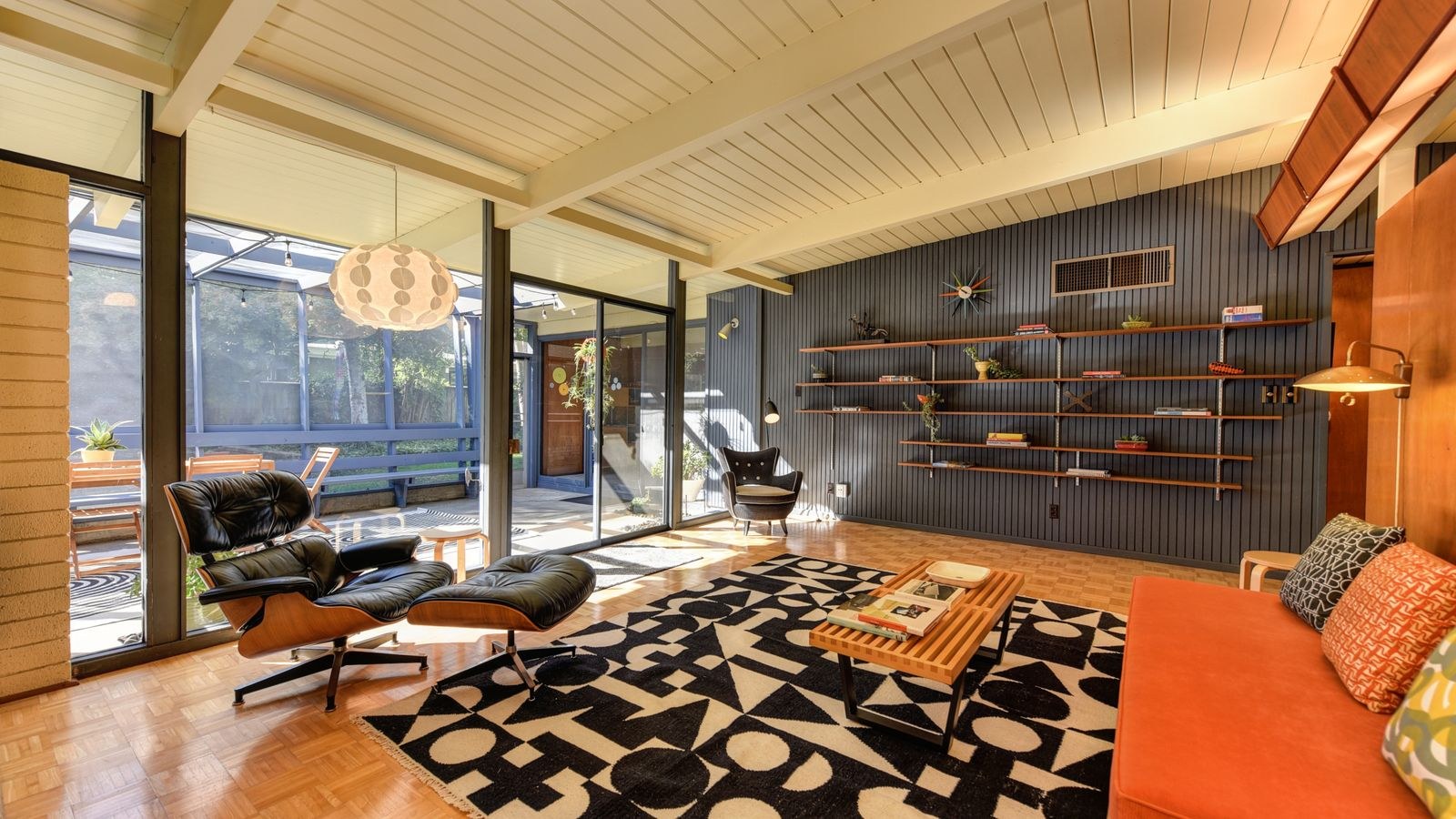
Mid-century modern grew out of postwar design that prized function, honest materials and clean geometry without coldness. It remains the most widely adopted style in contemporary homes because it works in small spaces and mixes easily with almost anything.
Defining Features
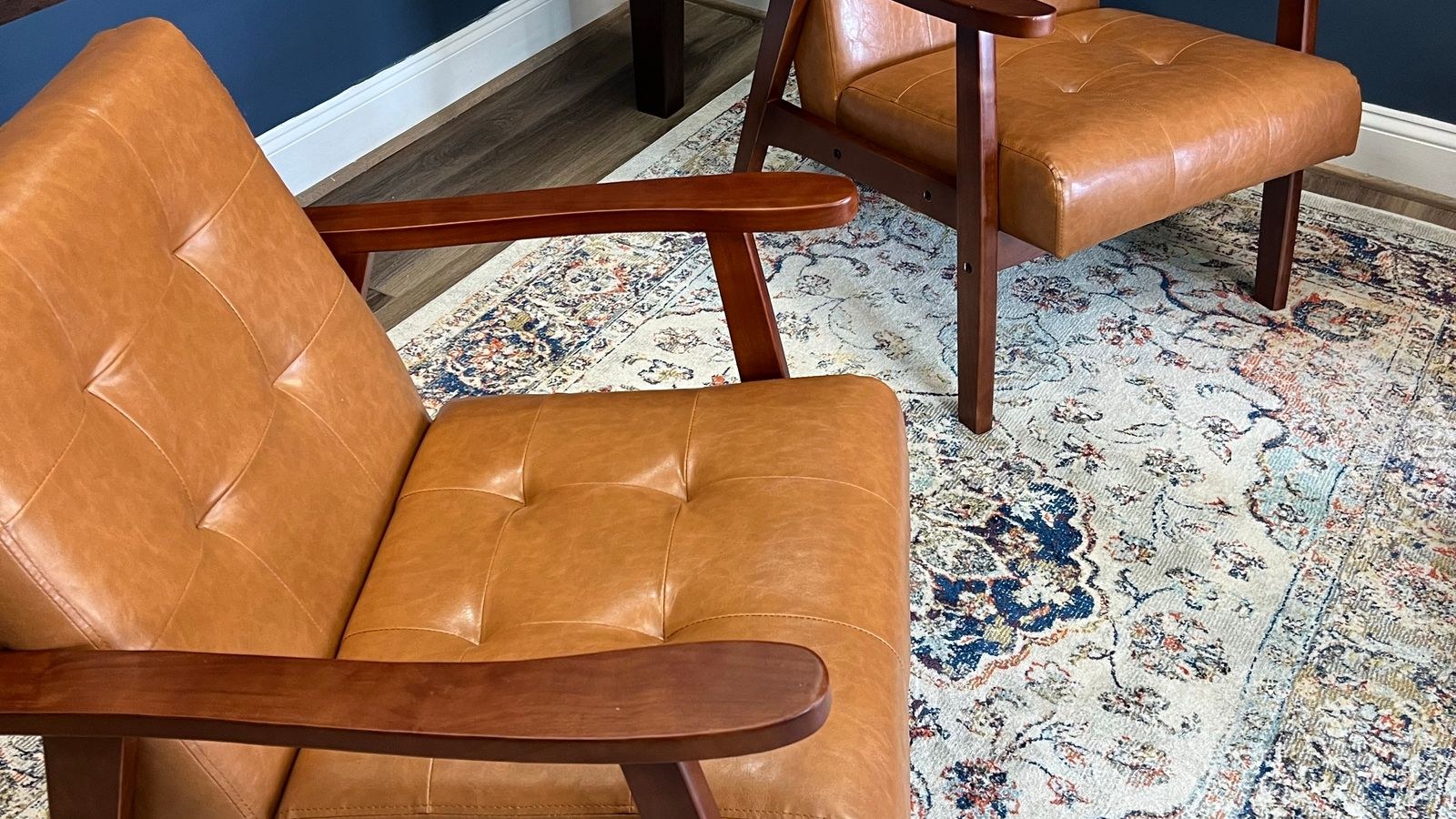
Look for tapered legs, often splayed slightly outward and left as exposed wood. Silhouettes are low and horizontal, with thin arms and tight cushions rather than deep pillowy seating. Wood is warm and mid-toned, typically walnut, teak or oak, with a satin rather than glossy finish. Upholstery tends toward tweed, boucle or tight woven fabric in mustard, olive, burnt orange, teal or muted grey. Case goods sit on legs rather than on the floor, which is a large part of why the style feels light in small rooms.
Where It Works Best
Raised furniture shows more floor, so mid-century suits apartments and compact living rooms. It also mixes gracefully with plants, vintage finds and modern art. The pitfall is the theme-park version, where every piece is period-styled and the room reads like a set. Anchor with two or three genuine mid-century silhouettes and let the rest be neutral. Options with the correct proportions appear in our roundups of the best mid-century modern sofas and the best mid-century modern chairs.
Farmhouse and Modern Farmhouse
Farmhouse style descends from rural utility furniture: sturdy, repairable, made from what was available. Modern farmhouse keeps the warmth and texture while trimming the clutter and lightening the palette.
Defining Features
Silhouettes are generous and slightly casual. Sofas have rolled or track arms, deep seats, loose back cushions and often a slipcover in white, oatmeal, grey or natural linen. Legs are turned, blocky or hidden under a skirt rather than tapered. Wood is either painted white or left rough with visible grain and knots, and reclaimed or distressed finishes are common. Metals lean toward blackened iron and aged bronze. Color stays largely neutral with black accents, and pattern arrives through ticking stripes, buffalo check and simple florals.
Where It Works Best
Farmhouse rewards space and natural light. Deep, loose-cushion seating looks generous in a large room and cramped in a small one, so scale down carefully in an apartment. The style is the most family-forgiving of the four, because slipcovers wash and distressed wood absorbs new scratches invisibly. Its weakness is drift toward clutter: too many signs, jars and layered textiles and the effect tips into pastiche. Comparable seating with the right arm and skirt profiles is collected in our list of the best farmhouse sofas.
Modern and Contemporary
Modern is often used loosely, but in furniture terms it means clean geometry, unbroken planes and an absence of applied ornament. Contemporary is its moving sibling: whatever is current, which today borrows heavily from modern while allowing softer curves and richer texture.
Defining Features
Expect straight lines and low profiles, wide track arms or no arms at all, and platform or plinth bases that sit close to the floor. Materials skew toward smooth surfaces: lacquered or veneered panels, glass, polished or brushed metal, and stone. Upholstery is often solid, in charcoal, ivory, camel or deep neutral tones, with a smooth hand rather than a rustic texture. Detailing is minimal, and where a piece has visual interest it comes from proportion, an unusual seam line or a single sculptural curve.
Where It Works Best
Modern suits open plans and rooms with strong architecture, because uninterrupted forms let the space itself read clearly. In a room with little natural interest, the same furniture can feel flat, which is why texture through rugs, throws and lighting matters more here than in any other style. Contemporary softens that risk by allowing curved silhouettes and mixed materials. Compare the two through our roundups of the best modern sofas, the best contemporary sofas and the best modern chairs.
Minimalist and Scandinavian
Minimalism is less a look than a discipline: fewer objects, each chosen carefully, with empty space treated as a design element. Scandinavian style is its most livable form, adding pale wood and soft textiles so the restraint reads as calm rather than austere.
Furniture is light in visual weight, often on slim legs, with a near-monochrome palette of white, pale grey, natural oak or ash, and one muted accent. Storage is closed rather than open, because visible clutter undermines the whole premise. The most common failure is confusing minimalism with emptiness: a room stripped of texture feels unfinished, not serene. Layering wool, linen and wood keeps it warm.
Style Comparison at a Glance
- Legs: mid-century tapered and splayed, farmhouse turned or skirted, modern plinth or metal, minimalist slim and pale.
- Wood tone: mid-century warm walnut, farmhouse painted or distressed, modern dark or high-sheen veneer, minimalist pale oak and ash.
- Upholstery: mid-century tweed and boucle, farmhouse washable linen slipcover, modern smooth solid, minimalist natural undyed textiles.
- Color: mid-century saturated warm accents, farmhouse neutrals plus black, modern strong neutrals, minimalist near-white with one accent.
- Best for: mid-century small spaces, farmhouse large family rooms, modern open plans, minimalist rooms with good natural light.
Mixing Styles Without It Looking Random
Almost nobody lives in a single-style home, and the best rooms are usually blends. The trick is to keep two of the four variables consistent while varying the others. If you hold the color palette and the wood tone steady, you can mix a mid-century sofa with a farmhouse dining table and the room still reads as coherent. If you change everything at once, it reads as accumulation.
A workable ratio is roughly seventy percent dominant style and thirty percent secondary, with the dominant style carried by the largest pieces. Repeat any introduced element at least twice so it looks intentional: one black metal lamp is a stray, three black metal accents are a decision. Keep the sight lines simple by matching metal finishes within a room, and let one piece be the clear focal point rather than three competing for attention.
Choosing the Style That Fits Your Home
Start with what you cannot change. Low ceilings and small rooms favor the raised, light silhouettes of mid-century and Scandinavian. Large rooms with generous windows carry farmhouse scale comfortably. Strong architectural features, such as exposed structure or a dramatic window wall, are best served by modern restraint that does not compete.
Then consider how you live. Households with children and pets do better with farmhouse slipcovers or performance-fabric modern pieces than with pale minimalist textiles. If you enjoy rearranging and collecting, mid-century absorbs new objects easily. If visual quiet helps you think, minimalism is worth the discipline it demands. Finally, be honest about maintenance: distressed farmhouse wood hides wear, while high-gloss modern surfaces show every fingerprint.
Common Mistakes When Choosing a Style
The first is buying a matched set, which produces a showroom effect with no personality and no flexibility. The second is copying a photograph without adjusting for room scale, so generous farmhouse seating ends up blocking a small living room. The third is mixing four styles at once with no shared palette or material, which leaves a room feeling unresolved. The fourth is ignoring lighting, since color and wood tone shift dramatically under different bulbs and a carefully chosen palette can be ruined by cool white light. The last is treating trend as style: a look that dates fast is expensive in furniture terms, so commit trends to cushions and art rather than to the sofa.
Frequently Asked Questions
What is the difference between modern and contemporary?
Modern refers to a specific design language of clean geometry, flat planes and minimal ornament. Contemporary means whatever is current, so it shifts over time and today blends modern lines with softer curves and richer textures.
Can I mix mid-century and farmhouse?
Yes, and it is one of the more successful pairings. Hold the wood tones and color palette consistent, let one style dominate the large pieces, and repeat any borrowed element at least twice so it reads as a choice.
Which style works best in a small apartment?
Mid-century modern and Scandinavian both raise furniture on legs and keep silhouettes low and slim, which shows more floor and wall and makes a compact room feel larger. Deep farmhouse seating is the hardest to scale down.
Is minimalism just having less furniture?
No. Minimalism removes visual noise but keeps texture and warmth through natural materials and layered textiles. A room with too little of both feels unfinished rather than calm, which is the most common misreading of the style.
How do I make a room look intentional on a budget?
Fix the palette first, since paint and textiles are cheap and unify mismatched pieces instantly. Then replace the largest item with one that matches your chosen silhouette, and let smaller existing pieces stay until they can be upgraded.
Final Thoughts
Interior design styles are shortcuts, not constraints. Learn to read silhouette, material, color and ornament level, and you can identify what you are drawn to and buy accordingly instead of accumulating pieces that never quite agree. Mid-century suits compact rooms and mixes generously, farmhouse rewards space and family life, modern flatters strong architecture, and minimalism trades objects for calm. Pick a dominant direction for the largest pieces, keep the palette steady, and let a secondary style supply the personality. That approach produces a room that still feels right in 2026 and stays flexible as your taste keeps evolving.