Owen Bradley
 Every yard lighting project eventually reaches the same fork in the road. On one side sits a low-voltage system: a transformer wired to the house, buried cable, and fixtures you place exactly where you want them. On the other sits solar, where each light is a self-contained unit you push into the ground in about ten seconds. The marketing for both is enthusiastic and neither side tells you where its choice falls apart. This comparison of low voltage vs solar lighting looks at the honest trade-offs in brightness, runtime, installation labour, reliability and long-term cost, so that by the time you place an order in 2026 you already know which system your particular yard can actually support.
How Each System Actually Works
A low-voltage system starts with a transformer mounted near an outdoor outlet. It steps household 120V down to 12V, which is safe enough that the cable can be buried at shallow depth without conduit in most residential codes. From there a main cable runs out into the landscape and fixtures tap into it with pierce connectors or waterproof splices. The transformer holds the timer or photocell, so the whole system switches together.
A solar fixture contains everything in one body: a photovoltaic panel on top, a rechargeable lithium or NiMH cell inside, a small LED, and a light sensor that switches the LED on when the panel stops producing. There is no wiring at all, no transformer, and no shared control. Each light lives or dies on its own.
That structural difference drives every practical distinction between them. Low voltage centralises power and control at the cost of installation labour. Solar distributes power and control at the cost of consistency.
Brightness: The Gap Is Larger Than Listings Suggest
This is where the two systems separate most sharply. A typical solar path light emits somewhere between 5 and 30 lumens. That is enough to mark the edge of a walkway as a visible glow, and it is genuinely pleasant, but it does not light the path itself. A low-voltage path light commonly runs 60 to 200 lumens, and a low-voltage spotlight aimed at a tree can deliver 300 to 700 lumens with a controlled beam.
The practical consequence: if you want to see the ground you are walking on, uplight a tree, wash a wall, or make a house number readable from the street, low voltage is not merely better, it is the only option that works. If you want to trace the shape of a bed or suggest the line of a walk, solar is entirely adequate and often looks more delicate.
Solar brightness also varies through the night. Most units start at full output and taper as the battery drains, so a light that looks convincing at 8pm may be a faint ember by 2am. Low voltage holds constant output until you switch it off. For projects where the light has to do real work, the fixtures in our roundup of the best landscaping lights illustrate the output range you get once you commit to wired power.
Beam Control Matters as Much as Lumens
A solar light almost always throws a soft, uncontrolled pool straight down. Low-voltage fixtures come in defined beam angles, from a 15-degree spot for a tall trunk to a 60-degree flood for a wide hedge, and many accept glare shields and lens filters. This is why professionally lit yards look composed rather than dotted. You cannot achieve that layering with fixtures that have no aiming control.
Runtime, Weather and the Shade Problem
Low voltage runs as long as you tell it to. Set the transformer for dusk-to-dawn or dusk-plus-six-hours and it behaves identically in June and January.
Solar depends on the day that just happened. A quality unit needs six to eight hours of direct sun to fully charge and will then run six to ten hours. Reduce that to three hours of weak winter sun filtered through cloud and runtime may drop to two hours or the light may not come on at all. Three overcast days in a row will flatten a marginal installation.
Shade is the deciding factor most buyers underestimate. Panels need direct light, not ambient brightness. A fixture under a tree canopy, on the north side of a fence, or shaded by the house for half the afternoon will chronically undercharge, and chronic undercharging kills the battery within a season or two. If shade is unavoidable but you still want to go solar, look specifically at units with oversized panels or remote panels on a cable, like those covered in the best solar lights for shaded areas. In genuinely sunny, open positions, the standard designs in the best solar path lights perform well enough that the wiring saved is a real win.
Installation Work Compared
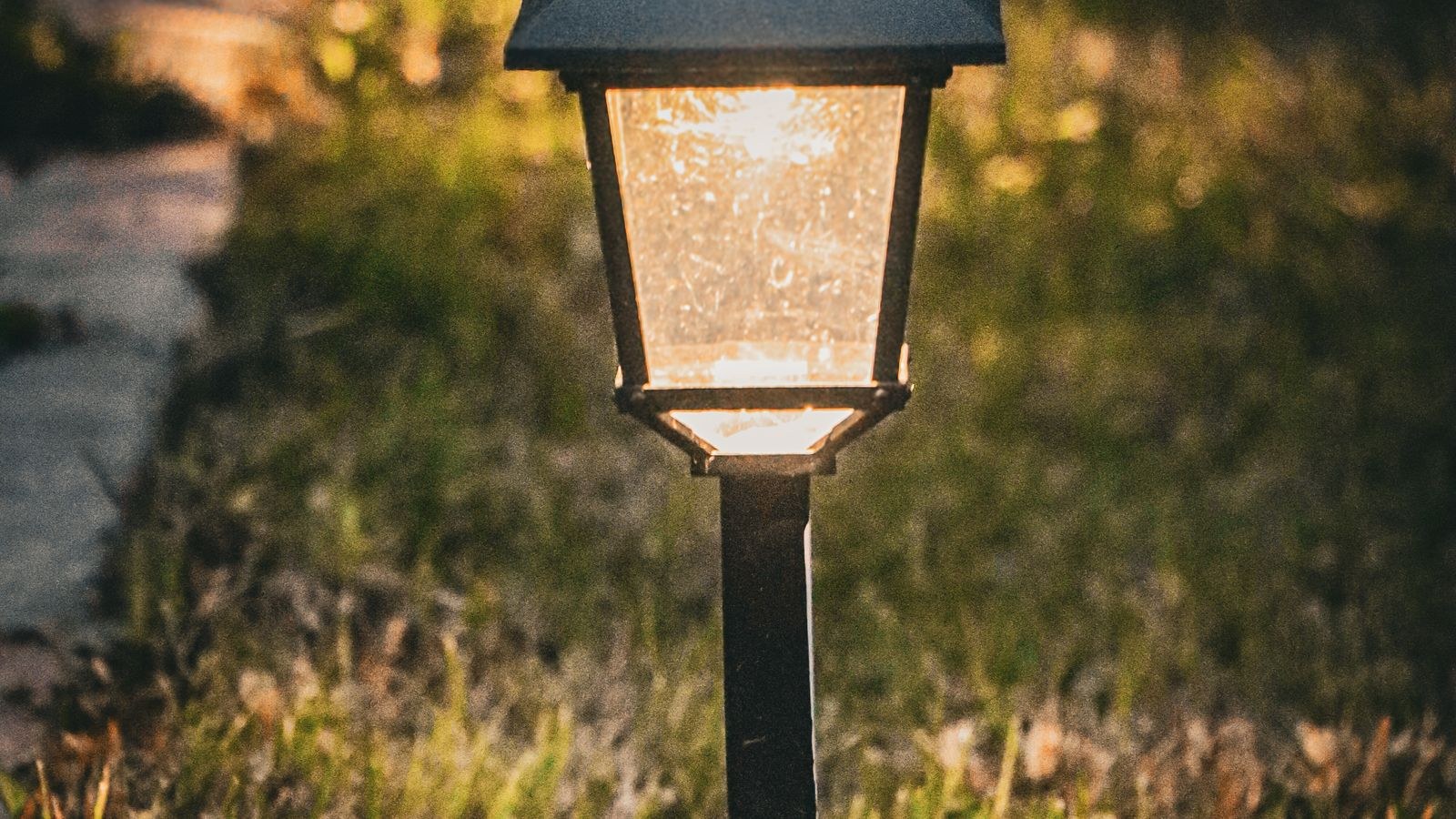
Solar installation is a single step. Assemble the stake, push it into soft ground, leave it in the sun for two days before judging it. A ten-fixture solar path takes under an hour and requires no tools beyond a trowel for hard soil.
Low voltage is a genuine afternoon project, sometimes a weekend. The sequence is: mount the transformer near a GFCI outlet, lay the cable along the route on top of the ground, connect and position all fixtures, run the system after dark and adjust aiming, then finally bury the cable in a shallow trench a few inches deep. The one step people skip and regret is running it live before burying; aiming a spotlight in daylight is guesswork.
The technical points that catch people out are cable gauge and voltage drop. A long run on thin 16-gauge cable loses voltage along its length, so the last fixture on a 150-foot run can be visibly dimmer than the first. Use 12-gauge for main runs of any length, keep individual runs under about 100 feet where possible, and consider a hub layout where several short runs radiate from the transformer instead of one long daisy chain. Size the transformer for no more than 80 percent of its rated wattage so there is headroom to add fixtures later.
Digging, Roots and Irrigation
Before trenching anywhere, call the national utility locate service. Low-voltage cable is shallow, but shovels are not, and irrigation lines and sprinkler wiring sit at exactly the depth you will be digging. A flat spade slit rather than an open trench is enough for 12V cable, and it heals over in a week.
Reliability and Maintenance
Solar’s weak point is the battery. Rechargeable cells lose capacity every cycle and typically need replacement every one to two years. Many budget fixtures seal the battery in, which turns a $4 maintenance item into a whole-fixture replacement. Panels also haze over from UV and dust, and a hazy panel charges poorly, so an annual wipe with a damp cloth and occasional plastic polish materially extends life. Stakes heave in freeze-thaw cycles and need straightening each spring.
Low voltage’s weak points are connections and cable damage. Pierce connectors corrode where moisture reaches the copper, which is why weatherproof gel-filled splices are worth the small extra cost. Aerating, edging and digging cut buried cable, so photograph the cable route before you bury it. Beyond that there is very little to do; integrated LED fixtures routinely last a decade, and brass or copper bodies simply develop a patina.
Cost Over Five Years
Solar wins decisively on day one. Ten decent solar path lights might cost $60 to $150 with no transformer, no cable and no labour.
Low voltage front-loads the spend. A 100-watt transformer runs $60 to $150, 100 feet of 12-gauge cable adds $40 to $80, and quality fixtures cost $25 to $80 each. A ten-fixture path plus three spotlights realistically lands between $500 and $900 in parts if you install it yourself, and several times that with a contractor.
The five-year picture narrows. Solar sets bought at the cheap end are frequently replaced twice in that window, plus battery swaps, while a low-voltage system consumes only electricity, which is trivial for LEDs. Running cost is roughly $3 to $8 per year for a modest LED system on a dusk-to-dawn schedule. If your lights are a permanent feature of the property, low voltage usually costs less by year four or five and looks better throughout.
When to Choose Each System
Choose solar when the area gets unobstructed sun for most of the day, when you are renting or unsure of the final layout, when the lights are decorative rather than functional, when there is no practical way to reach an outdoor outlet, or when you want lighting on a detached fence line, dock or shed with no power.
Choose low voltage when you want consistent brightness every night regardless of weather, when you need to uplight trees or architecture, when the lighting has a safety role on steps and grade changes, when you want everything on one schedule, or when this is a long-term investment in a property you own.
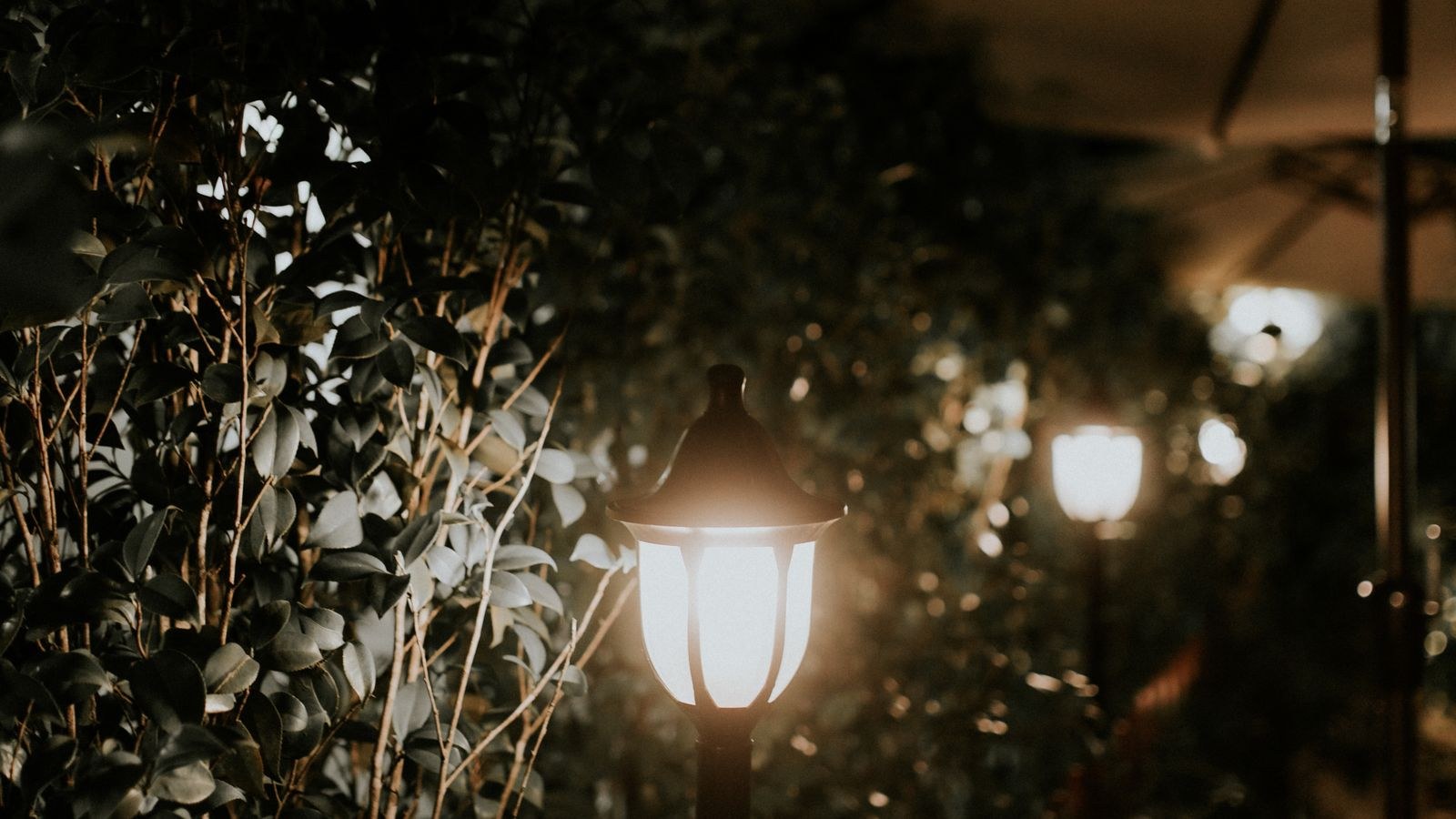
Choose both, which is what most yards end up with in practice. Run low voltage for the front entry, steps and feature trees where performance matters, and use solar for the back fence line, a distant bed or a side path where trenching cable would be absurd. Mixing brands is fine as long as you keep the colour temperature consistent; the fixtures in the best path lights comparison include both types so you can match the look across a hybrid installation.
Common Mistakes to Avoid
- Buying solar for a shaded position and blaming the product when it fails by November.
- Undersizing low-voltage cable, then wondering why the far fixtures look dim and yellow.
- Loading a transformer to 100 percent of its rating with no room to expand.
- Mixing colour temperatures, so half the yard glows amber and half looks blue-white.
- Over-lighting. A yard with too many bright points looks like a car park; restraint reads as expensive.
- Burying cable before testing the system after dark.
- Choosing solar fixtures with sealed, non-replaceable batteries.
Frequently Asked Questions
Can I convert existing solar lights to low voltage?
No. The fixtures are built around a battery and a tiny LED driver, and there is no practical way to feed them 12V. Converting means replacing the fixtures entirely, though you can often reuse the layout and the holes.
Do I need an electrician for low-voltage lighting?
Only if you need a new outdoor GFCI outlet installed. Everything downstream of the transformer is 12V and is designed for homeowner installation, which is precisely why the category exists.
How long do solar landscape lights last?
The LED itself lasts many years, but the battery typically needs replacing after one to two years and the plastic lens hazes over time. Budget fixtures often reach end of life in two to three seasons; premium ones with replaceable cells and glass lenses last considerably longer.
How many fixtures can one transformer run?
Add the wattage of every fixture and keep the total under 80 percent of the transformer’s rating. With modern LED fixtures at 3 to 7 watts each, a 100-watt transformer comfortably runs a dozen or more lights.
Will solar lights work in winter?
They work, but poorly. Short days, low sun angles, cold-reduced battery capacity and snow on panels combine to cut runtime dramatically. Brush snow off the panels and expect a few hours at best rather than all night.
Final Thoughts
The choice between low voltage and solar is really a choice about what the lighting has to accomplish. If it needs to make a space safe and visually composed every night of the year, buried 12V cable and aimable fixtures are worth the afternoon of labour and the higher upfront cost. If it needs to add a gentle sense of shape to a sunny garden with zero installation, solar does that job charmingly and costs almost nothing to try. Audit the sun exposure of each spot honestly before you commit, be realistic about how bright you actually need each fixture to be, and do not be afraid to run both systems in the same yard where each one plays to its strength.