Owen Bradley
 If your eyes ache by mid-afternoon, if certain rooms give you headaches, or if reading under a particular lamp feels like hard work, the bulb is a likely culprit. Light quality is not one number. It is a combination of flicker, colour temperature, colour rendering, blue light content, glare and raw brightness, and a bulb can score well on the one printed on the box while failing badly on the ones that are not. This guide explains what actually causes visual fatigue, which specifications predict a comfortable bulb, and how to light each room for eyes that get tired easily.
What Actually Causes Eye Strain from Lighting
Lighting-related eye strain has a small number of repeatable causes. Identifying which one applies to you narrows the shopping list immediately.
- Flicker: rapid fluctuation in output that you may not consciously see but your visual system still processes. The leading cause of lighting headaches.
- Glare: a bright source visible directly in your field of view, or a bright reflection off a screen or glossy surface.
- Poor colour rendering: light that reproduces colours inaccurately forces the eye to work harder to resolve detail and contrast.
- Excessive contrast: a bright pool of light in an otherwise dark room means your pupils constantly readjust.
- Wrong intensity: both too dim, which strains focus, and too bright, which causes squinting and aversion.
- Blue-heavy light at the wrong time: less an eye strain issue than a sleep issue, but it contributes to the tired-eye feeling in the evening.
Most people assume brightness is the problem, when flicker and glare account for far more complaints. Fixing those two often eliminates the symptom entirely.
Flicker: The Specification Nobody Prints
All mains-powered lighting fluctuates at some level, because alternating current itself fluctuates. The question is how much, and how fast. Flicker is described by two measures: percent flicker, which is the depth of the fluctuation, and flicker frequency, which is how many times per second it happens.
Low percent flicker is what you want. Under about 10 percent is generally considered comfortable and under 5 percent is excellent. Frequency matters too: fluctuation at low frequencies is far more disruptive than the same depth at high frequency, which is why cheap dimmed LEDs often feel worse than the same bulb at full output.
Manufacturers rarely publish these figures, so use proxies. Bulbs advertised as flicker-free, or specifying a high-frequency driver, are usually genuine. A practical field test: point a phone camera at the lit bulb and slowly pan; visible banding across the frame indicates significant flicker. Bulbs selected specifically for visual comfort are compared in our best light bulbs for sensitive eyes guide.
Colour Rendering Index and Why 90+ Matters
The colour rendering index describes how faithfully a light source reproduces colours compared to natural daylight, on a scale ending at 100. Budget LEDs typically sit around 80, which is adequate for a corridor and mediocre everywhere else.
For eye comfort, aim for CRI 90 or above. Higher CRI light contains a fuller spread of wavelengths, which improves the contrast between similar shades, and better contrast means less effort spent resolving edges and text. The difference is most obvious when reading printed material, doing detailed work, or looking at skin tones.
Look also for the R9 value where it is published. R9 measures deep red rendering, which most cheap LEDs handle badly, and a bulb with high overall CRI but low R9 will still make warm colours look flat. General options with good rendering are covered in the best light bulbs for eyes comparison.
Colour Temperature by Time of Day
Colour temperature does not directly cause eye strain, but it strongly affects comfort and alertness. Think in terms of when a room is used rather than what the room is called.
- 2200K to 2700K: very warm, amber. Evening living rooms, bedrooms, hallways used at night.
- 3000K: warm white. The comfortable general-purpose default for most homes.
- 4000K: neutral. Kitchens, bathrooms, workshops, and daytime work areas.
- 5000K: daylight. Task-specific use only, such as detailed craft work, and rarely comfortable as whole-room lighting.
Tunable bulbs that shift from cool in the morning to warm in the evening suit people who work from home and notice the difference. If you are choosing one fixed temperature for a shared living space, 3000K is the safest answer. Warmer options are compared in the best warm light bulbs roundup, and full-spectrum daytime options in the best natural light bulbs guide.
Glare Control: Diffusion and Placement
A bulb that is comfortable inside a shade can be painful bare. Frosted or opal bulbs spread the emitting surface across the whole envelope, dropping the peak luminance dramatically compared with a clear bulb, where the light comes from a handful of tiny, extremely bright diodes.
Three practical rules cut glare:
- Use frosted or opal envelopes anywhere the bulb is visible from a seated position.
- Never place a bare bulb in your direct sightline. Shades, diffusers and deep-set fittings exist for this reason.
- Bounce light off ceilings and walls where you can. Indirect light produces far less glare for the same room brightness.
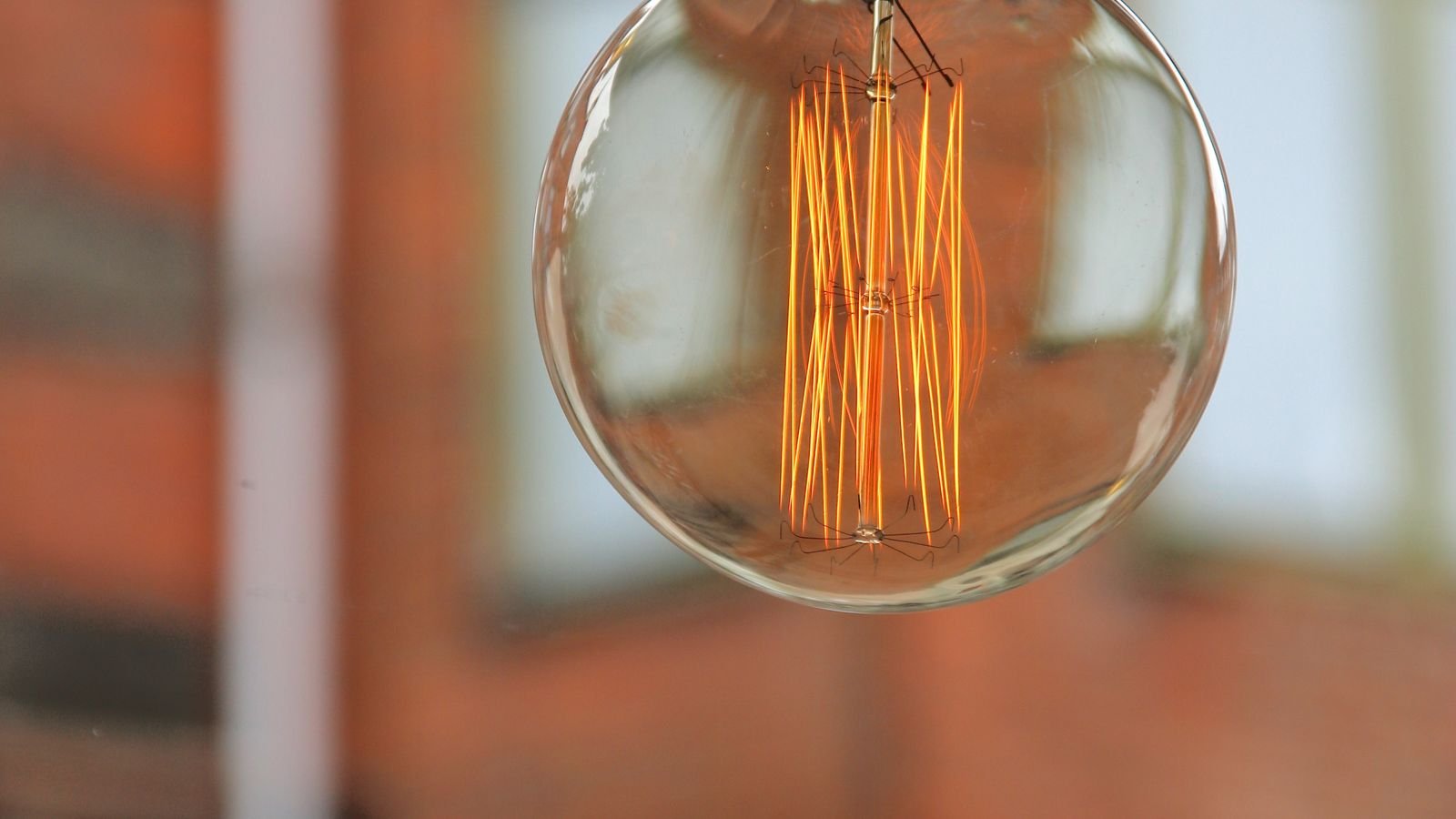
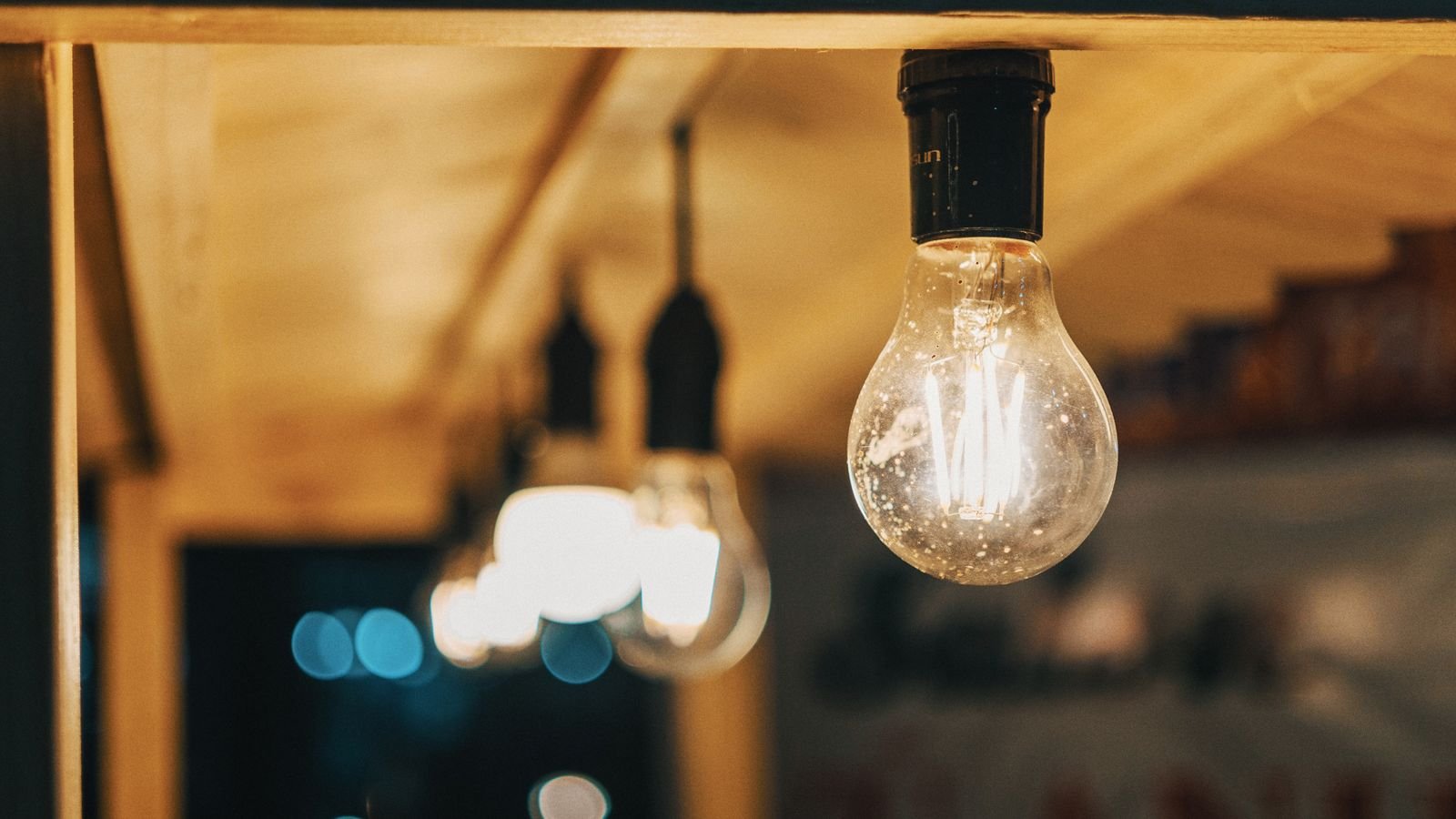
Filament-style decorative bulbs are the worst offenders. They are designed to be looked at, with visible bright filaments, and they are a poor choice for anyone with light sensitivity regardless of how good they look switched off.
Brightness and Balance Across the Room
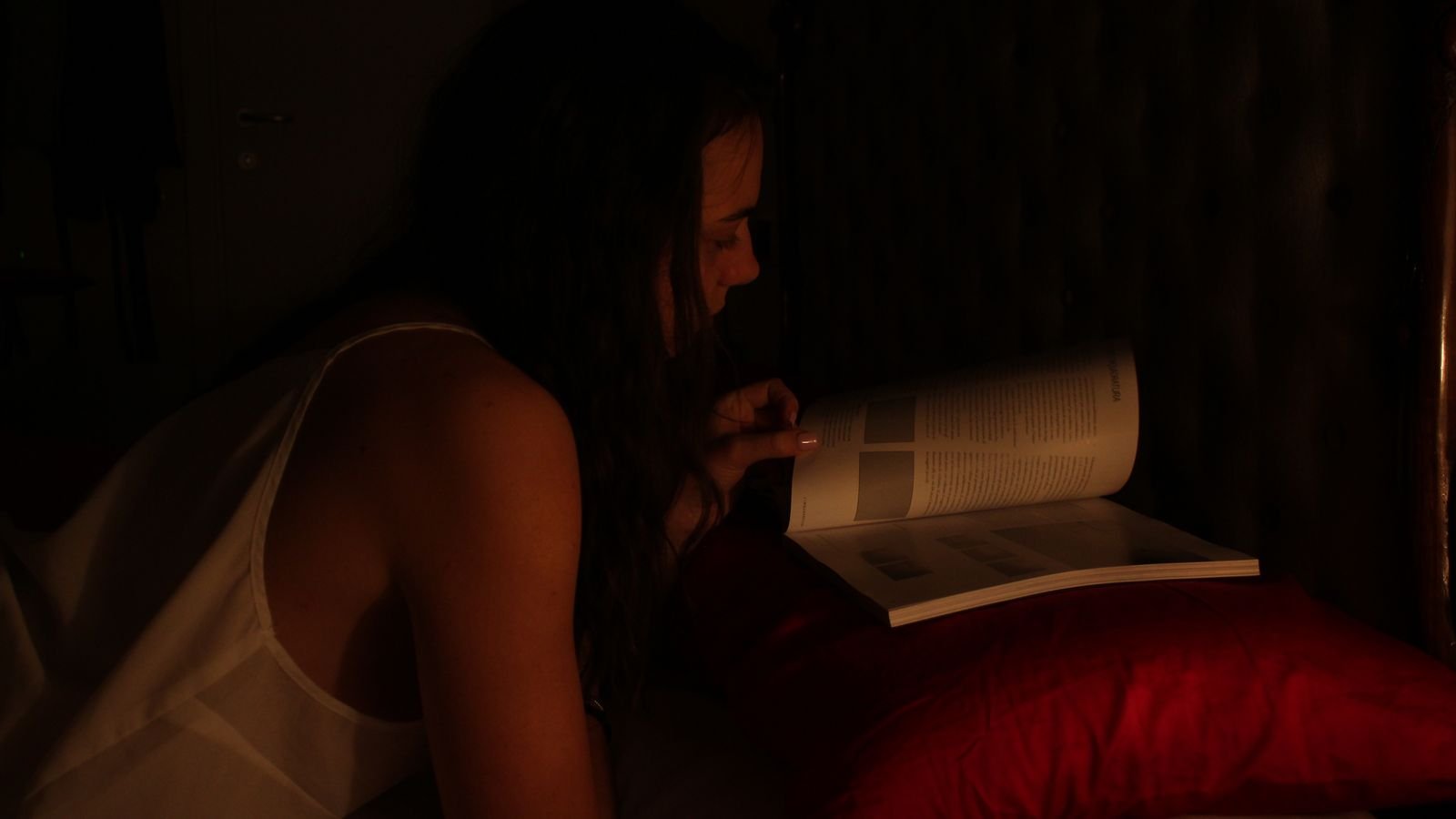
Eye strain often comes from contrast rather than absolute level. A single bright lamp in a dark room forces constant pupil adjustment as your gaze moves between the lit page and the dark surroundings. Adding a second, dimmer light source to lift the background usually feels better than making the primary lamp brighter.
As rough targets, a living room typically wants around 10 to 20 lumens per square foot for ambient light, a kitchen 30 to 40, and a dedicated task area more still, delivered locally rather than from the ceiling. A standard-shape bulb producing 800 lumens replaces the old sixty watt incandescent; 1100 lumens is a step up; 1600 lumens is bright enough that it needs a diffuser in most rooms.
Room-by-Room Recommendations
- Home office: 4000K, CRI 90+, low flicker, with a desk lamp positioned to the side of the screen rather than behind it. See the best light bulbs for home office setups for options that hold up over a full working day.
- Reading chair: 2700K to 3000K, a directional lamp aimed at the page from over your shoulder, plus low ambient light behind you. The best light bulbs for reading guide covers output and beam considerations.
- Kitchen: 3000K to 4000K, high CRI so food colour reads accurately, well diffused under cabinets.
- Bedroom: 2200K to 2700K, dimmable, with nothing bright in the eyeline from the bed.
- Bathroom: 3000K to 4000K, CRI 90+, lit from both sides of the mirror rather than overhead.
Dimming Without Making Flicker Worse
Dimming is genuinely useful for eye comfort, because it lets you match light level to time of day. Done badly, it makes things worse. Many LED bulbs flicker much more at low output than at full brightness, because the dimmer chops the waveform and a basic driver passes that straight through.
To dim comfortably, use bulbs explicitly rated as dimmable, pair them with an LED-compatible dimmer rather than an old resistive one, keep the total load within the dimmer’s stated range, and avoid mixing different bulb models on one circuit. If a dimmed bulb buzzes, that noise is a symptom of the same electrical behaviour causing the flicker.
Budget Tiers
- Entry level: standard LED bulbs with CRI around 80 and no published flicker data. Acceptable in corridors, closets and outdoor fittings where nobody lingers.
- Mid range: CRI 90+ bulbs with a frosted envelope and a genuine dimmable rating. This tier resolves most complaints and is where the money is best spent.
- Premium: flicker-free high-frequency drivers, CRI 95+ with strong R9, tunable white, and warm-dim behaviour that shifts amber as it dims. Worth it in a home office or for anyone with diagnosed light sensitivity or migraines.
Frequently Asked Questions
Do LED bulbs cause more eye strain than incandescent?
Not inherently. Incandescent bulbs flicker very little because the filament stays hot, which is why they felt comfortable. A well-made LED with a good driver matches that; a cheap one does not.
Is blue light from bulbs damaging?
Household lighting sits far below any level associated with damage. The realistic concern is sleep disruption from cool light in the evening, which warmer bulbs at night solve.
Does a higher CRI bulb look dimmer?
Slightly, for the same wattage, because producing a fuller spectrum costs efficiency. Compare bulbs by lumens rather than watts and the difference disappears.
How can I tell if a bulb flickers before buying?
Look for a published flicker percentage or a flicker-free claim. Once installed, pan a phone camera across the lit bulb and watch for rolling bands on the screen.
Should every bulb in the house be the same colour temperature?
Not necessarily, but every bulb visible within one sightline should be. Mixed temperatures in a single room look wrong and add unnecessary visual contrast.
Final Thoughts
Comfortable lighting is mostly about avoiding three things: flicker, glare and harsh contrast. Buy bulbs with CRI 90 or above and a credible flicker-free claim, use frosted envelopes wherever the bulb is visible, keep colour temperature warm in the evening and neutral during the day, and add a second soft light source rather than turning the main one up. Those changes cost little, apply to every room in the house, and usually make more difference than any single product upgrade you could make in 2026.