Owen Bradley
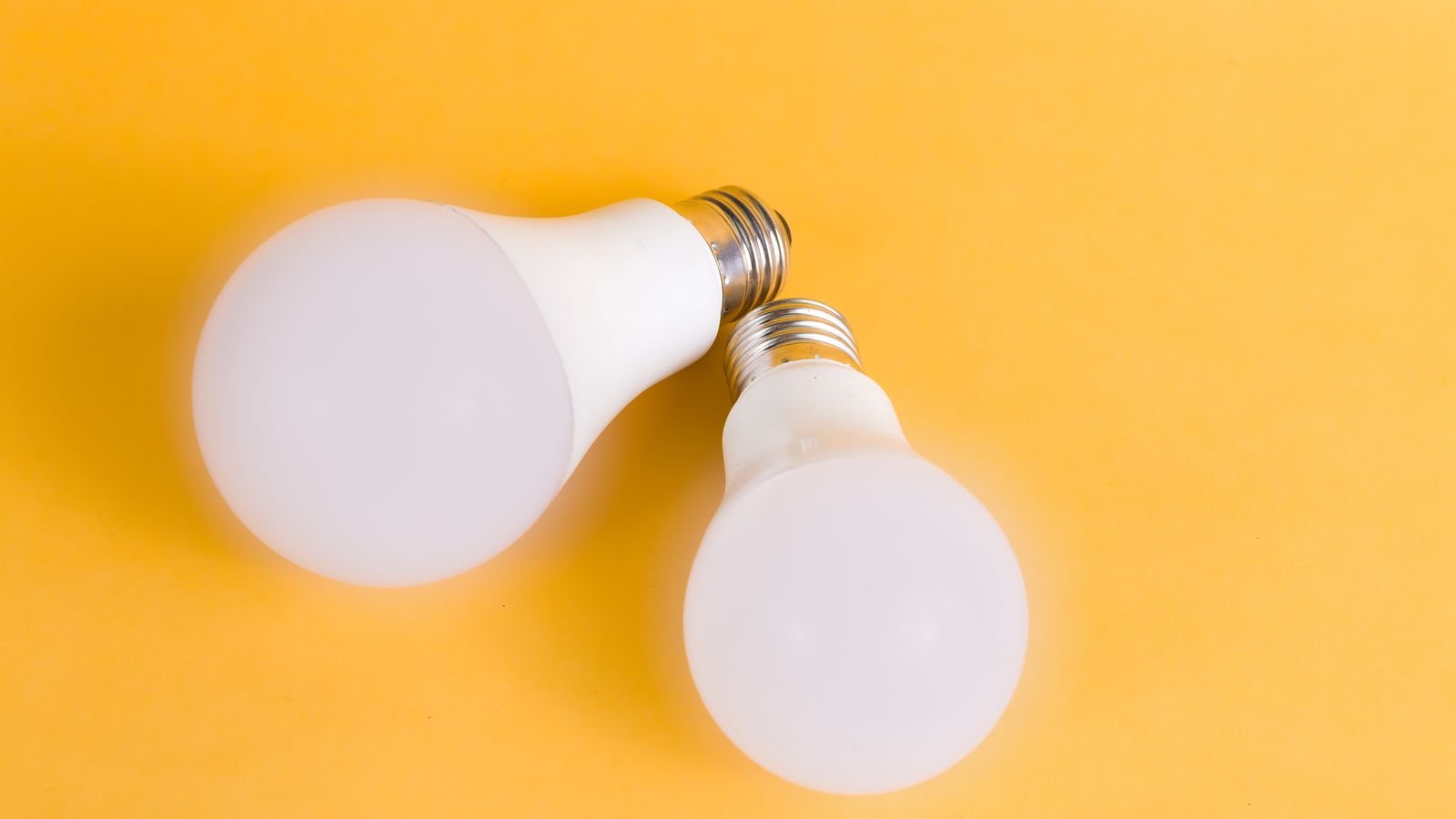
 Swap an incandescent bulb for an LED and the light usually looks fine. Put that same LED on the dimmer that has been in the wall for twenty years and things get strange: the bulb flickers at low settings, hums audibly, refuses to go below half brightness, drops out entirely near the bottom of the slider, or glows faintly when it should be off. None of that means the bulb is faulty. It means the dimmer and the bulb are speaking different languages. This guide explains why LED dimming misbehaves, how to read compatibility information properly, and how to build a combination that dims smoothly and silently in 2026.
Why LEDs and Old Dimmers Disagree
An incandescent bulb is a resistive load. It is essentially a wire that glows, and it draws a large, steady, predictable current. Old dimmers work by chopping the alternating current waveform, cutting off part of each cycle so less energy reaches the filament. The filament’s thermal inertia smooths the chopped waveform into a steady glow, and the dimmer’s internal electronics have plenty of current to power themselves.
An LED is nothing like that. It is a semiconductor fed by a small electronic driver that converts mains voltage into a regulated low-voltage supply. That driver expects a clean input. When a phase-cutting dimmer hands it a chopped waveform, the driver has to interpret a signal it was not designed for. Worse, an LED that replaces a 60W incandescent may draw only 8 or 9 watts, which is often below the minimum load a legacy dimmer needs to operate stably.
Those two mismatches, waveform and minimum load, cause nearly every symptom people experience.
The Symptoms and What They Actually Mean
- Flicker at low settings. The driver is losing stable input as the dimmer cuts more of the waveform.
- Buzzing or humming from the bulb. Components inside the driver are vibrating at the switching frequency. Usually a waveform mismatch.
- Buzzing from the wall switch. The dimmer itself is struggling, often with an inductive or badly matched load.
- Dead travel at the bottom of the slider. The bulb cuts out well above zero because the driver’s minimum operating threshold is reached early.
- Limited range at the top. Brightness barely changes across much of the slider, indicating a poor dimming curve match.
- Ghosting or faint glow when off. Leakage current, common with no-neutral dimmers, is enough to weakly illuminate an efficient LED.
- Drop-out and pop-back. The load is below the dimmer’s minimum, so it oscillates on and off.
Matching the symptom to the cause is usually enough to decide whether you need a new dimmer, different bulbs, or both.
Leading Edge Versus Trailing Edge Dimming
This is the single most useful concept to understand, and it explains most incompatibility.
Leading Edge
Also called TRIAC or forward phase dimming, this is the old technology found in almost every dimmer installed before LEDs became common. It cuts the beginning of each half cycle. It is robust, cheap, and handles high wattage, but the abrupt switching is electrically noisy and is the usual source of buzzing with LED drivers. Leading edge dimmers also typically require a substantial minimum load, often 25W to 40W, which a couple of LED bulbs will never reach.
Trailing Edge
Also called reverse phase dimming, this cuts the end of each half cycle with a much softer transition. It is quieter, produces smoother low-end dimming, and works far better with the electronic drivers inside LED bulbs. Minimum loads are typically much lower, sometimes just a few watts. For LED lighting, trailing edge is the technology you want in almost every case.
Universal and LED-Specific Dimmers
Modern LED dimmers frequently detect the load type automatically or offer a selectable mode, plus an adjustable low-end trim that lets you set the minimum brightness where the bulbs remain stable. That trim adjustment is genuinely the difference between a system that flickers and one that does not, and it is the feature to prioritise. Comparisons of the best led dimmer switches generally note which models include adjustable low-end trim and selectable dimming modes.
The Bulb Side of the Equation
Not every LED bulb dims, and the ones that do vary enormously in quality. Three things matter.
First, the bulb must be explicitly marked dimmable. A non-dimmable LED on a dimmer will flicker, buzz, or fail early, and no dimmer can fix it.
Second, driver quality determines the dimming range. Budget bulbs often dim only to 20 or 30 percent before cutting out, while better bulbs reach 5 percent or lower smoothly. Manufacturers who publish a minimum dimming percentage are generally the ones confident in it.
Third, consistency across the fixture matters. Mixing brands, colour temperatures, or production batches in one multi-bulb fixture produces visibly uneven dimming, because each driver has a slightly different curve. Buy all bulbs for a fixture at once, from one batch. Working through the best light bulbs for dimmer switches is the fastest way to identify bulbs with published dimming ranges rather than guessing from packaging.
Minimum and Maximum Load
Every dimmer states a load range, and both ends matter. Add up the actual wattage of your LEDs, not the incandescent equivalent printed on the box. Six bulbs marked as 60W equivalent might total only 54 actual watts, which sounds comfortable until you read that your old dimmer needs 40W minimum and your new one is rated 250W maximum for LED loads.
The maximum figure also deserves attention. Many dimmers carry a high rating for incandescent loads and a much lower one for LED, sometimes a fifth as much, because LED drivers present inrush current and capacitive behaviour that stress the switching components. Read the LED-specific rating, not the headline number.
If your total load falls below the minimum, you have three options: add a bulb, switch to a dimmer with a lower minimum, or fit a load-correction device, though the first two are preferable.
Wiring Considerations
The Neutral Wire
Smart and many high-quality LED dimmers need a neutral conductor to power their electronics continuously. Without one, the dimmer draws its power through the load, and that trickle is what causes ghost glow on efficient LEDs. Check your box for a bundle of capped white conductors before buying. No-neutral LED dimmers exist and have improved considerably, but they remain more prone to compatibility quirks.
Three-Way and Multi-Location Circuits
If a light is switched from two places, you need a dimmer explicitly rated for three-way use plus a matching companion or remote at the other location. Standard three-way mechanical switches paired with an LED dimmer frequently produce erratic behaviour.
Circuit Noise
Long runs, shared circuits with motors, and older wiring can all introduce noise that aggravates flicker. If a combination works perfectly on one circuit and misbehaves on another, the wiring rather than the components is the likely culprit.
Compatibility Lists Are Worth Reading
Reputable dimmer manufacturers publish tested compatibility tables listing specific bulb models, the maximum number supported, and observed dimming range. These documents are unglamorous and enormously useful, because they represent actual bench testing rather than marketing claims.
The practical workflow is straightforward. Decide on your bulb first, since it determines the light quality you live with. Find that bulb on a dimmer manufacturer’s compatibility list. Buy the dimmer that lists it. This order of operations resolves the majority of problems before they occur, and it costs nothing but ten minutes. Browsing the wider best dimmers for led bulbs field alongside those tables shows which brands invest in testing.
Smart Dimmers and LED Loads
Connected dimmers add scheduling, voice control, and scene recall, and the better ones also include the low-end trim and mode selection that fix compatibility problems. They almost always require a neutral, which is worth verifying before purchase.
One caution: a smart dimmer combined with a smart bulb is usually a mistake. The dimmer chops power to a bulb that expects full voltage to run its own radio, and the two fight. Choose one or the other. Use a smart dimmer with quality dimmable non-smart bulbs, or a plain switch left permanently on with smart bulbs. The best smart dimmer switches comparisons generally make this distinction clear.
A Troubleshooting Sequence
- Confirm every bulb in the fixture is marked dimmable, and that all are the same model and batch.
- Add the actual wattages and check the total against the dimmer’s LED minimum and maximum.
- Identify whether the dimmer is leading or trailing edge; if it predates LED lighting, assume leading edge.
- If the dimmer has a low-end trim adjustment, set it just above the point where flicker begins.
- If it has selectable modes, try the alternative setting and observe across the full slider range.
- Test one known-compatible bulb alone to isolate whether the fault is the bulb or the dimmer.
- If ghosting persists, verify whether the dimmer requires a neutral and whether one is connected.
- Replace the dimmer with an LED-specific trailing edge model chosen from a compatibility list.
Working in that order avoids the common trap of buying three sets of bulbs when the dimmer was always the problem.
Frequently Asked Questions
Why do my LED bulbs flicker only at low brightness?
The driver is losing stable input as more of the waveform is cut away. A trailing edge dimmer with an adjustable low-end trim, set just above the flicker threshold, resolves this in most installations.
Can I use my existing dimmer with LED bulbs?
Sometimes, if the total LED wattage exceeds the dimmer’s minimum load and the bulbs tolerate leading edge dimming. Results are unpredictable, which is why LED-specific dimmers are the reliable answer.
Why do my LEDs glow faintly when switched off?
A small leakage current is passing through the load, typically because a no-neutral dimmer powers itself that way. Fitting a dimmer with a neutral connection, or a manufacturer-supplied bypass at the fixture, eliminates it.
Is it safe to mix LED brands on one dimmer?
It is electrically safe but visually poor. Different drivers dim on different curves, so mixed bulbs in one fixture reach different brightness levels at the same slider position and may flicker at different thresholds.
Do I need a special dimmer for smart bulbs?
No, the opposite. Smart bulbs need constant full power and should be on a plain switch or a smart switch that does not chop voltage. Pairing a smart bulb with a dimmer causes erratic behaviour and shortens bulb life.
Final Thoughts
Flicker and buzz are a compatibility problem, not a quality problem, and they are almost entirely preventable. Choose a dimmable bulb whose light you like, check it against a dimmer manufacturer’s tested compatibility list, and install a trailing edge or LED-specific dimmer with adjustable low-end trim and a proper neutral connection. Keep every bulb in a fixture identical, add up the real wattage rather than the equivalent, and never pair a dimmer with a smart bulb. Follow those rules and dimming becomes what it should be: a smooth, silent slider that goes all the way down.