Owen Bradley
 Almost nobody thinks twice about tossing an expired smoke alarm in the bin. It is small, it is plastic, and it has stopped working. The complication is that a large share of household alarms are ionisation types, and every one of those contains a tiny sealed source of americium-241, a radioactive material. The quantity is minute and poses no hazard while the unit is intact, but it is precisely why many jurisdictions treat these devices as regulated waste rather than ordinary rubbish. Add the lithium or alkaline backup battery and you have a device with two separate disposal considerations. This guide explains how to identify what you have and route it to the right place.
First, Identify Which Type You Have
Turn the alarm over and read the label. Ionisation units are legally required to carry a radiation trefoil symbol and text naming the isotope, usually reading “Contains radioactive material Am-241” along with an activity figure in microcuries or becquerels. Photoelectric units carry no such marking and typically say “photoelectric” outright.
Dual-sensor alarms contain both technologies and must be treated as ionisation for disposal purposes. Combination smoke and carbon monoxide units add an electrochemical CO cell, which is a separate small-battery-like component and pushes the device firmly into the electronic waste category regardless of sensor type. Our comparison of photoelectric vs ionization smoke alarms explains how each sensing method works and why the disposal route differs.
Record the model and manufacturer while the label is in front of you. Several of the disposal options below require that information, and it is far easier to note now than to hunt for later.
Why Ionisation Alarms Need Special Handling
The americium source sits inside a sealed metal chamber and emits alpha particles that cannot penetrate skin or the housing. Left intact, the device is entirely safe to handle, store and transport. The concern is what happens at scale in a landfill or, worse, in an incinerator, where crushing and burning can release the source material into ash and air. Regulators therefore prefer that these units are either returned to the manufacturer or routed through hazardous waste handling.
Two rules follow from this and both are absolute. Never open the alarm to remove the sensing chamber, and never attempt to separate or dismantle the source. Never put an ionisation alarm through a general incinerator waste stream. Beyond that, normal handling is fine: no gloves, no special container, no exposure concern.
Disposal Options, Best to Worst
- Manufacturer mail-back programme. This is the gold standard for ionisation alarms. Several major manufacturers accept their own expired units by post for a small fee or free of charge. Check the brand’s website for a returns address and any required form. Most ask you to remove the battery, pack the alarm securely, and label the parcel as containing a smoke detector.
- Municipal household hazardous waste collection. Nearly every council or county runs periodic HHW drop-off days or a permanent facility. Ionisation alarms are almost always accepted there. Call ahead or check the accepted-items list, because a few facilities exclude them and will redirect you to the manufacturer.
- Electronic waste recycler. Photoelectric alarms and combination smoke-CO units are straightforward e-waste. Certified recyclers recover the circuit board, plastics and metals. Some also accept ionisation units under a separate radioactive-materials licence, so ask specifically rather than assuming.
- Retailer take-back. A growing number of hardware and electrical retailers accept old alarms when you buy replacements. This is convenient because you are already at the shop with the new unit.
- Fire department or local authority collection. Some fire services collect expired alarms as part of community safety programmes. Availability varies enormously by region, so phone the non-emergency line before turning up.
- General waste, only if permitted. A few jurisdictions explicitly allow photoelectric alarms, and occasionally ionisation ones, in household rubbish. If that is genuinely the local rule, remove the battery first and put the unit in with regular waste rather than recycling, so it does not contaminate a materials stream.
Step-by-Step: Preparing an Alarm for Disposal
- Confirm the unit is truly expired. Check the manufacture date on the back. Ten years is the replacement point regardless of apparent function. An alarm at eight years with nuisance problems is also fair to retire.
- Remove it safely from the ceiling. Cut power at the breaker for hardwired units, twist the head off the base, unplug the harness, and cap any exposed conductors if a replacement is not going up immediately.
- Take out the backup battery. This is required by nearly every disposal programme. Batteries go to a battery recycling point, not into the same bag as the alarm. Alkaline, lithium and rechargeable cells all have their own collection streams.
- Read and photograph the label. Note the sensor type, model number, manufacturer and any radiation marking. You will need this when you phone the facility or fill in a mail-back form.
- Leave the housing sealed. Do not open, crush, drill or dismantle the unit, and do not remove stickers. The intact housing is what makes it safe to transport.
- Check your local rules. Search your council or county website for “smoke detector disposal” or call the waste line. Rules vary between neighbouring authorities more than people expect.
- Pack it for transport or post. A small box with the alarm wrapped in paper is sufficient. If posting, follow the manufacturer’s packaging instructions exactly and include any required paperwork.
- Deliver or post it, and keep the receipt. Some programmes issue confirmation. Landlords and property managers should retain that record as evidence of proper handling.
Handling the Batteries Separately
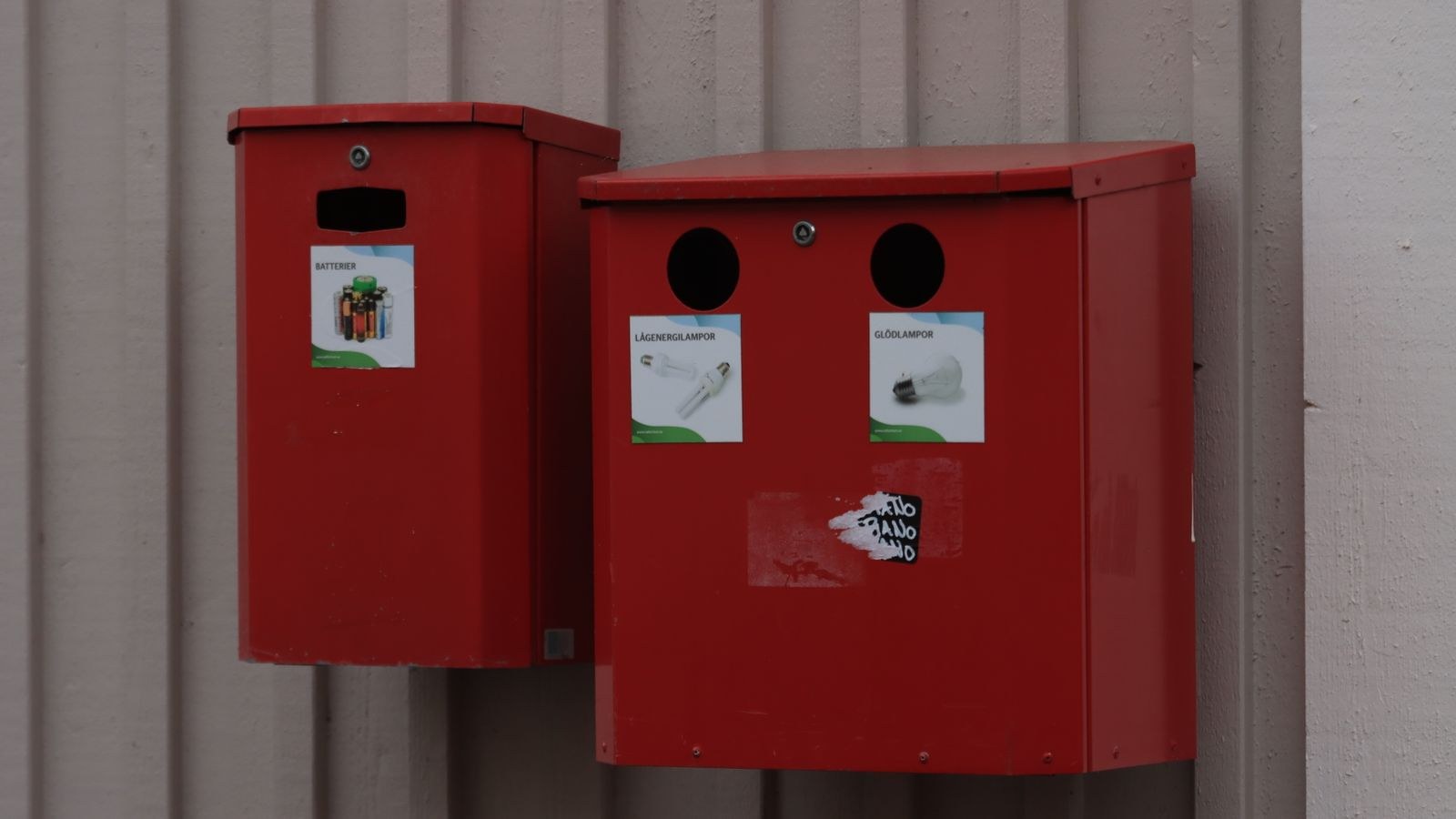
The backup cell is its own disposal item. Alkaline batteries are accepted at most supermarket and hardware store collection bins. Lithium cells, including the sealed packs inside ten-year alarms, must go to a dedicated battery recycling point because damaged lithium is a fire risk in refuse trucks and sorting facilities. If your alarm has a permanently sealed lithium battery that cannot be removed, say so when you contact the recycler; they will route the whole unit to a lithium-safe stream.
Tape over the terminals of loose 9V batteries before storing or transporting them. A 9V is exactly the wrong shape to sit in a drawer with keys and coins, and terminal contact is a genuine ignition source.
Disposing of a Whole Set at Once
Because alarms are usually installed as a matched set and expire together, most people end up with five to ten units to dispose of at the same time. That is actually convenient: one trip to a hazardous waste facility or one mail-back parcel handles them all. Do not stockpile them for years, though, and do not store them in a hot attic. A cardboard box in a garage or utility cupboard is fine for the weeks between removal and drop-off.
If you are replacing a whole set, this is the natural moment to reconsider sensor type. Many households now favour photoelectric or dual-sensor coverage, which also simplifies future disposal because pure photoelectric units carry no radioactive source at all. Our roundups of the best photoelectric smoke alarms and best dual sensor smoke alarms cover the trade-offs, and the general best smoke detectors list compares power sources and interconnect options across the range.
Common Mistakes
The biggest error is dropping alarms into the kerbside mixed-recycling bin. They are not accepted there, they contaminate the load, and ionisation units may end up incinerated. The second is opening the unit out of curiosity, which breaks the seal that makes it safe. The third is leaving the battery inside, which most programmes will reject on receipt.
A quieter mistake is removing an old alarm without installing the replacement the same day. Whatever the disposal route, fit the new unit first and test it before the old one leaves the house. An unprotected night is a far bigger risk than an incorrectly binned detector, and it is remarkably easy to let a week slip by. Comparing the best smoke alarms before you remove anything means the new set is already on hand.
Frequently Asked Questions
Is an old smoke detector dangerous to keep in the house?
No. An intact ionisation alarm poses no hazard, and the housing shields the alpha emission entirely. Store it in a box away from heat and dispose of it within a reasonable time rather than treating it as urgent.
Can I put a photoelectric alarm in the regular bin?
In many places, yes, once the battery is removed. It is still better routed to an e-waste recycler so the board and plastics are recovered. Check your local authority’s guidance first.
What if the manufacturer no longer exists?
Use household hazardous waste collection instead. Facilities accept ionisation alarms regardless of brand, which is exactly why the municipal route exists as a backstop.
Do I need to notify anyone when disposing of an ionisation alarm?
Not as a householder. Quantities in consumer devices fall well below reporting thresholds. Commercial premises disposing of large numbers should check the applicable regulations for their sector.
Final Thoughts
Disposing of old smoke detectors is a five-minute administrative task rather than a technical one. Read the label to find out whether you have an ionisation or photoelectric unit, pull the battery and recycle it separately, leave the housing sealed, and use a manufacturer mail-back or a household hazardous waste facility for anything carrying the radiation symbol. Handle the whole expired set in one trip, fit and test the replacements before the old units leave the ceiling, and note the new install date so the next round in 2026 plus ten is planned rather than rushed.