
 Owen Bradley
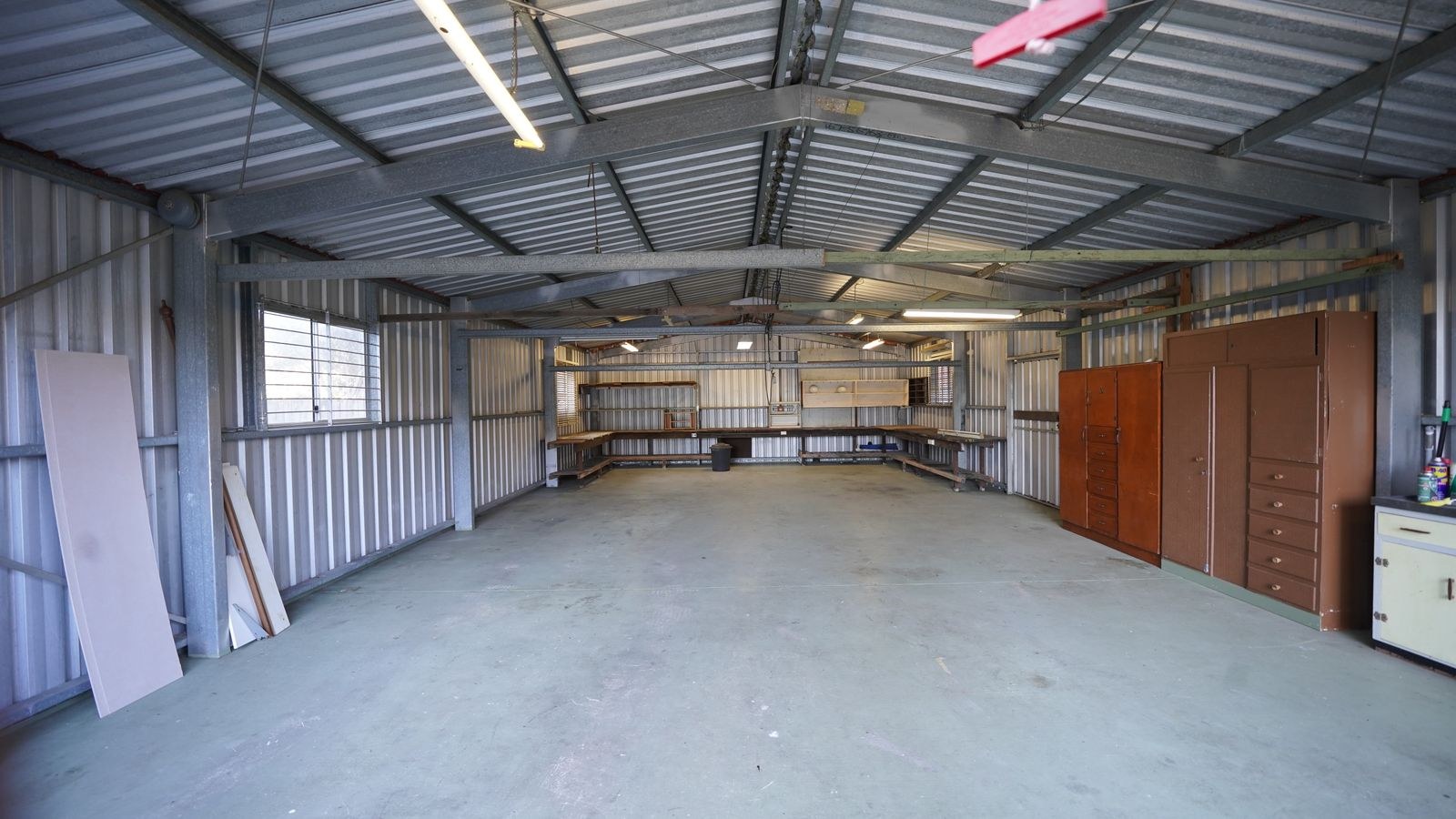
 Most garages are lit by a single bare bulb hanging from a ceiling joist, which is roughly the amount of light you would want for finding the fuse box and nothing more. The moment you try to read a torque spec, sort hardware, or paint a piece of trim, that one bulb becomes the reason the job takes twice as long and looks worse than it should. The fix is not a brighter bulb. It is a layout built around a target light level, spread across enough fixtures to eliminate shadows. This garage lighting guide gives you the lumens per square foot numbers to design around, a practical fixture layout for one, two and three-car bays, and the cold-weather details that catch people out when a garage drops below freezing in January.
Start With Lumens per Square Foot
Lighting designers size spaces by illuminance, and the simplest way for a homeowner to apply that is lumens per square foot. Here are the working targets for a garage:
- General parking and storage: 50 lumens per square foot. Enough to walk around safely, load a car, find a bin on a shelf.
- Workbench and general DIY: 75 lumens per square foot. The right level for assembly, sorting fasteners, basic repair work.
- Detailed work, automotive, painting, fine woodworking: 100 or more lumens per square foot. Anything where color accuracy or small-part visibility matters.
Do the multiplication and the scale of the problem becomes obvious. A standard two-car garage is about 20 by 20 feet, or 400 square feet. At 75 lumens per square foot that is 30,000 lumens. A typical 4 foot LED shop light produces 4,000 to 5,000 lumens, so you need six to eight of them. Compare that to the single 800-lumen bulb most garages ship with and you understand why every garage feels dark.
These are targets for the working plane, not raw fixture output, so build in a margin. Light-colored walls and ceilings bounce a surprising amount back into the room. A garage with bare gray concrete block and open joists can lose 30 percent compared to the same space painted white, which is why painting the ceiling white is genuinely one of the cheapest lighting upgrades available.
Sizing by Garage Type
Single-Car Garage (roughly 12 by 20 feet, 240 sq ft)
At 75 lumens per square foot you need about 18,000 lumens. That is four 4-foot LED shop lights, or three larger high-output units. Run them in two rows down the length of the bay, positioned over where the car doors open rather than dead center over the roof of the vehicle.
Two-Car Garage (roughly 20 by 20 feet, 400 sq ft)
Around 30,000 lumens for general work. Six to eight 4-foot fixtures in three rows: one over each parking position and one along the back wall where the bench usually sits. This is the most common configuration, and a look at the best 4 ft LED shop lights will show you how linkable models let you daisy-chain a whole row from one outlet.
Three-Car or Deep Garage (600 sq ft and up)
45,000 lumens or more. At this size, mixing fixture types pays off: high-output linear fixtures over the bays, plus higher-intensity task lighting over the bench. Consider splitting the lights across two switches so you are not burning the whole array to grab a rake.
Fixture Types and When to Use Each
Linear LED shop lights are the default and for good reason. A 4-foot integrated LED fixture delivers 4,000 to 5,000 lumens, draws 35 to 50 watts, mounts with two screws or chain hooks, and many plug into a standard outlet. Linkable versions let you connect four or five in series from a single receptacle. For most people, a set of these is the entire project. Browse the best LED shop light fixtures to compare integrated versus tube-based designs.
High-bay and UFO fixtures suit garages with ceilings above 12 feet, or shops where you want fewer fixtures at higher output. A single 100-watt UFO can put out 13,000 lumens or more. On a standard 9-foot garage ceiling they concentrate light into a hot pool and create harsh shadows at the edges, so they are the wrong tool for a typical residential bay.
Corn bulbs and screw-in LED garage lights with folding panels are the easiest possible upgrade because they thread into the existing porcelain socket. A good one delivers 6,000 to 10,000 lumens from the fixture that used to hold a 60-watt bulb. They are a fine stopgap and a poor final answer, because all the light still comes from one point in the ceiling.
Task and portable lighting covers what fixed lighting cannot: under a hood, inside a cabinet, behind a machine. An under-hood bar, a magnetic work light and a headlamp handle more real situations than any ceiling fixture. A broader look at workshop lighting options covers how fixed and portable layers work together.

Layout Principles That Kill Shadows
Even with the right total lumens, bad placement leaves you working in your own shadow. A few rules solve it:
- Light from the sides, not from directly overhead. Fixtures positioned over the aisles between and beside vehicles put light onto the sides of the car and into the engine bay. A fixture centered over the roof lights the roof.
- Run fixtures perpendicular to the workbench. Light arriving from two directions across the bench eliminates the shadow cast by your own hands and head.
- Keep spacing roughly equal to mounting height. On a 9-foot ceiling, fixtures about 8 to 10 feet apart across the width give even coverage.
- Add a dedicated bench fixture. A single 4-foot light mounted 18 to 24 inches above and slightly forward of the bench surface does more for precision work than two more ceiling units.
- Do not mount fixtures where the garage door travels. Measure the open-door path before you drill; overhead sectional doors sweep a surprising amount of ceiling.
Color Temperature and CRI in a Garage
Garages are one of the few residential spaces where cool light is genuinely better. Aim for 4000K to 5000K. That range reads as clean daylight, improves perceived sharpness, and keeps you alert. Below 3000K a garage feels murky; above 6000K the light takes on a blue cast that many people find harsh and that makes it harder to judge paint and finish colors.
CRI matters if you paint, stain, do bodywork or sort anything by color. A CRI of 80 is acceptable for general use; 90 or above is what you want over a bench where color decisions get made. The difference between matching automotive paint under CRI 70 and CRI 95 is not subtle.
Cold Weather, Damp Locations and Durability
An unheated garage in a northern climate can drop well below freezing, and that is where a lot of cheap lighting quietly fails.
Old fluorescent tubes were notorious for this. Standard T8 and T12 lamps struggle to start below about 50 degrees Fahrenheit and produce a fraction of their rated output when cold. If your garage still has humming fluorescent strips that take a minute to reach brightness in winter, that is the reason.
LEDs behave the opposite way and actually run slightly more efficiently in cold conditions. The vulnerable part is the driver electronics, so check the operating temperature range on the spec sheet. A fixture rated to minus 4 degrees Fahrenheit or lower is a safe bet in most of the continental United States. Look for a rated range printed on the box; fixtures that omit it are often rated only to freezing.
Moisture is the other factor. Garages get damp from snow melting off vehicles and from hosing down floors. Fixtures rated IP65 or with a “damp location” or “wet location” listing tolerate that; open-frame shop lights with exposed boards do not. If you park wet cars indoors, spend the extra few dollars on sealed housings. Comparing the best shop lights is the fastest way to see which models carry proper damp and cold ratings.
Power, Wiring and Controls
Most garages have one or two circuits, often shared with exterior outlets. Do the math before adding eight fixtures. Eight 50-watt LED shop lights draw 400 watts, which is only about 3.3 amps on a 120-volt circuit, so lighting load is rarely the problem. The problem is when that same circuit is also feeding a table saw and a compressor. Put lighting on its own circuit if you can, so a tripped breaker from a power tool does not plunge you into darkness mid-cut.
For controls, three upgrades are worth doing:
- Split the switching. One switch for the parking bays, one for the bench area.
- Add a motion sensor on the parking-bay circuit so lights come on when you pull in or walk through the door with your arms full.
- Consider a smart switch if you want the garage to light automatically when the overhead door opens.
Budget Tiers
Under $100. Two or three linkable 4-foot LED shop lights plus a white ceiling paint job. This roughly quadruples the usable light in a single-car garage in an afternoon.
$100 to $300. A full six to eight fixture layout for a two-car garage, properly spaced, plus a dedicated bench light and a motion sensor. This is where most people should land.
$300 and up. Hard-wired fixtures on a dedicated circuit, damp-rated sealed housings, high-CRI task lighting over the bench, and split switching or smart control. Appropriate for a garage that doubles as a real workshop.
Common Garage Lighting Mistakes
- Buying by wattage instead of lumens. Wattage tells you consumption, not output. Two fixtures at the same wattage can differ by 40 percent in lumens.
- One giant fixture in the middle. High output from a single point creates a bright pool and dark corners.
- Ignoring cold ratings. A fixture that flickers or fails at 20 degrees is useless exactly when you need it.
- Mounting over the car roof instead of the aisles. You end up working in your own shadow at the fender.
- Leaving walls and ceiling dark. Bare gray block absorbs light you already paid for.
- Forgetting the garage door path. A fixture the door hits is a fixture you replace once.
Frequently Asked Questions
How many lumens do I need for a two-car garage?
About 20,000 lumens for parking and storage, 30,000 for general workshop use, and 40,000 or more for detailed automotive or painting work in a 400 square foot space.
What color temperature is best for a garage?
4000K to 5000K. It reads as clean and neutral, keeps you alert, and renders colors more accurately than warm white without the blue cast of 6500K.
Can I just plug shop lights into an outlet?
Yes, most integrated LED shop lights come with a plug and a chain or bracket mount, and linkable models let you connect several from one receptacle. Check the maximum number the manufacturer allows in a chain.
Do LED shop lights work in an unheated garage?
Yes, and better than fluorescent. Just confirm the fixture lists an operating range down to at least minus 4 degrees Fahrenheit if you have cold winters.
Should garage lights be on a motion sensor?
For the parking bays, yes. It is genuinely useful when your hands are full. Keep the workbench lights on a manual switch so they do not shut off while you stand still working.
Final Thoughts
Garage lighting is a math problem before it is a shopping problem. Measure your square footage, pick a target between 50 and 100 lumens per square foot based on the work you actually do, divide by the output of the fixtures you are considering, and buy that many. Spread them over the aisles rather than the vehicles, add a dedicated light above the bench, choose 4000K to 5000K with a decent CRI, and confirm the cold rating if your winters get serious. Paint the ceiling white while you are at it. A garage that used to feel like a cave becomes a room you actually want to work in, usually for less than the cost of a mid-range power tool.









