Owen Bradley
 A floor lamp is the only light fixture you can buy, carry home and put to work in five minutes without touching a wire. That flexibility makes it the default fix for a dim corner, a reading chair with no outlet nearby, or a rental where the ceiling box is a sad single dome. The catch is that “floor lamp” describes at least six very different tools. A torchiere that bounces 3,000 lumens off the ceiling and an arc lamp that hangs a shade over a sofa solve completely different problems, and buying the wrong one leaves you with a handsome object that does not light anything useful. This floor lamp buying guide breaks down the main types, the brightness and bulb each one needs, the footprint they demand, and how to match a style to the room you actually have. By the end you should be able to walk into any showroom in 2026 and know within seconds which lamps are candidates and which are decoration.
Start by Naming the Job
Before you look at a single lamp, decide which of three jobs it is doing. Ambient lighting fills a room with soft general illumination and replaces or supplements a ceiling fixture. Task lighting puts a controlled pool of light on a book, a laptop or a craft project. Accent lighting picks out a plant, a piece of art or a corner and adds depth rather than usable brightness.
Most disappointing floor lamp purchases come from a mismatch here. A sculptural globe lamp bought for its looks cannot light a reading chair. A powerful torchiere aimed at the ceiling cannot put enough light on a page. Naming the job first eliminates most of the catalog immediately and turns an overwhelming choice into a short list.
Torchiere Floor Lamps
A torchiere points its light straight up into an open bowl-shaped shade. All of that output bounces off the ceiling and returns to the room as diffuse, shadow-free ambient light. Nothing else in the floor lamp category fills a room this evenly.
Torchieres shine in living rooms and bedrooms with white or light-colored ceilings under about 10 feet, since a dark or very high ceiling absorbs the bounce and wastes the output. Look for roughly 2,000 to 3,000 lumens if the lamp is doing the room’s main lighting, and insist on a dimmer because full output can feel like an office at night. Modern LED torchieres often include integrated dimming and a small reading arm on the side, which quietly turns a one-trick lamp into a two-job fixture.
The footprint is compact, usually a base of 10 to 12 inches, which makes them ideal for tight corners. Weight matters, though: a light base plus a tall pole is a tipping hazard in a house with pets or toddlers, so check for a weighted or wide base. Our roundup of the best torchiere floor lamps compares output, dimming behavior and base stability across the current field.
Arc Floor Lamps
An arc lamp puts a heavy base on the floor and sweeps a long curved arm outward, suspending the shade several feet away. It is the answer to the classic apartment problem of wanting a pendant over the sofa or dining table without drilling into the ceiling.
Reach is the key spec. Arms range from roughly 40 inches to well over 80 inches, and you need enough to place the shade over the middle of the seating area rather than over the edge of the cushion. Measure the distance from where the base can realistically sit to where you want the light to fall, then buy an arm at least that long. The base is deliberately massive, often 30 to 40 pounds of marble or cast metal, so plan for something you will not want to move weekly.
Arc lamps deliver directional downlight, so they work as a reading light over a sofa, a dining light over a table, or a dramatic accent. Hang the bottom of the shade about 40 to 48 inches above a dining surface and higher over a sofa so nobody clips it walking past. Our picks for the best arc floor lamps break down reach, base weight and shade adjustability.
Tripod Floor Lamps
The tripod lamp trades a single pole for three splayed legs, usually in wood or metal, topped with a drum or cone shade. It is primarily a style choice, borrowing from mid-century and photographic studio design, and it reads as furniture as much as lighting.
Functionally a tripod lamp produces broad ambient light through the shade plus some downlight from the open bottom. Because the legs claim a footprint of 20 to 28 inches, it needs open floor space and looks awkward jammed into a corner. Stability is excellent, which makes tripods a reasonable pick for homes with children or large dogs. Use them beside a sofa, flanking a media wall, or in an entryway where the shape can be seen from several angles.
Task, Reading and Pharmacy Lamps
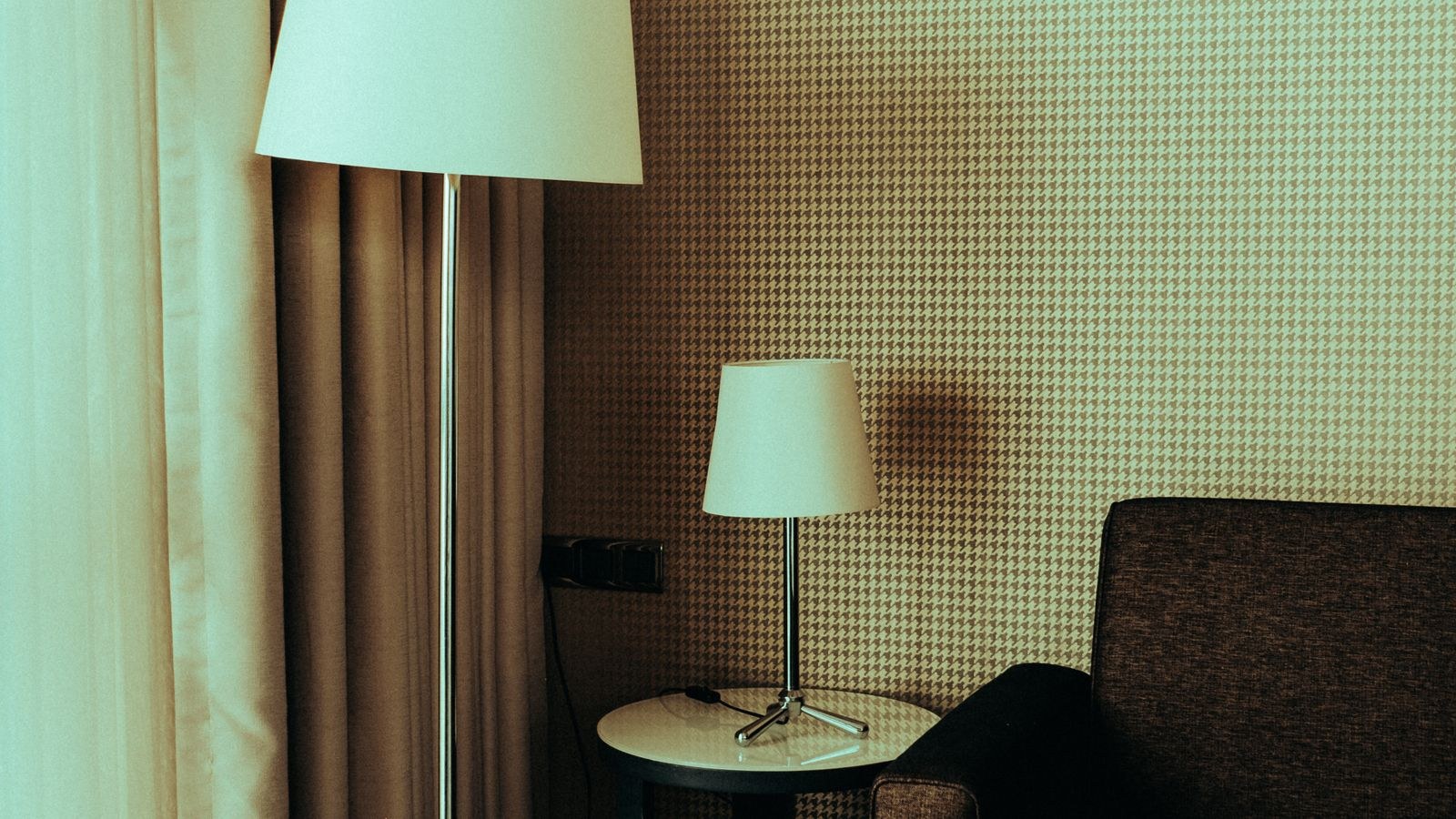
Task-oriented floor lamps use a small adjustable head on an articulating arm or a gooseneck. The pharmacy style, with its metal shade on a slim pole, is the classic version. These lamps put a tight, controlled pool of light exactly where you point it and produce very little spill.
They are the right answer beside a reading chair, a knitting basket or a sewing table. Look for a head that tilts and rotates, a pole tall enough to bring the shade above shoulder height when seated, and a base that slides under the chair so the light comes over your shoulder rather than into your eyes. Output of 600 to 1000 lumens is plenty for a task pool, but color quality matters more here than raw brightness; a CRI of 90 or above keeps colors accurate for detail work.
Some versions add a magnifier lens for close work such as jewelry, model building or fine stitching. If that describes your hobby, look for a lens of 3 to 5 diopters and a spring arm strong enough to hold the extra weight in place.
Multi-Head, Tree and Combination Lamps
Tree lamps mount two to five adjustable heads on a single pole, letting you aim light in several directions at once. They are efficient in rooms that need multiple pools of light from one outlet, such as a home office corner or a shared reading area.
Brightness, Bulbs and Color Temperature
Ignore watts and read lumens. Watts describe consumption, not output, and an LED producing 1500 lumens might draw 15 watts while an old incandescent needed 100 watts for the same result.
Reasonable targets by job:
- Ambient room lighting: 1500 to 3000 lumens, ideally spread across a ceiling bounce.
- Reading and task: 600 to 1000 lumens focused on the work surface.
- Accent and mood: 300 to 600 lumens, always dimmable.
Color temperature sets the feel. Choose 2700K for living rooms and bedrooms where warmth matters, 3000K for a workspace corner that needs to feel alert, and reserve 4000K and above for garages, workshops and hobby benches. Mixing color temperatures within a single room is the fastest way to make a space feel unresolved, so pick one number and stay with it.
Two more specs deserve attention. Look for a CRI of 90 or higher wherever you read, cook, sew or look at art. And confirm dimming compatibility before you buy: an integrated LED lamp with its own dimmer is simple, while a socket lamp needs a dimmable bulb and, if you are using a wall dimmer, a control rated for LED loads to avoid flicker and buzz. If you want maximum output for a large or dark room, our comparison of the best bright floor lamps focuses on high-lumen models that still dim smoothly.
Size, Scale and Placement
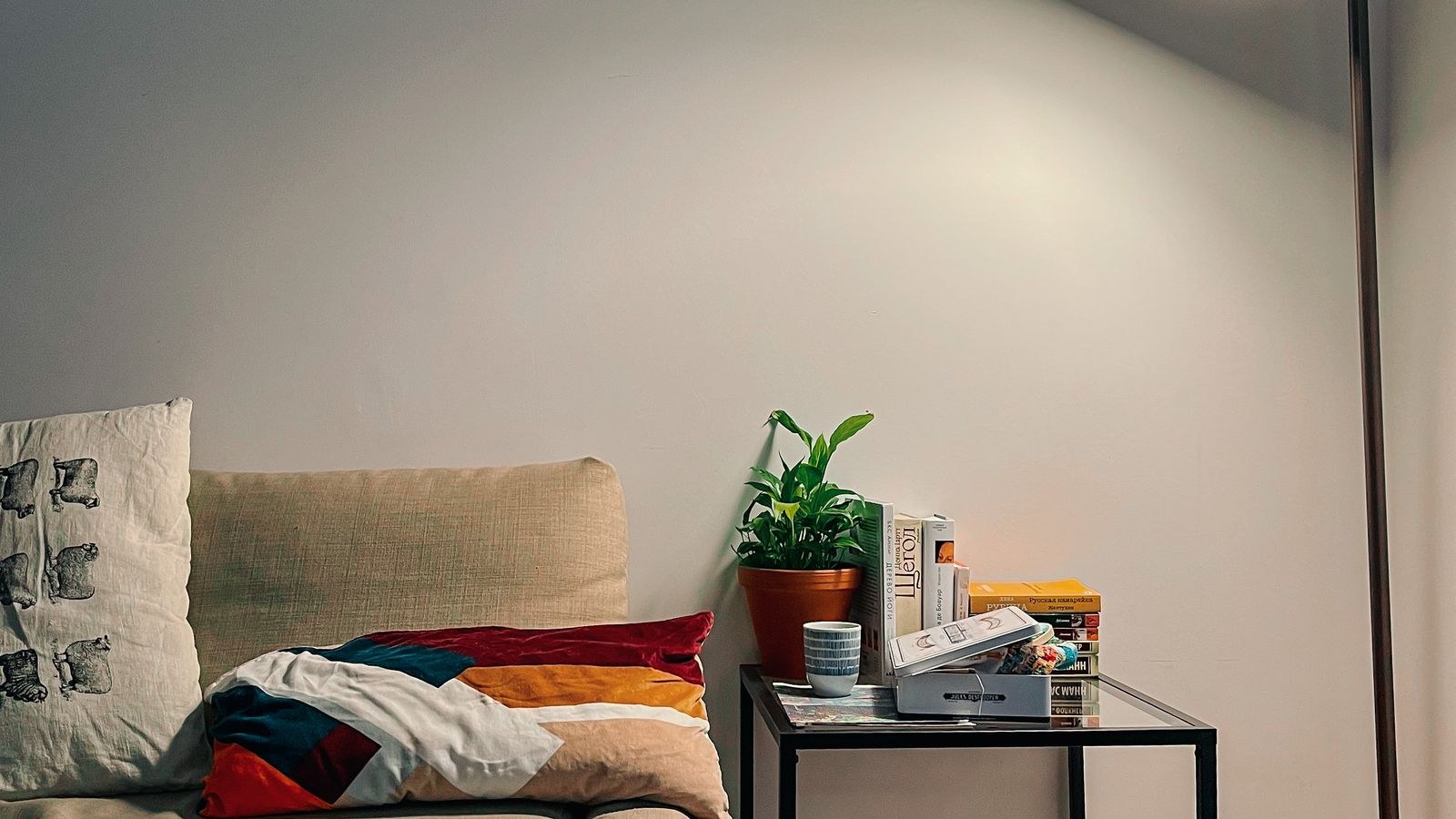
Height is the spec people get wrong most often. For a lamp beside a seat, the bottom of the shade should land at roughly eye level for a seated person, which means a total lamp height of 58 to 64 inches for most chairs and sofas. Too tall and you stare into the bulb; too short and the light dies in your lap.
Scale the shade to the furniture. A wide sectional swallows a narrow 10-inch drum shade, while an oversized shade dwarfs a slim side chair. As a rough guide, a shade diameter of 16 to 20 inches suits most living room seating. In a small room, prefer a slim pole and a compact base so the lamp does not eat the walking path.
Placement rules that consistently work: put the lamp behind and slightly to the side of a reading chair so light comes over the shoulder; keep any floor lamp out of primary traffic lanes; place torchieres in corners where the ceiling bounce covers the most area; and never position a lamp where its reflection lands in a television screen.
Build Quality Signals Worth Checking
- Base weight. A stable lamp feels heavy at the bottom. If you can knock it over with a nudge, a pet will.
- Pole construction. Metal poles that thread together should seat without wobble. Plastic collars are a long-term failure point.
- Switch type. A foot switch on the cord is far easier to use than a twist knob under a hot shade.
- Cord length. Six feet is common and often too short. Measure to the outlet before you buy rather than after.
- Socket versus integrated LED. A standard socket lets you replace the bulb forever; an integrated LED is sleeker but becomes e-waste when the diode fails. Both are valid, but know which you are choosing.
- Shade material. Linen and fabric diffuse softly, metal directs sharply, and glass sits in between. The material shapes the light as much as the bulb does.
Budget Tiers
Under about $60 you get basic poles, light bases and simple fabric shades. These work fine as accent light in a bedroom or guest room but rarely feel stable or bright enough to anchor a living space.
In the $60 to $180 range you find the sweet spot: solid weighted bases, real dimming, decent shades and enough output to serve as a room’s primary light. Most households should shop here.
Above $180 you are paying for materials and design, marble and solid brass bases, long-reach arc arms, and designer silhouettes. The light quality does not automatically improve, so buy at this level for the object rather than the lumens. For a curated look at pieces that earn their price on form as well as function, see our roundup of the best modern floor lamps, and for pairing options by room, the best floor lamps for living rooms guide covers full-room setups.
Frequently Asked Questions
How bright should a floor lamp be?
Around 1500 to 3000 lumens if the lamp is the room’s main light source, 600 to 1000 lumens for a dedicated reading spot, and 300 to 600 lumens for accent or mood lighting.
Can a floor lamp replace a ceiling light?
A high-output torchiere with a light-colored ceiling under 10 feet can genuinely replace an overhead fixture in a bedroom or small living room. In a large open-plan space you will usually need two lamps to avoid dark corners.
What height should a reading floor lamp be?
Total height of 58 to 64 inches, with the bottom of the shade near eye level when you are seated. Adjustable-height poles solve the problem outright if your chairs vary.
Should I buy an integrated LED lamp or one with a bulb socket?
A socket gives you decades of cheap bulb swaps and lets you change color temperature later. An integrated LED offers a slimmer design and built-in dimming but cannot be repaired when the diode fails. Choose based on how long you expect to keep the lamp.
Final Thoughts
Floor lamps look interchangeable on a shelf and behave nothing alike once they are plugged in. Decide whether you need ambient fill, a focused task pool or an accent glow, then let that choice pick the type: torchiere for room-filling bounce, arc for suspended downlight, tripod for style plus broad diffusion, pharmacy for precise reading, tree for multiple targets. From there, match lumens and color temperature to the job, check that the base is heavy and the shade sits near seated eye level, and confirm the lamp dims. Get those five things right and a $90 lamp will serve better than a $400 one bought for its silhouette.