
 Owen Bradley
 Walk down any lighting aisle or scroll through any online listing and you will see two acronyms repeated over and over: COB and SMD. Both describe how the tiny light-emitting diodes are mounted on a flexible strip, and that single manufacturing difference changes almost everything about how the finished light looks on your wall. One produces a smooth, continuous ribbon of light with no visible dots. The other produces individually visible points that can be addressed, color-shifted, and animated. Neither is universally better. The right choice depends entirely on whether you want the light source to disappear or to perform. This guide breaks down COB vs SMD LED strips on the factors that actually matter in a real room, so you can pick the right strip the first time instead of returning a reel because the glow looked speckled on your ceiling.
What SMD LED Strips Actually Are
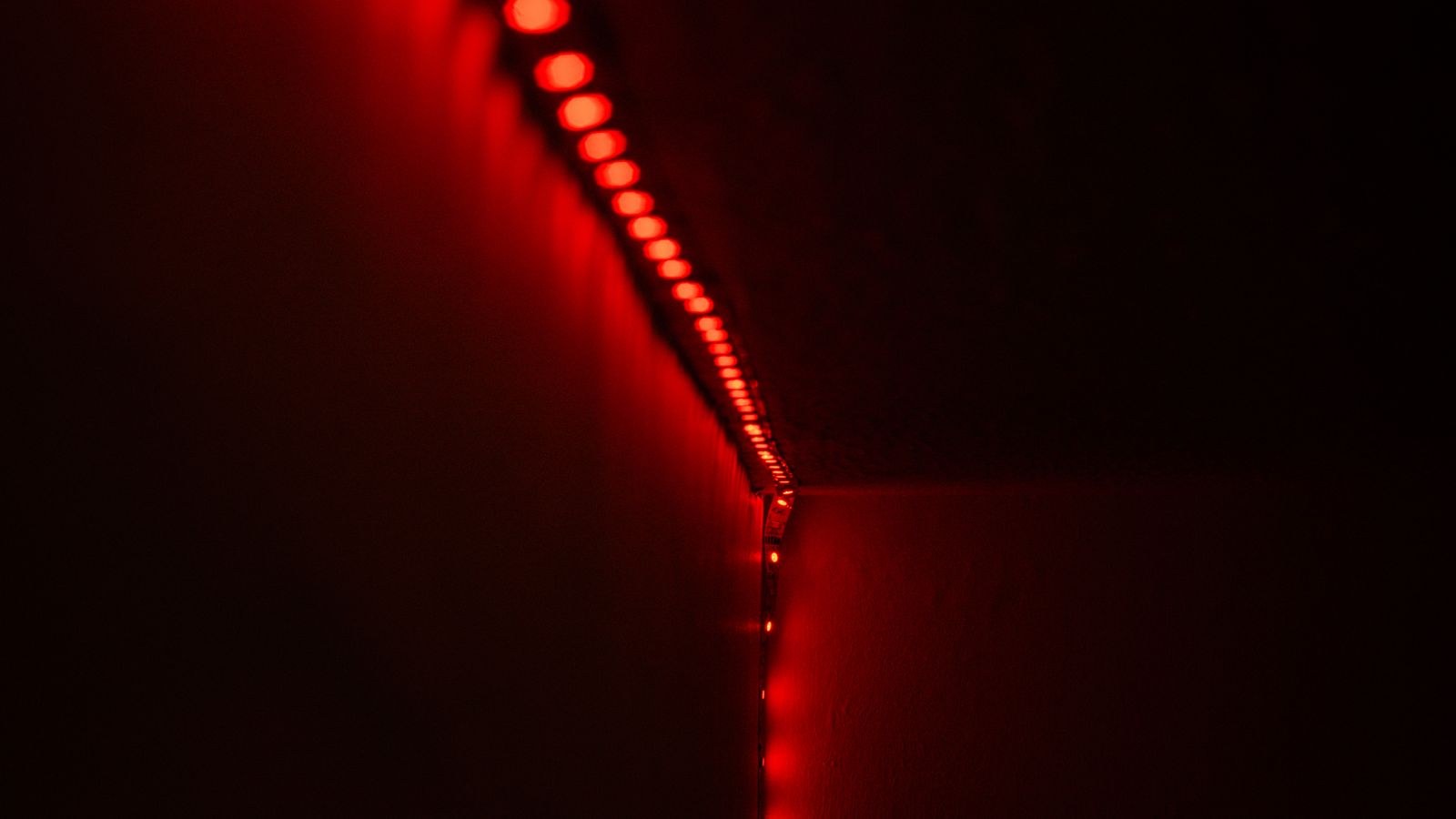
SMD stands for surface-mounted device. Each LED is packaged in its own small plastic housing and soldered onto the flexible circuit board at regular intervals, typically 30, 60, 120, or 240 diodes per meter. You can see every diode as a distinct point of light. The package sizes are named by their dimensions in tenths of a millimeter, which is why you see labels like 3528, 2835, 5050, and 5730.
The 3528 and 2835 packages contain a single diode chip and are usually single-color. The 5050 package holds three chips in one housing, which is how RGB strips produce red, green, and blue from a single visible dot. Newer variants add a fourth chip for dedicated white.
Because each SMD diode is a discrete component, it can also be individually controlled. That is the foundation of addressable strips, where a small driver chip sits beside each LED and lets you run chase effects, gradients, and per-pixel animation. If you want your lighting to do things rather than simply exist, SMD is the only realistic path.
Why You See Dots
Spacing is the whole story. With 60 LEDs per meter, the diodes sit roughly 16mm apart. Point that strip at a nearby wall or view it directly and your eye resolves each one as a separate bright spot with a dimmer valley between. Diffusion channels, frosted covers, and distance all soften this, but a shallow cove or a strip mounted close to a surface will show scalloping. Higher densities such as 120 or 240 LEDs per meter reduce the effect considerably at the cost of higher power draw and price.
What Makes COB Strips Different
COB stands for chip on board. Instead of packaging each diode separately, manufacturers bond hundreds of bare LED chips directly onto the circuit board and cover the entire run with a continuous layer of phosphor. The result is a solid line of light rather than a row of points. Typical COB strips carry 320 to 640 chips per meter, and because the phosphor blankets everything, you cannot see where one chip ends and the next begins.
That continuity is the headline advantage. Under a cabinet, along a stair nose, inside a cove, or behind a headboard, a COB strip reads as a clean glowing line even without a diffuser. There is no dotting, no scalloping on nearby surfaces, and no need to buy an expensive aluminum channel with frosted optics just to hide the hardware. Many people discover COB after fighting with dotted reflections from an SMD install and never go back for architectural work. If you are shopping broadly, our roundup of the best LED strip lights covers both technologies side by side with real-world installation notes.
The Bending Advantage
COB strips are noticeably more flexible along their length because the emitting layer is continuous rather than made of rigid packages. Many can bend around a tight radius, including some that flex sideways, which SMD strips generally cannot do without stressing solder joints. For curved coves, rounded furniture edges, or circular ceiling details, that flexibility saves a lot of cutting and splicing.
Brightness and Efficiency Compared
Raw brightness is where marketing gets slippery. A high-density SMD 5050 strip can hit very high lumen figures, and top-tier COB strips are now competitive, often landing between 800 and 1400 lumens per meter depending on wattage. The honest answer is that both technologies span a huge range, and the chip count on the label tells you less than the lumens-per-meter and watts-per-meter figures.
What differs is how that light is delivered. COB spreads output evenly across the whole run at a wider beam angle, usually around 180 degrees, so more of the light reaches the surface you are trying to wash. SMD strips concentrate output into points with a narrower effective spread, which is excellent when you want punch through a diffuser or need to throw light farther. For accent washing, COB usually looks brighter at the same measured output because none of it is lost in dark gaps.
Efficiency is close enough between the two that it should rarely decide your purchase. Focus instead on the driver quality and the current rating, since a cheap power supply will undercut any strip’s performance and lifespan. Check the best quality LED strips if build standards, copper weight, and adhesive strength matter more to you than the lowest possible price.
Color Options and Color Quality
This is where SMD keeps a clear lead. RGB, RGBW, RGBIC, and fully addressable strips are overwhelmingly SMD products because individual diode control requires individual diodes. If you want a gaming room that cycles through colors, a media wall that reacts to audio, or holiday lighting that runs chase patterns, buy SMD and do not think twice.
COB has traditionally been a single-color technology, sold in warm white around 2700K, neutral around 4000K, and cool white around 6000K, plus fixed colors. Tunable-white COB strips now exist and work beautifully for spaces where you want warm light in the evening and crisp light for tasks. Color-changing COB is available but the palette control is coarser than a true addressable SMD strip.
CRI Matters More Than Color Modes
For any space where you look at food, fabric, skin, or artwork, color rendering index beats color modes. Look for CRI 90 or higher, which both technologies offer at the upper end of the market. Budget strips often sit at CRI 70 to 80, where reds go muddy and wood tones look flat. COB strips frequently ship with higher CRI as standard because they target architectural applications where color accuracy is expected.
Heat, Lifespan, and Dimming Behavior
COB spreads heat across the entire board rather than concentrating it at solder points, which generally means more even thermal behavior and less risk of individual failures. On the other hand, a dense COB strip run at full power over a long span produces real heat, and it should be mounted on an aluminum channel that acts as a heat sink. Skipping the channel is the single most common cause of premature dimming and color shift.
SMD strips are easier to repair. If one diode fails, you often lose only that segment, and you can cut and resolder at the marked cut points.
On dimming, COB has an advantage in smooth low-end performance. Because the light is continuous, dimming down to a few percent still looks like an unbroken line. Dimmed SMD strips can show flicker or uneven point brightness at very low levels, especially with cheap PWM controllers. If you want warm, low ambient lighting at night, COB dims more gracefully.
Price and Value
COB strips typically cost more per meter than an equivalent-brightness SMD strip, sometimes 20 to 50 percent more. That gap narrows once you account for accessories: many SMD installs need an aluminum channel with a frosted diffuser to hide the dots, and that channel often costs as much as the strip itself. If your COB install can go without a diffuser, total project cost can land in the same neighborhood.
Where SMD wins on value is sheer output per dollar for utility lighting, backlighting behind a TV, or anywhere the strip itself is completely hidden and only the reflected glow is visible. Nobody sees dots bouncing off a wall three feet away, so paying extra for continuity there is wasted money. For long hidden runs, browse the best LED tape lights and prioritize adhesive quality and power supply headroom over emitter style.
Which Jobs Suit COB Best
- Under-cabinet lighting where the strip reflects off a glossy countertop and dots would be obvious.
- Cove and ceiling perimeter lighting in shallow channels with little distance to diffuse the light.
- Stair nosing and handrails viewed at close range from many angles.
- Mirror and vanity surrounds where even, flattering light matters and dotting reads as cheap.
- Curved installations that require bending around a radius.
Ceiling perimeter work is the clearest COB win of all. If that is your project, the picks in our guide to the best LED strip lights for ceiling installations focus on the length, brightness, and mounting hardware those runs demand.
Which Jobs Suit SMD Best
- Color-changing and addressable effects for gaming rooms, media walls, and party spaces.
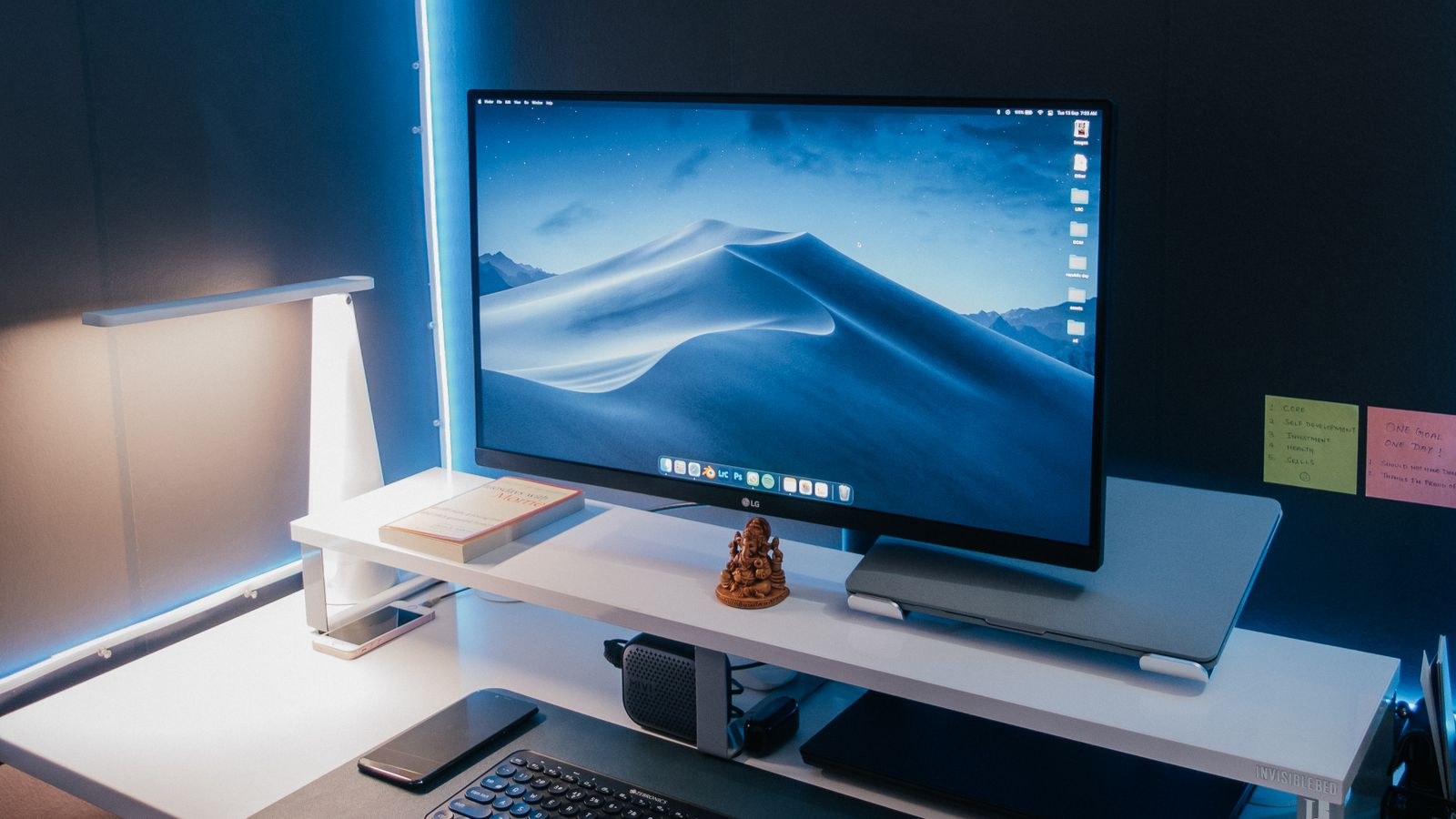
- TV and monitor backlighting where bias lighting benefits from color control and the strip is invisible.
- Long budget runs in garages, closets, and storage areas where appearance is irrelevant.
- Outdoor and holiday displays that rely on animation and pattern.
- Installations behind heavy diffusers that would erase dotting anyway.
Common Mistakes When Choosing
The most frequent error is buying based on chip count alone. A strip advertising 480 chips per meter is not automatically brighter than one with 60 SMD diodes, because COB chips are individually far less powerful. Compare lumens per meter and watts per meter, and treat any listing that hides those figures with suspicion.
The second mistake is undersizing the power supply. Add up watts per meter times total length, then add at least 20 percent headroom. A driver running at its absolute limit gets hot, sags in voltage at the far end of a run, and dies early. Related to that, long single runs of 12V strip suffer visible voltage drop and dim toward the end. Either switch to 24V, which tolerates roughly double the run length, or inject power at both ends.
A Quick Decision Checklist
- Will the strip itself, or its reflection on a glossy surface, be visible? If yes, lean COB.
- Do you need color changing or animated effects? If yes, buy SMD, full stop.
- Is the run curved or in a shallow channel? COB handles both better.
- Is the strip completely hidden and used only for indirect glow? SMD gives more light per dollar.
- Do you need high color accuracy for food or grooming? Choose CRI 90 or better in either technology.
- Will you dim it very low regularly? COB stays smoother at the bottom of the range.
Frequently Asked Questions
Is COB always dot-free?
In practice, yes. The continuous phosphor layer eliminates visible points even when you look directly at the strip. Very cheap COB reels can show slight brightness variation along the run, but you will not see individual dots.
Can I mix COB and SMD in the same room?
You can, and it often works well. Use COB for architectural lines under cabinets or in coves, and SMD for accent color behind a TV or shelving. Just match color temperature between the white sources so the room does not look mismatched.
Do COB strips need an aluminum channel?
They do not need one for appearance, which is the main reason people buy them. But a channel still helps with heat dissipation and physical protection, so it is worth adding on high-wattage or long runs.
Which lasts longer?
Both are rated in the 30,000 to 50,000 hour range when properly powered and cooled. Real-world lifespan depends far more on driver quality and thermal management than on construction type.
Final Thoughts
The COB versus SMD decision comes down to one honest question: is this lighting meant to be seen, or meant to be felt? COB is the better choice when the light itself is part of the design, when the strip sits in view or reflects off polished surfaces, and when you want a clean unbroken line without buying diffusers to fake it. SMD remains the answer for color, animation, addressable effects, and hidden utility runs where brightness per dollar wins. Decide the job first, then buy the technology that serves it, and put the money you save on the wrong feature into a better power supply and proper mounting hardware. That combination will outlast and outperform any spec-sheet bragging in 2026.









