
 Marcus Bell
Picking the best high performance CPUs for a new build usually comes down to one question: what will you actually be doing with the machine? A chip built for 1080p gaming frame rates isn’t the same chip you want for video exports or CAD work. This guide breaks down the top options by workload, walks through the specs that matter, and flags the mistakes that trip up first-time builders.
Quick answer: If you only read one section, here it is — for most builders in 2026, the best high performance CPUs for gaming and general use converge on the AMD Ryzen 7 9800X3D, our #1 rated choice thanks to its class-leading gaming frame rates and strong all-around efficiency. See the full ranked picks and buying advice below.

Pros
- 6 cores and 12 threads on the Zen 5 architecture, with a 5.4 GHz max boost clock
- Unlocked multiplier allows manual overclocking on compatible AM5 motherboards
- 38MB of combined cache and DDR5-5600 support speed up memory-bound workloads and gaming
- AM5 socket supports PCIe 5.0 on select motherboards for current-generation SSDs and GPUs
- Delivers over 100 FPS in many popular titles at stock settings, per official gaming benchmarks
Cons
- No cooler is included in the box, so a compatible AM5 cooler must be purchased separately
- Unlocked overclocking headroom requires a motherboard with adequate VRM cooling to fully use
- AM5 platform requires DDR5 memory only, so existing DDR4 kits from an older build cannot be reused

Pros
- Metal-free, non-conductive carbon microparticle formula, so a slip onto nearby SMD components will not short the board
- 4 g syringe covers roughly 15 to 20 desktop CPU applications at a pea-sized dot
- Manufacturer states an 8-year service life, so one application normally outlasts the build
- Continuous-use range of -50 to 150 C covers sub-ambient loops and hot mini-ITX cases alike
- Viscosity of 31,600 poise spreads under mount pressure without needing a spreader card
Cons
- No spatula or cleaning wipe in this variant, so you supply isopropyl and a lint-free cloth
- Grey compound stains PCB and fabric and will not wash out of clothing
- Conductivity trails liquid-metal compounds by a few degrees under sustained full load, which is the trade for being non-conductive
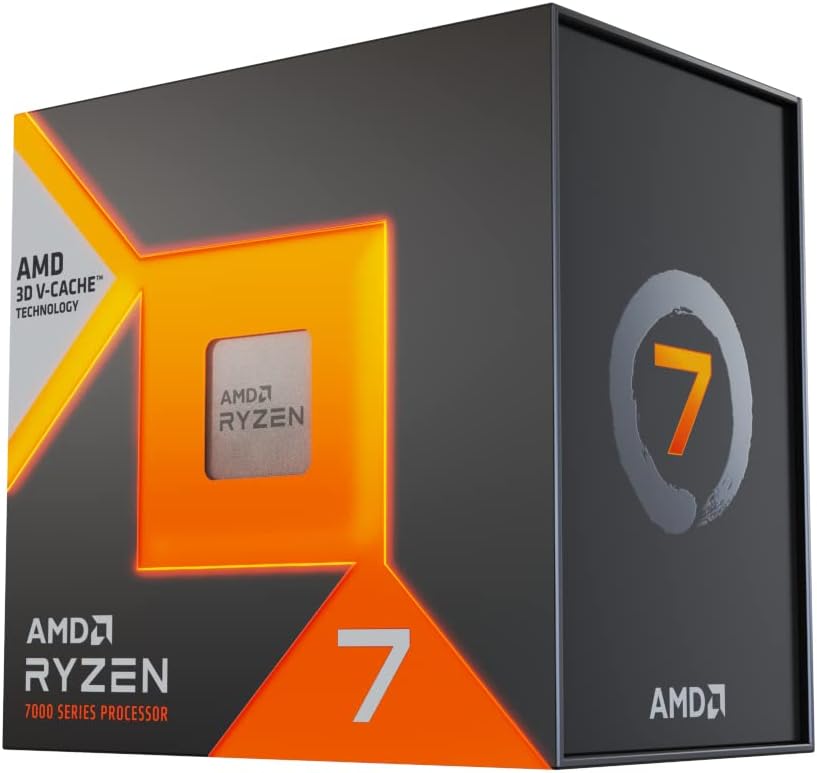
Pros
- 8 cores and 16 threads on a 5 nm process, with a 4.2 GHz clock quoted for the part
- 96 MB of L3 cache stacked on the compute die plus 8 MB of L2, which is what lifts frame rates in simulation-heavy games
- Integrated graphics running at 2200 MHz, so the machine boots and drives a display with no card fitted
- AM5 platform brings DDR5 memory and PCIe 5.0 lanes for both the graphics slot and an M.2 drive
- Holds clocks until it reaches a Tjmax of 89 C, so high load numbers are designed behaviour rather than a warning
Cons
- No cooler is included, so a large air tower or a 240 mm liquid cooler has to be added
- AM5 socket and DDR5 only, so an AM4 board and existing DDR4 kits do not carry over
- The integrated graphics are display-out class rather than gaming class, so a discrete card is effectively mandatory

Pros
- Eight Zen 5 cores and sixteen threads paired with 96MB of L3 from second-generation 3D V-Cache
- Boosts to 5.2 GHz because the stacked cache now sits beneath the compute die, letting heat escape upward
- Roughly 16% IPC uplift over the previous generation at comparable power draw
- Drops into existing Socket AM5 boards after a firmware update, reusing DDR5 memory and coolers
- Unlocked for overclocking and curve tuning, unlike earlier X3D parts with restricted voltage control
Cons
- No cooler in the box, so a large tower cooler or a 240mm liquid cooler has to be planned for separately
- Integrated graphics are display-class only, so a discrete card is effectively required for gaming
- AM5 only — AM4 and Intel boards cannot take it, making this a full platform decision

Pros
- The world's best gaming desktop processor that can deliver
- 12 Cores and 24 processing threads, based on AMD "Zen 5"
- 5.6 GHz Max Boost, unlocked for overclocking, 76 MB cache,
- For the state-of-the-art Socket AM5 platform, can support PCIe 5.0
Pros
- 16 cores and 32 threads on the Zen 5 architecture handle heavy multi-threaded workloads alongside gaming
- 5.7 GHz max boost clock and 80MB of cache push single-core responsiveness for latency-sensitive tasks
- Unlocked multiplier supports manual overclocking on compatible AM5 motherboards
- Supports DDR5-5600 memory, taking advantage of higher bandwidth than older DDR4 platforms
- AM5 socket carries PCIe 5.0 support on select motherboards for current-generation GPUs and NVMe drives
Cons
- No cooler is included in the box — AMD recommends a liquid cooler, which is an added purchase most basic air coolers won't fully replace
- AM5 socket motherboards run costlier on average than mature previous-generation AM4 boards, an ecosystem cost beyond the chip itself
- 80MB of cache and 16 active cores draw more power under full multi-threaded load than lower-core-count chips in the same family

Pros
- 6 cores and 12 threads with a 4.2 GHz maximum boost, enough for 100+ FPS in mainstream titles alongside a discrete card
- 19 MB of combined cache keeps working sets close to the cores in games and compile workloads
- Fully unlocked multiplier, so overclocking is available on B450, B550 and X570 boards
- A stock air cooler is supplied in the box, so no separate heatsink is needed to run at default clocks
- Drops into the mature Socket AM4 platform with DDR4-3200 memory support
Cons
- No integrated graphics at all, so a discrete graphics card is mandatory just to reach the desktop
- Limited to PCIe 3.0, so a Gen4 NVMe drive or a Gen4 graphics card runs at half its available link bandwidth
- AM4 is the end of its own road; there is no upgrade path to newer CPU generations without changing motherboard and memory together

Pros
- 12 cores split as 8 performance plus 4 efficient, giving 20 threads so a stream encodes while the game runs
- 5.0 GHz maximum turbo on the performance cores with a fully unlocked multiplier for manual tuning
- 25 MB of L3 and 12 MB of L2 cache keeps large compile and simulation working sets close to the cores
- Socket LGA1700 accepts both 600 and 700 series boards, so DDR4 or DDR5 memory are both valid routes
- Thread scheduling hands background tasks to the efficient cores, keeping foreground frame times steadier
Cons
- The KF suffix means there is no integrated graphics, so a discrete card is mandatory just to get a picture
- No cooler in the box, and the 125 W base power climbs far higher under turbo, so a 240 mm liquid cooler or a large tower air cooler is needed
- LGA1700 ended with 14th generation parts, so the socket has little upgrade headroom left
Cooling is the main build decision around this chip.
- A 240 mm or 280 mm liquid cooler, or a large dual-tower air cooler, keeps the performance cores at peak turbo for longer stretches.
- Compact 120 mm coolers will run it, but sustained renders will pull clocks back to keep temperatures in check.
- Case airflow matters as much as the cooler itself, since the heat still has to leave the chassis.
On upgrades, the platform is mature rather than new. LGA1700 closed out with 14th generation parts, so the realistic path from here is more memory, faster storage or a stronger graphics card rather than a future CPU swap. If you want a long CPU upgrade runway, a newer socket suits better; if you want cores today, this delivers them.

Pros
- Sixteen Zen 5 cores and 32 threads, running a 4.3 GHz base up to a 5.7 GHz boost
- Second-generation 3D V-Cache sits under the compute die so clock speeds stay high
- AM5 socket drops into existing X670 and B650 boards after a BIOS update
- Integrated graphics allow display output without a discrete card fitted
- Boxed retail unit aimed at both gaming and multi-threaded content work
Cons
- No cooler in the box, so a 360 mm liquid unit or a large tower cooler is a separate purchase
- Draws enough power to demand a strong board VRM and steady case airflow
- The 3D V-Cache sits on one core complex, so current chipset drivers matter for correct thread scheduling

Pros
- 24 cores, 8 P-cores plus 16 E-cores, and 24 threads with integrated graphics on the same chip
- Unlocked up to 5.7GHz, with 36MB cache to feed the hybrid core architecture
- Supports PCIe 5.0 and 4.0 lanes plus Turbo Boost Max Technology 3.0 for prioritized single-core tasks
- Built for Intel 800 series chipset motherboards, positioning it for the current platform generation
Cons
- No thermal solution included, so a separate CPU cooler is required before first boot
- 125W base power draw calls for a case and power supply sized for sustained higher loads
- Requires an 800 series chipset motherboard, so it will not drop into older Intel boards
What Actually Makes a CPU “High Performance”?
“High performance” gets thrown around loosely, so it helps to know what you’re actually paying for. A few specs drive real-world speed more than any marketing label does.
- Core and thread count — more cores help with rendering, compiling, and multitasking, but gaming often cares more about a handful of very fast cores.
- Clock speed and boost behavior — higher GHz numbers translate to snappier single-threaded tasks, including most games.
- Cache size, including 3D V-Cache — extra on-chip cache (the memory built directly into the processor) keeps frequently used data close by, which is why some “3D” chips punch above their core count in games.
- TDP and cooling needs — a higher power draw usually means you need a beefier cooler to avoid thermal throttling (the chip slowing itself down when it gets too hot).
- Platform and memory support — the socket and supported RAM speed decide which motherboards and memory kits will actually work with the chip.
Keep these five factors in mind and the rest of this guide will make a lot more sense.
Best High Performance CPUs for 2026, by Use Case
Instead of ranking chips on a single scale, it’s more useful to match a processor to what you’ll spend most of your time doing.
Best for Gaming: AMD Ryzen 7 9800X3D
The AMD Ryzen 7 9800X3D (, 4.8 stars from 5,935 reviews) is built around AMD’s 3D V-Cache, and it shows up directly in frame rates. If your build exists mainly to push high refresh rates at 1440p or lower, this is the chip to plan around. The trade-off is price — you’re paying a premium for gaming-specific gains that barely move the needle in heavily multi-threaded work like video rendering.
Best for Heavy Multitasking and Content Creation
Editors, streamers, and anyone running several demanding apps at once should look at the AMD Ryzen 9 9950X (, 4.8 stars from 1,172 reviews). Its 16 cores and 32 threads chew through export queues and background tasks without breaking a sweat. It’s overkill for gaming-only rigs, so skip it unless your workload genuinely uses those extra threads.
Best Extreme Multi-Core Option
For workstation-class builds — 3D rendering, large compiles, or scientific workloads — the AMD Ryzen 9 9950X3D (, 4.7 stars from 1,783 reviews) combines 16 cores with 3D V-Cache, so you get strong multi-threaded output and competitive gaming performance in one chip. It’s the priciest pick here, and most home users won’t fully use its capability.
Best Value High-Performance Pick
Not everyone needs a flagship. The AMD Ryzen 5 9600X (, 4.9 stars from 3,843 reviews) delivers 6 cores and 12 threads at a fraction of the cost of the chips above, and it still handles current games comfortably at common resolutions. If your budget is tight and you’d rather spend more on a graphics card, start here.
Best Intel Alternative
If you’re staying on Intel’s platform, the Intel Core Ultra 9 285K (, 4.7 stars from 758 reviews) pairs 24 cores (8 performance plus 16 efficiency) with strong multi-core throughput. It runs cooler than older Intel flagships under sustained load, though AMD’s 3D V-Cache chips still generally lead in pure gaming benchmarks.
Best Previous-Gen Value Pick
If you don’t need the latest generation, the AMD Ryzen 7 7800X3D (, 4.8 stars from 8,056 reviews) still holds up as a strong gaming chip, and its large review count suggests it’s a well-tested, reliable pick. Pair it with a compatible motherboard you may already own and you can skip a full platform upgrade.
A couple of older parts are also worth a mention if you’re upgrading an existing rig rather than building from scratch. Intel’s previous-generation Core i7-12700KF still handles current games well on an existing LGA1700 board, and AMD’s Ryzen 5 5500 is a genuinely low-cost way to bring an aging system up to a usable baseline. Neither is the fastest chip on this list, but both can stretch your budget further if your motherboard already supports them.
How to Choose the Right High-Performance CPU
Once you know your use case, a few practical checks keep the rest of the build simple.
Socket and motherboard compatibility. Every CPU only fits a specific socket, so confirm your motherboard (or planned motherboard) supports the exact chip before you buy. Mixing this up is the single most common — and most expensive — mistake in PC building.
Cooling. Higher core counts and boost clocks generate more heat, so budget for a cooler rated for your chip’s TDP. A capable air cooler is fine for mid-range chips; the 16-core options above benefit from a good tower cooler or liquid setup.
Memory speed and capacity. These platforms run best with fast DDR5 kits, and the difference between a mediocre kit and a well-tuned one is measurable in games. Our guide to the best high performance RAM walks through capacity and speed sweet spots for each of these chips.
Power delivery. The 16-core, higher-wattage chips need a motherboard with solid VRMs and a PSU with headroom to spare, especially once you add a power-hungry graphics card. If you’re unsure whether your current unit can handle the upgrade, check our best high performance PSUs picks before you commit to a chip.
Common Mistakes to Avoid When Buying a High-Performance CPU
A few avoidable errors show up again and again in build logs and support threads.
- Buying the CPU before checking the motherboard socket. Confirm compatibility first — returns on opened processors can be a hassle.
- Skimping on thermal paste or reusing old paste. A fresh, quality thermal compound applied properly makes a real difference in sustained boost clocks, especially on higher-TDP chips.
- Underestimating PSU wattage. High-core-count chips paired with modern GPUs can pull more power than people expect under load.
- Chasing core count without matching the workload. Extra cores don’t help games that lean on fast single-thread performance; match the chip to what you actually run.
- Ignoring BIOS updates. Newer chips sometimes need a motherboard firmware update before they’ll even boot — check this before you assume something’s defective.
Budget vs Premium: Do You Really Need 16 Cores?
It’s tempting to assume more cores always means a better CPU, but that’s not how most software works. Games, in particular, still lean on a handful of fast cores rather than spreading work evenly across all of them. If gaming is your priority, a 6- or 8-core chip with strong single-core speed and generous cache will often outperform a 16-core chip in frame rates, for less money.
Where high core counts earn their keep is sustained, heavily threaded work: video encoding, 3D rendering, large compile jobs, or running several virtual machines at once. If that’s not a regular part of your week, put the savings toward a better graphics card or monitor instead.
Complete Your High-Performance Setup
A fast CPU is only one piece of a balanced build. If your current display can’t keep up with the frame rates these chips produce, it’s worth browsing our best high performance monitors roundup so the rest of your setup matches the upgrade.
Frequently Asked Questions
Is a high-core-count CPU worth it for gaming?
Usually not by itself. Most games respond more to fast single-core speed and cache than to raw core count, so a 6- or 8-core chip with strong cache often games just as well as a 16-core part.
How much should I budget for a high performance CPU?
Solid options exist from under $200 up to $650 and beyond. Set your budget around your actual workload first, then pick the chip that fits it, rather than starting with the most expensive option.
Do I need a new motherboard to upgrade my CPU?
It depends on your current socket and chipset. Check the specific CPU’s supported platforms before buying, since a mismatch is the most common return reason for these processors.
Is AMD or Intel the better choice for high performance builds?
Both make excellent chips. AMD’s 3D V-Cache lineup currently leads most gaming benchmarks, while Intel’s latest Core Ultra chips remain competitive for multi-core productivity work. Your use case matters more than brand loyalty here.
What cooler do I need for a high performance CPU?
Match the cooler to the chip’s rated TDP. Mid-range chips run fine on a good air cooler, while the higher-wattage 16-core options benefit from a larger tower cooler or an all-in-one liquid cooler.
The right pick ultimately comes down to matching the chip to your actual workload rather than chasing the biggest spec sheet. Start with how you use your computer day to day, check the platform and cooling requirements above, then compare specs and availability for the chip that fits before you check out.


