Owen Bradley
 A bedroom is the only room in the house whose primary job is to help you stop being alert. That single fact should drive every lighting decision in it, and yet most bedrooms are lit exactly like a hallway: one bright fixture in the middle of the ceiling, one switch by the door, and nothing else. The result is a room you either flood with light or plunge into darkness, with no setting in between for reading, dressing, or winding down. Better bedroom lighting is not expensive or complicated. It is a matter of building three or four independent layers, choosing warm bulbs with proper dimming, and putting the controls where you actually are, which is usually in bed. This guide covers bedside lighting, ceiling fixtures, accent and strip placement, color temperature for sleep, and the smart controls worth having, so you can plan a full setup rather than buying one lamp at a time.
Build the Room in Layers
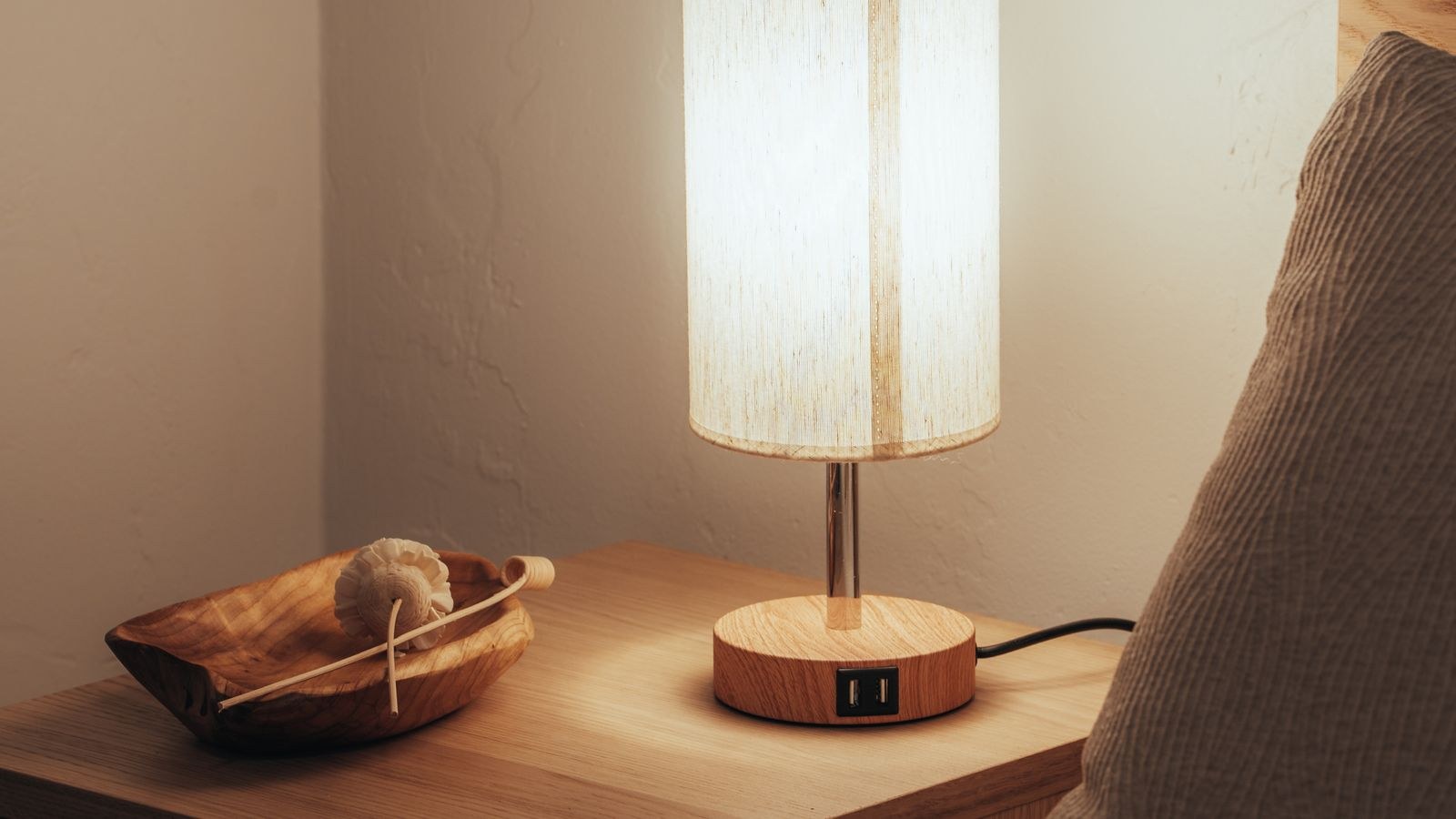
Every well-lit bedroom uses at least three layers, ideally four.
- Ambient. A soft general wash that lets you cross the room, make the bed and find things. It should never be the brightest thing in the room at night.
- Task. Focused light for reading in bed, dressing, and doing makeup or hair at a mirror. This is the layer most bedrooms lack entirely.
- Accent. Low-output light on a headboard, a shelf, artwork or the perimeter of a ceiling. It adds depth and gives you something to leave on at very low levels.
- Night. Extremely dim, low-mounted light for getting to the bathroom at 3 a.m. without waking yourself or a partner fully.
The value of layers is control. With four independent circuits you can run a bright combination while cleaning and a single 2200K bedside lamp at 10 percent while falling asleep, without ever adjusting a fixture. That flexibility, not fixture quality, is what separates a bedroom that feels restful from one that does not. Our broader roundup of the best lights for bedrooms walks through fixture options for each of these layers.
Bedside Lighting: The Layer That Matters Most
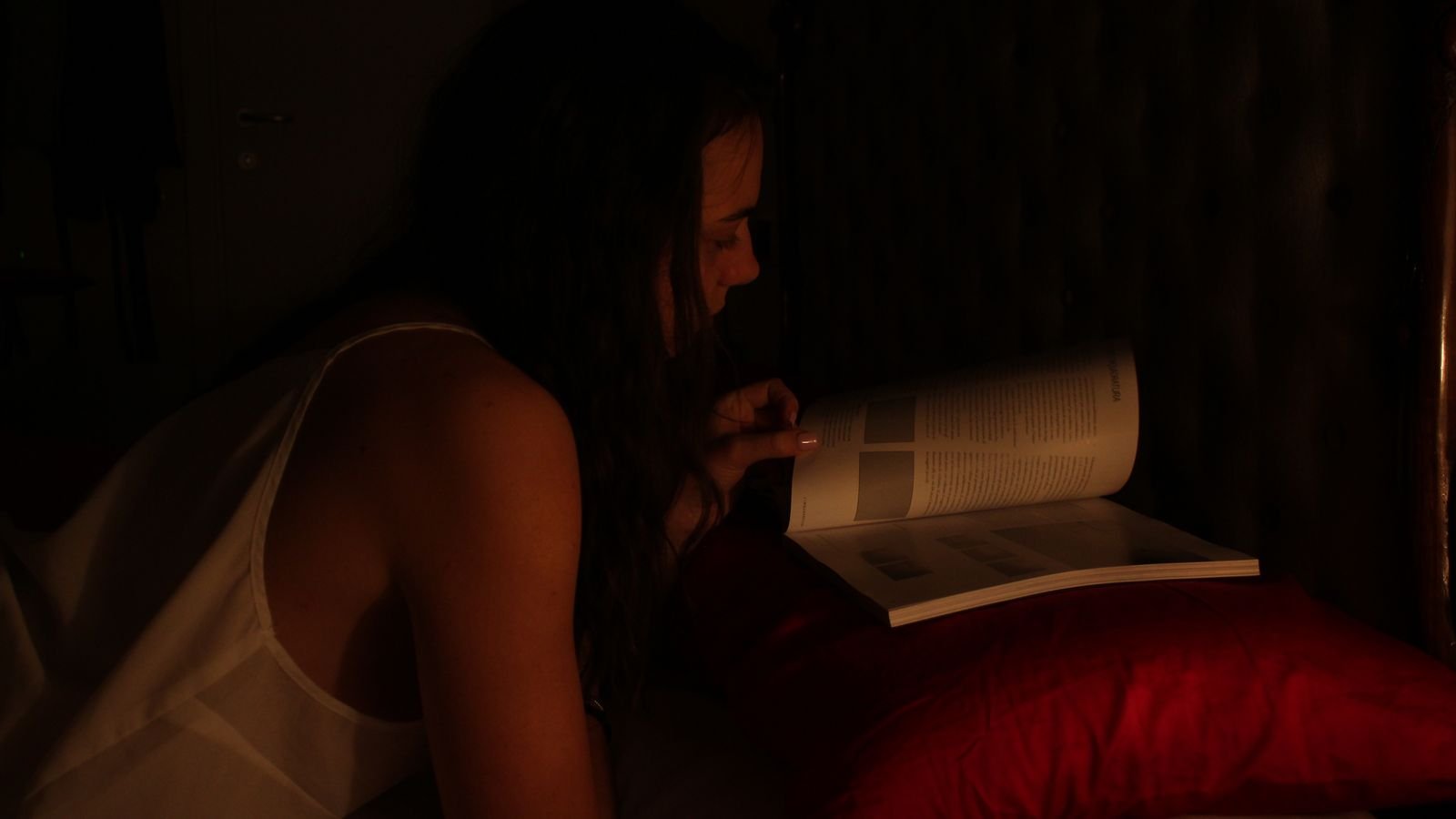
If you fix only one thing, fix the bedside. It is where you read, where you check the time, and where you reach in the dark, and it is the light that most directly affects how easily you fall asleep.
The height rule is simple: the bottom of the lampshade should sit roughly at your eye level when you are sitting up in bed, which usually means the shade bottom lands 20 to 24 inches above the mattress top. Too high and you look straight into the bulb; too low and the light pools on the nightstand instead of the page. Because bed heights vary so much, measure your own rather than trusting a product description.
Aim for 400 to 800 lumens per side for comfortable reading, dimmable down to well under 100 lumens for winding down. Two independently switched lamps are far better than one shared fixture, because one person reading should not force the other to sleep in light.
Table Lamp, Sconce or Pendant
Table lamps are the flexible default: no wiring, easy to swap, and they add height and texture to a nightstand. The tradeoff is that they consume surface area you might want for a book, a glass of water and a phone.
Wall sconces free the nightstand entirely and, with a swing arm, let each person aim light exactly at their page. Mount them 30 to 36 inches above the mattress and 6 to 10 inches outside the headboard edge. Plug-in versions with a cord cover give you most of the benefit without opening a wall.
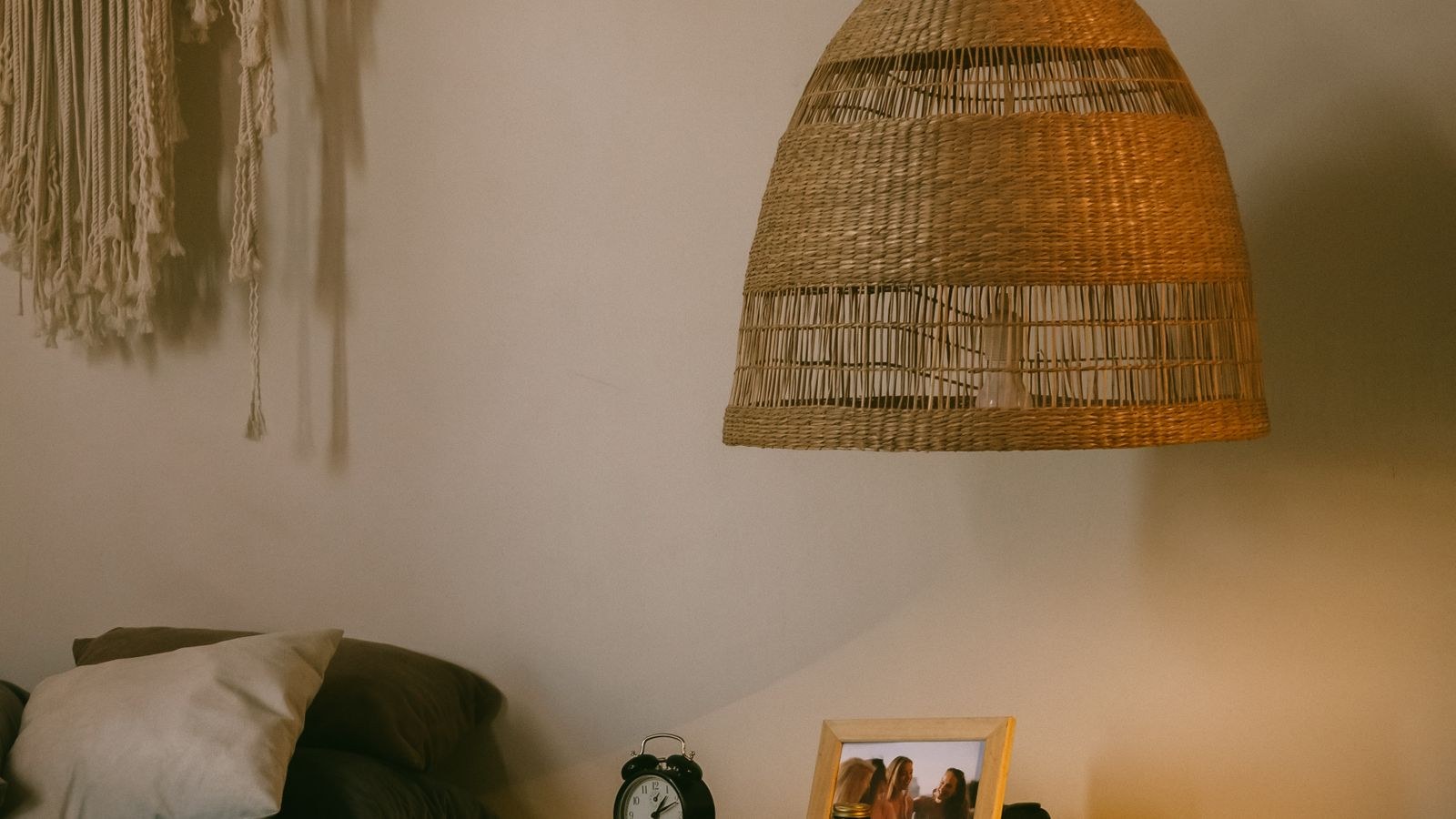
Hanging pendants beside the bed look striking and work well when nightstands are small. Hang the bottom of the shade about 20 to 26 inches above the nightstand surface, and choose a shade that hides the emitter from a reclining view. For a comparison of the styles and switching options across all three approaches, see our guide to the best bedside lamps.
Ceiling and Ambient Lighting
The overhead fixture is the layer people over-rely on, but it still has a job: general light for cleaning, dressing and finding things. Choose it accordingly rather than treating it as the room’s main character.
For ambient output, plan on roughly 10 to 20 lumens per square foot in a bedroom, notably lower than a kitchen or office. A 12-by-14-foot bedroom at 168 square feet therefore wants somewhere around 1700 to 3400 lumens of ambient capacity, which sounds like a lot until you remember it should almost never run at full.
Fixture options depend on ceiling height. Flush and semi-flush mounts suit ceilings under 9 feet and keep headroom clear. A small chandelier or pendant works over the foot of the bed in a room with 9-foot or higher ceilings, adding character without hanging over anyone’s head. Recessed cans give clean, even coverage; place them around the perimeter rather than directly over the bed so nobody lies staring into a downlight. Ceiling fans with integrated light kits are common and practical, but check that the light module dims and that the bulb is replaceable.
Whatever the fixture, put the overhead on a dimmer. An ambient layer that only runs at 100 percent is a layer you will rarely use.
Accent Lighting and LED Strips
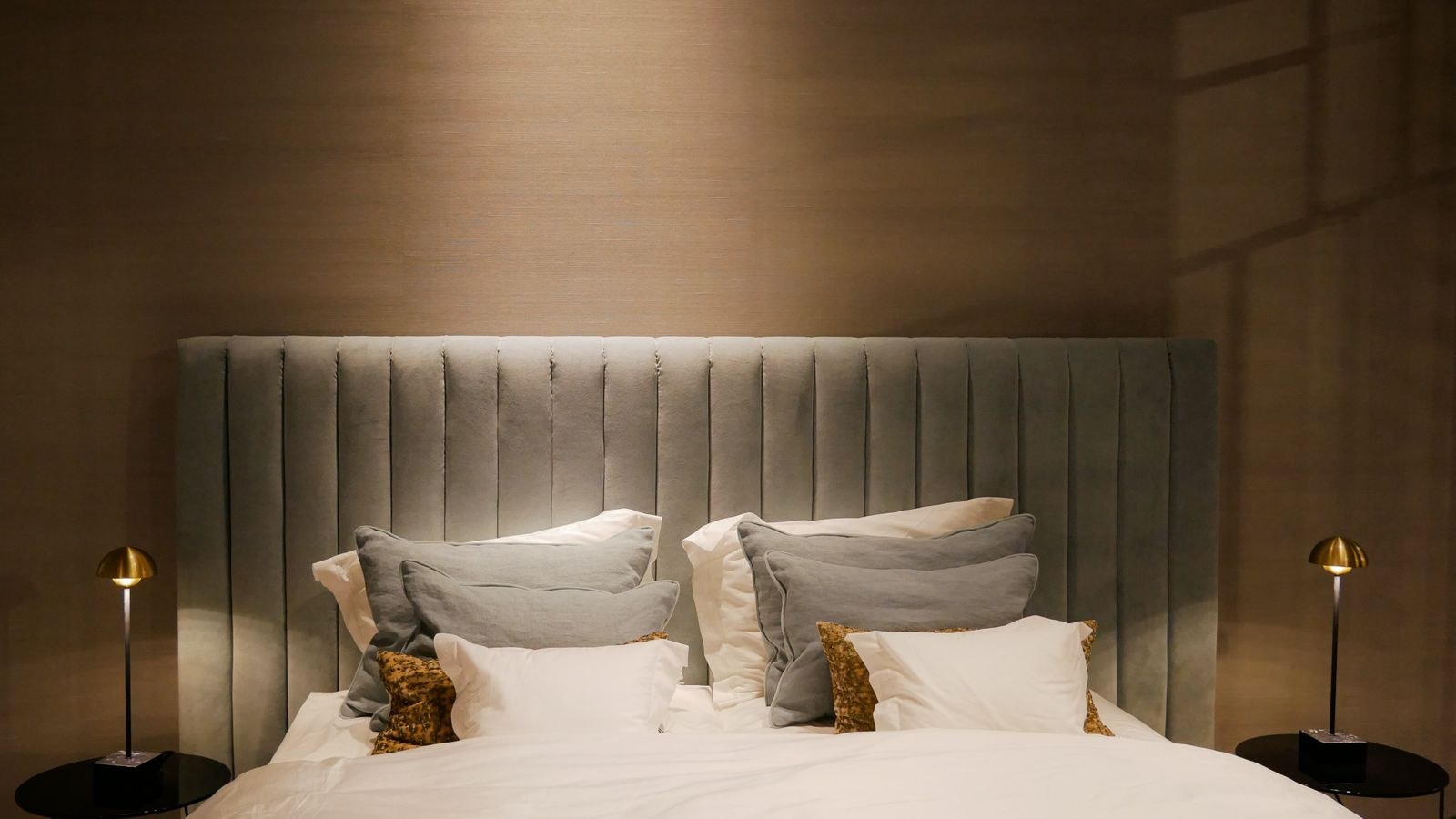
Accent lighting is where a bedroom gains atmosphere, and LED strips are the cheapest way to get it. Because a strip is a long, low-brightness line rather than a point source, it produces glow without glare, which is exactly what a bedroom wants after dark.
Placements that consistently work:
- Behind the headboard. A strip mounted on the back edge washes the wall and creates a halo effect. The most flattering single accent in a bedroom.
- Cove or crown molding. Aimed at the ceiling, this gives soft indirect ambient light with no visible source at all.
- Under the bed frame. A dim strip here doubles as a night light that guides your feet without lifting the room’s overall brightness.
- Behind a wall-mounted television or mirror. Bias lighting reduces eye strain when watching in a dark room.
- Inside a closet or along shelving. Practical light exactly where a ceiling fixture casts shadows.
Choose strips by density and quality, not by peak brightness. Look for at least 60 LEDs per meter so the individual diodes blend into a continuous line rather than showing dots, and prefer CRI 90 or above if the strip lights a surface you will look at closely. Warm white at 2700K suits accent duty better than color-changing RGB for everyday use, though tunable and RGBW strips give you both. Our roundup of the best LED lights for bedroom installations compares strip density, adhesive quality and controller options, and for a wider look at how accent layers combine, the best ambient lighting for bedrooms guide covers indirect fixtures alongside strips.
Color Temperature and Sleep
Color temperature is the specification with the largest effect on how a bedroom feels and functions. Light in the blue-rich part of the spectrum suppresses melatonin production, which is helpful at 8 a.m. and counterproductive at 10 p.m.
Practical guidance:
- 2200K to 2400K. Very warm, close to candlelight. Excellent for the final hour before sleep and for night lighting.
- 2700K. The standard warm white and the right default for bedside lamps, ceiling fixtures and accent strips.
- 3000K. Acceptable for a dressing area or a mirror where you need slightly crisper light.
- 4000K and above. Avoid in a bedroom. Cool white light at night delays sleep onset and makes the room feel institutional.
Tunable white bulbs are genuinely useful here, letting you run 3500K in the morning to help you wake and drop to 2200K in the evening. Some LEDs also offer warm dimming, which mimics an incandescent by shifting warmer as they dim, so a lamp at 10 percent glows amber rather than staying at its rated kelvin. If you are choosing output levels for a bedroom fixture, our guide to the best light bulb watts for bedroom use translates wattage equivalents into the lumen figures that actually matter.
Controls, Switching and Smart Options
Lighting you cannot reach is lighting you will not use. The single most impactful control upgrade in a bedroom is being able to turn everything off without getting out of bed.
Traditional solutions still work well. A three-way switch at both the door and the bedside handles the overhead. Inline cord switches or lamps with touch bases make bedside control effortless. A dimmer on every circuit, not just the ceiling, is the baseline.
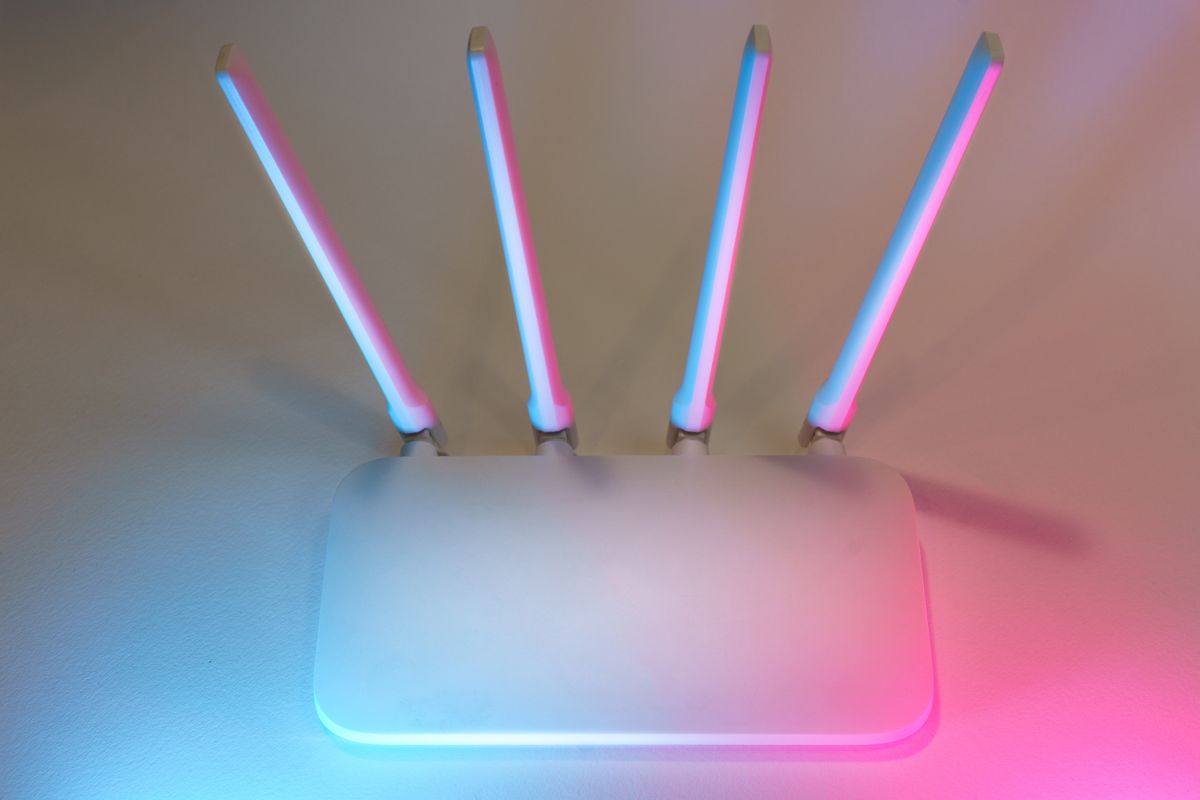
Smart controls add scheduling and scenes. A smart switch controlling the ceiling fixture plus smart bulbs in the bedside lamps lets you define an evening scene that drops everything to a warm low level with one command, and a morning scene that ramps up gradually. Motion-activated night lights under the bed or along a baseboard solve the 3 a.m. problem without any interaction at all. Keep two rules in mind: always leave a physical control that works when the network is down, and disable or dim the status LEDs on smart devices, since a bright blue pinpoint across a dark room is its own kind of sleep problem.
Common Bedroom Lighting Mistakes
- Relying on one ceiling fixture. A single overhead gives you bright or off, and nothing useful in between.
- Cool white bulbs. 5000K light in a bedroom actively works against falling asleep.
- Bedside lamps that are too tall or too short. If the shade bottom is not near seated eye level, you get glare or a lit nightstand instead of a lit page.
- Shared bedside switching. One switch for both lamps guarantees an argument eventually.
- Skipping dimmers. Every circuit in a bedroom benefits from one.
- Recessed cans directly over the bed. Lying down and staring into a downlight is uncomfortable even when it is off.
- Ignoring device indicator lights. Chargers, televisions and smart plugs collectively brighten a room more than people realize.
Frequently Asked Questions
What color temperature is best for a bedroom?
2700K for general use and 2200K to 2400K for the hour before sleep. Stay below 3000K throughout the room, and avoid 4000K and above entirely.
How bright should bedside lamps be?
Between 400 and 800 lumens each for comfortable reading, with dimming down to under 100 lumens for winding down. Independent switching for each side is more important than raw output.
How high should a bedside lamp be?
The bottom of the shade should sit near eye level when you are sitting up in bed, typically 20 to 24 inches above the mattress top. Measure your own bed height rather than assuming.
Are LED strip lights good for a bedroom?
Yes, provided you choose a dense strip of at least 60 LEDs per meter, mount it so the diodes are hidden, and stay in the warm white range for everyday use. They excel behind headboards, in coves and under the bed frame.
Do I need a ceiling light in the bedroom?
Not necessarily. A pair of bedside lamps plus a floor lamp and an accent layer can cover a bedroom completely. An overhead is convenient for cleaning and dressing, but it is the most replaceable layer of the four.
Final Thoughts
Bedroom lighting works when it gives you a dial rather than a switch. Build four layers, bedside task light you can control from the pillow, a dimmable ceiling fixture for general use, a warm accent glow behind the headboard or in a cove, and a very dim path light for the middle of the night. Keep every bulb at 2700K or warmer, insist on real dimming across all of them, and make sure both sides of the bed have independent control. None of that requires an expensive fixture or an electrician for most of the work, and the difference between a bedroom lit this way and one lit by a single ceiling dome is something you notice the very first evening.