
 Owen Bradley
 Choosing between a battery-powered doorbell and a hardwired one is one of those decisions that looks trivial until you start reading the fine print. Both types ring a chime, both can stream video to your phone, and both sit in roughly the same price bracket. The difference shows up months later, in how often you climb a ladder to recharge a battery, in whether your video clips arrive before or after the visitor has left, and in whether your existing transformer can actually carry the load. This complete comparison guide walks through the electrical realities, the day-to-day performance differences, and the installation trade-offs so you can pick the doorbell that suits your house rather than the one that happens to be on sale in 2026.

How Each Doorbell Type Actually Gets Its Power
A hardwired doorbell draws low-voltage power from a transformer, usually mounted near the electrical panel, in a closet, or on the side of the furnace. That transformer steps household voltage down to somewhere between 8V and 24V AC and feeds two thin wires out to the button by the front door and back to a mechanical or digital chime inside. The circuit is continuous: the button simply closes it, the chime sounds, and the loop reopens. Because the wiring is already carrying power all the time, a smart video doorbell wired into it never runs out of charge.
A battery doorbell has no such loop. It carries a rechargeable lithium pack, sometimes removable and sometimes sealed into the body, and it sleeps between events to preserve charge. When its motion sensor or button wakes it, it powers up the radio, connects to your Wi-Fi, records, and goes back to sleep. Everything about the design is built around minimizing awake time, and that constraint shapes every performance characteristic that follows.
There is a third category worth knowing about: battery doorbells that can optionally be connected to existing doorbell wiring. These use the low-voltage feed as a trickle charger rather than as the primary power source. They behave like battery units but rarely need manual recharging, which is often the best of both worlds if the wiring already exists.
Installation Difficulty and What It Costs You
Battery models win here without much argument. Two anchors, two screws, a mounting bracket, and a phone app is the whole job. Renters can install one and take it with them. Anyone nervous about electrical work can finish the project in fifteen minutes with a drill and a level. If you are shopping this category, our roundup of the best battery operated doorbells covers the models that balance capacity against detection quality.
Hardwired installs range from trivial to genuinely involved. If you already have a working chime and button, swapping in a smart unit is a fifteen-minute job too: kill the breaker, unscrew the old button, connect two wires, remount. The complications begin when there is no existing wiring, when the transformer is undersized, or when the chime is an older mechanical unit that buzzes continuously with a smart doorbell attached. Running new low-voltage cable through finished walls is the single biggest cost variable, and in an older home it can turn a small upgrade into a half-day project. The best wired doorbells generally list their transformer requirements clearly, and checking that spec before you buy saves a great deal of frustration.
Transformer and Chime Compatibility Explained
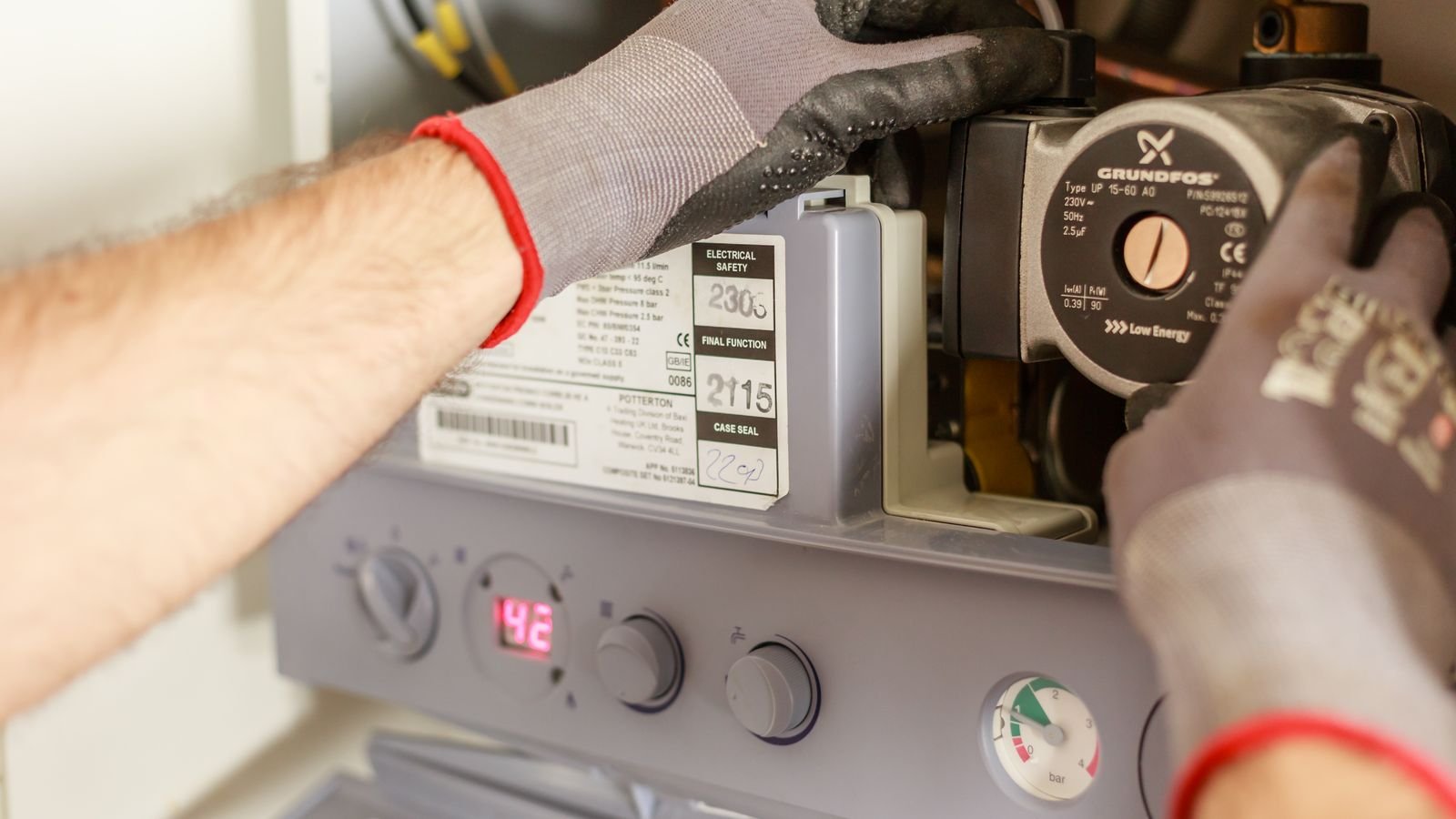
This is where most hardwired upgrades go wrong. Traditional mechanical chimes were designed for a button that draws current only for the second it is pressed. Smart doorbells draw a small continuous current to stay online. If the transformer is rated at 10VA and the doorbell wants 16V at 30VA, you will see symptoms: the camera reboots during recording, night vision flickers, or the chime hums quietly all day.
- Check the transformer label. It will state voltage and VA rating. Most smart doorbells want 16V to 24V AC and at least 10VA to 30VA.
- Identify your chime type. Mechanical chimes use a solenoid and two metal bars. Digital chimes use a speaker. Digital chimes usually need a bypass module or a power kit.
- Install the supplied power kit. Most manufacturers include a small module that wires across the chime terminals to condition the current.
- Plan for a transformer swap. A replacement transformer is inexpensive, but it is a line-voltage connection and is worth handing to an electrician if you are unsure.
Video Performance: Where the Gap Is Real
Battery doorbells sleep, and waking up takes time. That wake-up latency is why battery cameras are famous for clips that begin with a person already halfway up the path. Manufacturers have narrowed the gap considerably with faster radios and low-power standby modes, but a wired unit that is always awake will almost always start recording sooner and deliver a smoother live view when you tap the notification.
Continuous power also unlocks features that a battery simply cannot sustain. Pre-roll buffering, where the camera retains the few seconds before the trigger, needs the sensor running constantly. Higher frame rates, always-on live view, and 24/7 recording all fall into the same category. If catching the moment a package is set down matters to you, wired hardware is the more reliable foundation.
That said, the practical difference for most households is smaller than spec sheets suggest. If your camera covers a short front step rather than a long driveway, a modern battery unit will capture the visitor’s face perfectly well. The gap widens with distance, and it widens in cold weather.

Battery Life in the Real World
Advertised runtimes assume light traffic. A doorbell facing a quiet cul-de-sac with motion zones tuned tightly might genuinely run for six months. The same doorbell facing a sidewalk with pedestrians, cars, and a neighbor’s cat will need charging every three to five weeks. Cold weather compounds this: lithium cells lose usable capacity below freezing, and a unit that lasted four months in summer may last six weeks in January.
Three habits extend runtime meaningfully. First, shrink the motion zone so the camera ignores the street. Second, reduce recording length from the default to something shorter, since every extra second is radio time. Third, turn off live-view checks you do not need, because each one wakes the device. Buying a model with a removable battery, or a spare pack you can swap while one charges, removes the downtime entirely. Households that want camera features without the wiring often start with the best battery doorbell cameras and add a spare battery from day one.
Reliability, Wi-Fi, and Failure Modes
Both types depend on your wireless network, and both fail the same way when the signal is weak: dropped notifications, blurry compressed video, and long buffering before live view loads. Front doors are frequently the worst-covered spot in a house, sitting behind a masonry wall or at the far end of the building from the router. Before blaming the doorbell, check signal strength at the mounting point and consider a mesh node near the entry.
Their failure modes differ in one important way. A hardwired doorbell fails when the power fails, so a whole-home outage takes the camera with it. A battery doorbell keeps recording through an outage, though it cannot upload anything if the router is also dark. Neither is a true security system on its own, which is why many owners pair a doorbell with a separate camera covering the same approach.
Chimes, Wireless Repeaters, and Hearing the Bell
A battery doorbell has no wired chime, so it needs either a plug-in wireless chime or a smart speaker to announce visitors. Households often underestimate how much this matters. Phone notifications get silenced, delayed, or missed entirely, and a doorbell that only rings on a phone is a doorbell that gets ignored. Adding one or two plug-in units, positioned where people actually spend time, restores the behaviour everyone expects. Our guide to the best doorbell chimes covers range, volume, and how many receivers a single transmitter can drive.
Hardwired setups already have a chime, but the existing one may be quiet, poorly located, or inaudible from the basement. Adding wireless extension chimes to a hardwired system is straightforward and usually cheaper than rewiring. If you are designing the whole entry setup from scratch, comparing complete best doorbell systems is often more useful than shopping the button alone.
Cost Over Five Years, Not at Checkout
Sticker prices between the two categories overlap heavily, so the real comparison is total cost of ownership.
- Battery: lower install cost, possible spare battery purchase, eventual battery degradation after roughly three to five years, and replacement of the whole unit if the pack is sealed.
- Hardwired: possible transformer upgrade, possible electrician labour if wiring is absent, then effectively zero maintenance for the life of the device.
- Both: optional cloud subscription for event history, which is frequently the largest recurring line item regardless of power type.
If wiring already exists, hardwired almost always wins on five-year cost. If it does not, the calculus flips, because running cable through finished walls can cost more than the doorbell itself.
Which One Should You Choose?
Answer these four questions and the decision usually makes itself.
- Do you have existing doorbell wiring that works? If yes, lean hardwired, or a battery model that trickle-charges from those wires.
- Do you rent? Choose battery. Reversible installation is worth more than a slightly faster wake time.
- How busy is the approach? High-traffic frontages punish battery models with constant wake events.
- How cold does it get? Sustained sub-freezing winters favour wired power.
Wireless models remain the pragmatic default for apartments, condos, and any home where the front door was never wired. Comparing the best wireless doorbells against wired equivalents on features rather than price usually reveals that the feature gap is narrower than the installation gap.
Mistakes That Cause Most Complaints
- Skipping the power kit. The humming chime problem is almost always a missing or misinstalled bypass module.
- Leaving motion zones at default. Wide-open detection generates dozens of daily false alerts and drains batteries fast.
- Mounting too high. Above roughly 52 inches, the camera looks down at heads rather than faces. Use an angled wedge if the door frame forces the height.
- Ignoring sun position. A west-facing door gets backlit every afternoon. Choose a model with strong dynamic range or add a small awning.
- Assuming an undersized transformer will cope. It will work for a week and then start rebooting, and the symptom looks like a faulty camera.
Frequently Asked Questions
Can I convert a battery doorbell to hardwired later?
Many models accept low-voltage wiring as a charging input, so if you run cable later, the same unit keeps working and stops needing manual charges. Check the spec before buying if this is your plan.
Will a hardwired smart doorbell work during a power cut?
No. It loses power along with the transformer and the router. A battery model continues recording locally but cannot send alerts until the network returns.
How long does a doorbell battery really last?
Expect roughly one to four months depending on traffic, recording length, weather, and how often you open live view. Cold climates sit at the low end of that range.
Do I need a subscription to use either type?
Not always. Most brands offer live view and real-time alerts without one, but saved event history usually requires a paid plan or a model that supports local storage on a card or hub.
Is the video quality different between the two?
Sensor resolution is typically identical within a product family. The difference is in responsiveness, frame rate, and the availability of pre-roll footage, all of which favour continuous power.
Final Thoughts
There is no universally better answer, only a better fit. Existing wiring, a cold climate, or a busy street points firmly toward hardwired. Renting, a masonry facade, or a door that was never wired points just as firmly toward battery. What matters more than the power source is getting the fundamentals right: a transformer that meets spec, a mounting height that captures faces, a motion zone that ignores the sidewalk, and an audible chime inside the house. Get those four things right and either type will serve you well for years, which is exactly what a front door deserves.








Comments are closed.
No reviews yet. Be the first to share your experience!