
 Owen Bradley
 An alarm siren is the only part of a security system that does anything to an intruder in real time. Sensors detect, panels report, cameras record, but the siren is what turns a quiet, private break-in into a loud, public one, and privacy is the thing burglars value most. The strobe beside it does the same job for a different audience: it tells neighbours, responders, and anyone in a noisy environment exactly which house is calling for help. Getting both right is mostly a matter of understanding decibels, which behave far less intuitively than the numbers suggest. This guide explains how loud is actually loud enough, where indoor and outdoor sirens belong, why a strobe matters as much as volume in daylight, and how to avoid a setup that annoys your street without deterring anyone in 2026.
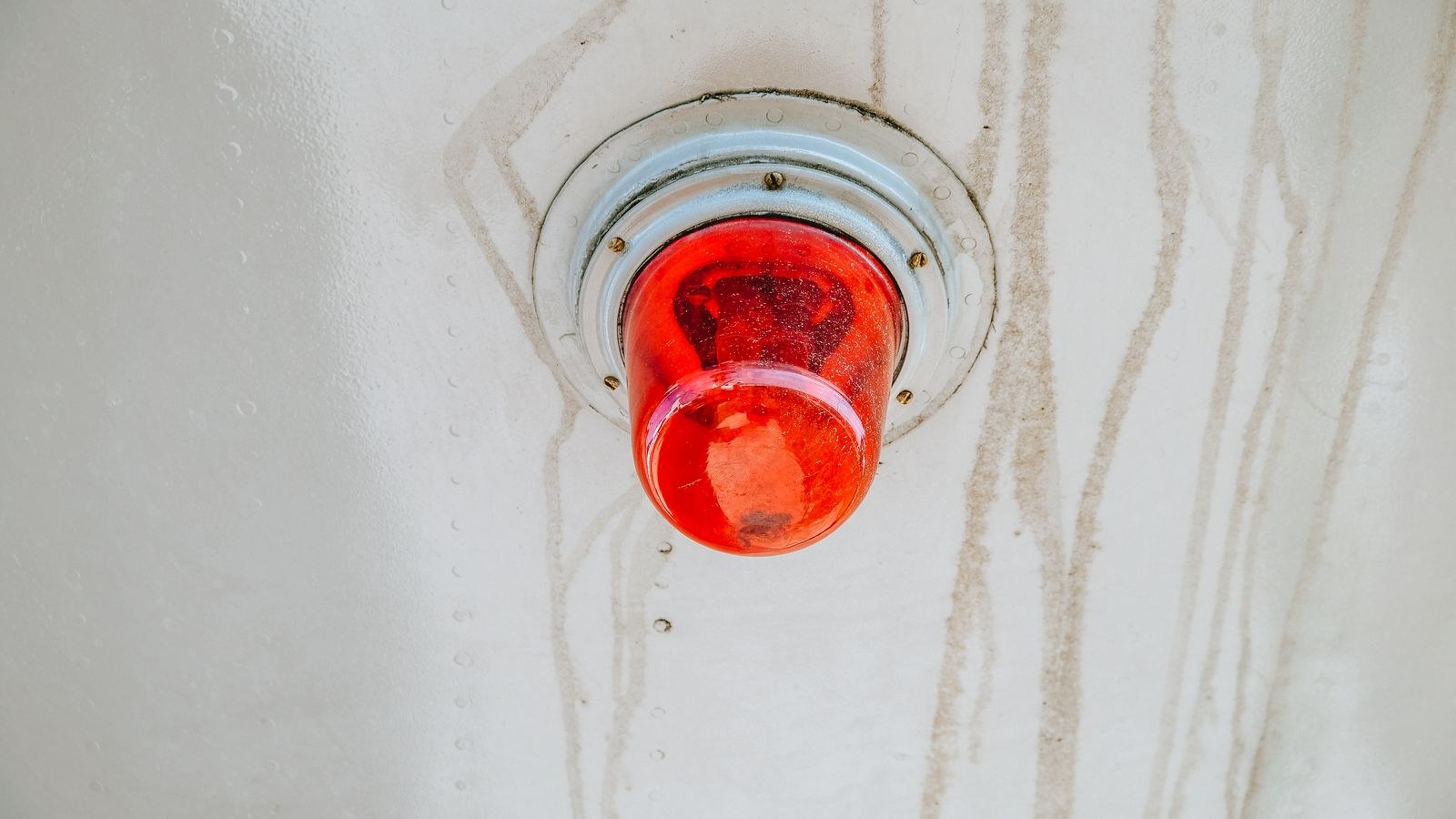
Understanding Decibels: The Numbers Are Not Linear
Decibels are logarithmic, which trips up nearly every buyer. An increase of 10 dB represents roughly ten times the sound energy and is perceived as about twice as loud. So the difference between a 95 dB siren and a 105 dB siren is not a marginal 10 percent improvement; it is a doubling of perceived loudness. Conversely, upgrading from 105 dB to 110 dB is a much smaller real-world gain than the specification sheet implies.
The second catch is measurement distance. Manufacturers usually quote decibels at one metre, and sound falls off by roughly 6 dB every time you double the distance. A 110 dB siren measured at one metre is around 104 dB at two metres, 98 dB at four, and closer to 80 dB by the time it reaches a neighbour thirty metres away. Always check whether a rating is quoted at one metre or three metres, because the same device can honestly be advertised with two very different numbers.
What the Ratings Mean in Practice
- 85 to 95 dB: adequate for a small flat, a shed, or a standalone door alarm. Loud in the room, unremarkable from the street.
- 100 to 105 dB: the sensible target for an indoor siren in a house. Loud enough to be genuinely unpleasant and to wake sleeping occupants.
- 110 to 120 dB: the range for exterior sirens, where the goal is to be heard across a garden and along a road.
- Above 120 dB: approaching immediate hearing damage at close range and often restricted by local noise rules. Rarely necessary and sometimes counterproductive.
For context, sustained exposure above roughly 85 dB risks hearing damage over time, and 120 dB is around the pain threshold. That is a deliberate design feature indoors, since an intruder who cannot stand to be in the room leaves the room.
Indoor Sirens: Drive Them Out, Wake You Up
The indoor siren does two jobs that the outdoor unit cannot. It makes the interior of your home physically intolerable to stand in, and it wakes the household. At 100 to 105 dB in an enclosed hallway, conversation is impossible, thinking is difficult, and hearing whether anyone is coming is impossible too, which removes an intruder’s situational awareness entirely.
Placement should follow that logic. Put the primary indoor siren in a central hallway or at the top of the stairs, where sound carries through the whole house rather than being trapped in one room. Hard surfaces reflect sound and help; a siren buried in a carpeted cupboard behind a closed door loses much of its output. In a two-storey home, two indoor sirens usually beat one very loud unit, because you want coverage upstairs and down. Many self-install packages include only a small sounder in the panel itself, which is rarely enough, so check what the kits in our best wireless home security systems comparison actually ship with before assuming you are covered.
Do Not Forget the Small Sounders
Not every alert should be a full alarm. Entry and exit tones, chimes when a door opens during the day, and low-battery warnings all need to be audible without being alarming. Standalone units such as those in our best door alarms and best window alarms roundups serve a related purpose: a local 100 dB screech at the point of entry that startles an intruder before they are even inside, useful in sheds, garages, rentals, and anywhere you cannot install a full system.
Outdoor Sirens: Signalling to the Neighbourhood
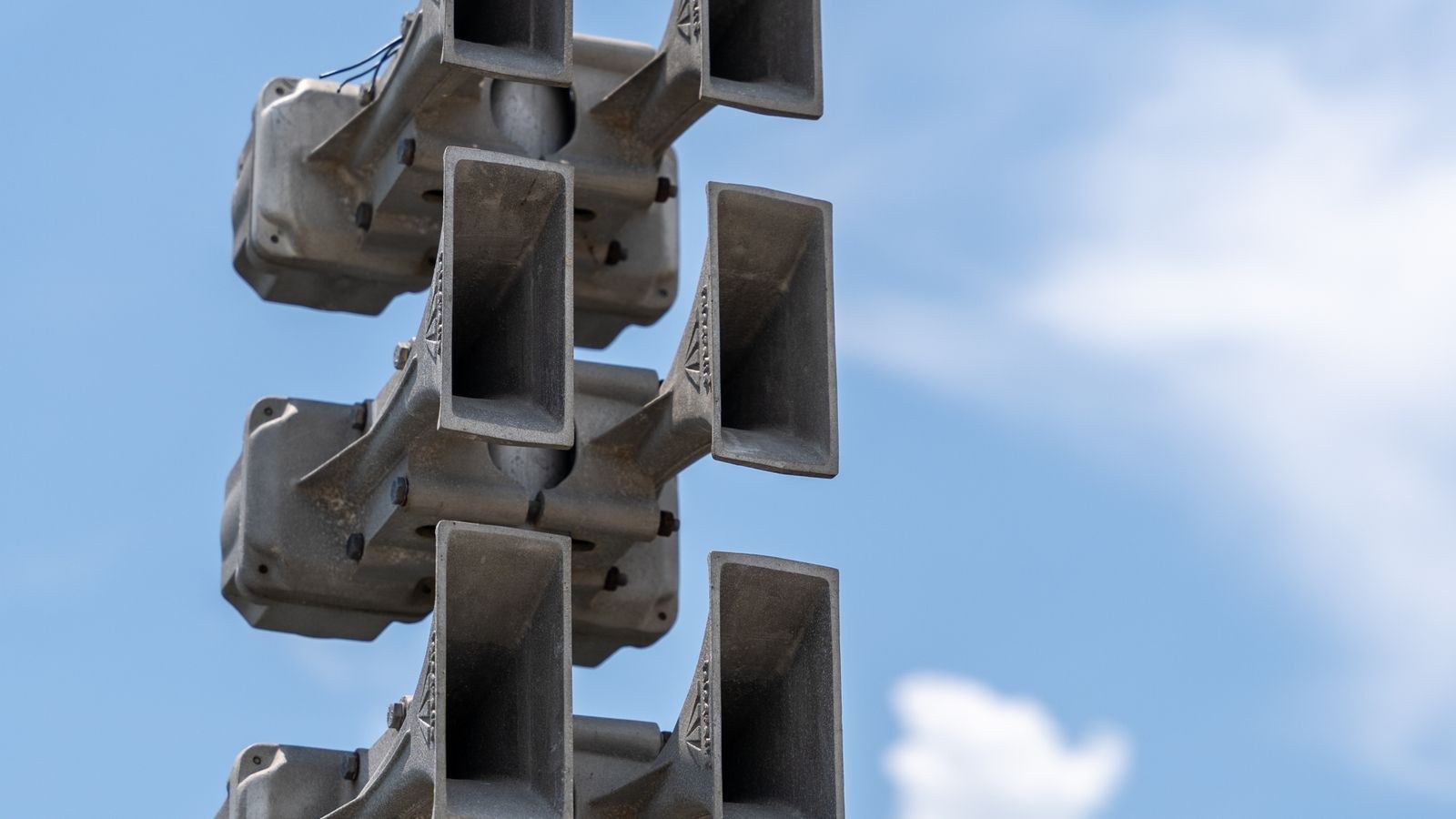
The exterior siren has a different mission. It is not there to hurt anyone’s ears; it is there to be heard by other people and to announce that this specific property is in trouble. That means volume in the 110 to 120 dB range, mounting high enough to be out of easy reach, and a housing built for the job.
Look for a weatherproof rating of at least IP54 for a sheltered position and IP65 or better for exposed walls. A tamper switch is essential, so that prising the cover or unscrewing the unit triggers the alarm rather than defeating it. Better exterior sirens are self-actuating, meaning they contain their own battery and sound even if the cable to the panel is cut. Mount at least three metres up on a wall facing the road or the nearest occupied building, not tucked into a rear garden where the sound dies against a fence.
Cut-Off Timers and Noise Rules
Most jurisdictions limit how long an external alarm may sound continuously, commonly around 15 to 20 minutes, after which it must cut off and may only flash. This is not merely a legal formality; a siren that runs for an hour trains everyone nearby to ignore your alarms permanently. Set the cut-off timer to the maximum your rules allow, then let the strobe carry on. Check whether your local authority requires a registered keyholder who can attend and silence the system, as many do.
Why the Strobe Matters as Much as the Volume
People consistently undervalue the strobe, and it is doing more work than they think. In daylight, sound is competing with traffic, machinery, and general street noise, and nobody can localise a siren by ear with any accuracy. A flashing beacon identifies the exact property instantly, which matters enormously for a responder arriving on a street of near-identical houses. It also works for anyone hard of hearing and for neighbours indoors with windows closed.
Strobes matter after the cut-off too. Once the siren silences at the legal limit, the strobe is the only remaining indication that something happened, and it keeps flashing until the system is reset. That is what lets you see from the end of the road that your house alarm went off hours ago. Choose a high-intensity LED beacon rather than a dim indicator, and mount it where it is visible from the street and from any approach path, ideally on the same bracket as the exterior siren.
Dummy Boxes and Visible Deterrence
An exterior siren box is a deterrent before it ever sounds, because a visible, branded housing tells anyone assessing the property that an alarm exists. Dummy boxes exploit this and cost very little, but experienced intruders recognise the common fakes and a dummy box on a house with no other visible security can even signal that you have nothing real to protect. A genuine siren with a live strobe and a slowly flashing standby indicator is the stronger message.
Wired Versus Wireless Sirens
Wired sirens take power and signal from the panel, so there are no batteries to maintain and no radio link to fail. They are the reliable default for exterior units, where a battery change means getting a ladder out in bad weather. The cost is cabling, which is easy on a new install and disruptive on a retrofit.
Wireless sirens have improved enormously and are the practical choice for retrofits and for indoor units you may want to reposition. What you must check is battery life under alarm conditions, since a siren draws far more current when sounding than a contact sensor ever does, and whether the panel supervises the siren so you are warned if it stops responding. Signal strength matters too: an exterior siren is often the furthest device from the panel, sometimes through a masonry wall. Test the link at the intended location before you fix anything permanently. Complete packages compared in our best alarm systems guide vary widely in whether an external siren and strobe are included or sold as an add-on.
How Many Sirens Does a House Need?
For a typical three-bedroom home, plan on one exterior siren and strobe on the front elevation, one indoor siren in the downstairs hallway, and one upstairs on the landing. That gives you deterrence and public signalling outside, plus intolerable volume and reliable waking inside. Larger properties, or homes where the front and rear face different streets, benefit from a second exterior unit at the back, particularly since rear access is where most forced entries happen.
Detached garages, outbuildings, and annexes usually need their own local sounder, since a siren on the house is easily ignored by someone working on a shed thirty metres away. If you are planning a whole-property setup rather than adding to an existing one, our overview of the best home security systems covers how sirens are specified across full packages.
Common Mistakes
The most frequent is chasing the biggest decibel figure while ignoring placement. A 120 dB siren mounted in a rear garden behind a fence delivers less useful warning than a 110 dB unit on the front wall facing the road. Sound needs a path, and volume cannot substitute for line of sight.
Next is skipping the strobe entirely on the grounds that the siren is loud enough. It is not, in daylight, on a busy street, or after the cut-off timer expires. Third is disabling or ignoring the cut-off, which converts your neighbours from allies into people who will never call anyone on your behalf again. Finally, many people never test the siren after installation, and a unit that has sat silent for two years may have a flat backup battery or a corroded connection. Sound it deliberately, at a reasonable hour, at least twice a year.
Frequently Asked Questions
How loud should a home alarm siren be?
Aim for around 100 to 105 dB indoors and 110 to 120 dB outdoors, both measured at one metre. Going higher indoors risks hearing damage without adding deterrence, and going lower outdoors means the alarm is lost in normal street noise.
Is a strobe light really necessary?
Yes. It identifies the exact property for responders, works when sound is masked by traffic or closed windows, helps anyone hard of hearing, and keeps signalling after the siren cut-off timer silences the sounder.
Can my alarm siren sound indefinitely?
Usually not. Most areas cap continuous external sounding at roughly 15 to 20 minutes, after which only the strobe may continue. Check your local rules and set the panel’s cut-off timer accordingly.
Should the exterior siren have its own battery?
Ideally yes. A self-actuating siren sounds even if its cable is cut or the panel is destroyed, which removes one of the simplest ways to silence a system before it can raise an alarm.
Final Thoughts
Sirens and strobes are where a security system stops observing and starts intervening, and they reward careful specification rather than big numbers. Put a weatherproof, tamper-protected, self-powered siren high on the front elevation with a bright strobe beside it, add a second exterior unit at the rear if the layout demands it, and run indoor sirens on both floors at a volume nobody would choose to stand in. Respect the cut-off timer, mount for sound paths rather than raw decibels, and test everything twice a year. Done properly, the siren makes a break-in loud, public, and short, which is the outcome every other component in your system exists to enable.









