Owen Bradley
 Speaker wire is the least glamorous purchase in any audio system and the one most likely to be either over-thought or ignored entirely. The truth sits between the two extremes. Cable will not transform a mediocre system, but wire that is too thin for the run length genuinely costs you output and damping, and wire that is not rated for where you install it can be a code violation or a fire risk. This speaker wire gauge guide explains what AWG numbers mean, gives you run-length charts for the three gauges you will actually shop for, and covers the connectors, insulation ratings, and installation details worth paying for.
What AWG Actually Means
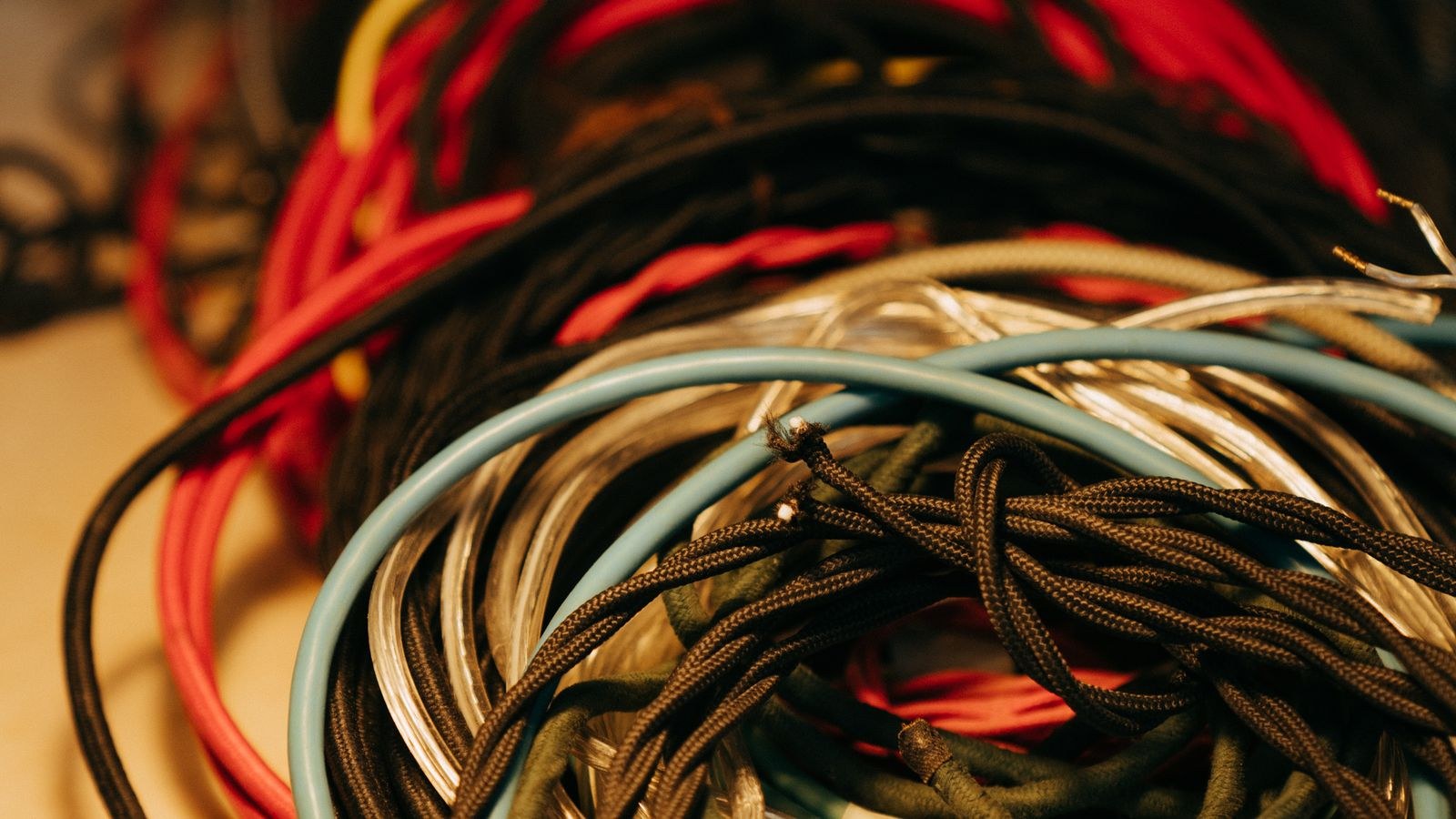
AWG stands for American Wire Gauge, and the numbering runs backwards: a smaller number means a thicker conductor. So 12 AWG is thicker than 14 AWG, which is thicker than 16 AWG. Each step of roughly three gauge numbers halves or doubles the cross-sectional area, which is why the difference between 12 and 18 AWG is far larger than it looks on paper.
Thicker wire has lower resistance. Lower resistance means less of your amplifier’s power turns into heat in the cable instead of motion at the driver, and it means the amplifier keeps better electrical control over the woofer. Both effects grow with distance, which is why run length, not sound quality mythology, is the number that decides your gauge.
The Rule Behind the Charts
The accepted engineering guideline is that the total cable resistance should stay below 5 percent of the speaker’s nominal impedance. For an 8 ohm speaker, that means keeping the round-trip cable resistance under about 0.4 ohms. For a 4 ohm speaker, the budget halves to about 0.2 ohms, which is why low-impedance speakers need thicker wire over the same distance. Everything in the tables below comes from that single rule.
Run Length Charts by Gauge
Measure the actual path the cable will take, following walls and around furniture, not the straight-line distance. Then add a few feet of slack at each end so you can move equipment without re-running the cable.
16 AWG
- 8 ohm speakers: comfortable up to roughly 24 feet per run.
- 6 ohm speakers: comfortable up to roughly 18 feet.
- 4 ohm speakers: keep runs under about 12 feet.
16 AWG is the sensible default for surround channels, compact bookshelf speakers, and any short run in a normal room. It is flexible, easy to terminate, cheap, and fits under most baseboards and behind furniture without a fight.
14 AWG
- 8 ohm speakers: good to roughly 40 feet per run.
- 6 ohm speakers: good to roughly 30 feet.
- 4 ohm speakers: good to roughly 20 feet.
14 AWG is the practical sweet spot for most whole-room installations. It handles typical living room front-channel runs, tolerates a 4 ohm load at moderate distance, and costs only slightly more than 16 AWG. If you are buying one spool for a mixed system, this is usually the one.
12 AWG
- 8 ohm speakers: good to roughly 60 feet or more per run.
- 6 ohm speakers: good to roughly 48 feet.
- 4 ohm speakers: good to roughly 32 feet.
12 AWG is for long runs: in-wall installations to a distant room, ceiling speakers on the far side of a house, outdoor runs to a patio, or any high-power system driving demanding low-impedance loads. It is stiff, harder to route through tight cavities, and noticeably more expensive per foot, so use it where the distance justifies it rather than everywhere by default.
Anything thinner than 16 AWG, such as the 18 or 20 AWG bell wire bundled in the box with budget systems, should be treated as temporary. It is acceptable for a 6 foot desktop hop and inadequate for anything else. When you are ready to replace it, our comparison of the best wire for speakers covers spool sizes, conductor purity, and jacket types worth paying for.
Copper, Copper-Clad Aluminium, and What to Avoid
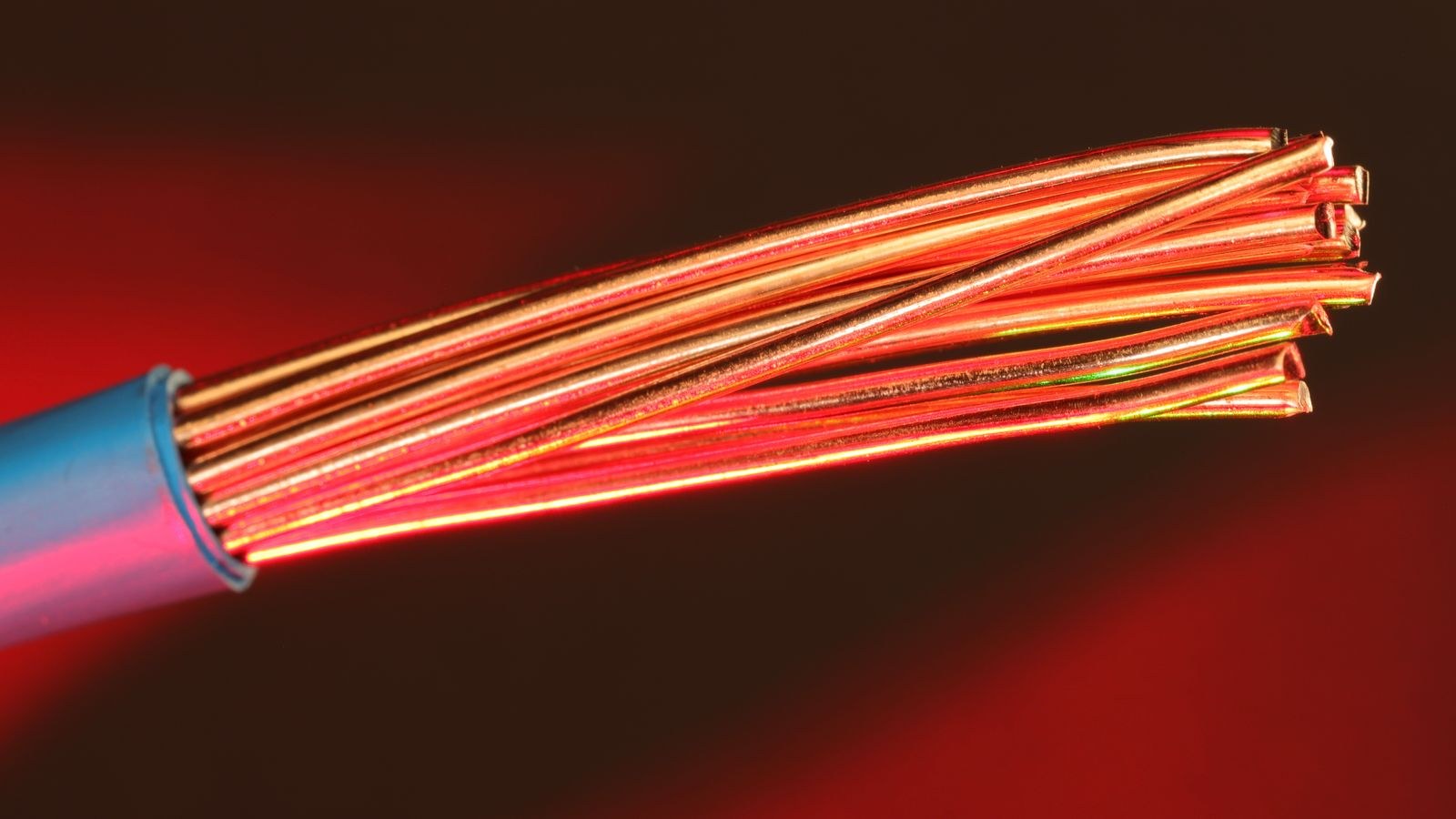
Genuine oxygen-free copper is the standard conductor and what you should buy. The alternative you will encounter is copper-clad aluminium, sold as CCA, which is an aluminium core with a thin copper skin. CCA is cheaper and lighter, but aluminium has roughly 60 percent of copper’s conductivity, so a 14 AWG CCA cable behaves more like 16 AWG copper. It also corrodes more readily at the terminations and is more brittle when repeatedly flexed.
Sellers rarely advertise CCA prominently. Check the printed jacket text and the product specification for “OFC” or “100 percent copper”. If a spool of 12 AWG costs a fraction of every competitor, aluminium content is the usual reason. If you do choose CCA to save money, size up by two gauge numbers to compensate.
Exotic Cable Claims
Beyond adequate gauge and clean copper, the audible returns from exotic construction, unusual geometries, or expensive dielectrics are very difficult to demonstrate. Spend on sufficient gauge, sound terminations, and correct in-wall rating, then put the remaining budget toward speakers, a subwoofer, or acoustic treatment, where the difference is not in dispute.
In-Wall and In-Ceiling Ratings
If cable passes through a wall, ceiling, or floor cavity, ordinary zip-style speaker wire is not appropriate. Building codes in most jurisdictions require cable with a flame-retardant jacket rated for the space, marked CL2 or CL3 for in-wall use. Cable running through a plenum, meaning an air-handling space above a suspended ceiling, requires the stricter CL3P or plenum rating because of the smoke toxicity requirements there.
These ratings are printed along the jacket every couple of feet, so you can verify them before and after installation. The price premium is modest and the alternative is an installation that fails inspection or, far worse, contributes to a fire. Any project involving ceiling speakers should start with correctly rated cable, because retro-fitting the right wire after the drywall is closed is a genuinely miserable job.
Outdoor and Direct-Burial Cable
Runs to a deck, patio, or garden need a UV-stable jacket that resists sunlight and moisture. If the cable will be buried, even inside conduit, look for direct-burial rated cable with a heavier waterproof jacket. Ordinary indoor cable degrades quickly outdoors, the jacket cracks, and water wicks along the strands into the terminals. Plan the full route before buying, since outdoor runs are usually long enough to push you to 12 AWG anyway. Our guide to the best outdoor speakers covers how those longer runs interact with speaker impedance choices.
Connectors: Bare Wire, Banana Plugs, and Spades
Bare wire twisted and clamped under a binding post works perfectly well and costs nothing. Its weaknesses are practical: stray strands can short the terminals, the exposed copper oxidises over months, and reconnecting after moving equipment is fiddly behind a rack.
Banana plugs solve all three. They insert straight into standard binding posts, they make repeated disconnection painless, and they enclose the conductor so nothing frays. For any system you will move, service, or rearrange, they are worth the small cost. Screw-on types are easy to fit with no tools; soldered or crimped types make a more durable joint.
Spade connectors clamp under the binding post nut and give a large contact area, which suits permanent installations and terminals that do not accept bananas. Pin connectors suit spring-clip terminals found on compact speakers and receivers.
Whichever you choose, strip only as much insulation as the connector needs, twist the strands tightly, and tighten the post firmly. A loose connection creates resistance and intermittent contact, which will do more audible damage than any gauge decision.
Getting Polarity and Runs Right
Speaker cable has no inherent direction, but it does have polarity, and getting it wrong on one speaker inverts that driver relative to the other. The result is a hollow sound with no centre image and weak bass. Manufacturers mark one conductor with a stripe, a ridge, printed text, or a different colour. Pick one convention, use it at both ends of every run, and check it before you close any wall.
Two more habits pay off. First, run all channels in the same gauge where practical, so left and right behave identically. Cutting both front runs to the same length, even if one speaker is closer, is unnecessary for audio timing but does keep resistance matched. Second, keep speaker cable a few inches away from mains power cable where they run in parallel, and cross at right angles where they must meet, to avoid inducing hum.
For passive multi-channel installs, plan the whole cable schedule on paper before buying a spool. Count the runs, measure each path, add slack, and total the footage. Systems built around a receiver and several passive speakers often need more cable than people expect once surrounds are included, and a single larger spool is cheaper than several short ones.
Common Mistakes
The most common error is reusing the thin wire that came in the box for a long run to surround speakers on the far wall. That cable is typically 18 AWG or thinner and will lose meaningful power over 30 feet.
The second is buying by price per foot without checking whether the conductor is copper or CCA. The third is running unrated cable inside a wall because it was already on hand. And the fourth is over-buying: a 12 AWG exotic cable on an 8 foot desktop run to a pair of powered monitors delivers no benefit whatsoever.
Finally, do not skip labelling. Tag both ends of every run with the channel name before the cables disappear behind furniture or into a wall. Every installer who has skipped this step has regretted it. Home cinema systems using a full complement of home theater speakers can involve seven or more runs converging on one receiver, and untangling them afterwards by trial and error wastes an afternoon.
Frequently Asked Questions
Does thicker wire make my speakers sound better?
Only up to the point where resistance stops being significant. Going from inadequate to adequate gauge is audible; going from adequate to enormous is not. Use the run length charts and stop there.
Can I join two lengths of speaker wire together?
Yes, if the joint is properly made. Solder or crimp the conductors and insulate each one separately, then sleeve the pair. Twisted-and-taped joints corrode and loosen. Where possible, a single unbroken run is better.
What gauge should I use for in-ceiling speakers?
Use 14 AWG for typical runs and 12 AWG for anything beyond about 40 feet, in both cases with CL2 or CL3 rated jacket. Since the cable will be inaccessible afterwards, size up rather than down.
Do I need to match cable length between left and right?
No. The difference in signal travel time over a few feet is far too small to hear. Matching length only matters as a way of keeping resistance identical, which is negligible when the gauge is correct for both runs.
Final Thoughts
Choosing speaker wire well is a five-minute job once you know the three inputs: the length of each run, the impedance of each speaker, and where the cable will physically live. Measure the route, look up the gauge, buy genuine copper with the correct jacket rating for the location, and terminate it cleanly. That approach costs very little, satisfies every electrical requirement, and leaves your budget where it belongs, in the speakers themselves.