Owen Bradley
 Shower head shopping runs into a number almost immediately: gallons per minute. It appears on every box, it is regulated by law, and it is widely blamed for weak showers. Yet plenty of low-flow heads feel stronger than the thirsty models they replaced, and plenty of high-flow heads feel disappointing. Flow rate alone does not determine how a shower feels, because pressure, nozzle design, and spray pattern do at least as much work. This shower head flow rate guide explains what GPM actually measures, what the legal limits are, how WaterSense certification fits in, and why smart nozzle engineering lets modern heads deliver a satisfying shower on considerably less water. It also covers how much you can realistically save and how to diagnose a weak shower that is not the head’s fault.

What GPM Actually Measures
Gallons per minute is the volume of water a shower head passes in one minute when tested at a standard supply pressure, usually 80 psi. It is a volume measurement, not a force measurement, and that distinction explains most of the confusion in this category. A head rated at 2.5 GPM delivers more water than one rated at 1.75 GPM, but it does not necessarily deliver a more forceful stream, because force depends on the velocity of water leaving each nozzle.
Velocity is set by the pressure behind the water and the size of the opening it passes through. Push the same volume through smaller openings and each individual jet moves faster and hits harder. That is the core trick behind good low-flow design, and it is why a well-engineered 1.5 GPM head can feel more invigorating than a poorly designed 2.5 GPM one that simply dumps water in a soft, low-velocity curtain.
It also means your household water pressure matters enormously. Every GPM rating assumes a test pressure you may not have. A house with 40 psi supply will get considerably less flow from the same head than the label suggests.
Legal Limits and WaterSense Certification
Federal regulation caps shower head flow at 2.5 GPM at 80 psi, and that ceiling has applied to new heads sold for decades. Several states enforce stricter limits, with some capping heads at 1.8 GPM and others at 2.0 GPM, so the maximum legally available where you live may be lower than the federal figure.
WaterSense is a voluntary certification layered on top of that. To carry the label, a head must use no more than 2.0 GPM and, crucially, must also pass independent performance testing for spray force and water coverage. That second requirement is what makes the label useful. Plenty of cheap low-flow heads meet a flow limit simply by restricting water badly; a WaterSense head has to prove it still performs while doing so.
Treat WaterSense as a filter for competence rather than a guarantee of a particular feel. It tells you the manufacturer submitted the product for testing and it passed a meaningful spray-force threshold, which eliminates the worst offenders. Choosing between certified models still comes down to spray pattern and personal preference.
About Flow Restrictors
Most heads contain a small plastic insert that limits flow to the rated figure. Removing it is a widely shared piece of internet advice and it does increase volume, but it comes with real consequences. It puts the fixture outside its legal rating, may conflict with local code and water utility rules, raises both water and heating costs, and on some designs produces a worse spray because the internal geometry was tuned around the restricted flow.
If your shower feels weak, the restrictor is rarely the actual cause. Mineral scale in the nozzles, a partially closed supply valve, a clogged inline filter, or genuinely low household pressure are all more common culprits and are worth checking first. Some shoppers still prefer maximum flow, and the models covered in the best shower heads without flow restrictors roundup are designed around that preference from the outset rather than being modified after purchase.
How Low-Flow Heads Still Feel Strong
Three engineering approaches let modern heads deliver a satisfying shower on less water.
- Smaller, precisely shaped nozzles. Narrowing each opening raises jet velocity, so the water arrives with more perceived force even though total volume is lower.
- Air induction. The head draws air into the water stream, producing larger, softer droplets that cover more skin per gallon. This creates a fuller, more enveloping sensation, though it can cool the water slightly on its way down.
- Pressure-compensating chambers. Internal chambers regulate output so the spray stays consistent as household pressure fluctuates, preventing the drop in force that happens when someone runs a tap elsewhere.
Nozzle material affects longevity as much as feel. Silicone or rubber nozzle tips flex, which lets you rub limescale off with a thumb and keeps jets clear for years. Rigid plastic or metal nozzles clog progressively in hard-water areas and are far harder to clear, and a partially blocked nozzle field is the most common reason a once-good shower degrades.
Matching Flow Rate to Your Water Pressure
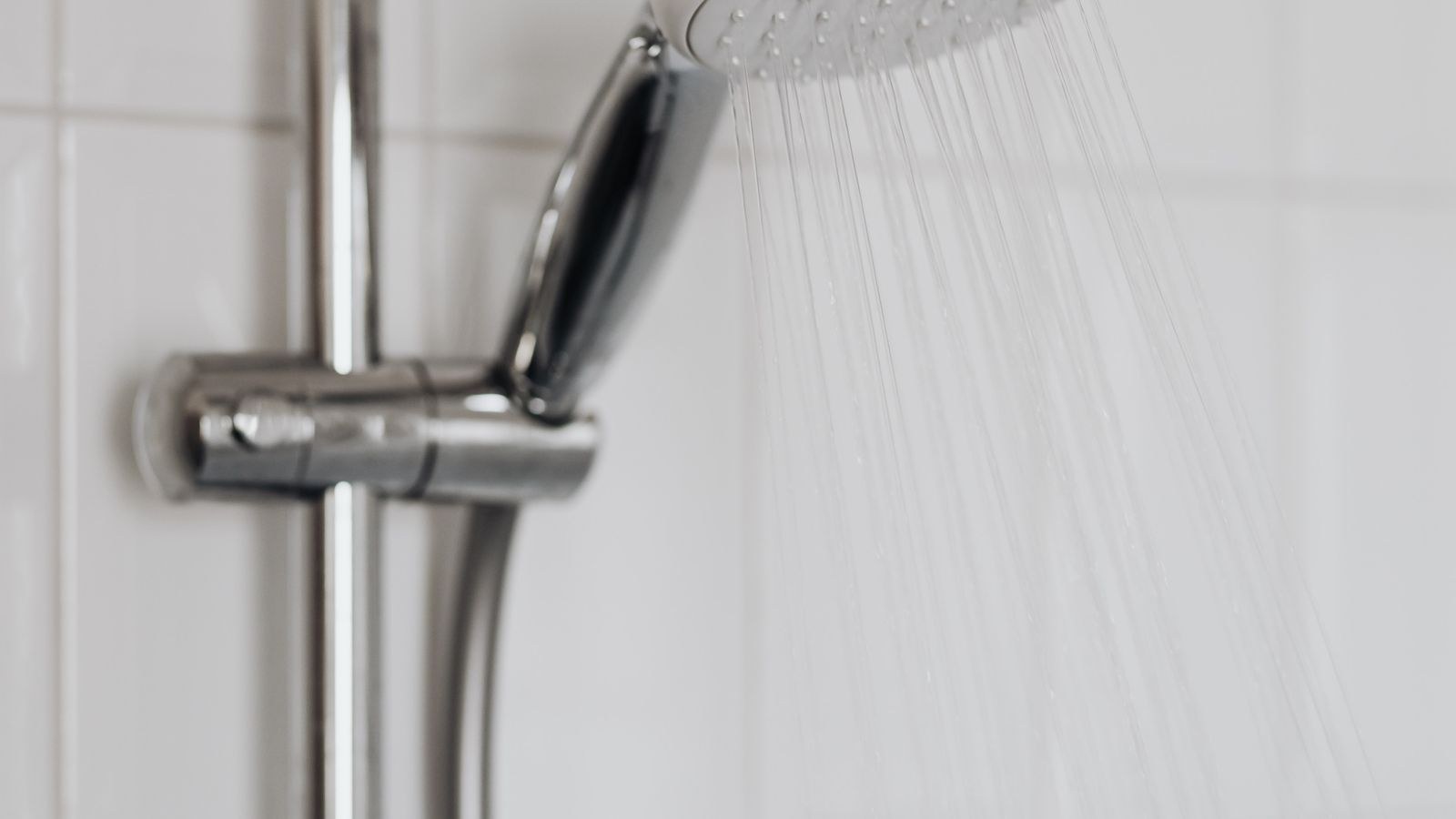
Your supply pressure determines which flow rate will actually feel good. Homes with strong pressure, roughly 60 psi and above, can run a low-flow head comfortably because there is plenty of force behind each jet. Homes with weak pressure, below about 40 psi, often struggle with aggressive low-flow designs because there is not enough force to make a narrow jet feel powerful.
Testing your pressure is cheap and worth doing before you buy. A simple gauge that screws onto an outdoor spigot or a washing machine connection gives a reading in seconds. Anything between 45 and 60 psi is comfortable territory. Below 40 psi you should look for heads specifically designed for low-pressure supply, which use wider nozzle spacing and less internal restriction. Above 80 psi you may want a pressure-reducing valve, since excessive pressure stresses fixtures and pipe joints throughout the house.
If pressure is your main complaint, the shortlist in our best high pressure shower heads comparison focuses on designs that maximize perceived force, while the best pressure shower heads guide covers models that hold spray force steady when supply pressure varies.
What Lower Flow Actually Saves
The savings from a lower flow rate are more significant than the small difference in GPM suggests, because water is only part of the cost. Every gallon that goes down the shower drain has been heated, and water heating is one of the largest energy loads in a typical home.
Consider the arithmetic. Dropping from 2.5 GPM to 1.75 GPM saves 0.75 gallons per minute. Across a ten-minute shower that is 7.5 gallons. For a household of four showering daily, that approaches 11,000 gallons a year, along with the energy required to heat roughly two-thirds of it. The water bill saving is real but modest; the water heating saving is usually the larger figure, and it recurs every month.
Behaviour compounds this. A shower that feels good encourages shorter showers because you get clean faster and are not standing under a weak trickle waiting. A poorly performing low-flow head can backfire entirely by extending shower duration, which is precisely why the performance testing behind WaterSense certification matters.
Spray Patterns and Head Types
Flow rate interacts with head format. A fixed wall-mounted head is the simplest and most reliable, with all flow directed through one nozzle field. Handheld heads on a hose add flexibility for rinsing, cleaning the enclosure, and bathing children or pets, at the cost of a slight pressure loss through the hose. Combination sets offer both and are popular for family bathrooms.
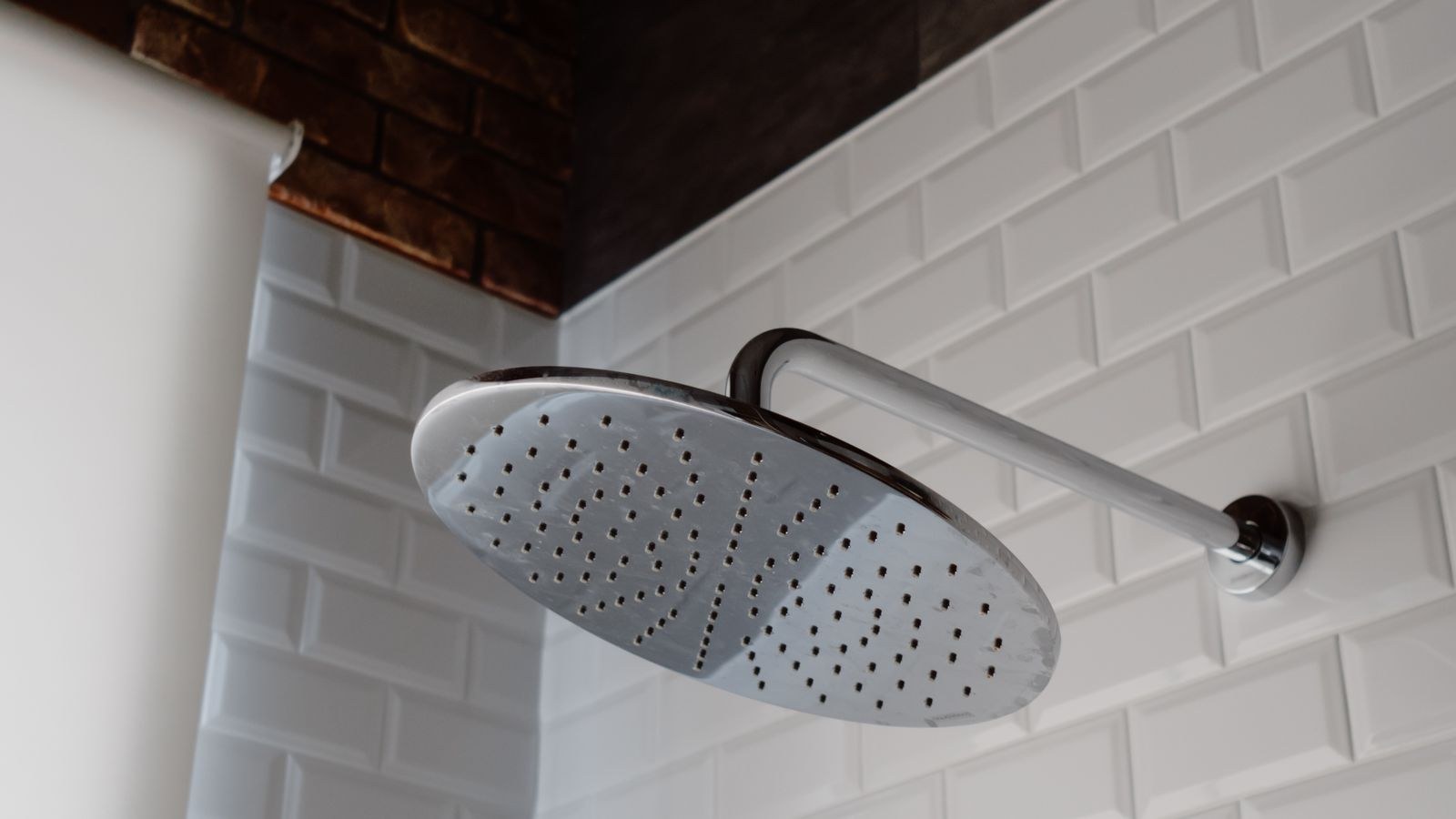
Rain heads deserve particular caution at low flow rates. Their large face relies on gravity rather than velocity, so at 1.75 GPM or below the spray can feel like standing in light drizzle. If you want a rain head on a restricted flow, look for one with a smaller face and pressure-boosting internals rather than the widest panel available.
Dual-head and body-spray systems multiply flow demand, since each outlet has its own rating and running them simultaneously may exceed both your supply capability and local code. Check whether the system diverts flow between outlets or runs them together before installing.
Also consider a pause or trickle valve, which reduces flow to a dribble while you lather without disturbing the temperature mix. It is a small feature that saves a surprising amount of water and is genuinely useful in a handheld setup.
Installation and Maintenance Notes
Nearly all shower heads use a standard half-inch threaded connection, so replacement is a straightforward job requiring only thread seal tape and a wrench with a cloth to protect the finish. Wrap the tape clockwise around the shower arm threads several times, hand-tighten the head, then give it a modest quarter turn with the wrench. Over-tightening cracks plastic fittings and does not improve the seal.
Maintenance is mostly about limescale. In hard-water areas, wipe the nozzle face regularly, and every few months soak the head in a descaling solution or white vinegar for an hour before rinsing thoroughly and clearing the nozzles. Restoring flow this way is far cheaper than replacing a head, and it addresses the real cause of most gradual pressure complaints. If the head has a filter cartridge, follow the stated replacement schedule, since a clogged cartridge throttles flow noticeably.
Common Mistakes to Avoid
- Assuming higher GPM means a stronger shower. Nozzle velocity and pressure matter more than volume.
- Removing the flow restrictor as a first step. Descale the nozzles and check your supply valve before modifying the fixture.
- Buying a wide rain head on low pressure. Large faces need volume and gravity to feel good.
- Ignoring household pressure. Test it first, because it determines which flow rate will satisfy you.
- Over-tightening the connection. Thread tape seals the joint; force only cracks fittings.
- Neglecting descaling. Blocked nozzles are the most common cause of a shower that used to be fine.
For a broader look at finishes, mounting types, and feature sets alongside flow rate, our overview of the best shower heads covers the full range, and the detailed shower head buying guide walks through spray settings, materials, and installation compatibility in more depth.
Frequently Asked Questions
What is a good flow rate for a shower head?
For most homes with normal pressure, somewhere between 1.75 and 2.0 GPM offers a good balance of feel and efficiency. Homes with weak supply pressure may prefer to stay closer to the 2.0 to 2.5 GPM range within the limits allowed locally.
Is it legal to remove a flow restrictor?
Federal rules apply to what may be sold rather than to individual modification, but several states and local water authorities restrict altered fixtures, and doing so puts the head outside its certified rating. Check local requirements before removing one.
Does WaterSense mean a weaker shower?
No. Certification requires passing spray force and coverage tests in addition to the flow limit, so a certified head has demonstrated acceptable performance. Poor low-flow showers usually come from uncertified budget fixtures.
Why did my shower get weaker over time?
Almost always mineral deposits blocking the nozzles, sometimes combined with a clogged inline filter or a partly closed supply valve. Descaling the head resolves the majority of these cases.
Will a new head fix genuinely low water pressure?
It can improve how the shower feels by raising jet velocity, but it cannot create pressure that is not there. If pressure is low throughout the house, investigate the main supply, the pressure regulator, and any corroded pipework instead.
Final Thoughts
Flow rate is a useful specification, but it describes volume rather than experience. Start by measuring your household pressure, then choose a flow rate your supply can actually support, and let nozzle engineering rather than raw gallons deliver the feel you want. A WaterSense label is a reliable shortcut to heads that have proven they perform at reduced flow, and it protects you from the weak budget fixtures that give low-flow designs a bad name. Keep the nozzles descaled, resist the temptation to modify the restrictor before diagnosing the real problem, and match the head format to your pressure rather than to a showroom photograph. Shop that way in 2026 and you will get a shower that feels better while quietly cutting both your water and water-heating costs.